Peniophorella rude
(Bres.) K.H.Larss.
Study description
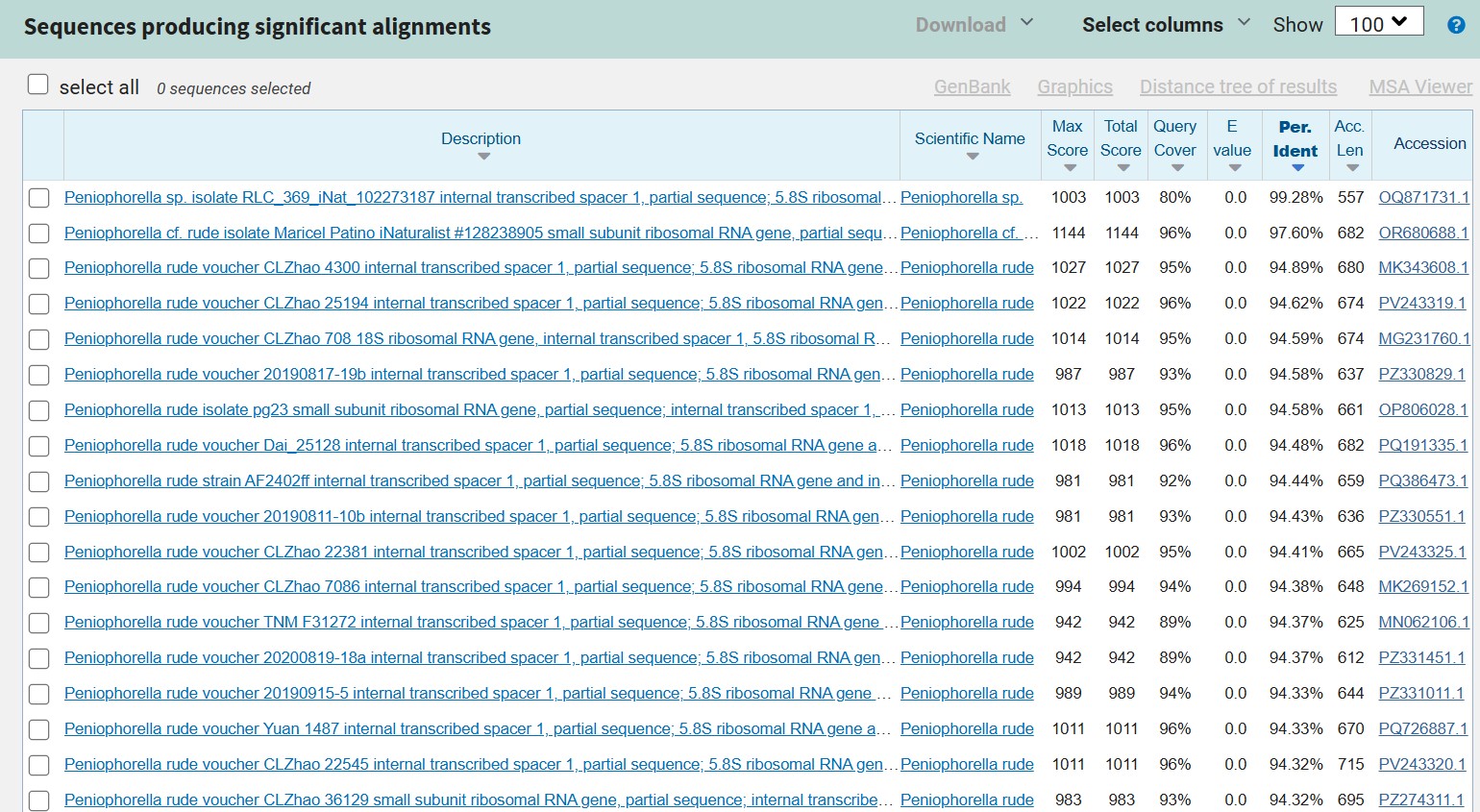
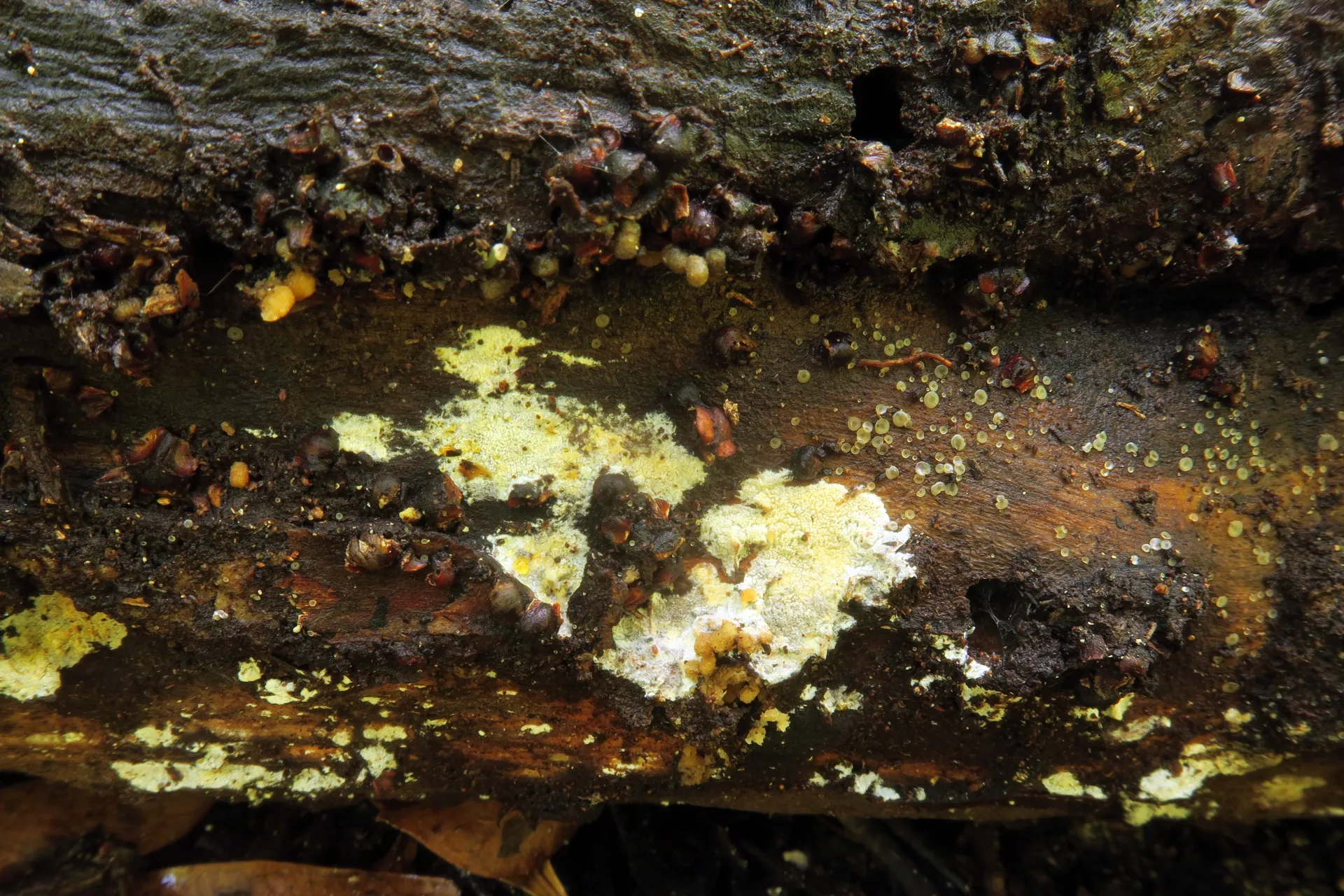
A tropical species occurring on decaying wood of an unidentified tropical tree on the ground, with white to cream basidiomata, grandinioid to slightly hydnoid surface, waxy consistency, and a well-delimited margin.
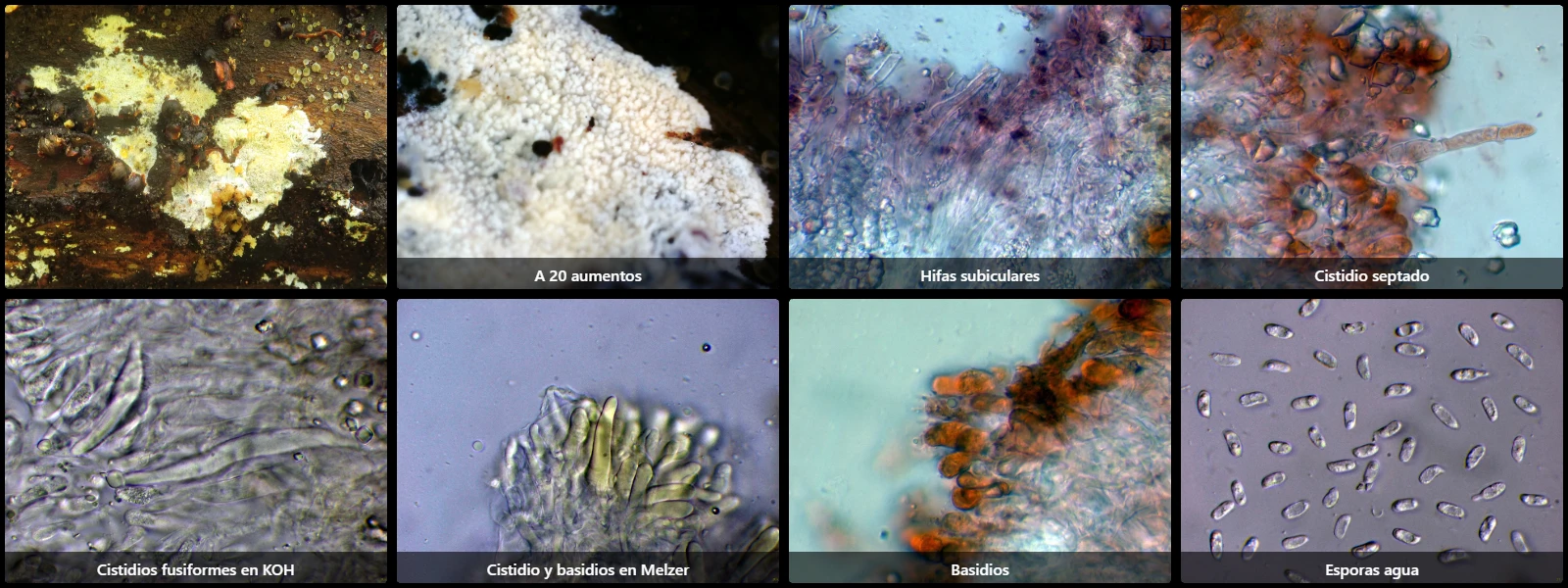
Hyphal system monomitic; subicular and subhymenial hyphae smooth, hyaline, moderately thick-walled, 3 to 4 µm wide, septate with clamp connections.
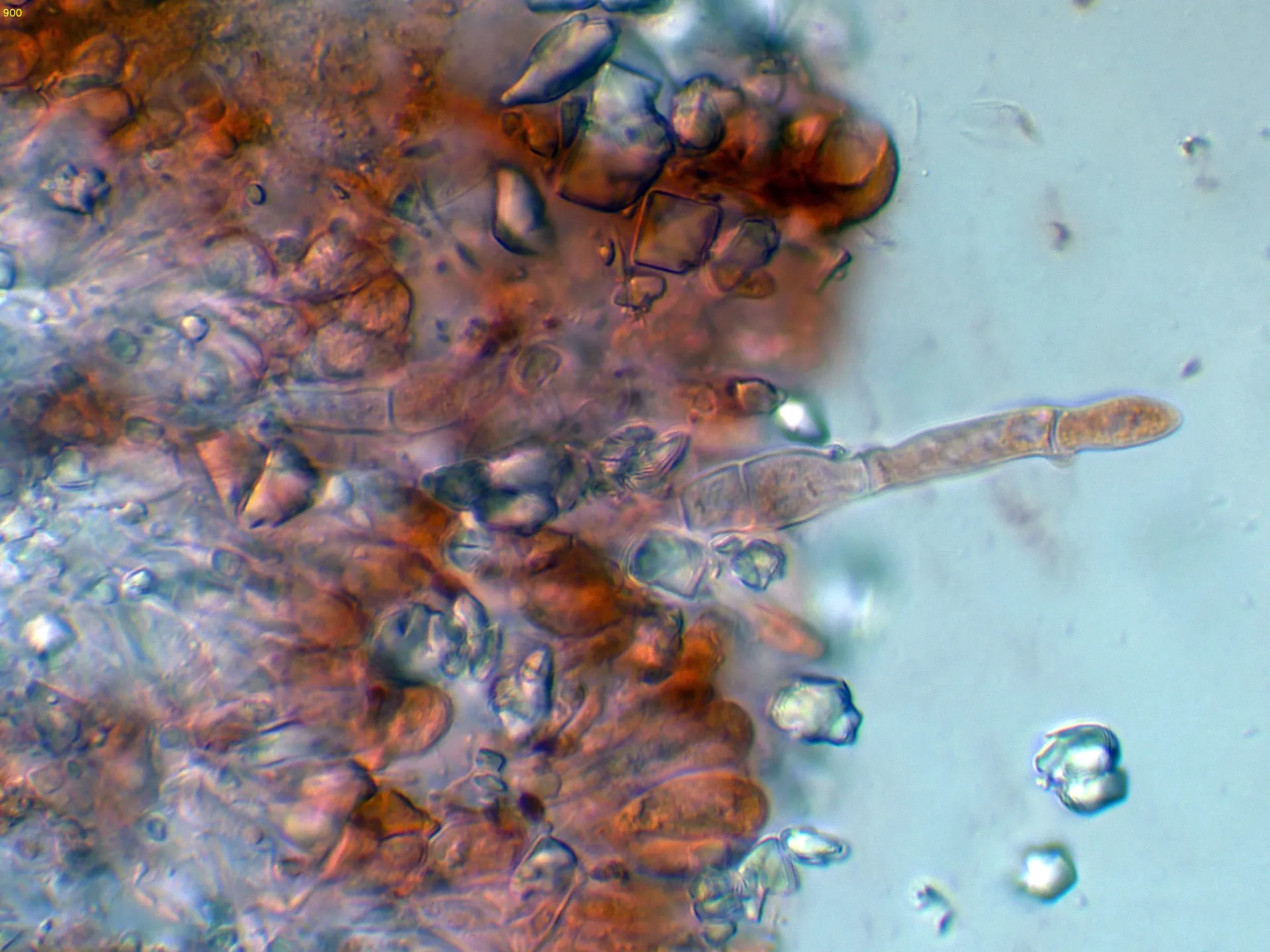
Leptocystidia hyphoid, septate, hyaline, thin-walled, 45 to 70 µm long, 5 to 8 µm wide, projecting considerably beyond the basidia.
Deeply embedded in the hymenium are other fusiform cystidia resembling gloeocystidia, 55 to 100 µm long and 8 to 12 µm wide.
Basidia subcylindrical to clavate, 25 to 35 µm long, 6 to 8 µm wide, clamped at the base, 4-spored.
Spores ellipsoidal to cylindrical, flattened on one side, smooth, hyaline, thin-walled, 8.5 to 12 µm long, 4 to 5.5 µm wide, with a lateral apiculus at one end, inamyloid in Melzer's reagent.
Geographic references
Map generated from global occurrence data from GBIF. GBIF.
Study measurements
Values in Microns (µm)Macroscopic gallery
Microscopic gallery
Genetic / Phylogenetic Study
Phylogenetic Tree