Peniophorella pubera
(Fr.) P.Karst.
Study description
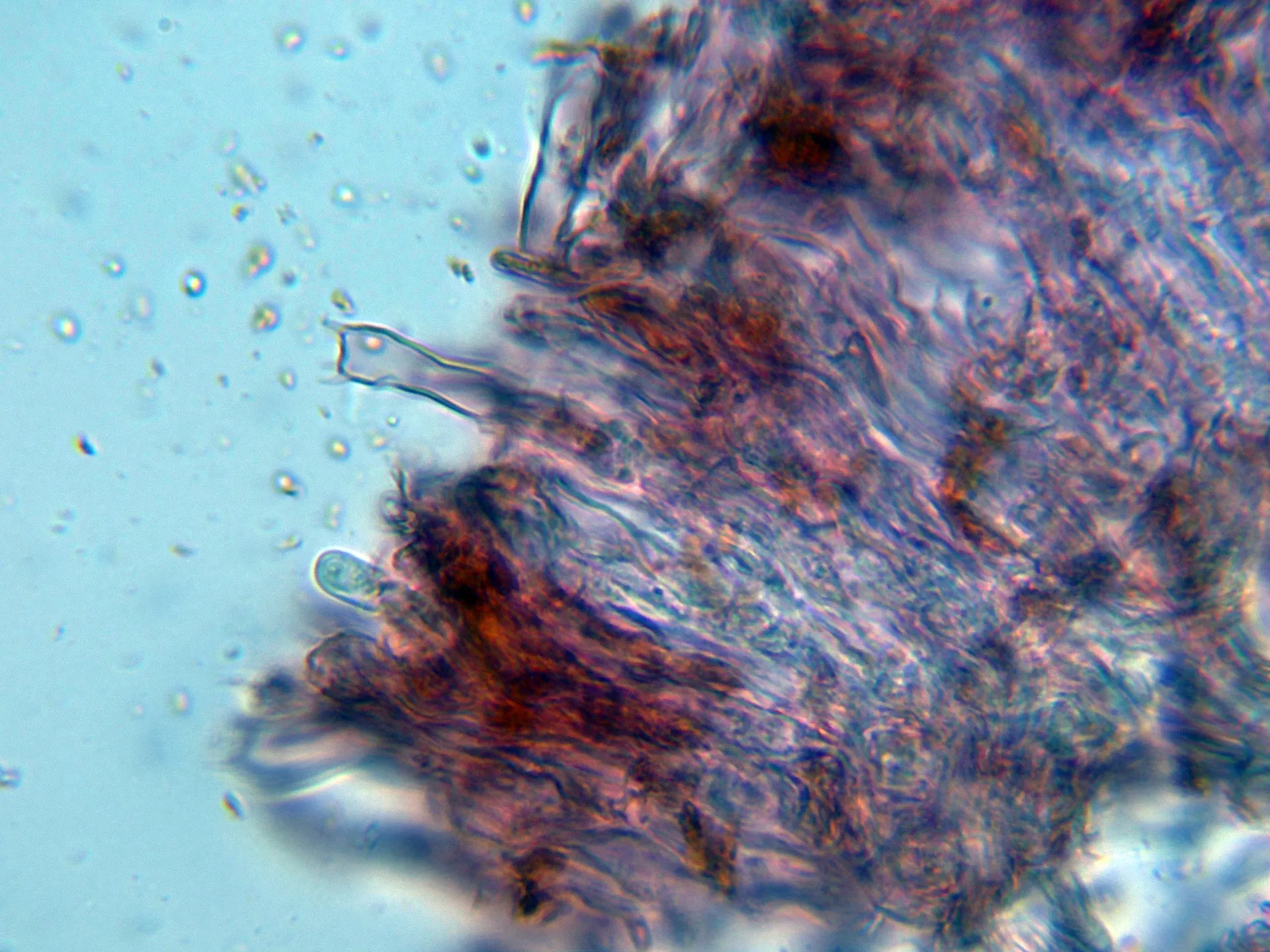
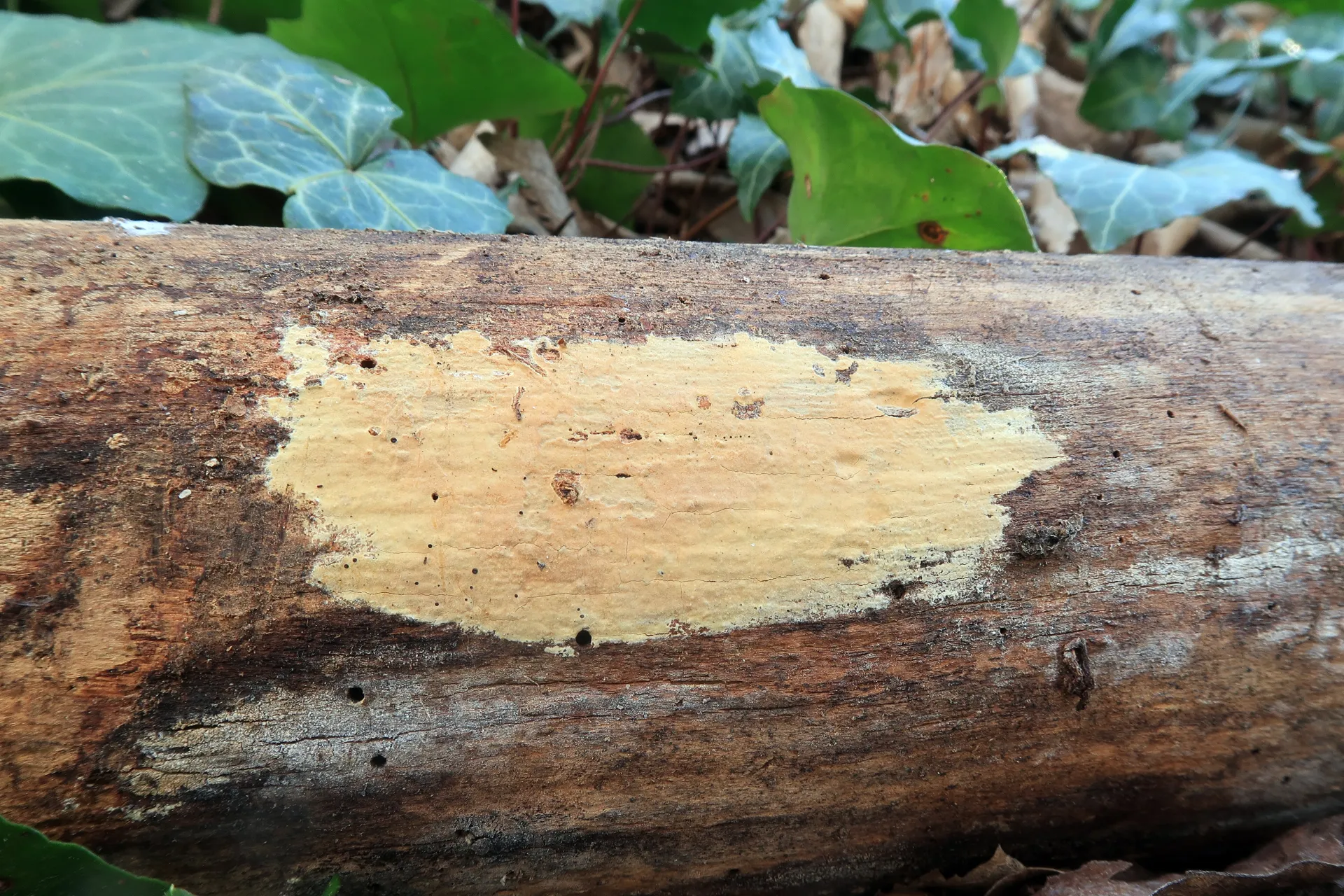
On decaying fallen wood of broadleaved trees on the ground, rarely on conifer wood, with resupinate basidiomata, white to cream, smooth to slightly rugose surface, soft consistency, waxy appearance, and an indeterminate margin.
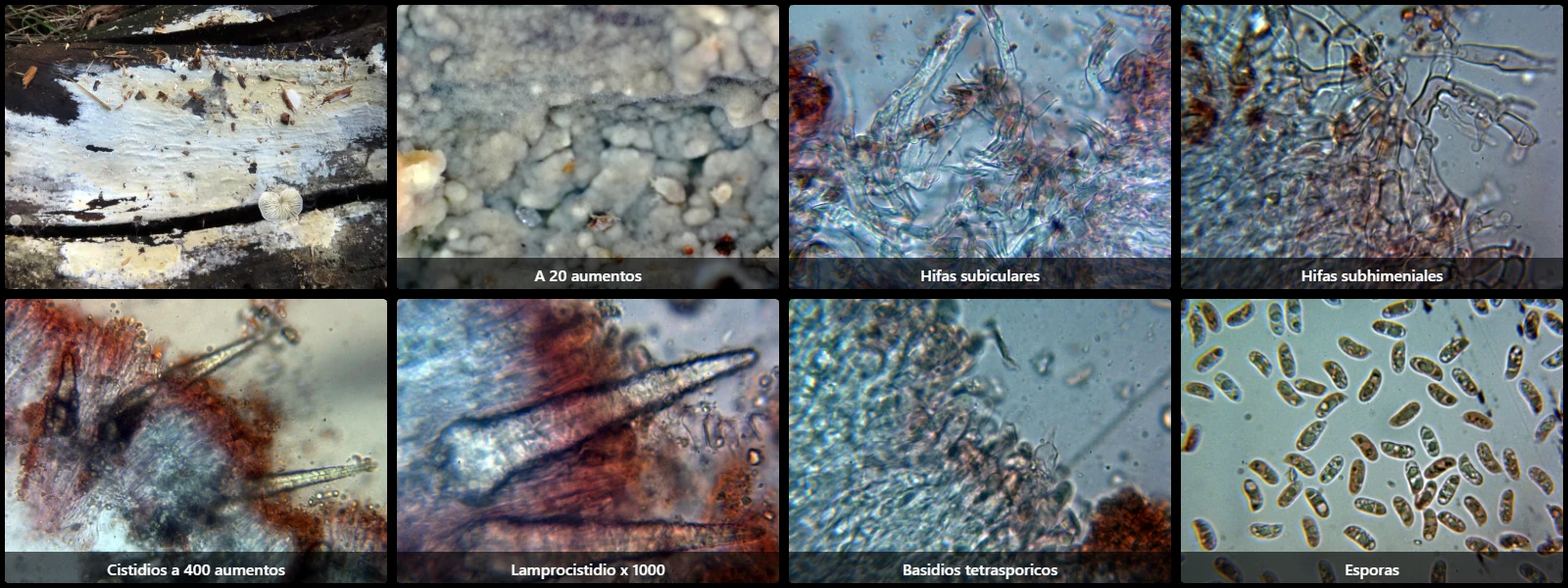
Hyphal system monomitic; subicular hyphae hyaline, thick-walled, 2.5 to 5 µm wide, septate with prominent clamp connections.
Lamprocystidia abundant, fusiform to lageniform, thick-walled, large, 80 to 100 µm long and 12 to 17 µm wide, encrusted with crystals over virtually their entire length (except at the base).
Basidia cylindrical to clavate, hyaline, 25 to 35 µm long, 7 to 9 µm wide, clamped at the base, 4-spored.
Spores cylindrical-ellipsoidal, slightly allantoid, smooth, hyaline, thin-walled, 8 to 11 µm long, 4 to 5 µm wide, with a lateral apiculus at one end, containing granular oily contents inside, inamyloid in Melzer's reagent.
Geographic references
Map generated from global occurrence data from GBIF. GBIF.
Study measurements
Values in Microns (µm)Macroscopic gallery
Microscopic gallery