Peniophorella praetermissa
(P.Karst.) K.H.Larss.
Study description
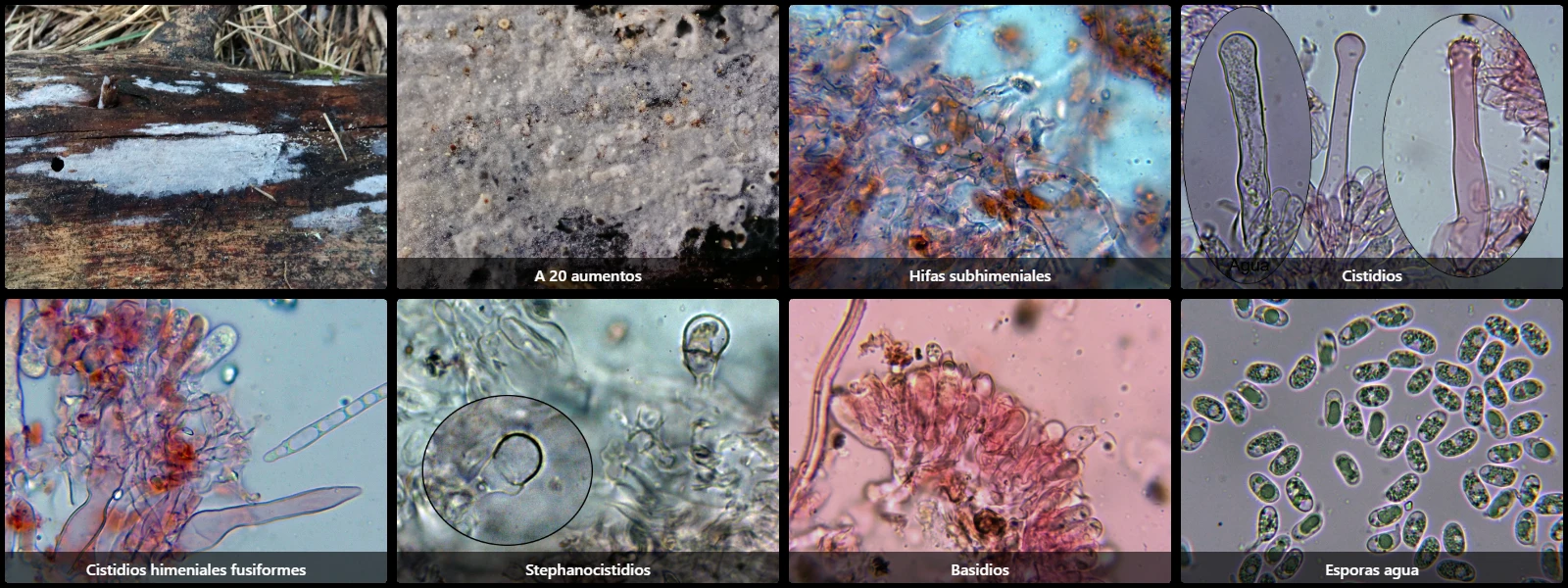
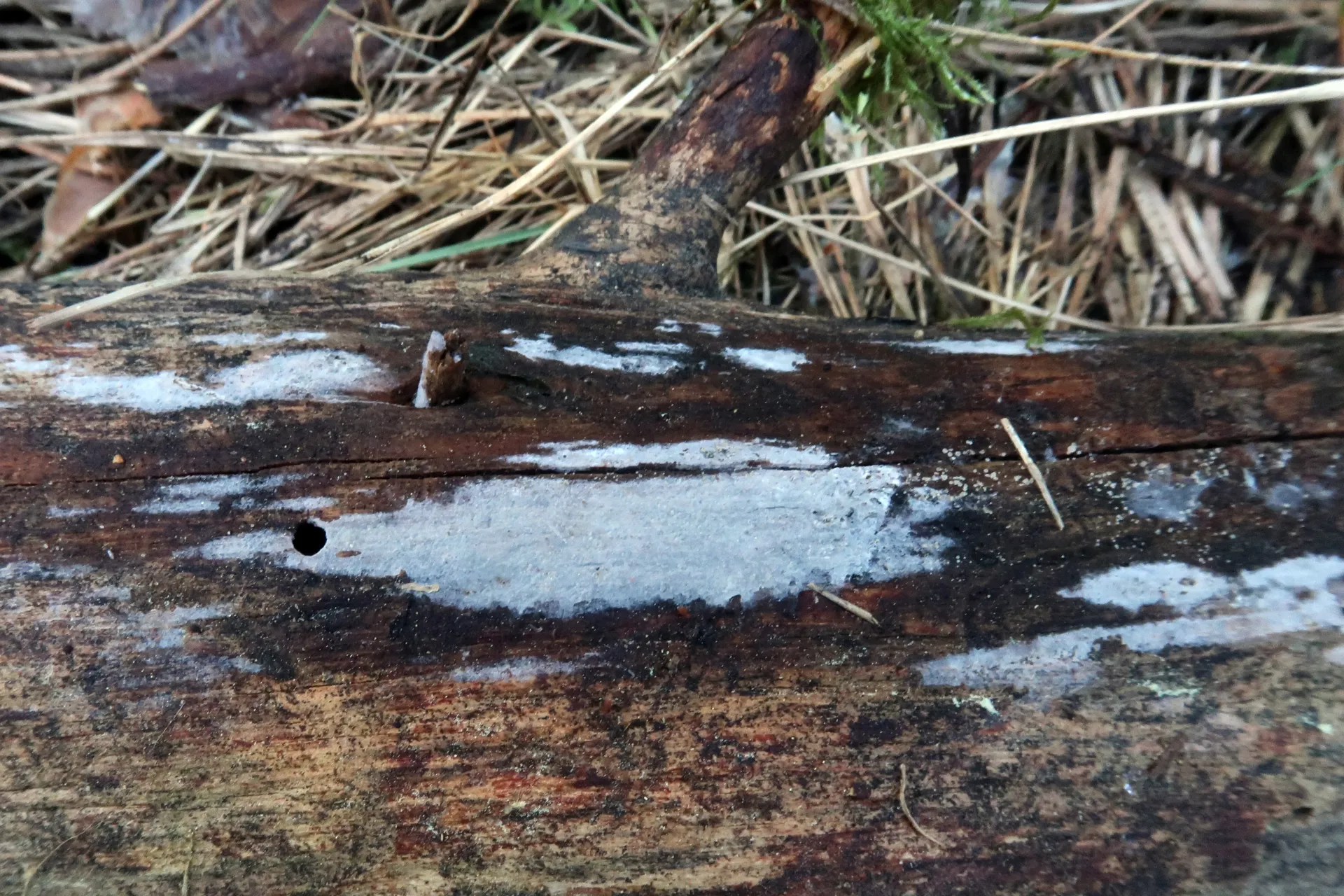
A fairly common species found on decaying wood on the ground, occurring on both conifers and broadleaved trees, with resupinate basidiomata, greyish-white to ochre, smooth to faintly rugose surface, waxy texture, and an indeterminate margin.
Hyphal system monomitic, with only generative hyphae, hyaline, moderately thick-walled, 4 to 6 µm in diameter, septate with clamp connections.
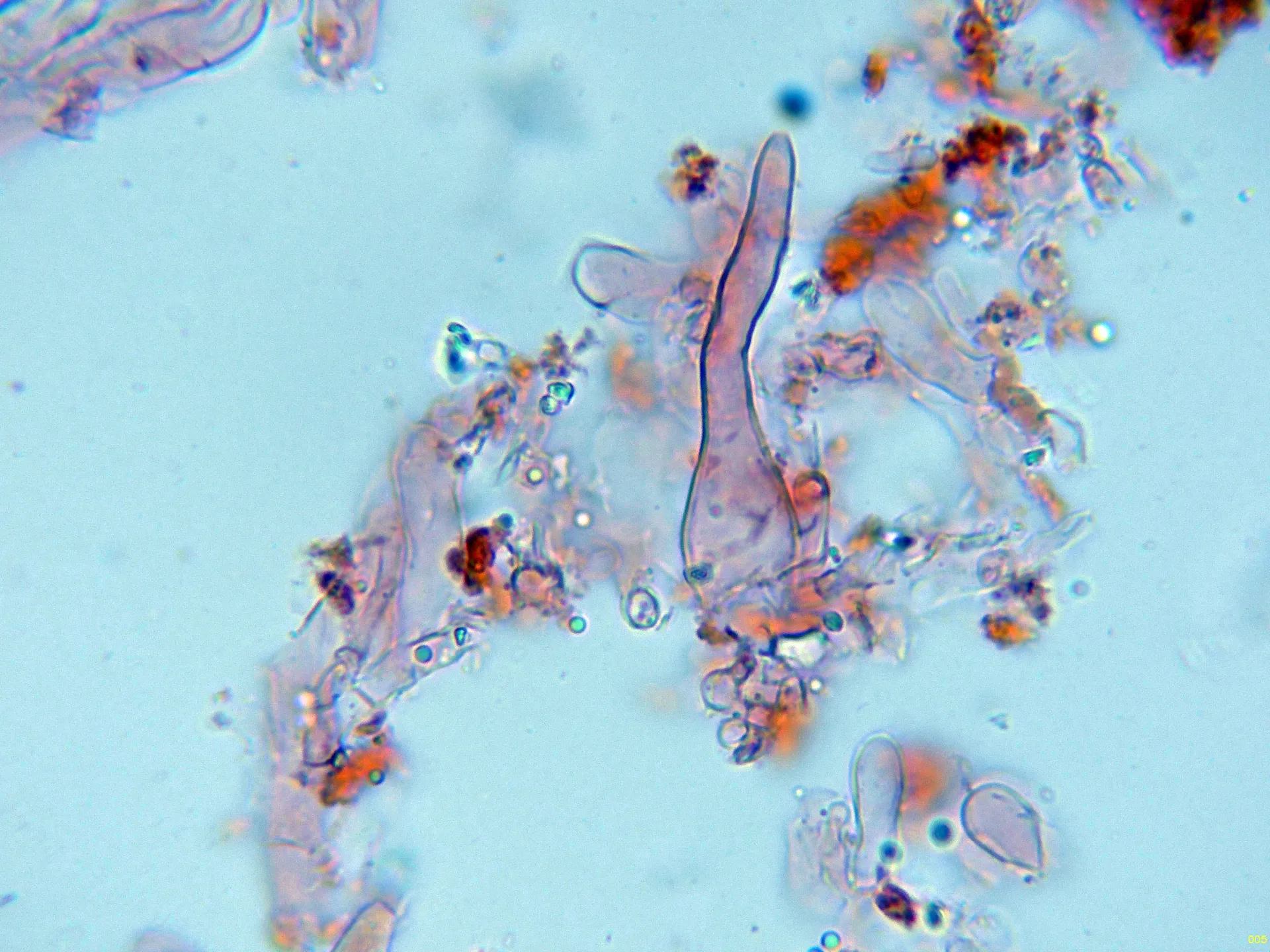
Hymenial cystidia (leptocystidia) cylindrical, subcapitate, 35 to 65 µm long, 7 to 9 µm wide, sometimes bearing an apical amorphous resinous droplet, projecting prominently beyond the basidia.
Deeply embedded in the hymenium are other subfusiform to lageniform cystidia resembling gloeocystidia, empty or with faint granular contents, 60 to 90 µm long, 10 to 14 µm wide, generally not exceeding the basidia.
Subhymenium also contains vesiculose cells resembling stephanocysts, pyriform to clavate, with a denticulate crown/collar that is difficult to observe.
Basidia cylindrical-clavate, 25 to 30 µm long, 6 to 8 µm wide, clamped at the base, 4-spored.
Spores ellipsoidal to oblong, flattened on one side, smooth, hyaline, thin-walled, 9 to 11.5 µm long, 4.5 to 5.5 µm wide, containing lipid droplets (guttules) of varying sizes, inamyloid in Melzer's reagent.
Herbarium material available: JTP2205/24.
Geographic references
Map generated from global occurrence data from GBIF. GBIF.
Study measurements
Values in Microns (µm)Macroscopic gallery
Microscopic gallery