Peniophora quercina
(Pers.) Cooke
Study description
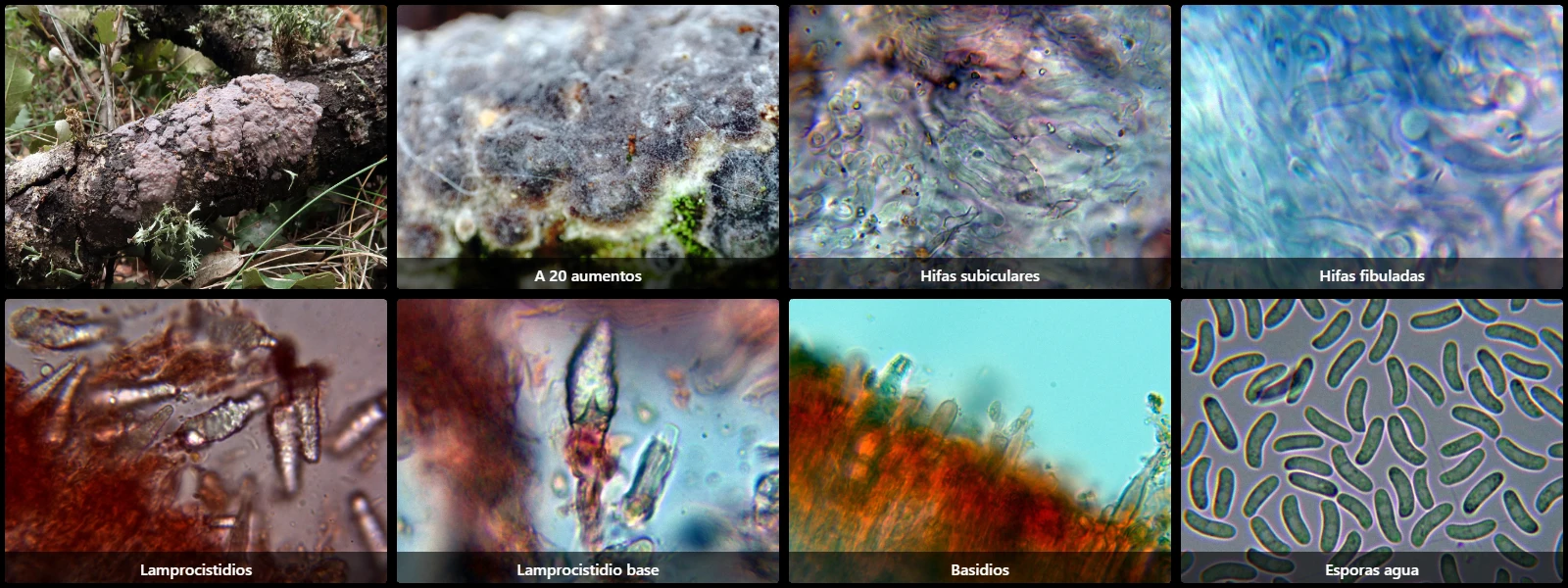
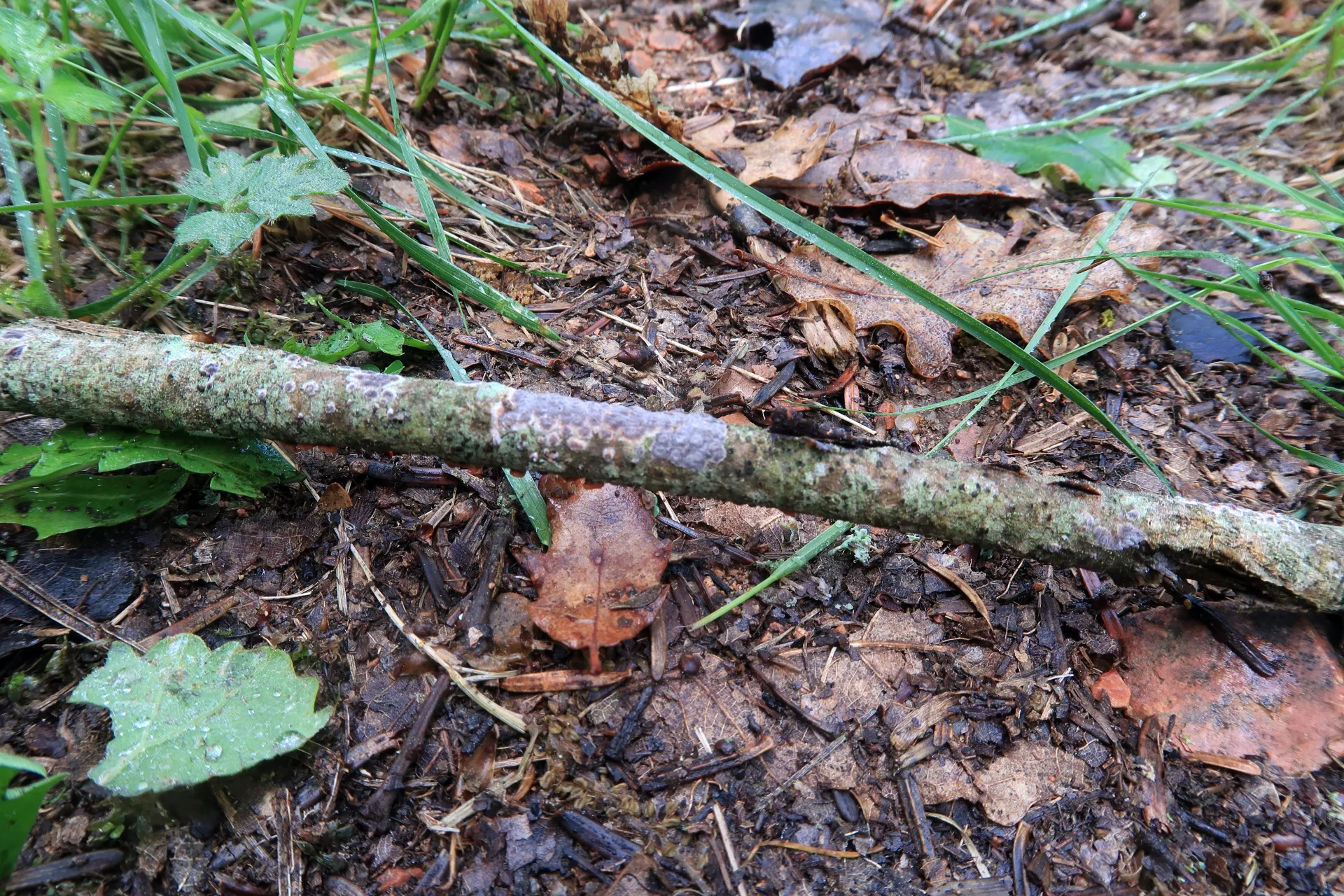
On decaying fallen branches on the ground, especially of Quercus and Fagus, with completely resupinate basidiomata having a smooth to slightly rugose hymenium, striking blue with pronounced violaceous tints, 0.5 to 1 mm thick, and waxy in consistency.
Subicular hyphae filamentous, thick-walled, arranged more or less parallel, 2.5 to 4 µm wide, containing brown intracellular pigment; subhymenial hyphae of similar width, hyaline, thin-walled; both septate with clamp connections.
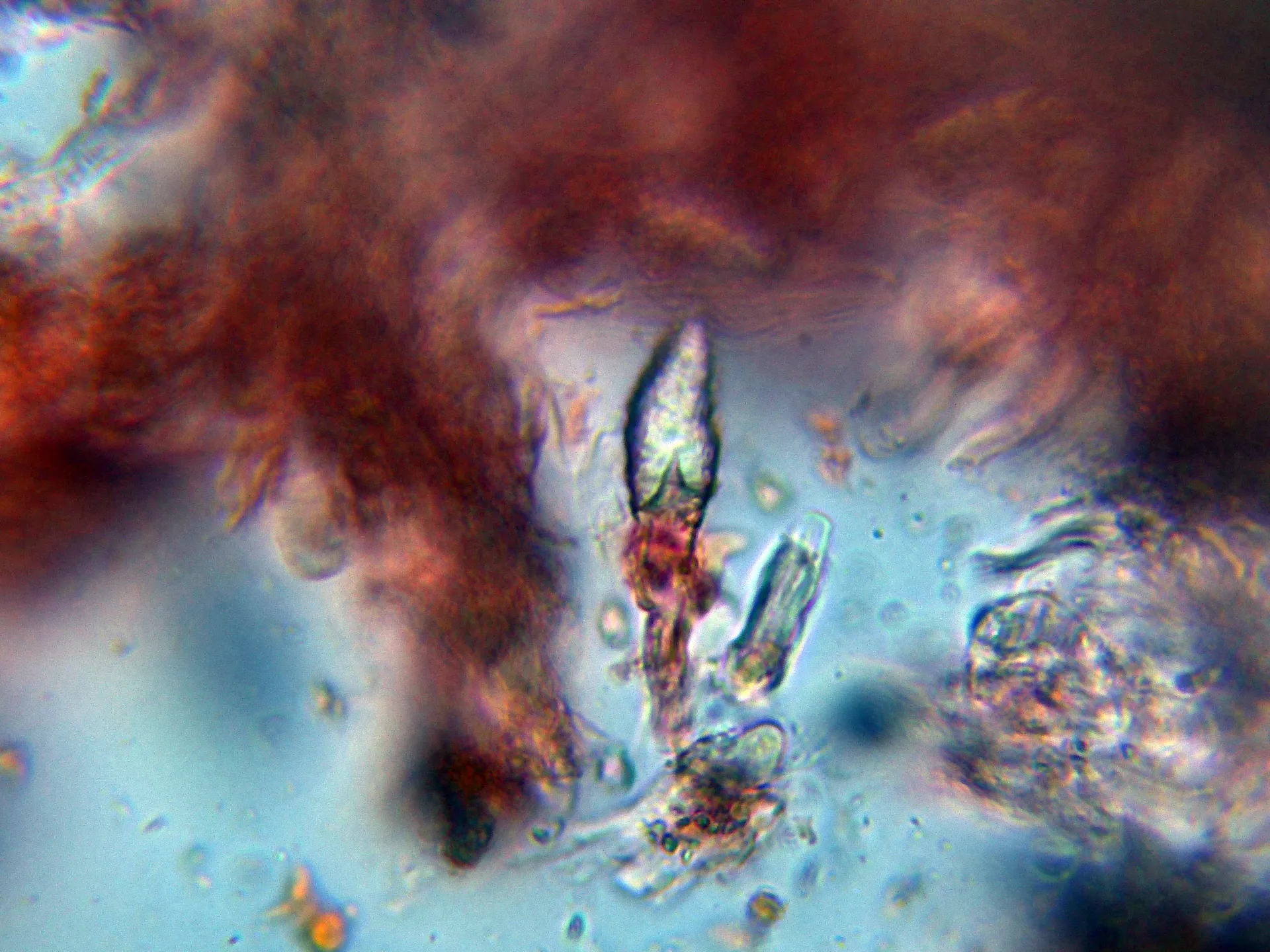
Lamprocystidia very thick-walled, fusiform to clavate, 40 to 50 µm long, 10 to 15 µm wide, with the upper half heavily encrusted with hyaline crystals.
Basidia cylindrical-clavate, 35 to 50 µm long, 5 to 6 µm wide, clamped at the base, 4-spored.
Spores cylindrical to allantoid, smooth, hyaline, thin-walled, 8.5 to 12 µm long, 3 to 4 µm wide, with a lateral apiculus at one end, inamyloid in Melzer's reagent.
Geographic references
Map generated from global occurrence data from GBIF. GBIF.
Study measurements
Values in Microns (µm)Macroscopic gallery
Microscopic gallery