Peniophora pseudoversicolor
Boidin
Study description
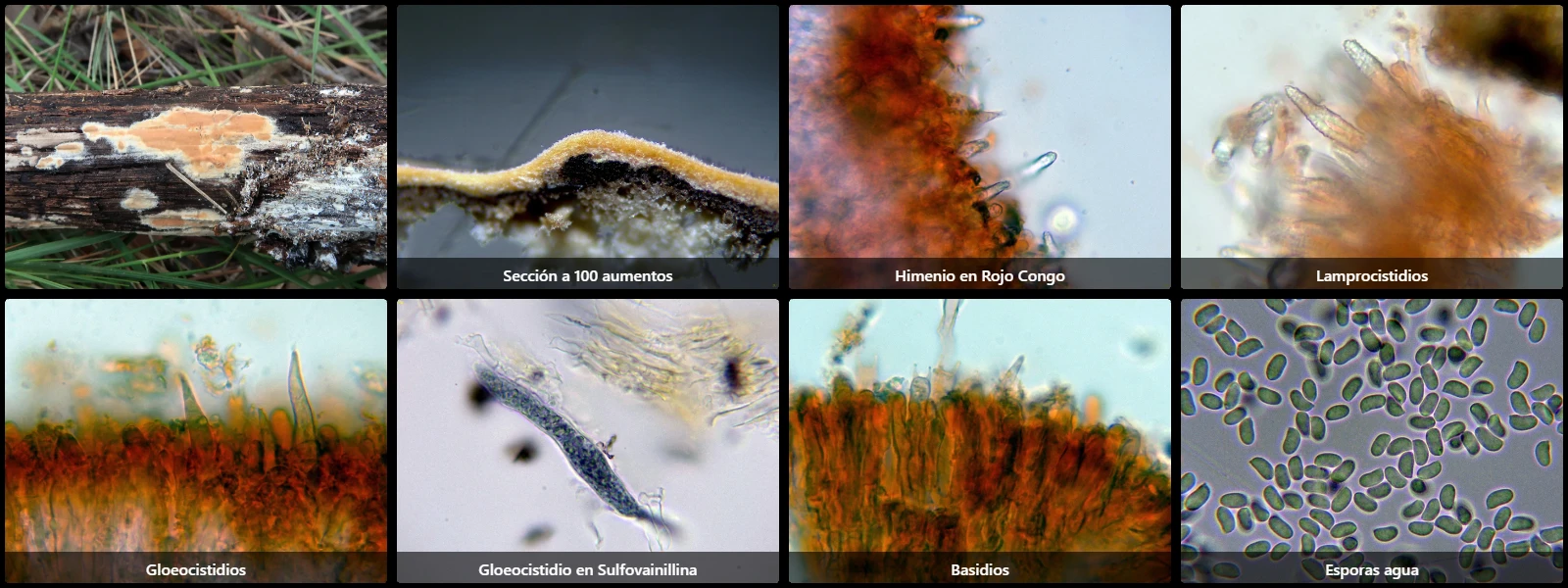
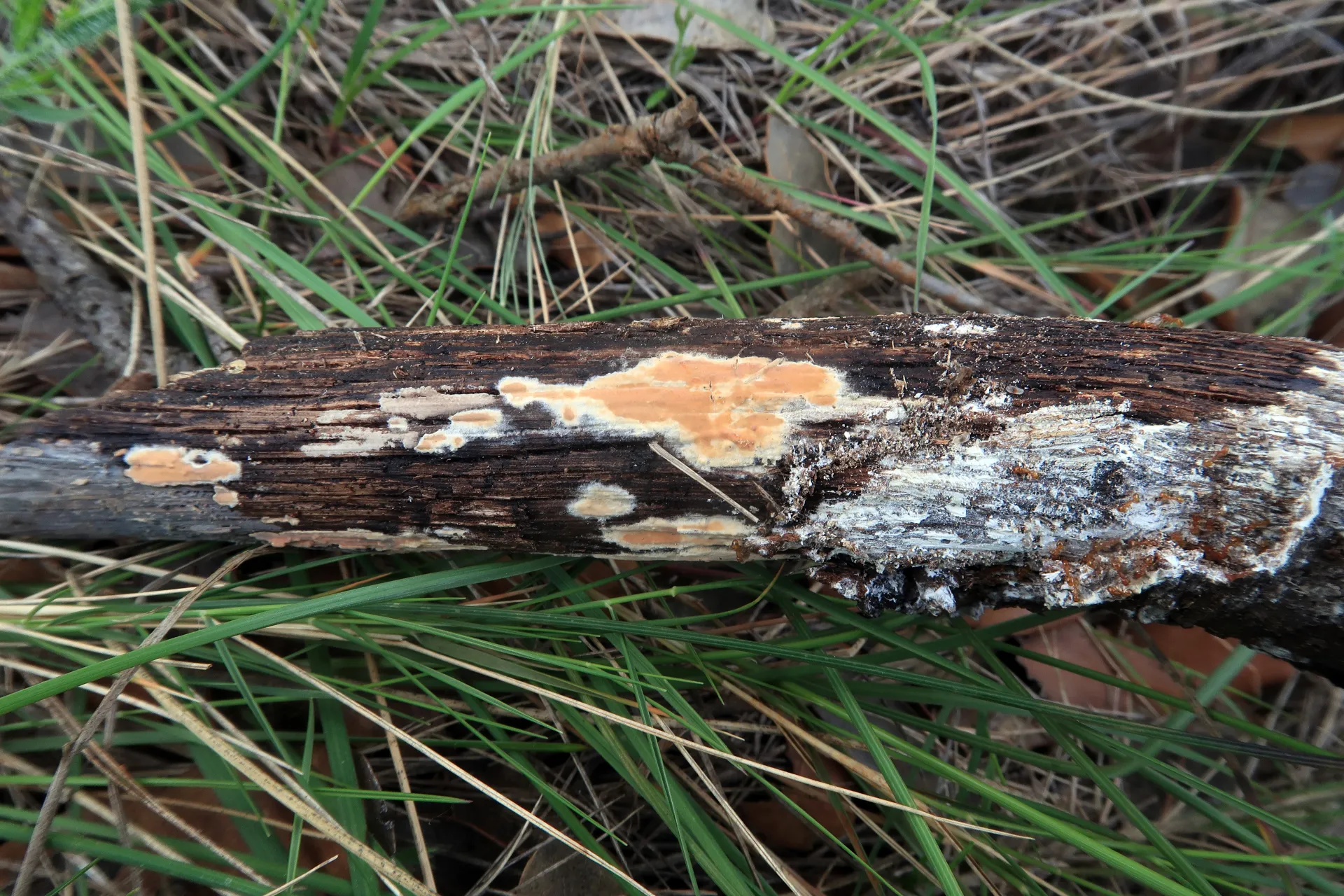
On decaying dead wood on the ground, preferentially on small branches of oak or holm oak (Quercus), with orange basidiomata, smooth to slightly rugose surface, very thin, with a whitish growth margin.
Hyphal system monomitic; hyphae cylindrical, smooth, hyaline, thin-walled, 3 to 5 µm wide, septate with clamp connections.
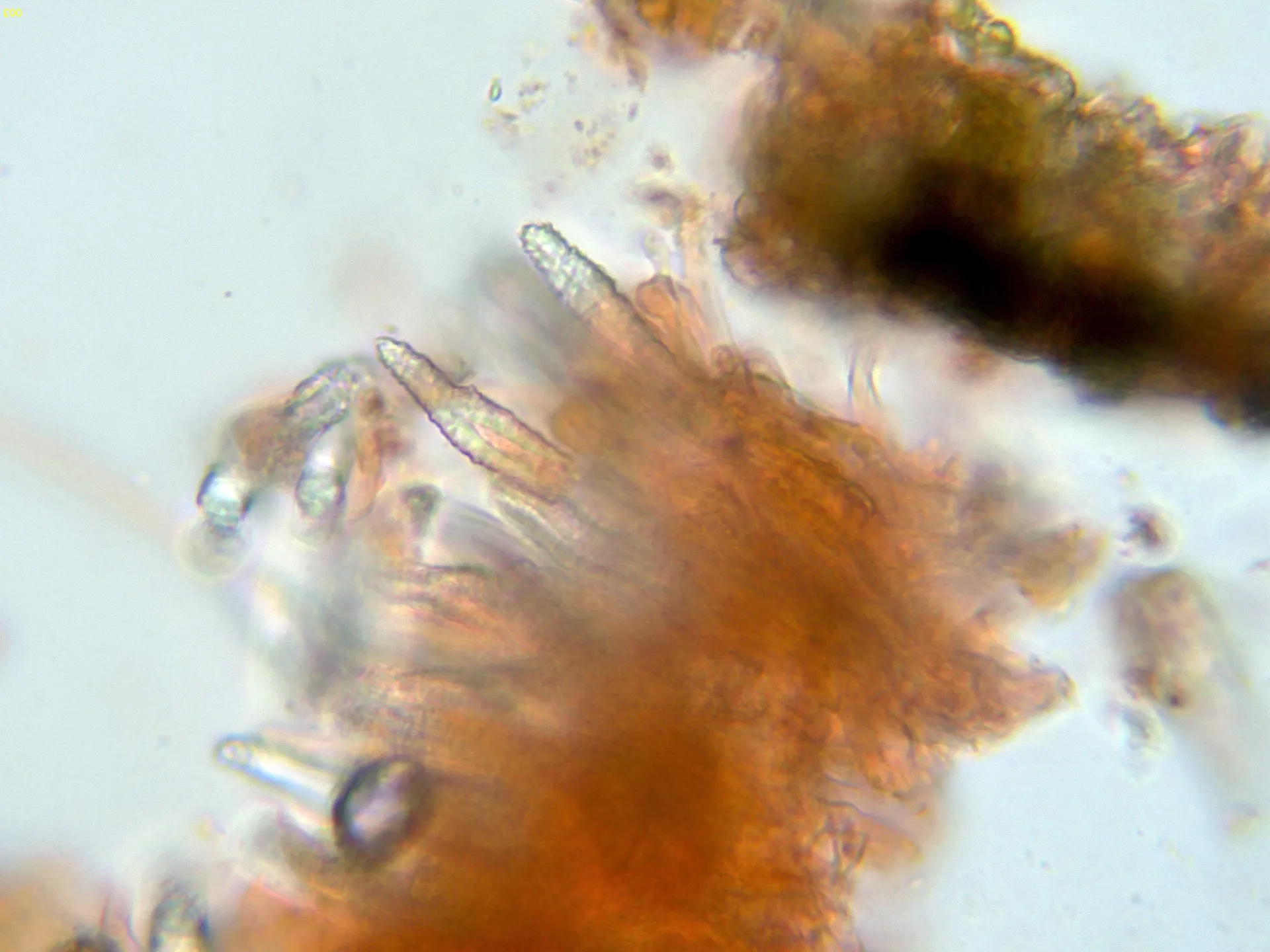
Lamprocystidia (metuloids) abundant, very thick-walled, 35 to 50 µm long, 7 to 9 µm wide, heavily encrusted with crystals over their surface.
Gloeocystidia scattered, deeply embedded in the hymenium, cylindrical to fusiform with a pointed tip, 30 to 90 µm long, 9 to 14 µm wide, with contents darkening noticeably in sulfovanillin.
Basidia cylindrical to slightly clavate, sinuous, 30 to 45 µm long, 4.5 to 6 µm wide, clamped at the base, 4-spored.
Spores cylindrical-ellipsoidal to slightly allantoid, smooth, hyaline, thin-walled, 6.5 to 9 µm long, 3.5 to 4.5 µm wide, with a lateral apiculus at one end, inamyloid in Melzer's reagent.
Herbarium material available: JTP2089/24.
Geographic references
Map generated from global occurrence data from GBIF. GBIF.
Study measurements
Values in Microns (µm)Macroscopic gallery
Microscopic gallery