Peniophora lycii
(Pers.) Höhn. & Litsch.
Study description
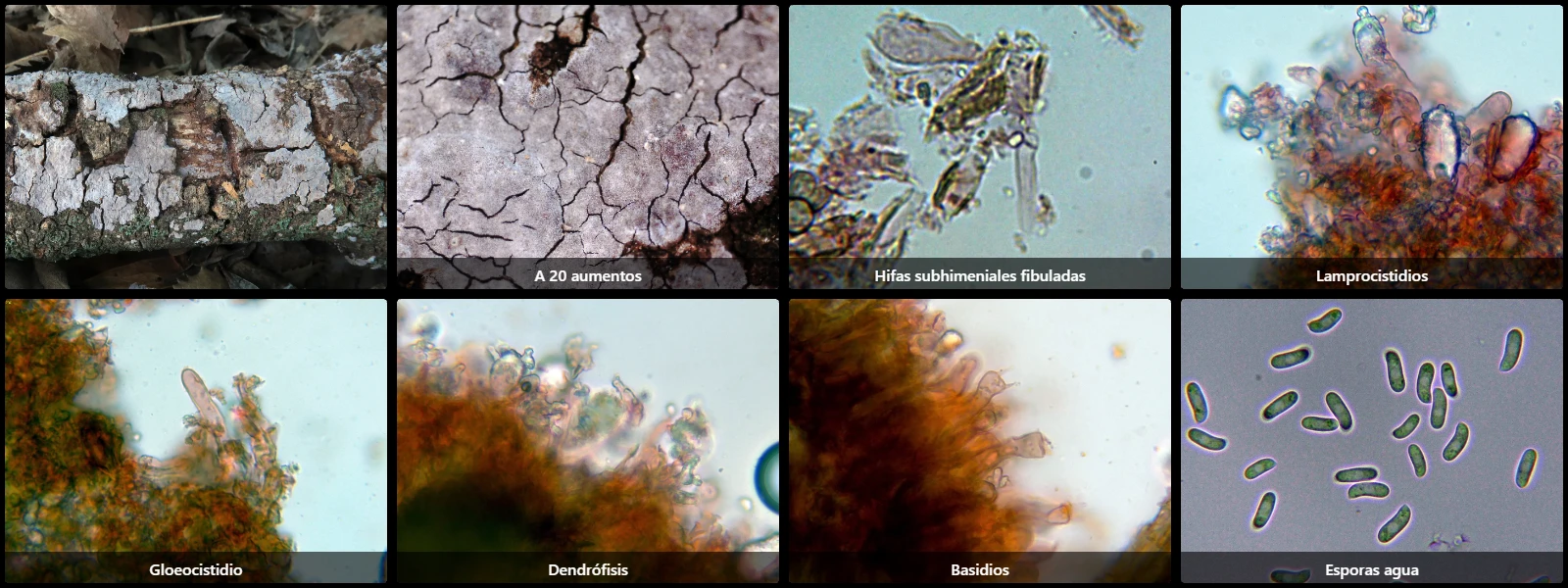
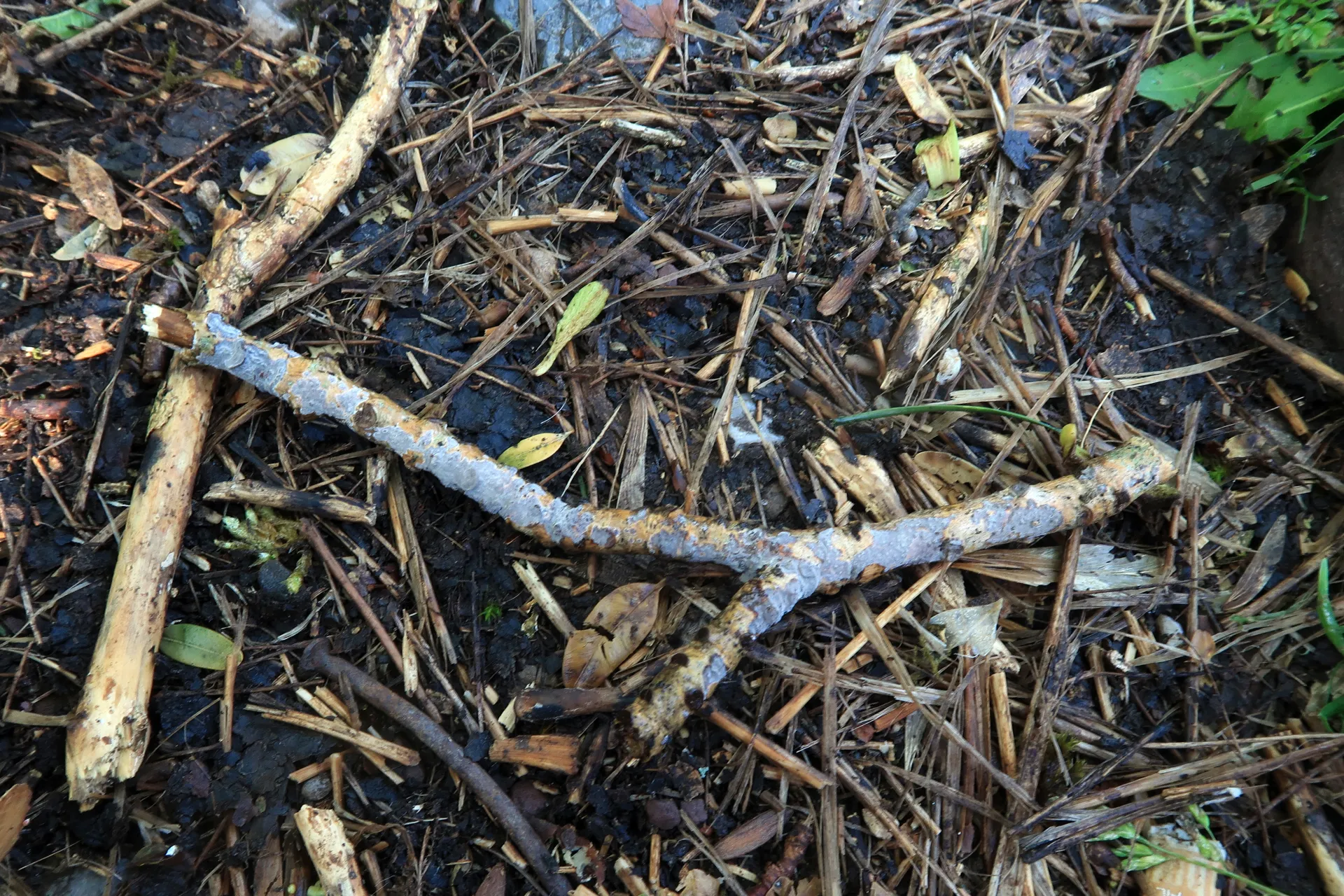
One of the most frequently encountered corticioid species, occurring on the bark of decaying broadleaved branches, with completely resupinate basidiomata 0.1 to 0.2 mm thick, bluish-grey, waxy in texture, becoming cracked upon drying.
Hyphal system monomitic; subhymenial hyphae hyaline, thin- to moderately thick-walled, 3 to 5.5 µm wide; subicular hyphae with pale greyish-brown intracellular pigment; both septate with clamp connections.
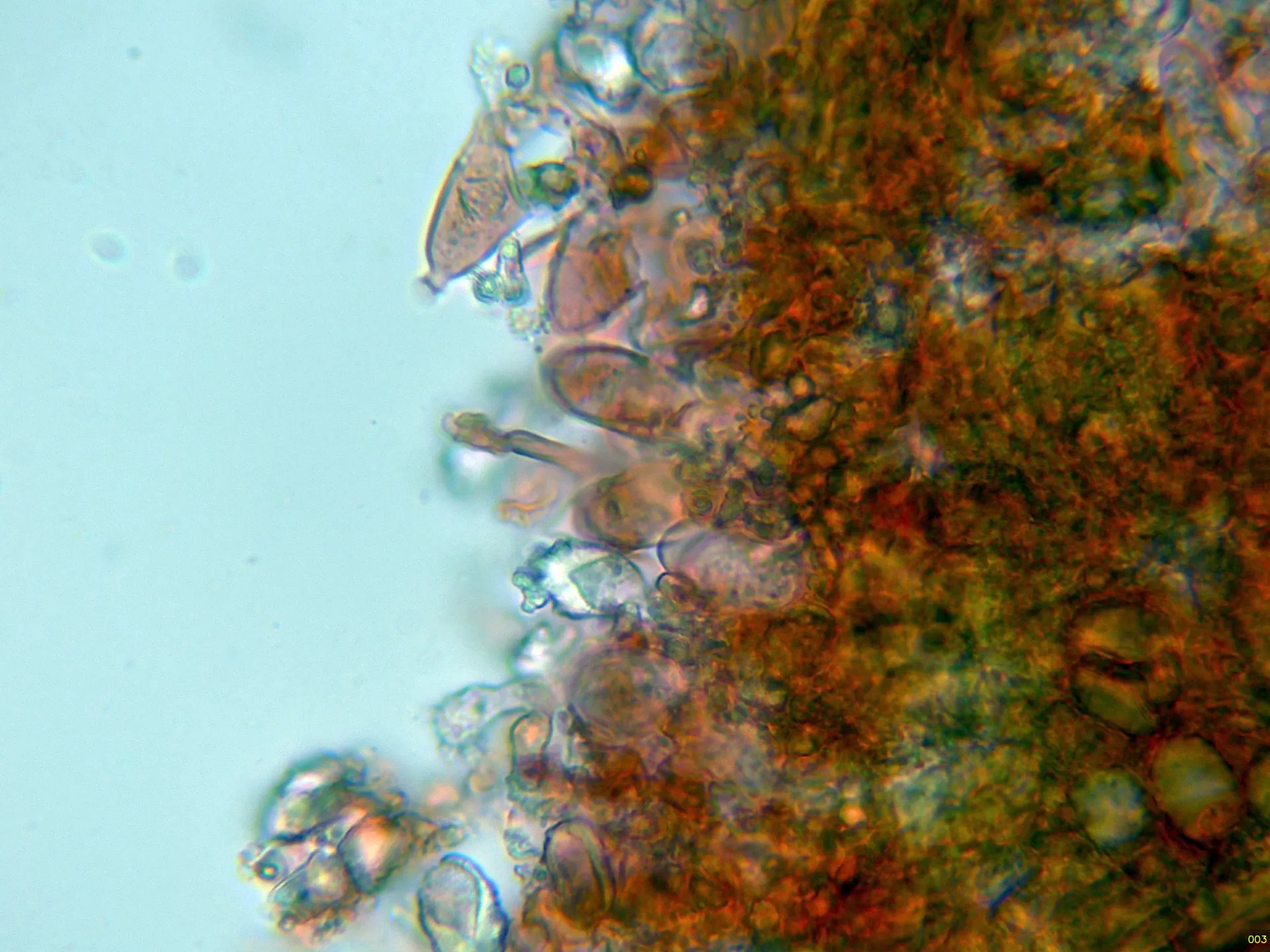
Lamprocystidia cylindrical, pyriform to conical, thick-walled, 15 to 40 µm long, 10 to 18 µm wide, heavily encrusted with crystals in the upper portion.
Gloeocystidia scattered, cylindrical, 60 to 80 µm long and 7 to 9 µm wide.
Dendrohyphidia abundant, profusely branched in an arborescent fashion, their entire surface covered in fine crystals, imparting a pruinose appearance to the basidiome surface.
Basidia subcylindrical to clavate, 25 to 35 µm long, 5 to 7 µm wide, clamped at the base, 4-spored.
Spores cylindrical to allantoid, smooth, hyaline, thin-walled, 9.5 to 12 µm long, 3.5 to 4.5 µm wide, with a lateral apiculus at one end, inamyloid in Melzer's reagent.
Herbarium material available: JTP2114/24 and JTP2424/25.
Geographic references
Map generated from global occurrence data from GBIF. GBIF.
Study measurements
Values in Microns (µm)Macroscopic gallery
Microscopic gallery