


Peniophora ericina
Bourdot
Study description
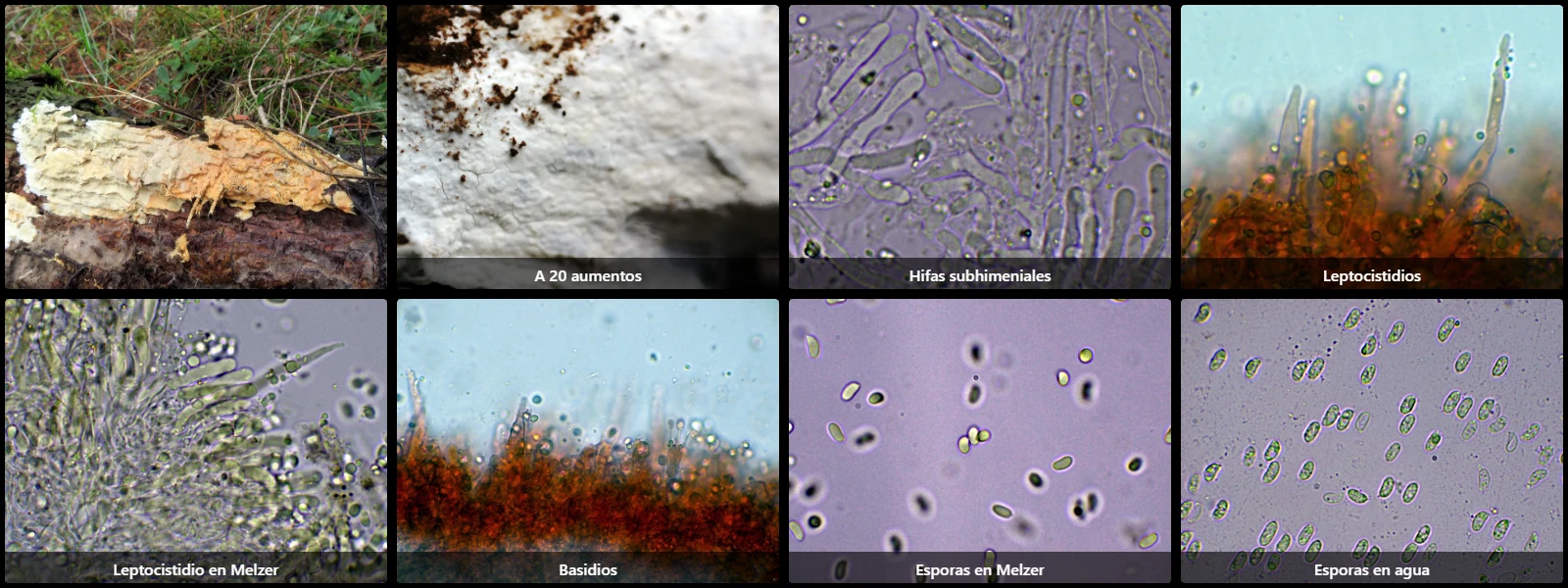
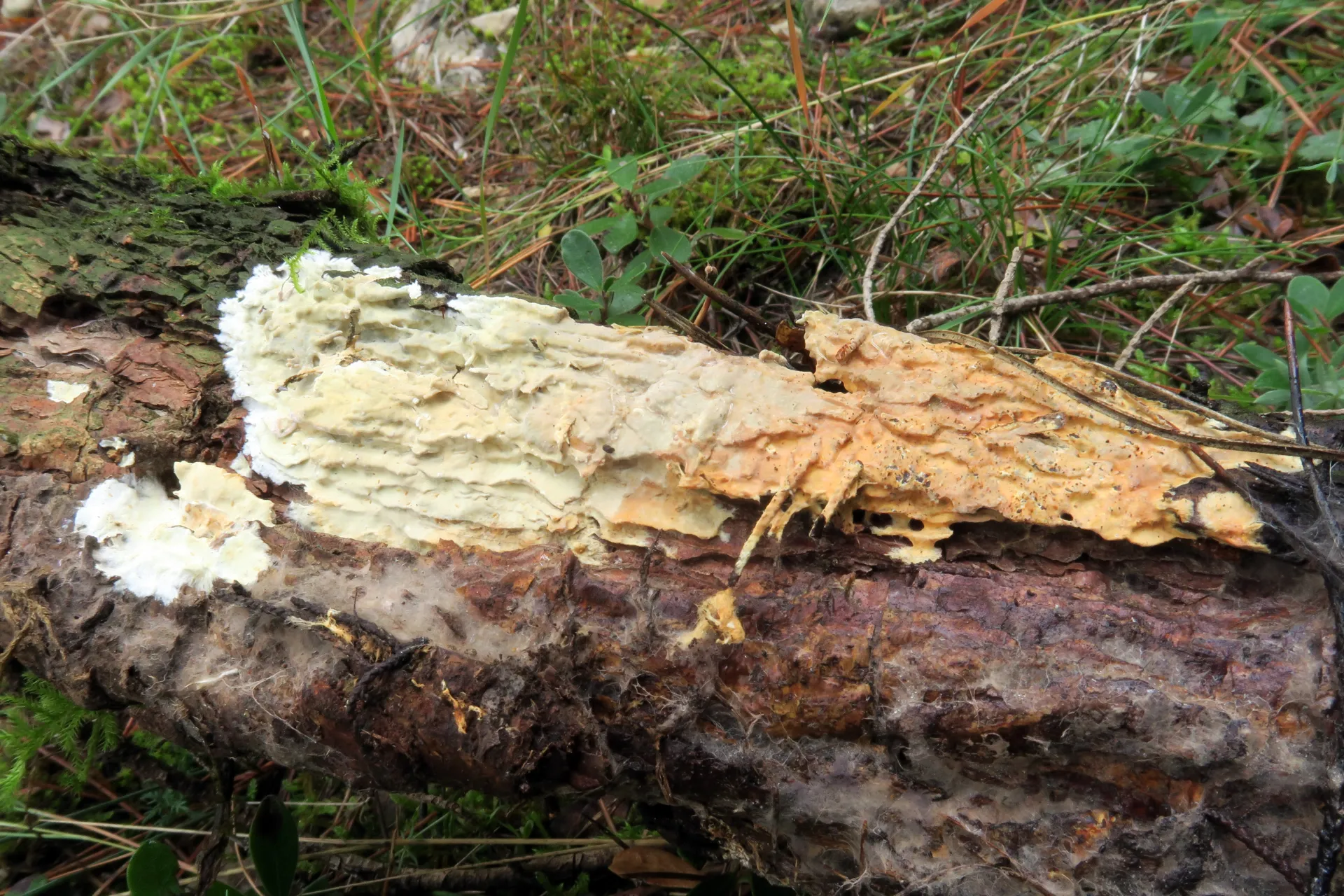
Formerly known as Phanerochaete ericina, its specific epithet refers to its association with shrubs of the Ericaceae family, fruiting on decaying wood on the ground, with resupinate basidiomata having a smooth surface, white to cream, tightly adnate to the bark or wood of the host, waxy in consistency.
Subicular hyphae arranged parallel to the substrate, hyaline, slightly thick-walled, 4 to 6 µm wide, simple-septate.
Subhymenial hyphae hyaline, thin-walled, densely interwoven, 2 to 3.5 µm wide, with short cells, without clamp connections.
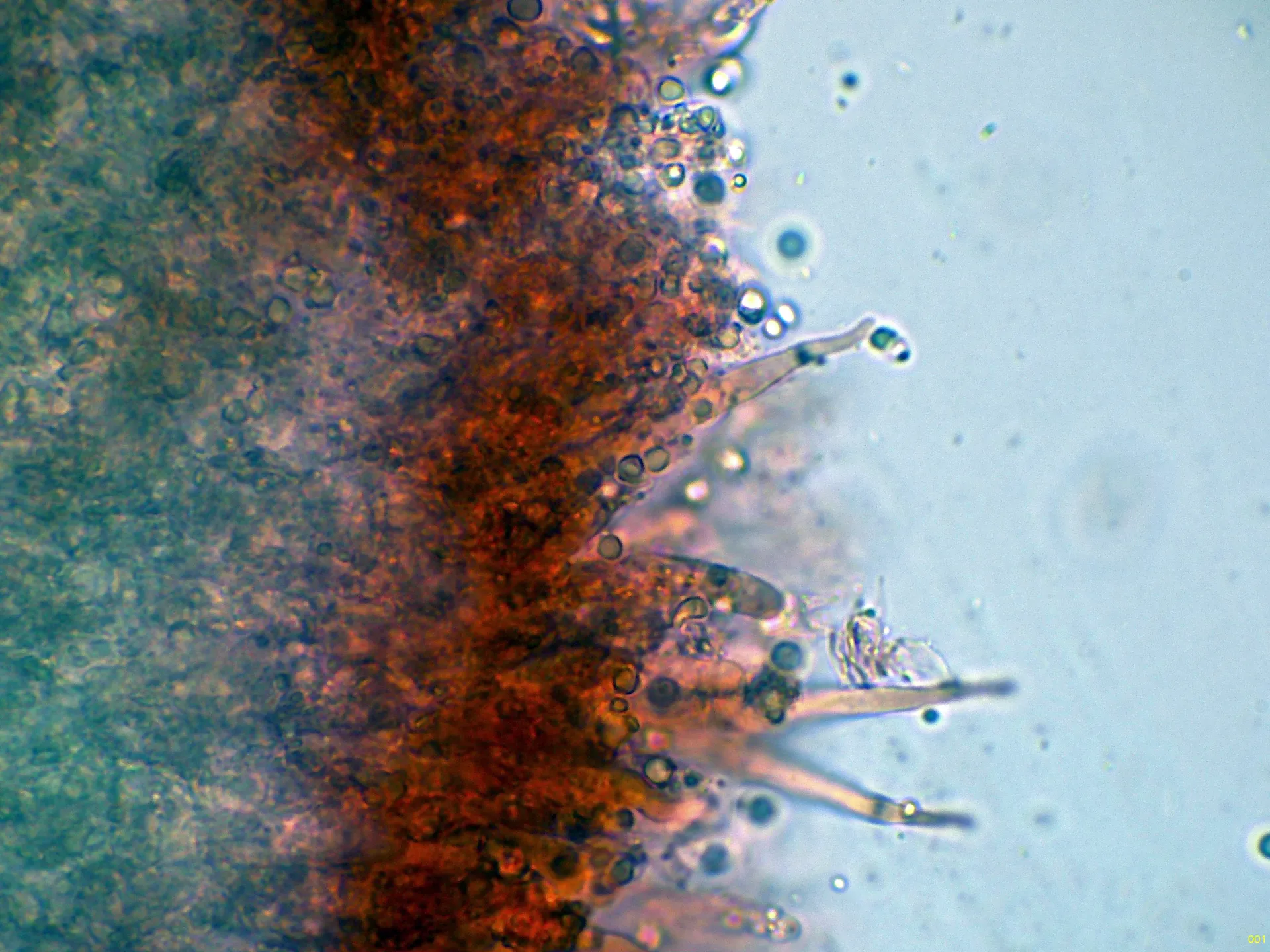
Leptocystidia abundant, cylindrical to subfusiform, unencrusted, 35 to 55 µm long, 4 to 5.5 µm wide, projecting beyond the basidia.
Basidia cylindrical to clavate, 25 to 35 µm long, 4 to 6 µm wide, simple-septate at the base, 4-spored.
Spores cylindrical-ellipsoidal, smooth, hyaline, thin-walled, 5.5 to 7 µm long, 2.5 to 3.5 µm wide, with a tapered apicular end, containing lipid guttules inside, inamyloid in Melzer's reagent.
Herbarium material available: JTP2752/25.
Geographic references
Map generated from global occurrence data from GBIF. GBIF.
Study measurements
Values in Microns (µm)Macroscopic gallery
Microscopic gallery
Genetic / Phylogenetic Study
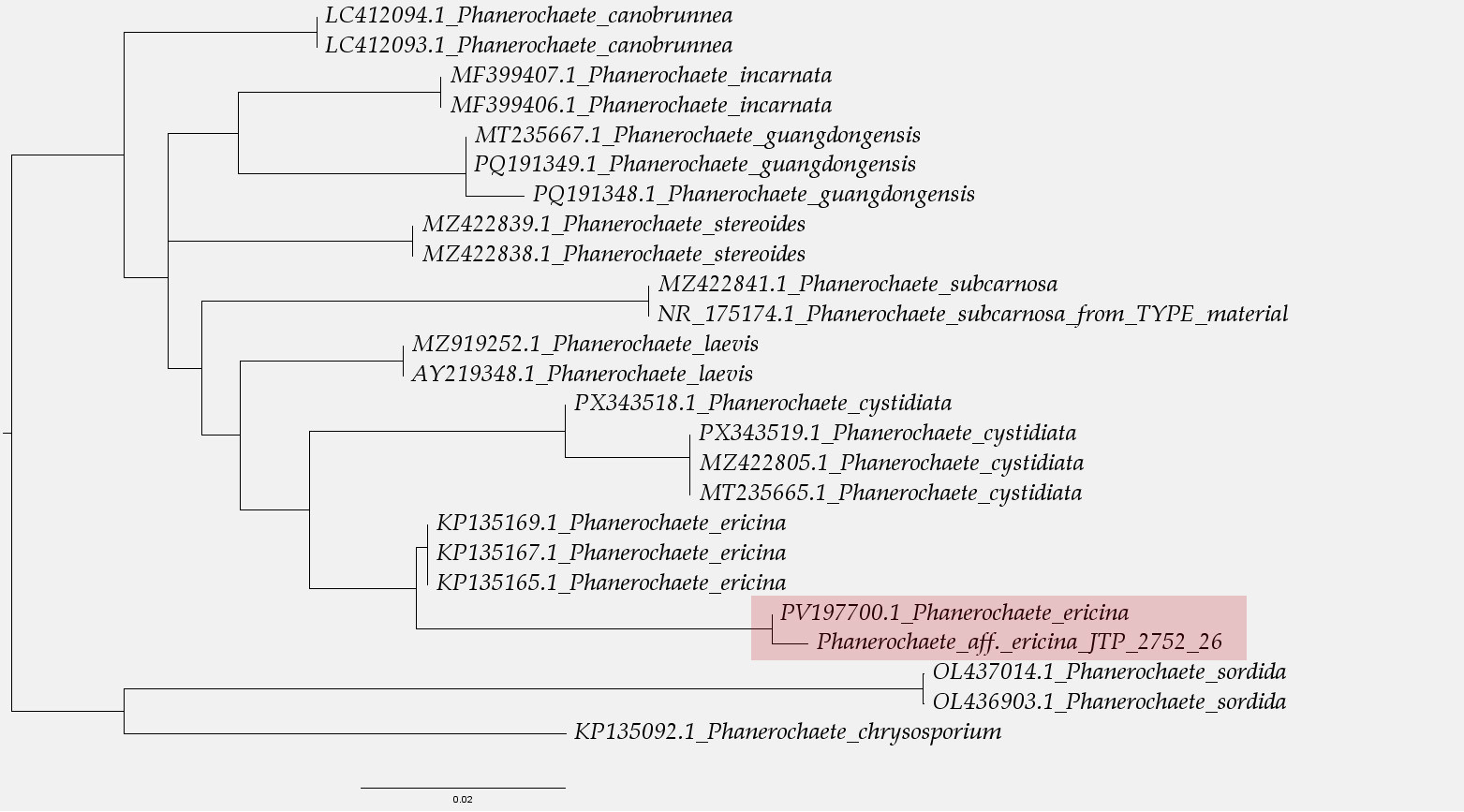
Phylogenetic Tree
Sequences and Data
Sequencing (Chromatogram)
Select a file to visualize the chromatogram