Paraxerula caussei
(Maire) R.H.Petersen
Study description
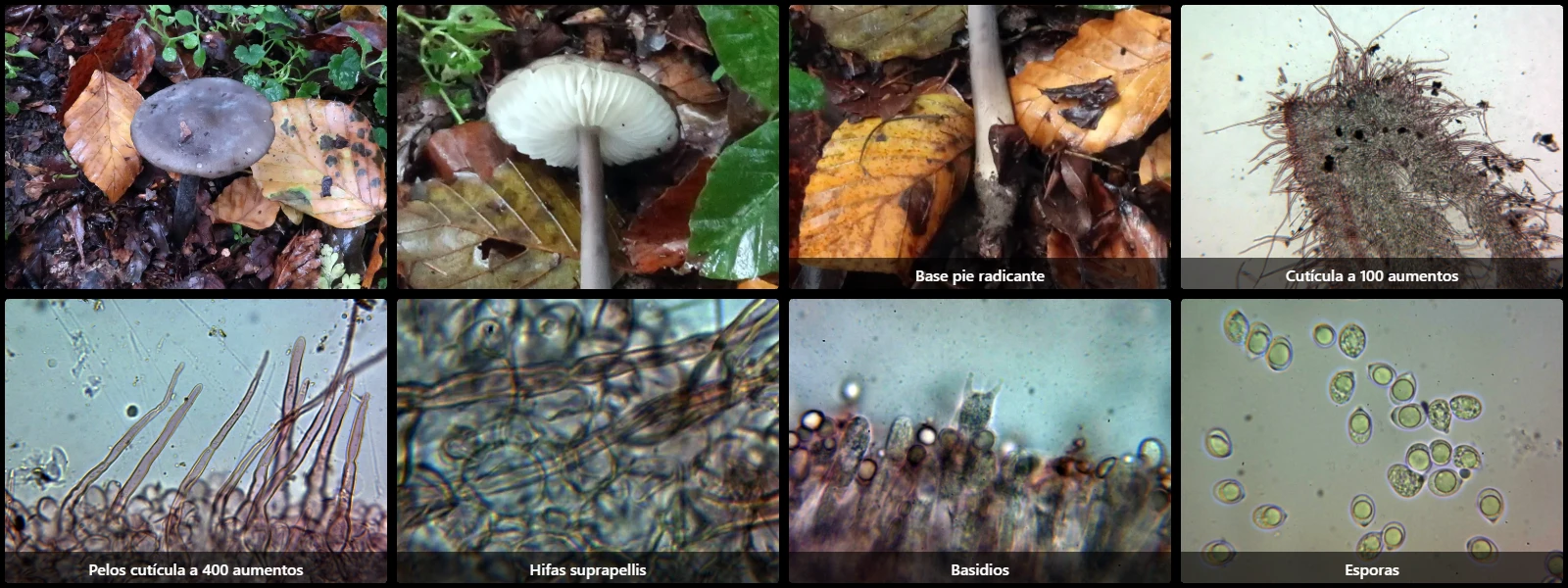
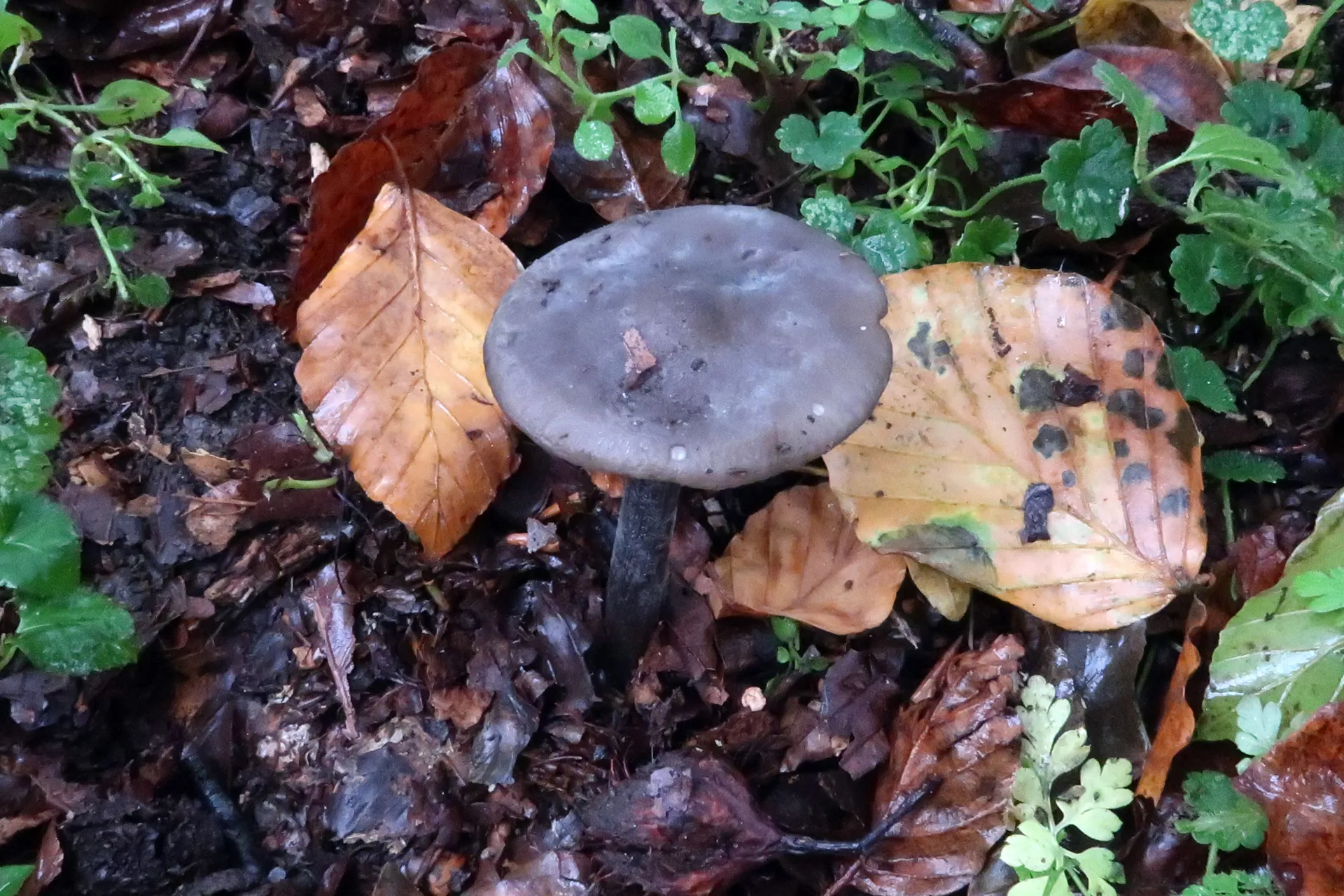
Formerly known as Xerula nigra, an uncommon species strictly associated with beechwoods (Fagus sylvatica), with a conical to flattened pileus retaining an obtuse umbo, 3 to 8 cm across, greyish-brown with bluish tints, distant ventricose white lamellae, and a cylindrical stipe concolorous with the cap, gradually expanding toward the base and extending into a long rooting pseudorrhiza deep into the ground.
Pileipellis a hymeniderm of subglobose, pyriform to clavate cells 25 to 50 µm long and 15 to 25 µm wide, interspersed with very abundant, elongated pileosetae 150 to 250 µm long, swollen at the base (10 to 20 µm wide), hyaline with tapered tips.
Cheilocystidia and pleurocystidia not observed; according to literature subcylindrical, clavate to utriform, 50 to 90 µm long and 12 to 25 µm wide.
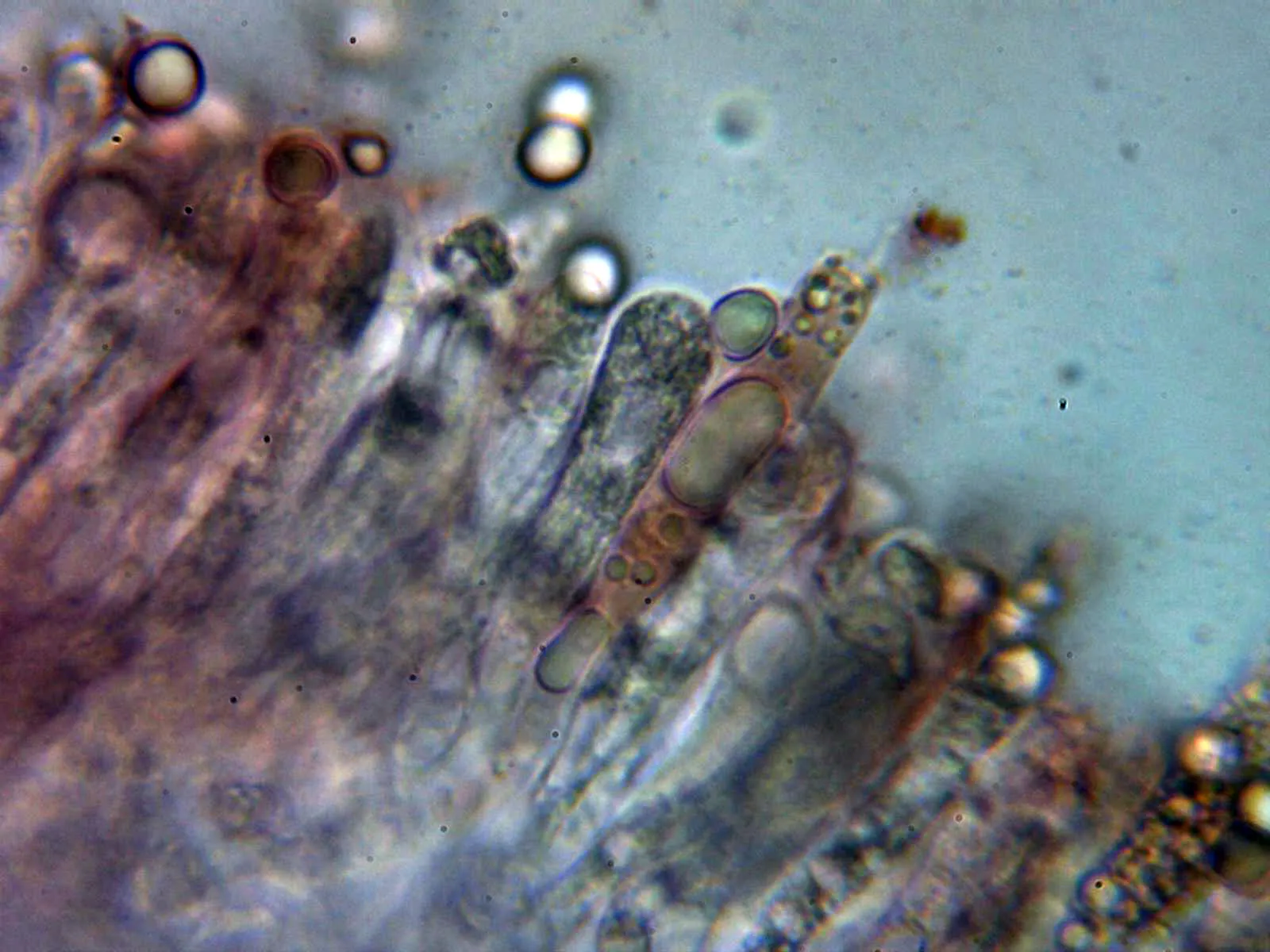
Basidia clavate, 45 to 65 µm long, 10 to 14 µm wide, clamped at the base, 4-spored.
Spores ellipsoidal to slightly amygdaliform, smooth, hyaline, thin-walled, with a pointed apicular end, 8.5 to 12 µm long, 6.5 to 8.5 µm wide, containing one or several oil guttules, inamyloid in Melzer's reagent.
Geographic references
Map generated from global occurrence data from GBIF. GBIF.
Study measurements
Values in Microns (µm)Macroscopic gallery
Microscopic gallery