Parasola plicatilis
(Curtis) Redhead, Vilgalys & Hopple
Study description
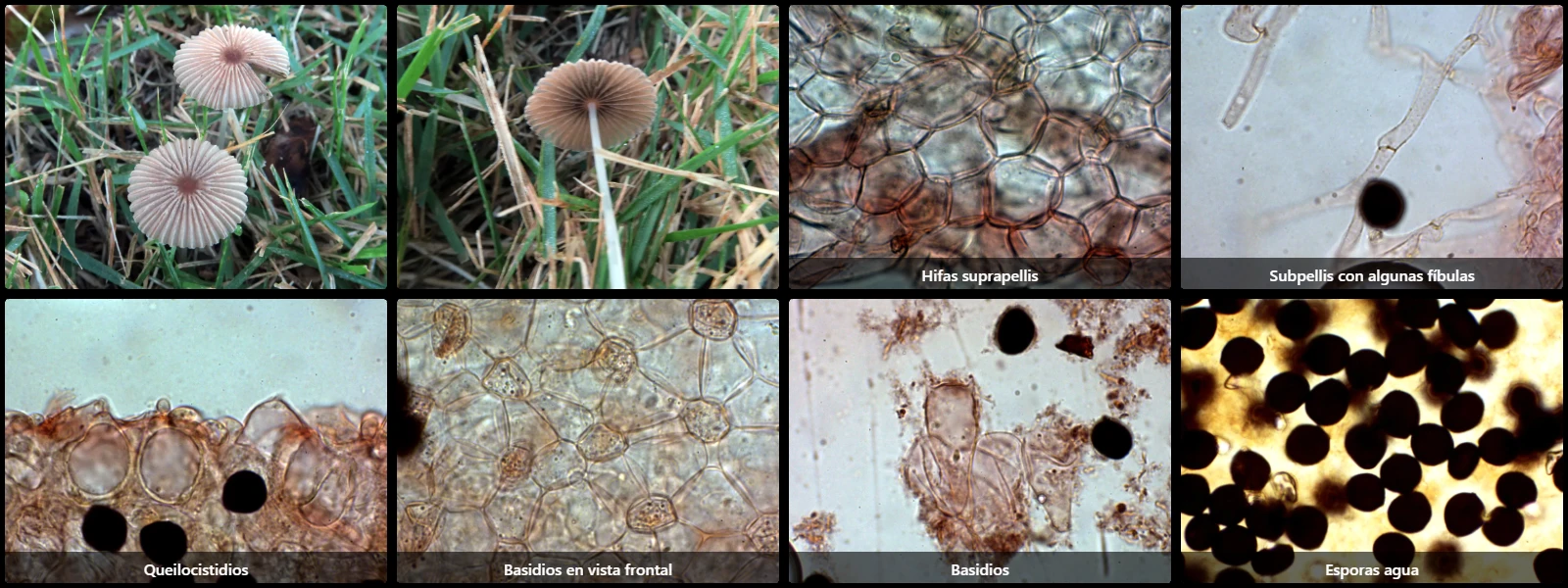
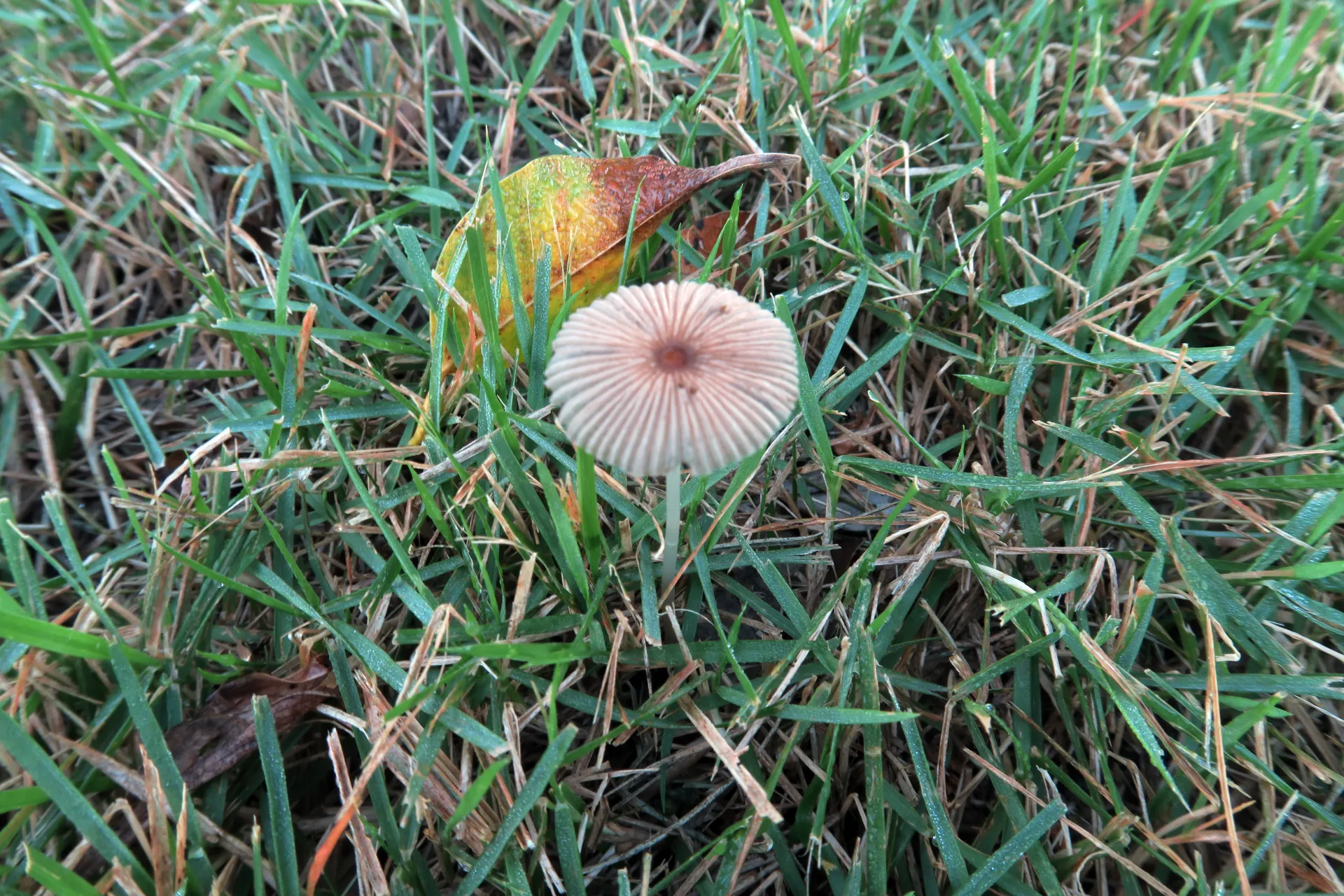
Species growing among grass in lawns, meadows, forest entrances, or path margins, with a convex to flattened pileus 1 to 2.8 cm across, reddish-brown at the disc and greyish with reddish tinges elsewhere, radially plicate-translucent, free lamellae separated from the stipe by a collarium, and a cylindrical, hollow, fragile whitish stipe slightly tapered toward the apex.
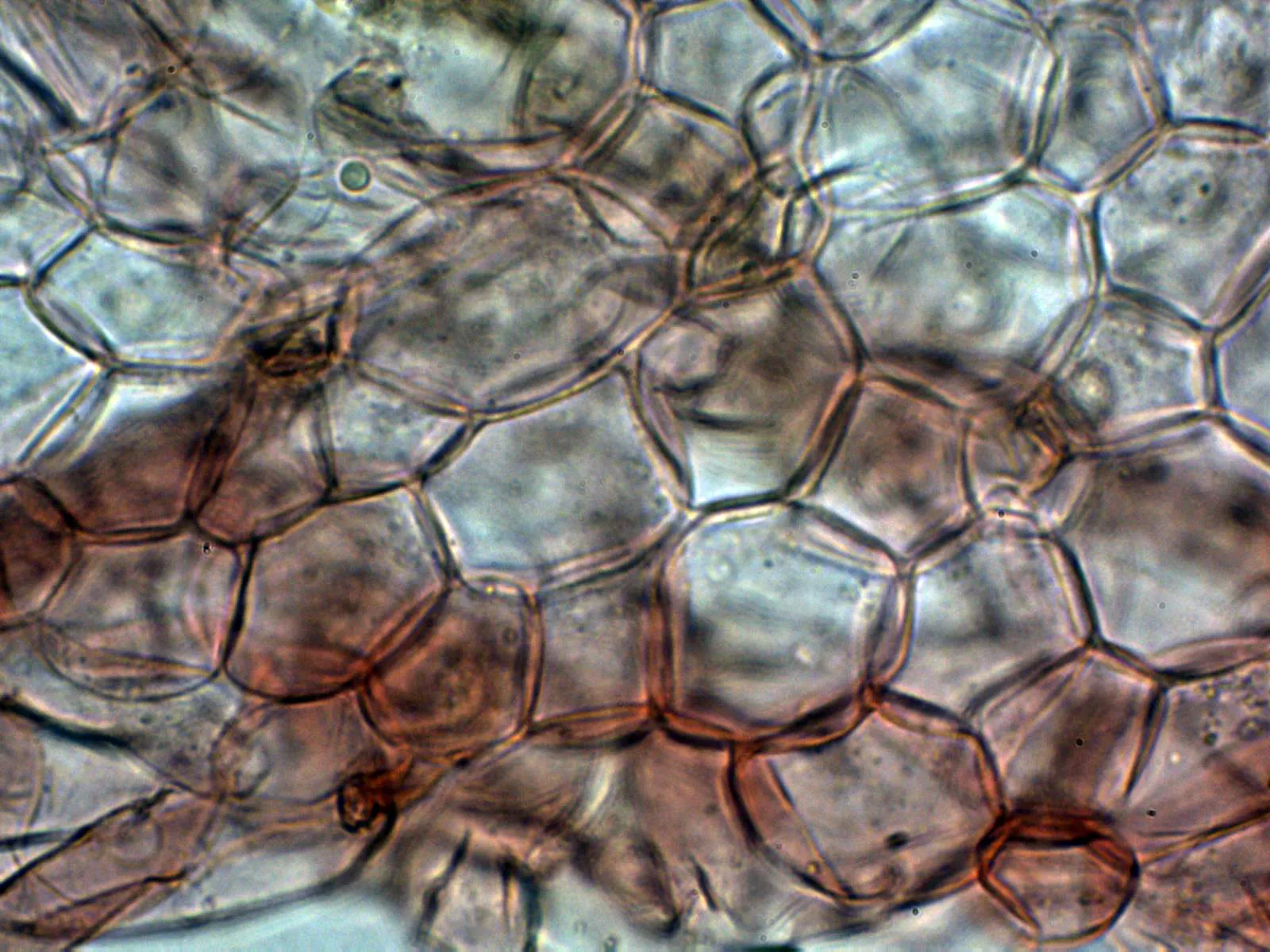
Pileipellis composed of spherical to vesiculose cells, hyaline or containing only very faint pale brown intracellular pigment, 25 to 40 µm long and 15 to 25 µm wide.
Cheilocystidia cylindrical to vesiculose, 30 to 55 µm long and 20 to 25 µm wide. Pleurocystidia not observed; according to literature, cylindrical to ventricose, 70 to 120 µm long and 20 to 35 µm wide.
Basidia clavate, 25 to 40 µm long, 10 to 16 µm wide, simple-septate at the base (unclamped), 4-spored.
Spores lentiform to mitriform (heart- or rounded-triangular-shaped in front view), smooth-walled, dark reddish-brown under the microscope, 10 to 12.5 µm long, 6 to 9 µm wide, with an indistinct apiculus at one pole and an apical germ pore at the opposite pole.
Geographic references
Map generated from global occurrence data from GBIF. GBIF.
Study measurements
Values in Microns (µm)Macroscopic gallery
Microscopic gallery