Parasola hercules
(Uljé & Bas) Redhead, Vilgalys & Hopple
Study description
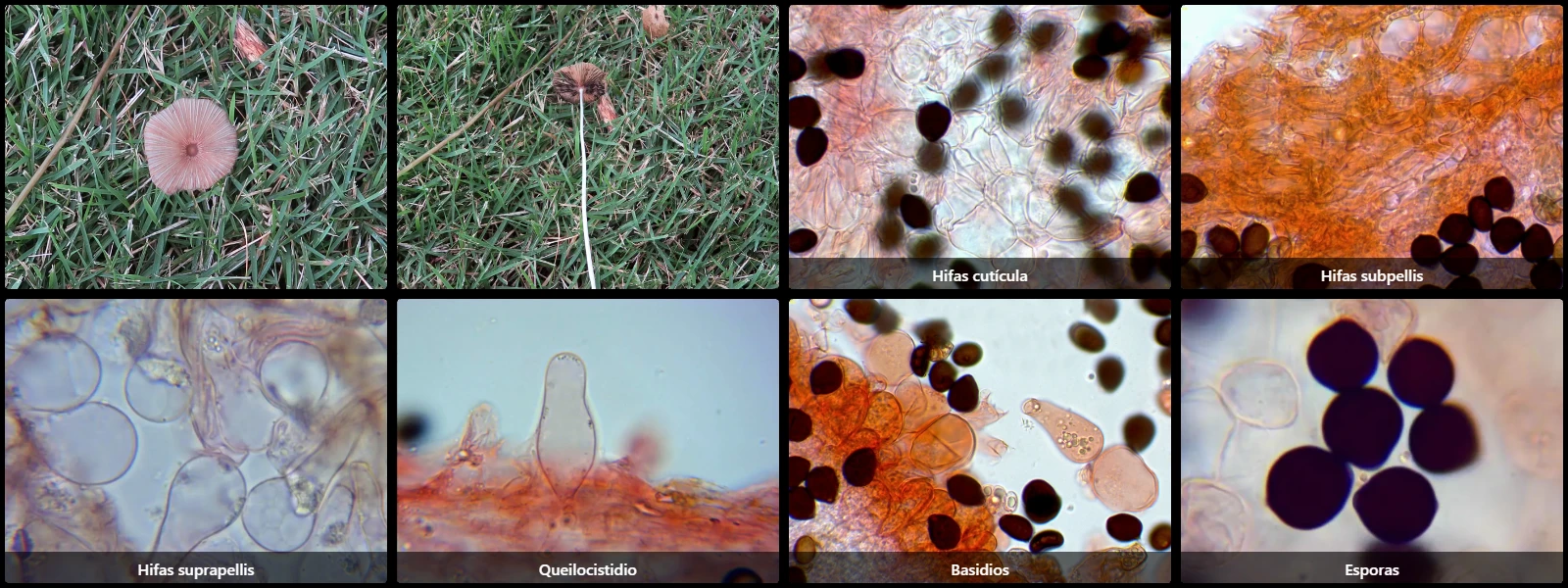
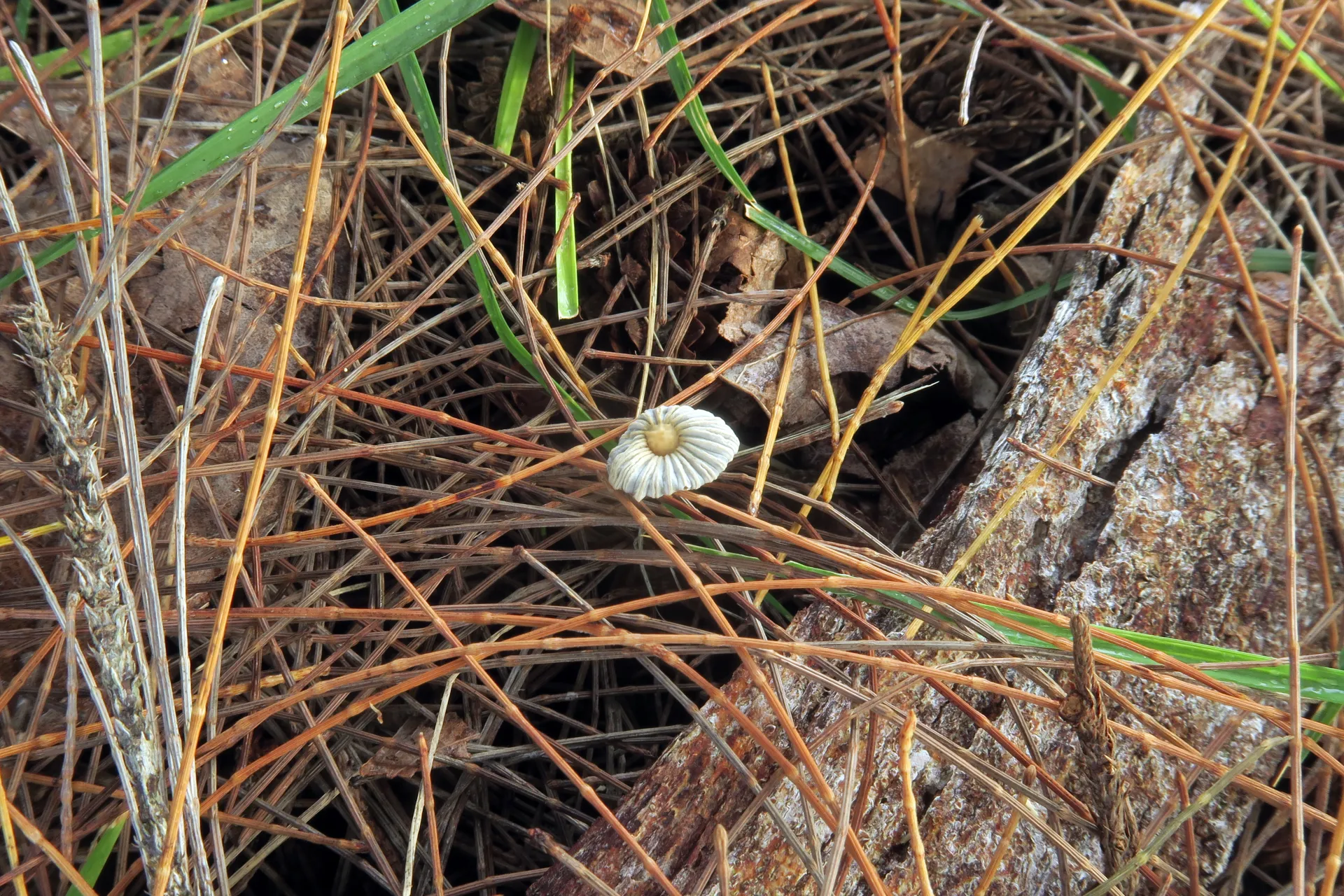
Small-sized species with an ovoid to flattened pileus only 0.6 to 1.8 cm in diameter, orange-brown to reddish-brown, darker at the central disc, with radially translucent striations revealing the lamellae, and a cylindrical, hollow, smooth, very fragile white stipe.
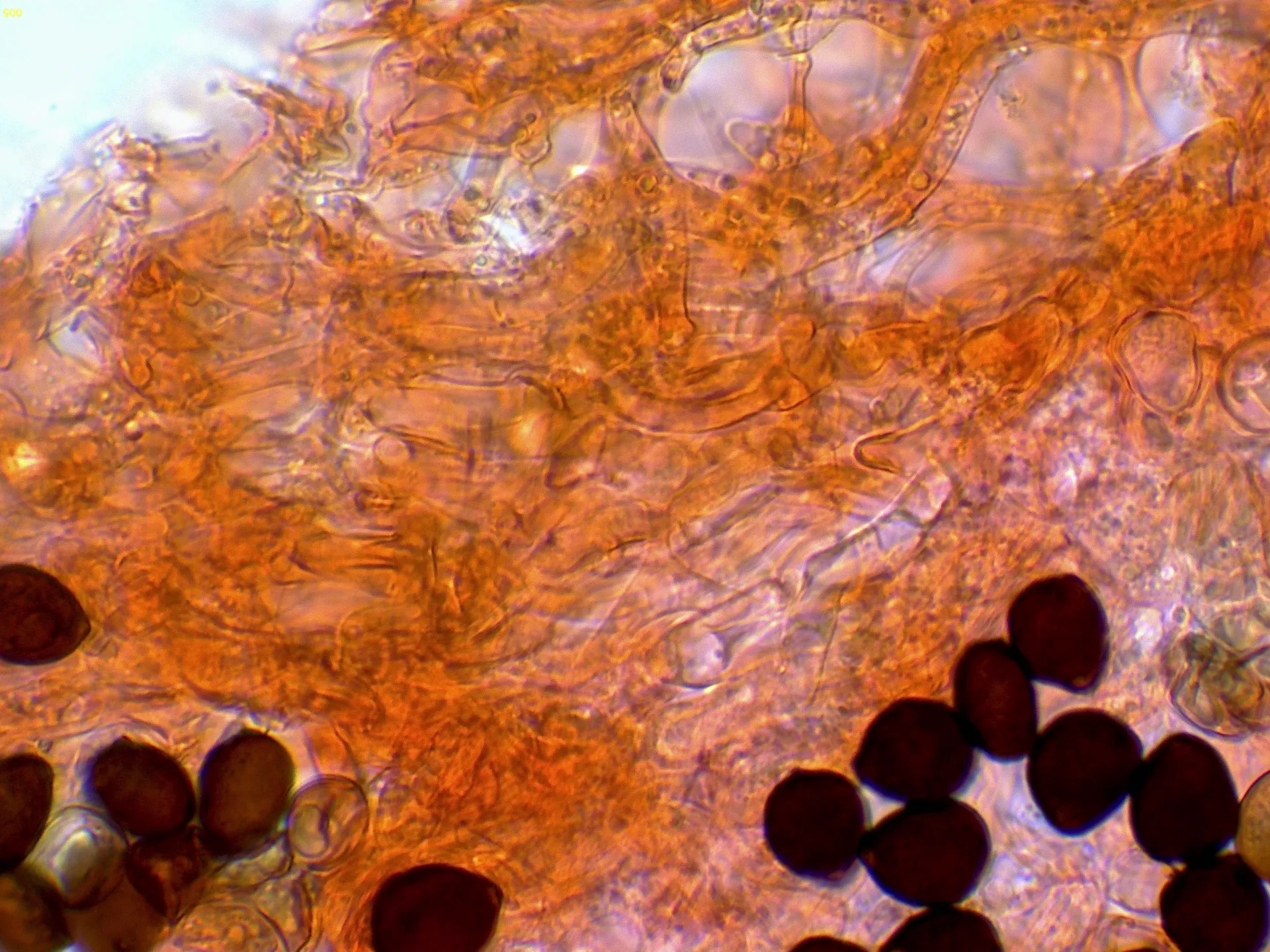
Pileipellis formed by a superficial layer of globose to clavate cells 30 to 50 µm long and 20 to 40 µm wide, overlying interwoven filamentous hyphae 4 to 12 µm wide.
Cheilocystidia and pleurocystidia cylindrical to lageniform, 30 to 80 µm long and 10 to 25 µm wide.
Basidia clavate, 25 to 45 µm long, 13 to 16 µm wide, simple-septate at the base, 4-spored.
Spores angular to rounded, mitriform (heart- or bishop's-mitre-shaped in face view), smooth-walled, brown under the microscope, 12 to 15.5 µm long, 10 to 13 µm wide, with an indistinct hyaline apiculus at one end and a conspicuous germ pore at the opposite pole.
Closely resembles Parasola plicatilis, which has considerably narrower spores (6 to 9 µm wide).
Herbarium material available: JTP2156/24.
Geographic references
Map generated from global occurrence data from GBIF. GBIF.
Study measurements
Values in Microns (µm)Macroscopic gallery
Microscopic gallery