Parasola conopilea
(Fr.) Örstadius & E.Larss.
Study description
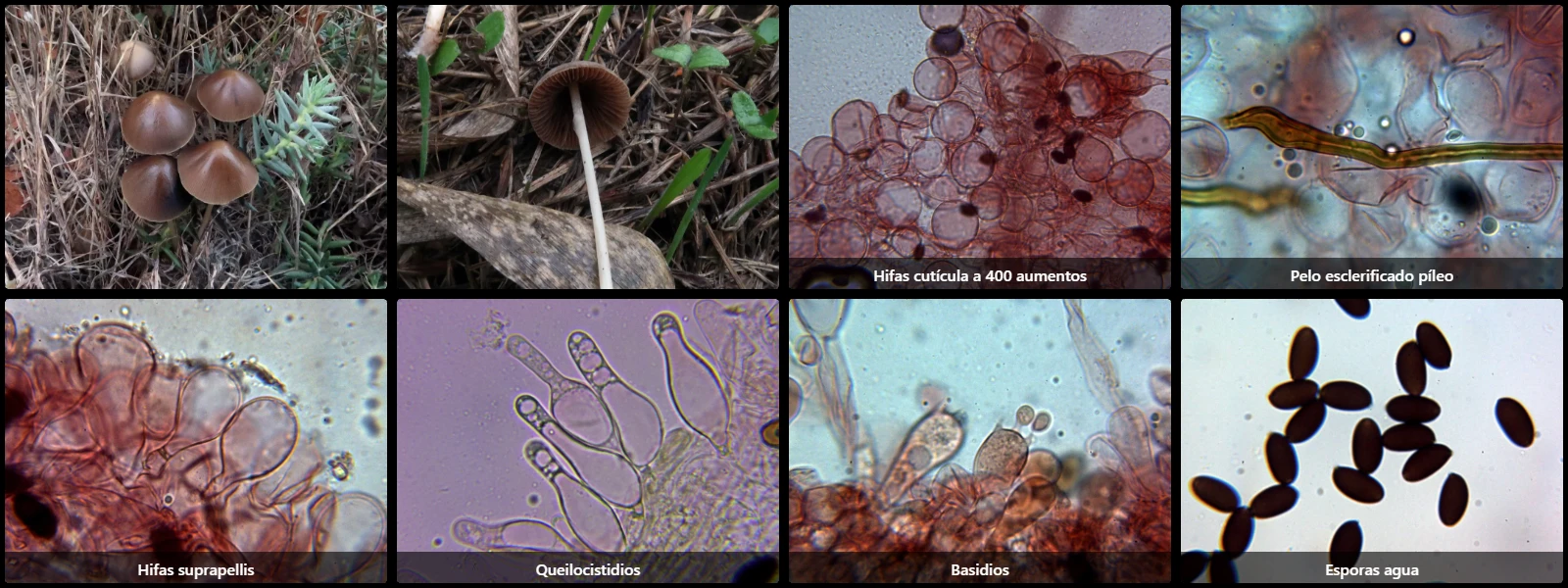
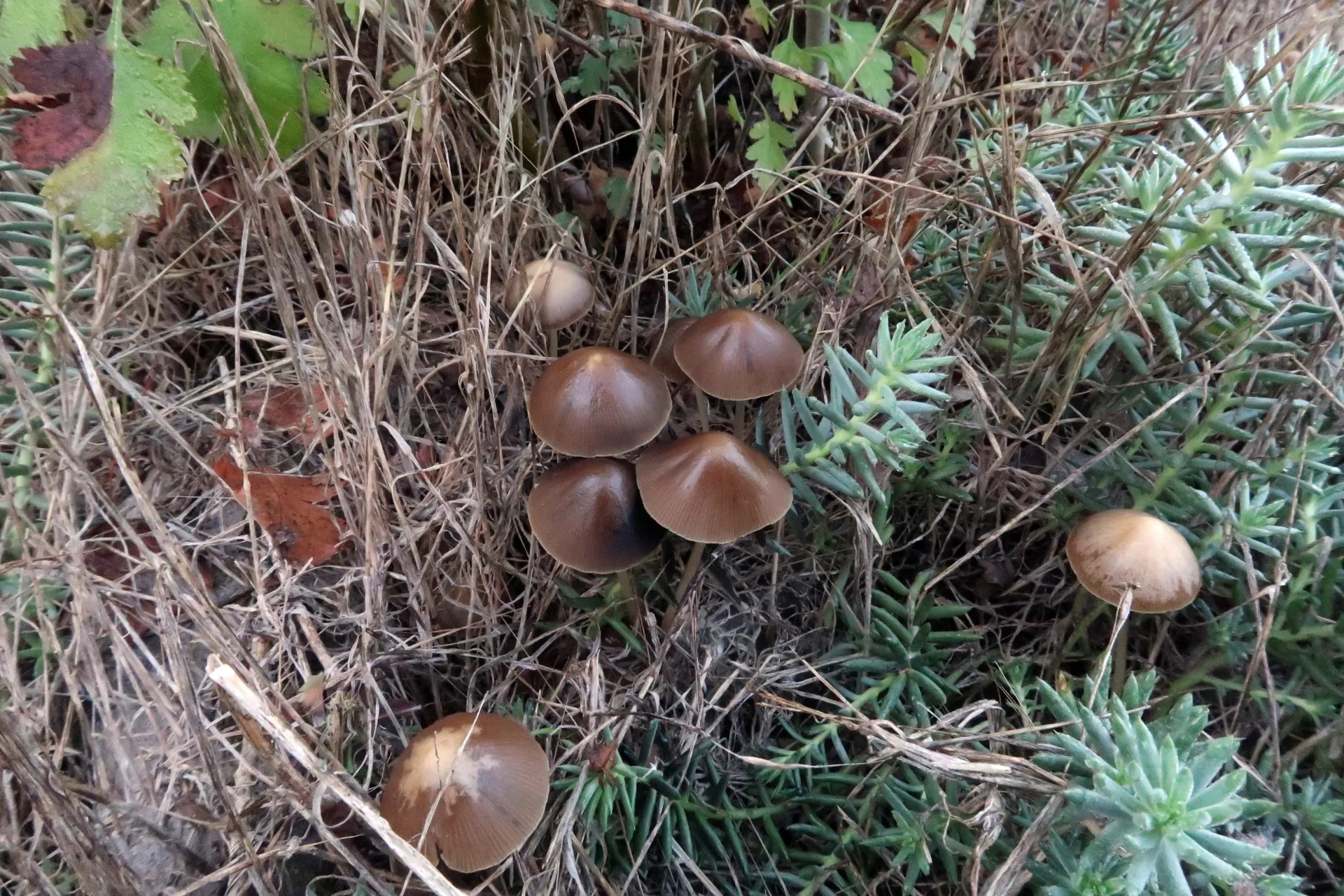
Species found along path edges, often associated with buried woody debris, with a conical pileus 1.5 to 3.5 cm in diameter, reddish-brown, dark brown lamellae with purplish tints from sporulation, and a cylindrical, hollow, brittle cream to whitish stipe with a pulverulent apex.
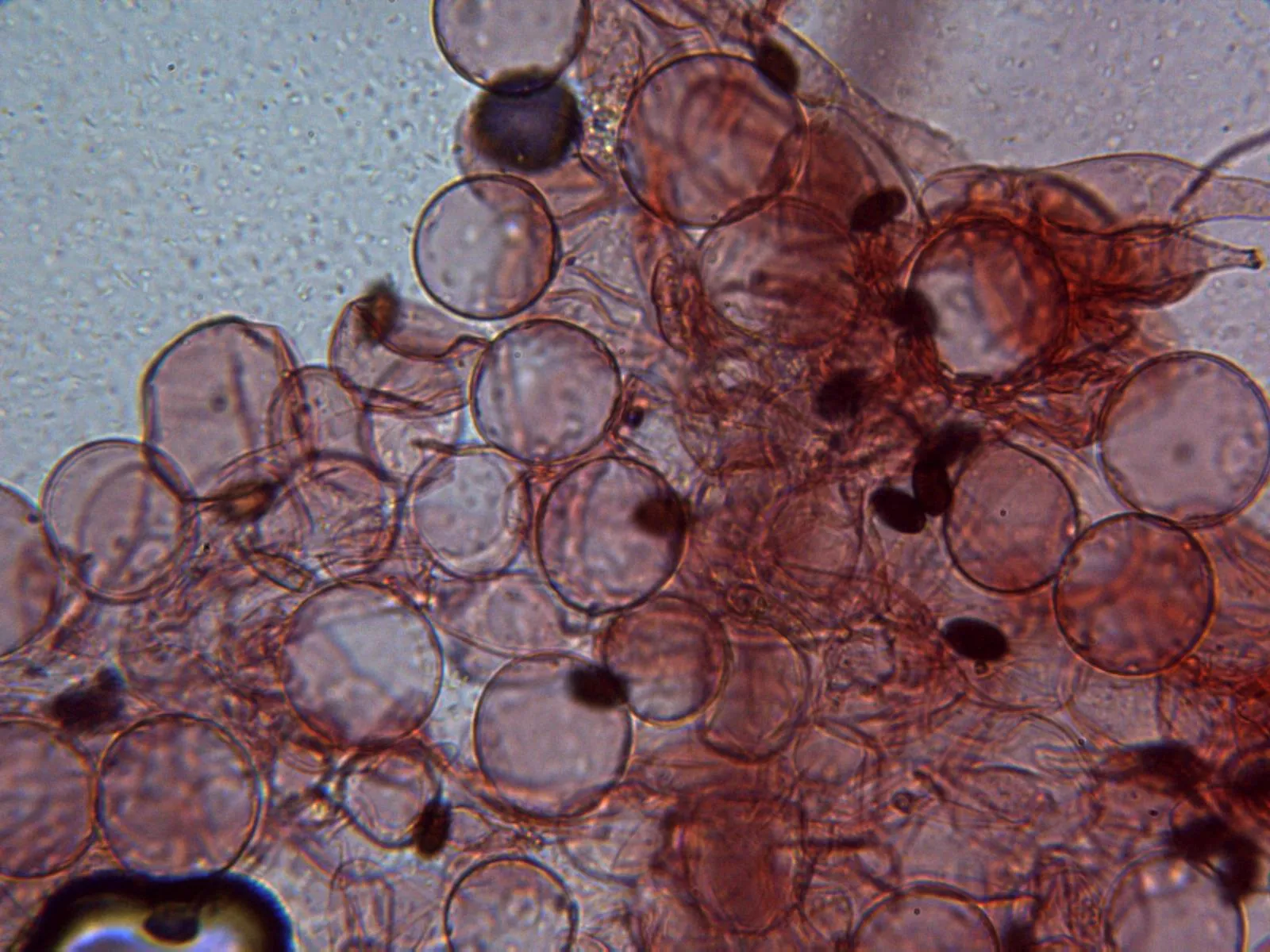
Pileipellis cellular, composed of pyriform to clavate cells 25 to 40 µm long and 20 to 25 µm wide, containing pale brown intracellular pigment, interspersed with scattered sclerified seta-like elements (sclerocystidia/pileosetae), brown, thick-walled, 100 to 320 µm long and 7 to 10 µm wide at the base.
Cheilocystidia fusiform to lageniform, ventricose, 35 to 65 µm long, 15 to 20 µm wide, mixed with shorter pyriform cells 15 to 25 µm long and 10 to 13 µm wide.
Pleurocystidia absent.
Basidia clavate, 23 to 35 µm long, 11 to 15 µm wide, simple-septate at the base, 4-spored.
Spores ellipsoidal, smooth-walled, dark reddish-brown under the microscope, 14 to 17 µm long, 7.5 to 9.5 µm wide, with an indistinct hyaline eccentric apiculus at one end and a central germ pore at the opposite pole.
Geographic references
Map generated from global occurrence data from GBIF. GBIF.
Study measurements
Values in Microns (µm)Macroscopic gallery
Microscopic gallery