Parasola auricoma
(Pat.) Redhead, Vilgalys & Hopple
Study description
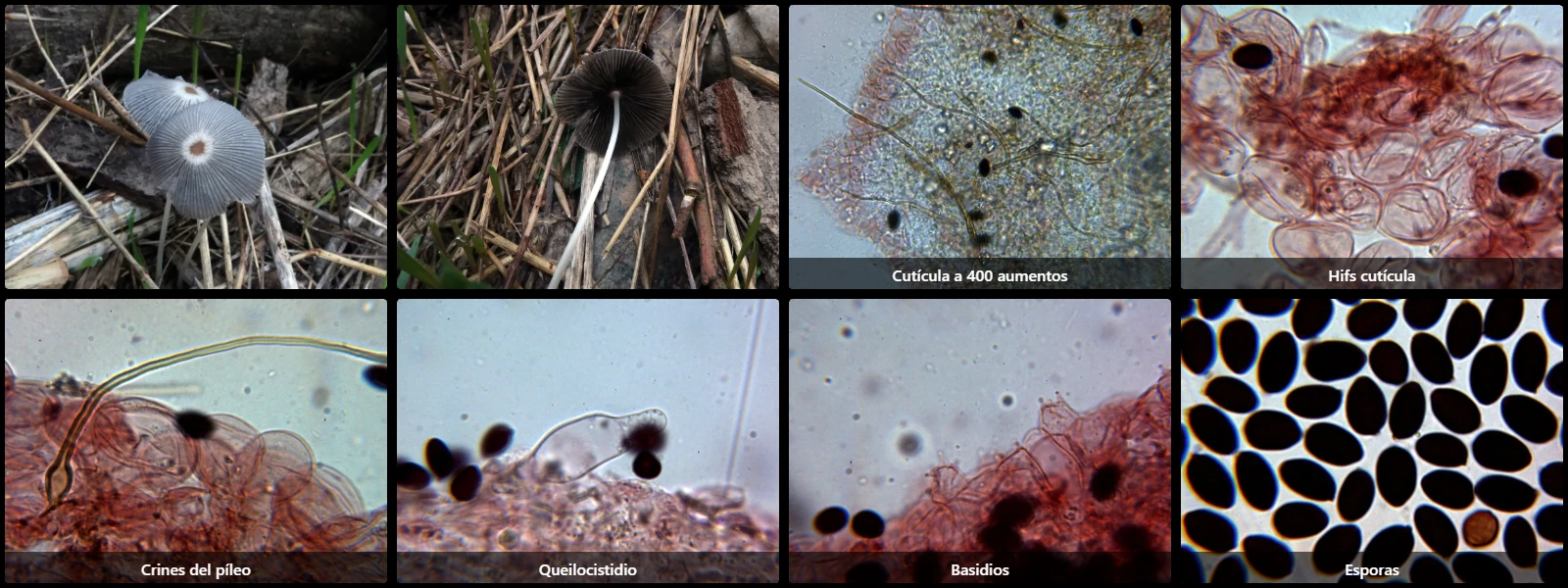
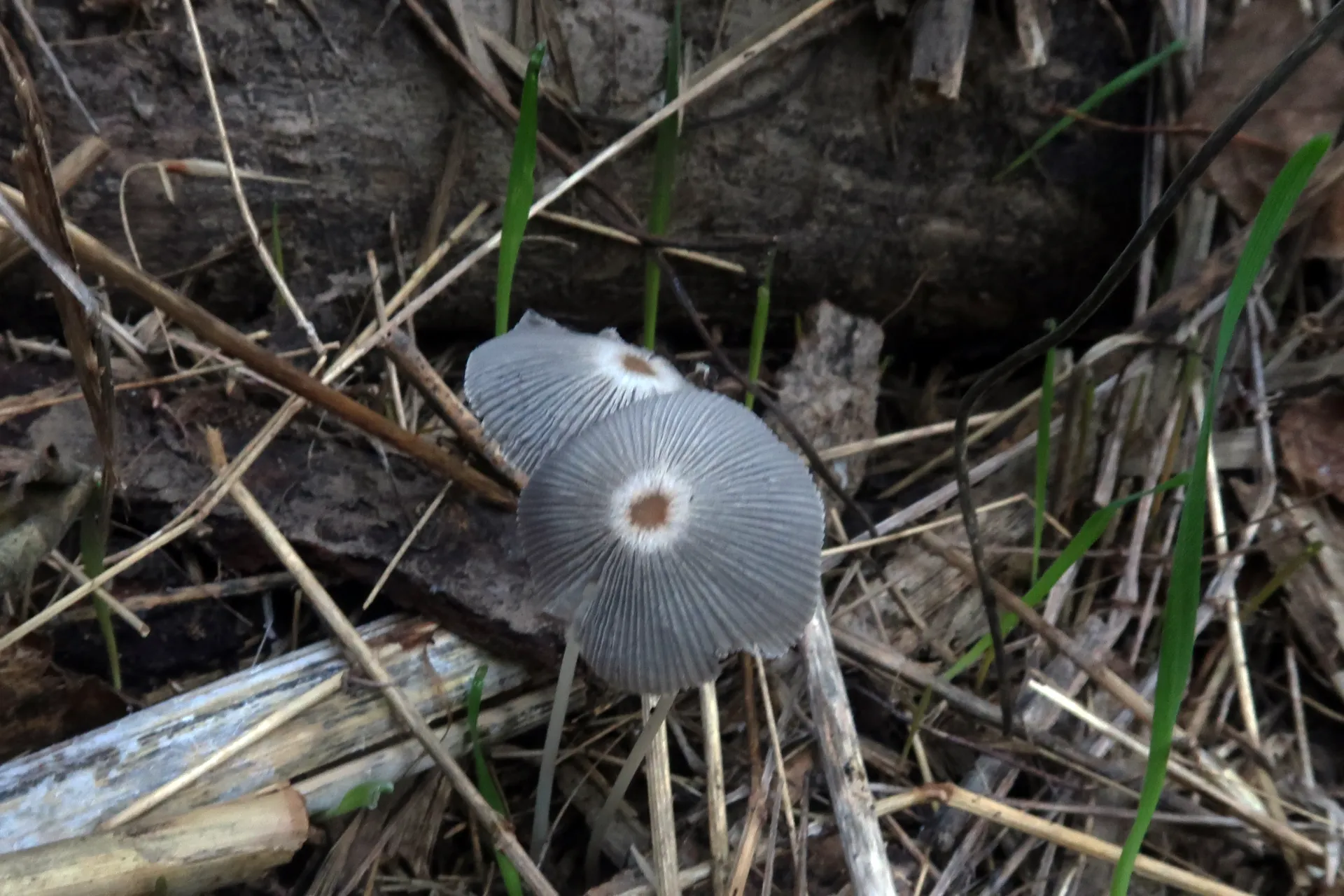
Species typical of parks, gardens, or woodland edges, with a convex to flattened pileus 1.5 to 3 cm in diameter, brown at the centre with greyish radial plication, adnate lamellae turning greyish-black with spore maturation, and a cylindrical, hollow, fragile whitish stipe.
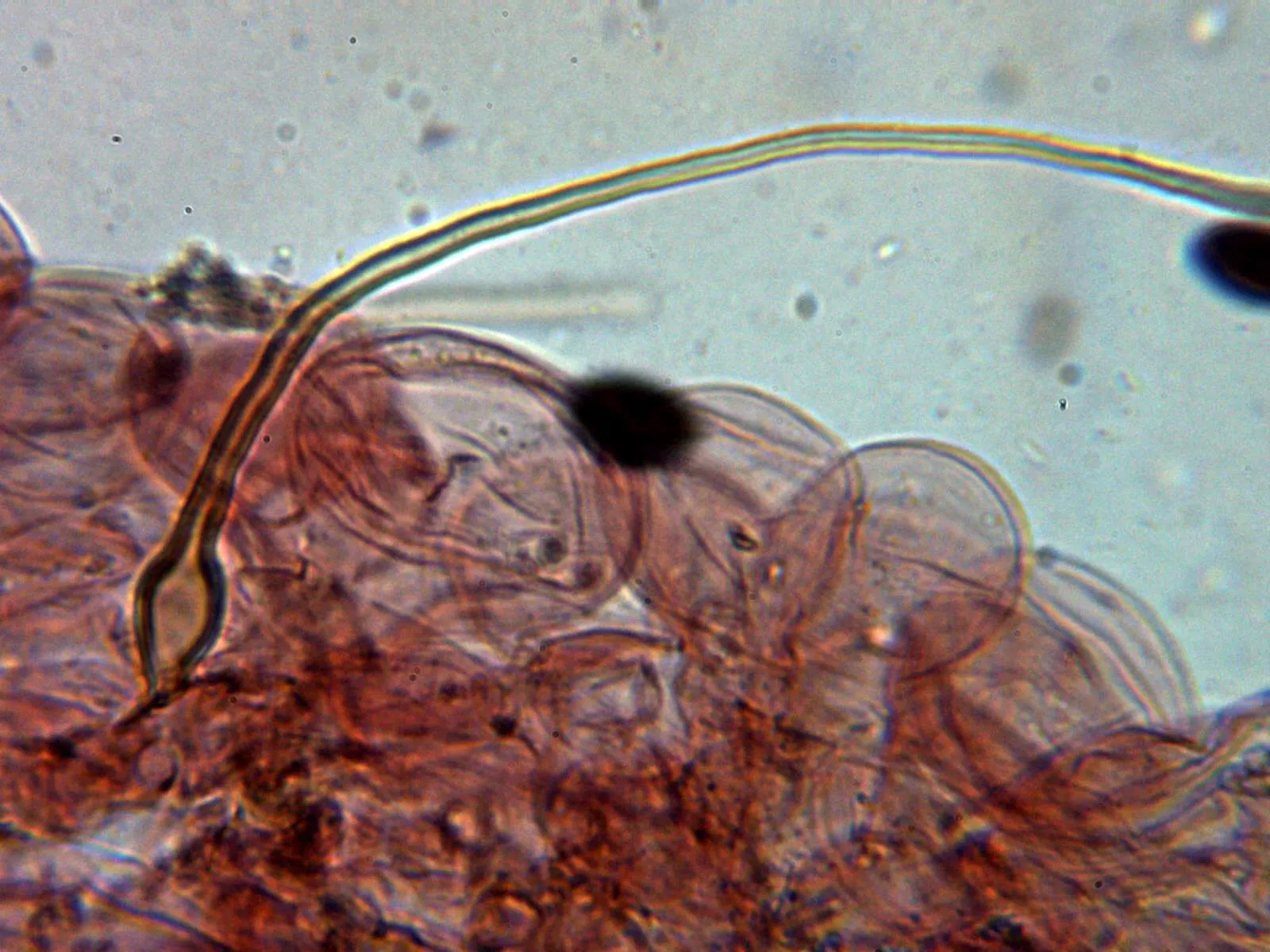
Pileipellis cellular (hymeniderm), composed of subglobose to vesiculose hyaline cells 30 to 50 µm long and 20 to 35 µm wide, interspersed with abundant brown, thick-walled, seta-like hairs (pileosetae) up to 350 µm long and up to 10 µm wide at the swollen base.
Cheilocystidia cylindrical to lageniform, 25 to 70 µm long and 10 to 25 µm wide.
Pleurocystidia of similar morphology but larger, 70 to 120 µm long and 20 to 35 µm wide.
Basidia clavate, 15 to 35 µm long, 11 to 13 µm wide, without clamp connections (simple-septate), 2- or 4-spored.
Spores ellipsoidal, smooth-walled, very dark brown under the microscope, 11 to 14 µm long, 6.5 to 8.5 µm wide, with a small eccentric apiculus at one end and a germ pore at the opposite pole.
Geographic references
Map generated from global occurrence data from GBIF. GBIF.
Study measurements
Values in Microns (µm)Macroscopic gallery
Microscopic gallery