Paragalactinia succosa
(Berk.) Van Vooren
Study description
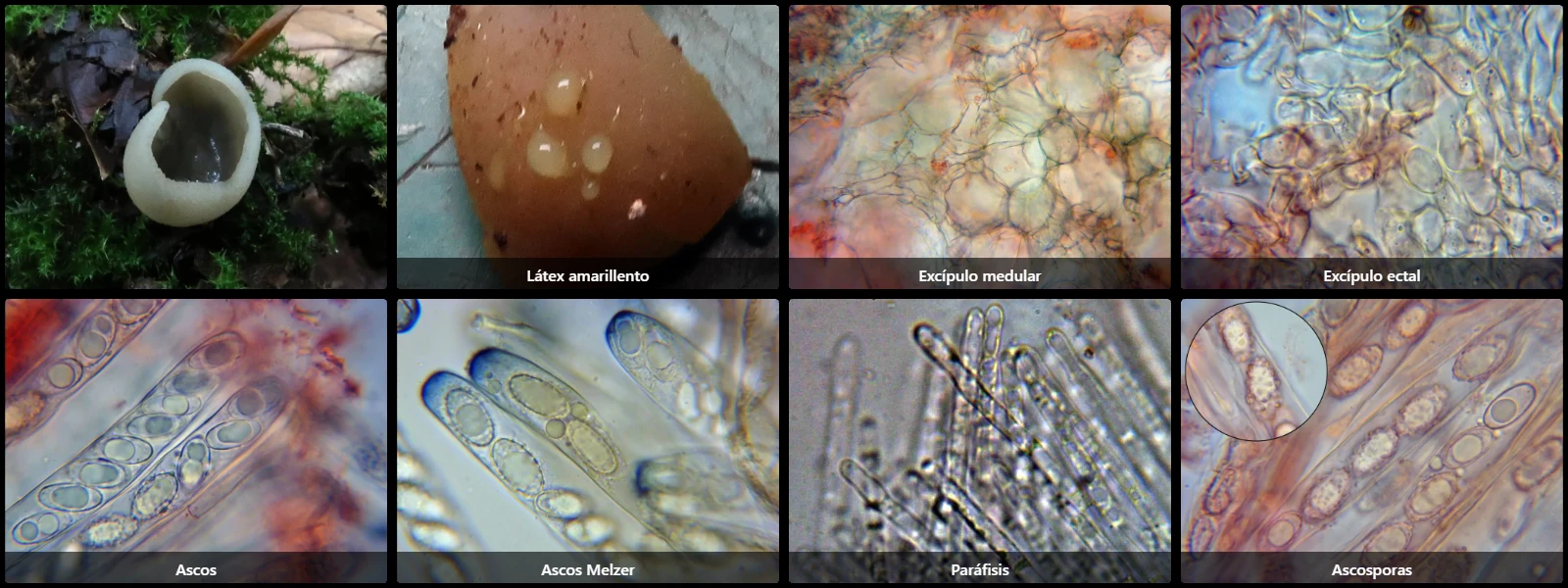
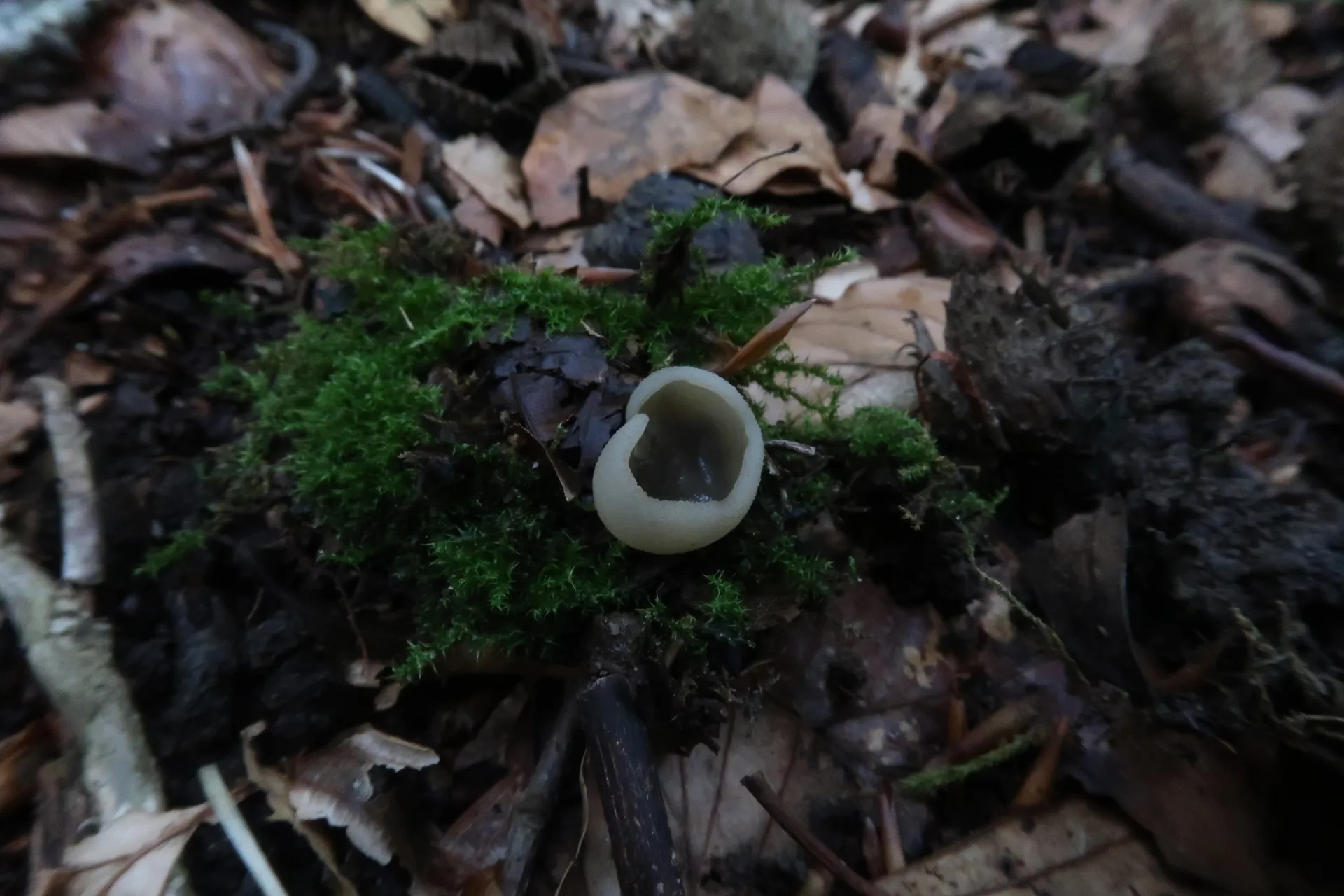
In deciduous and mixed woodlands, on clayey or stony soils, with cup-shaped, closed apothecia 2 to 6 cm in diameter, greyish-brown hymenium with greenish tints, paler external surface, and flesh that exudes a yellowish latex when cut or bruised.
Medullary excipulum composed of globose hyphae intermixed with numerous cylindrical connective hyphae.
Ectal excipulum of textura globulosa-angularis, formed by hyaline hyphae, from which short, cylindrical terminal cells emerge externally, conferring its furfuraceous appearance.
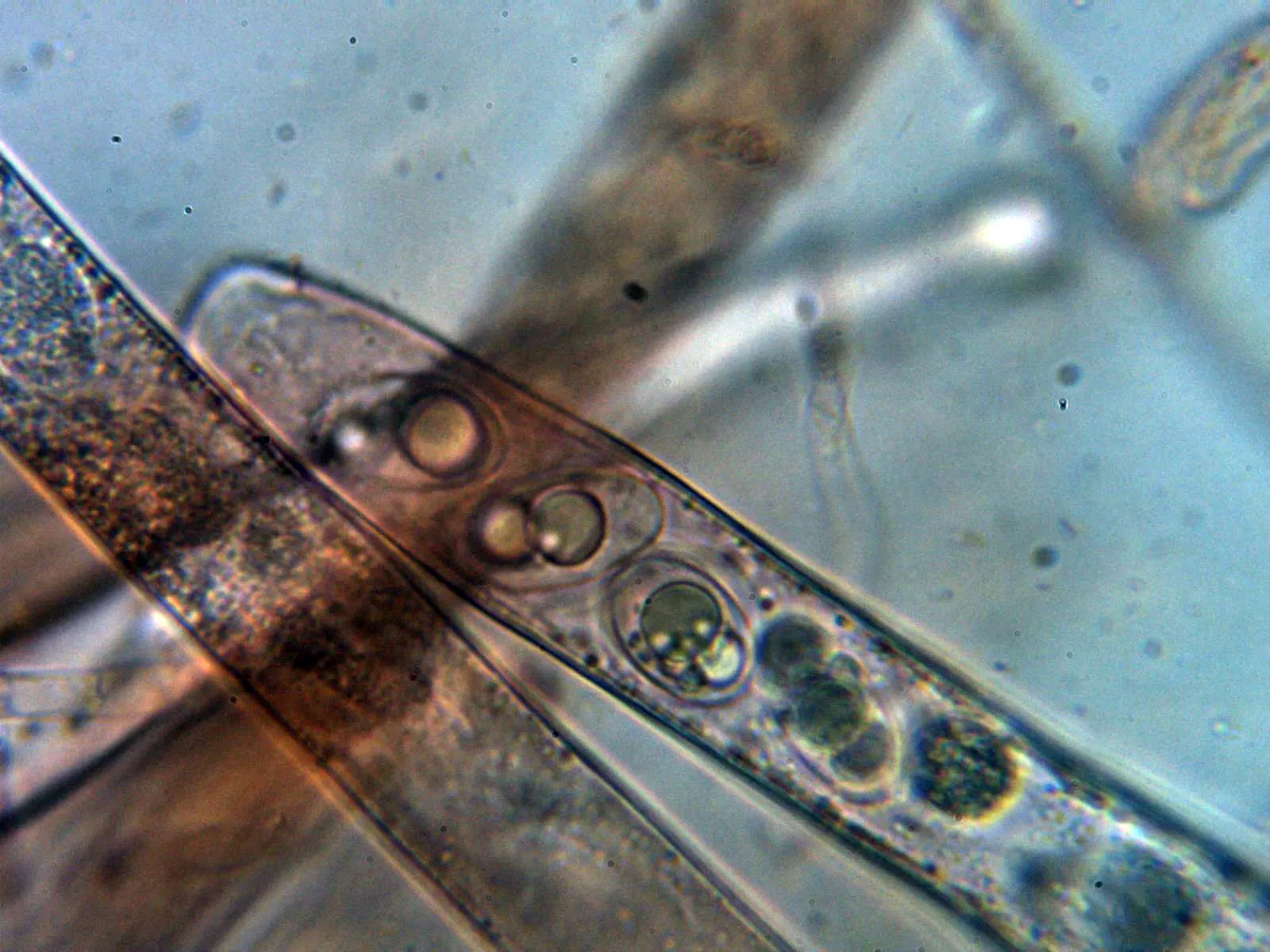
Asci cylindrical, 8-spored, operculate, 280 to 330 µm long, 12 to 16 µm wide, uniseriate, without basal croziers, and displaying an amyloid reaction in Melzer's reagent on both the apical apparatus and the ascus walls.
Paraphyses filiform, septate, hyaline, with only slight apical enlargements up to 3 to 6 µm wide.
Ascospores ellipsoidal, hyaline, with coarsely verrucose walls bearing warts up to 1.5 µm high, 17.5 to 21.5 µm long, 8.5 to 11 µm wide, mature spores generally containing two large oil drops (guttules) inside.
Geographic references
Map generated from global occurrence data from GBIF. GBIF.
Study measurements
Values in Microns (µm)Macroscopic gallery
Microscopic gallery