Paragalactinia michelii
(Boud.) Van Vooren
Study description
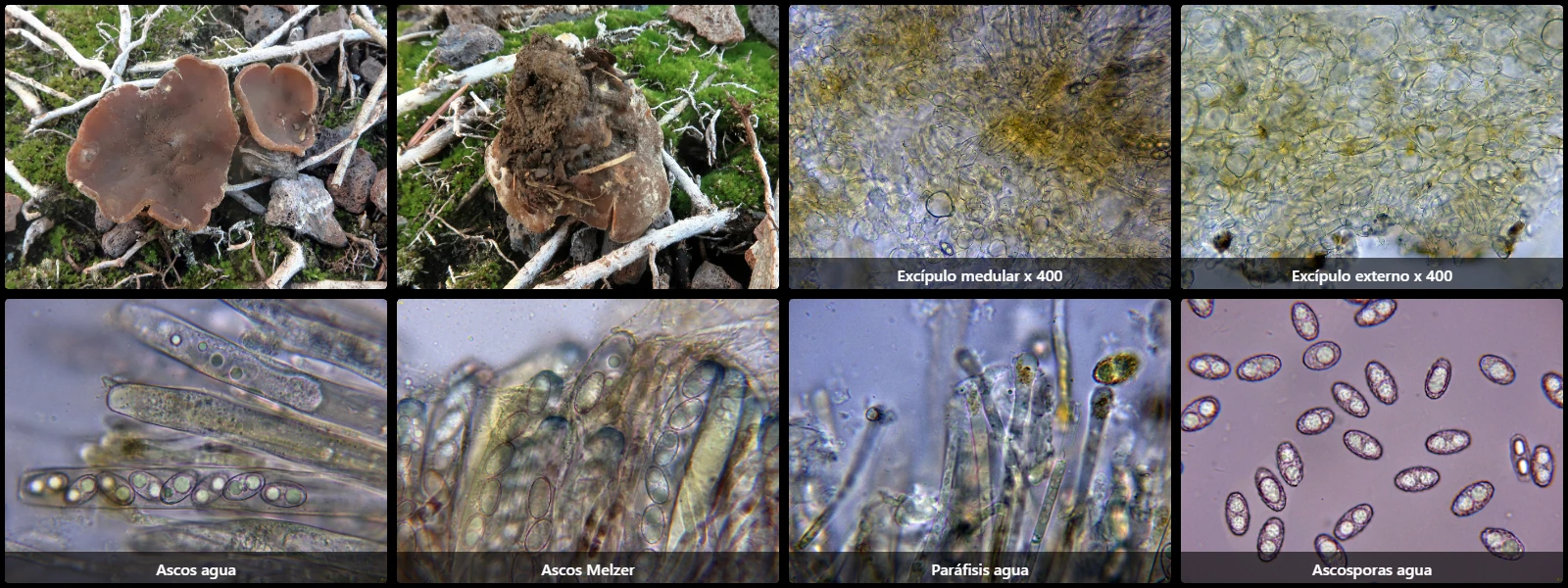
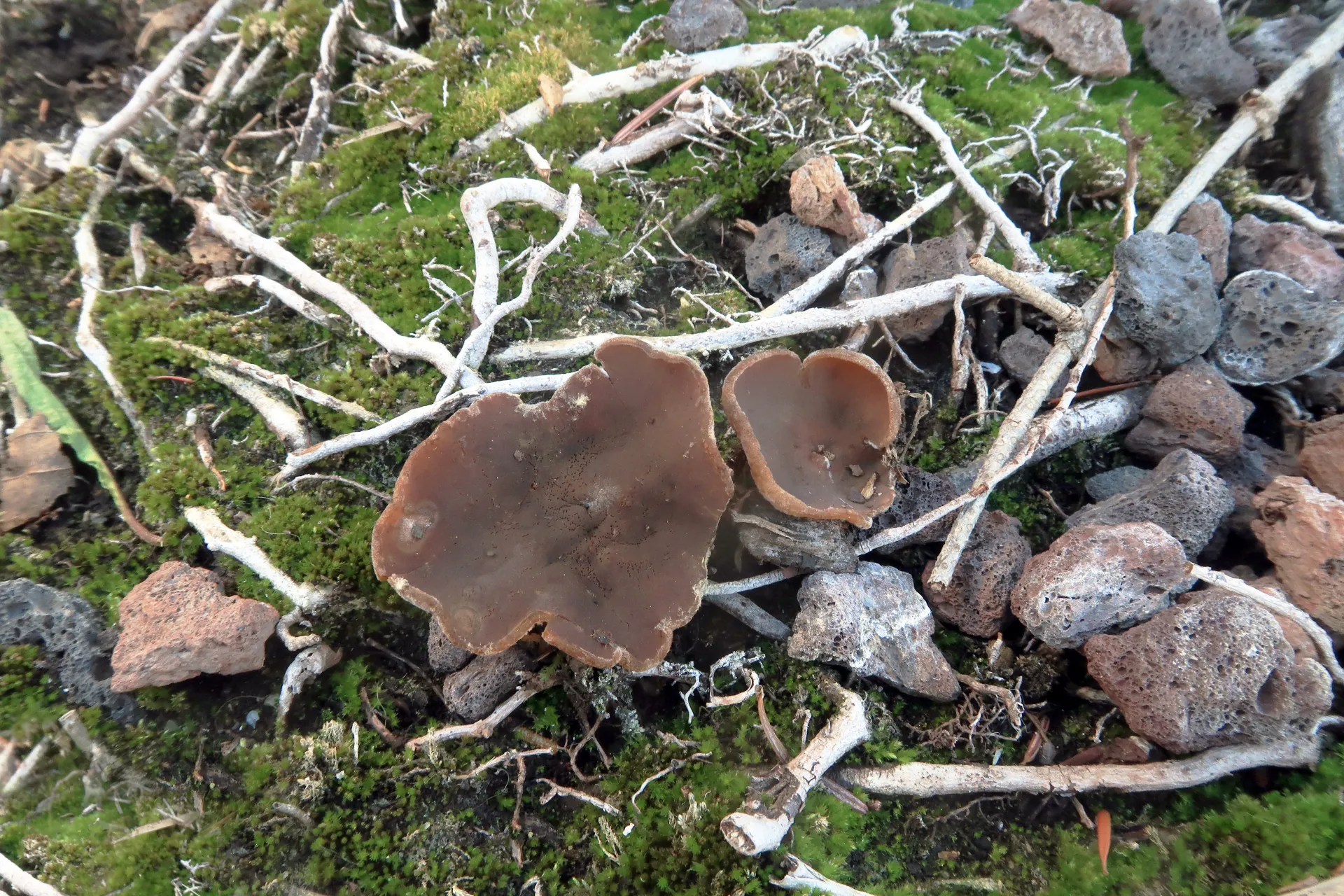
A species typical of roadsides, track edges, or woodland borders, with cup-shaped ascomata featuring an inrolled margin, 3 to 5 cm across, reddish-brown with violaceous tints, a paler and very faintly granulose external surface, and fragile, brittle context.
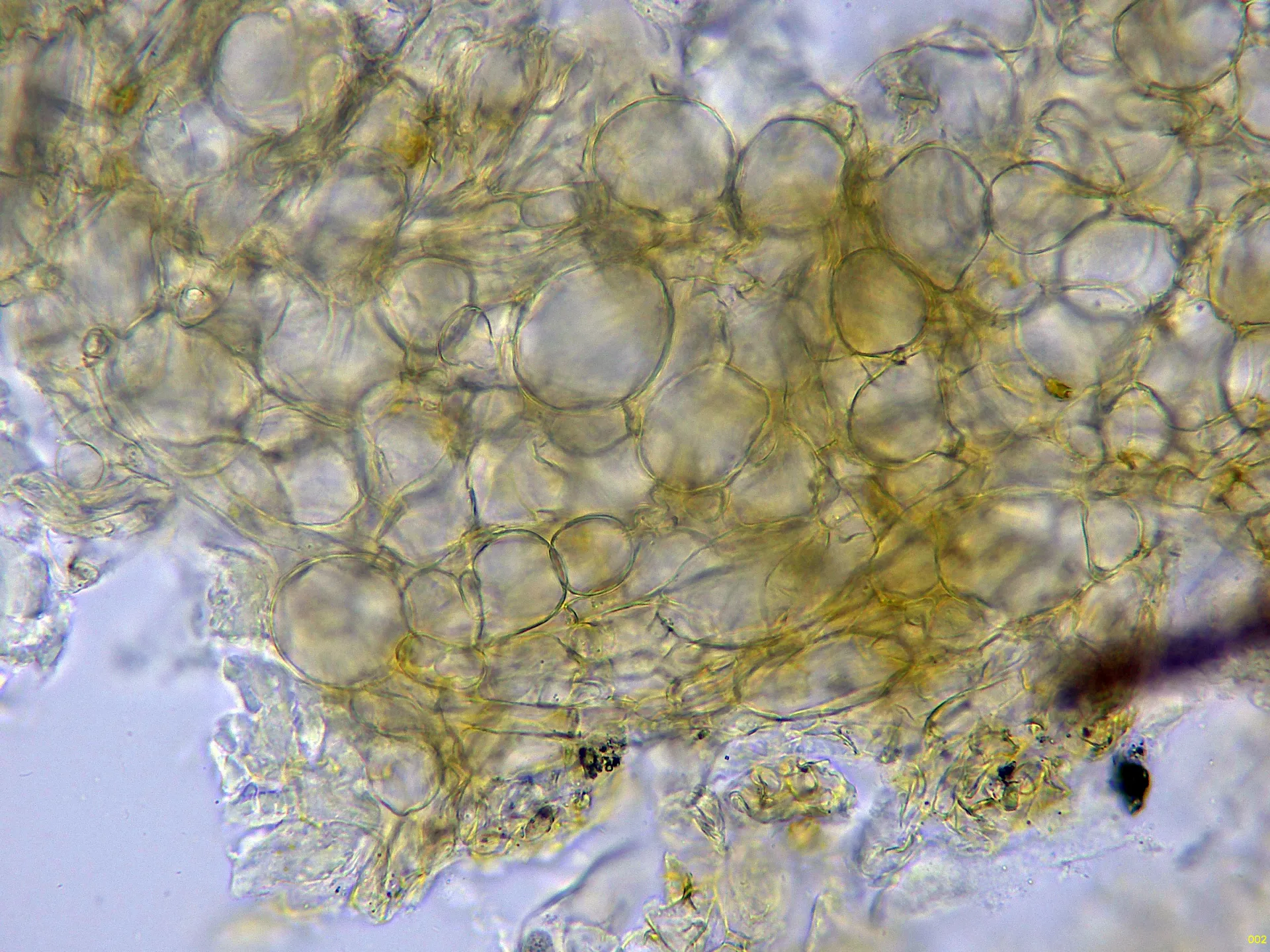
Medullary excipulum with a thin subhymenial layer of interwoven filamentous hyphae 5 to 7 µm wide, beneath which lie globose hyphae intermixed with slender, inflated connective filamentous hyphae; globose hyphae 25 to 60 µm in diameter.
Ectal excipulum of textura globulosa-angularis, poorly differentiated from the medullary excipulum, with smaller-diameter hyphae, presenting cylindrical hyphae arranged in chains toward the outer surface, though without forming true hairs.
Asci cylindrical, 8-spored, operculate, 290 to 330 µm long, 11 to 16 µm wide, uniseriate, without basal croziers, and with an amyloid reaction in Melzer's reagent.
Paraphyses filiform, septate, 2.5 to 4 µm wide, with slight apical inflations 3 to 6 µm wide, containing abundant yellowish-brown intracellular pigment.
Ascospores cylindrical-ellipsoidal, hyaline, with a verrucose wall bearing warts connected into very short crests without forming a complete reticulum, 14.5 to 18 µm long, 8 to 10 µm wide, containing two large oil drops (guttules) inside.
Herbarium material available: JTP2010/23.
Geographic references
Map generated from global occurrence data from GBIF. GBIF.
Study measurements
Values in Microns (µm)Macroscopic gallery
Microscopic gallery