Panus neostrigosus
Drechsler-Santos & Wartchow
Study description
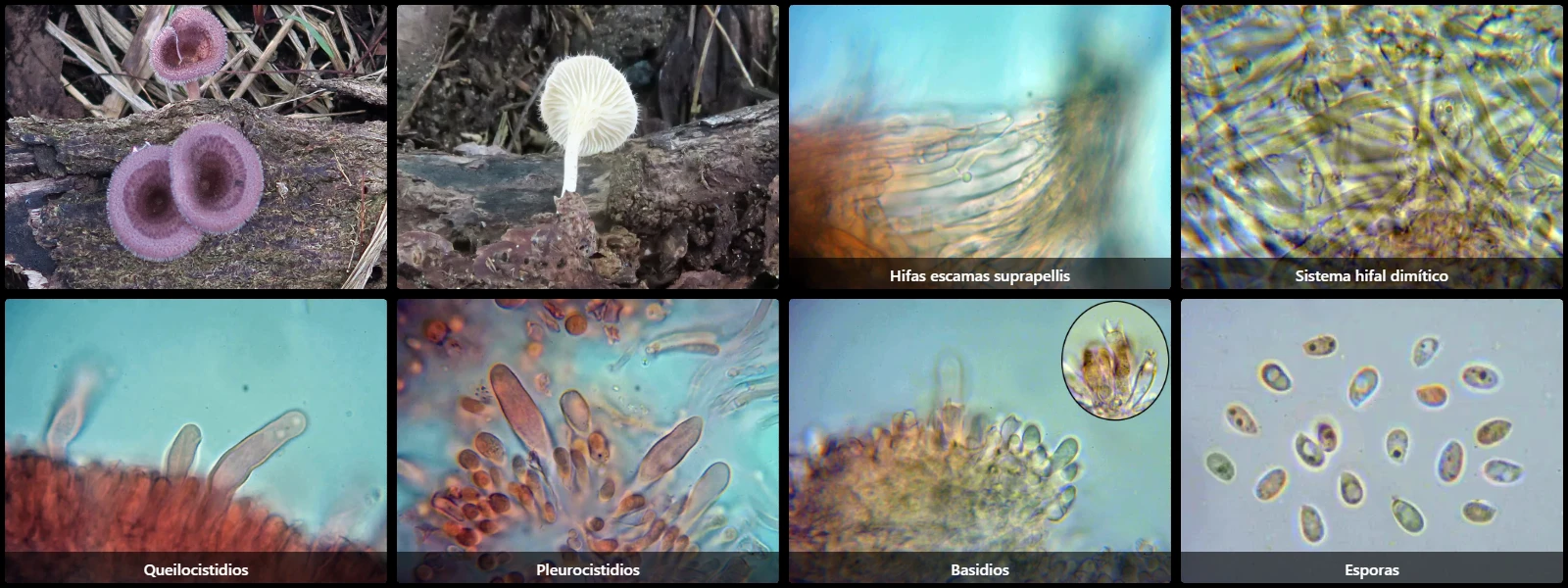
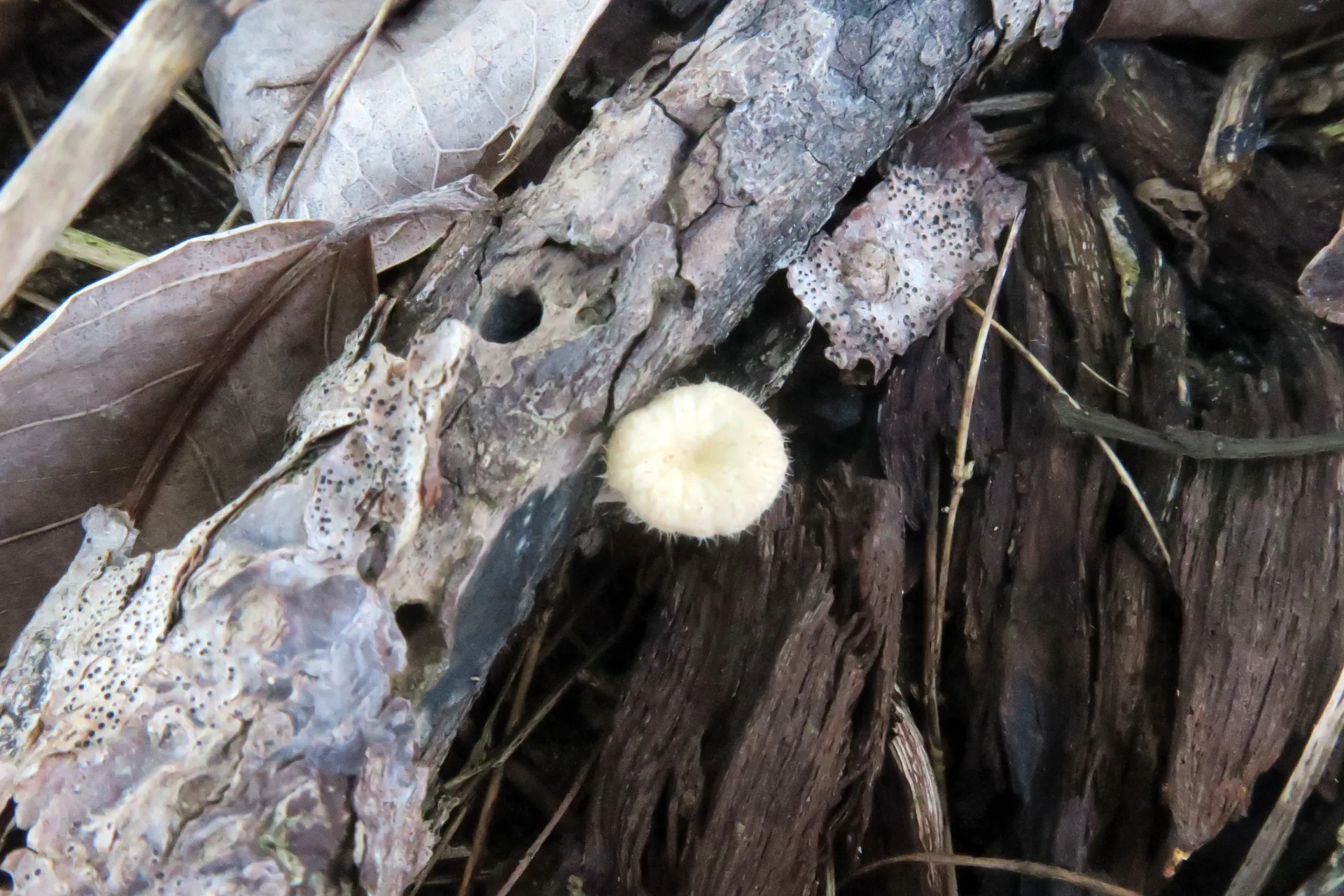
Species growing on decaying deciduous wood, with a funnel-shaped (infundibuliform) pileus 2 to 6 cm in diameter, purple to brown, with a conspicuously hirsute/strigose surface, decurrent white lamellae, and a typically eccentric, whitish, hairy stipe slightly enlarged at the base.
Pileipellis composed of cylindrical hyphae 2.5 to 5 µm wide, septate with clamp connections, with numerous emergent terminal hyphae gathered in tufts forming the hirsute scales, with rounded apices.
Cheilocystidia and pleurocystidia subcylindrical to clavate, thick-walled, 40 to 65 µm long and 7 to 15 µm wide.
Basidia cylindrical-clavate, 20 to 25 µm long, 3 to 4 µm wide, with basal clamp connections, 4-spored.
Spores ellipsoidal, smooth, hyaline, thin-walled, 5 to 6.5 µm long, 3 to 3.6 µm wide, containing oil droplets inside, inamyloid in Melzer's reagent.
Geographic references
Map generated from global occurrence data from GBIF. GBIF.
Study measurements
Values in Microns (µm)Macroscopic gallery
Microscopic gallery