Panus conchatus
(Bull.) Fr.
Study description
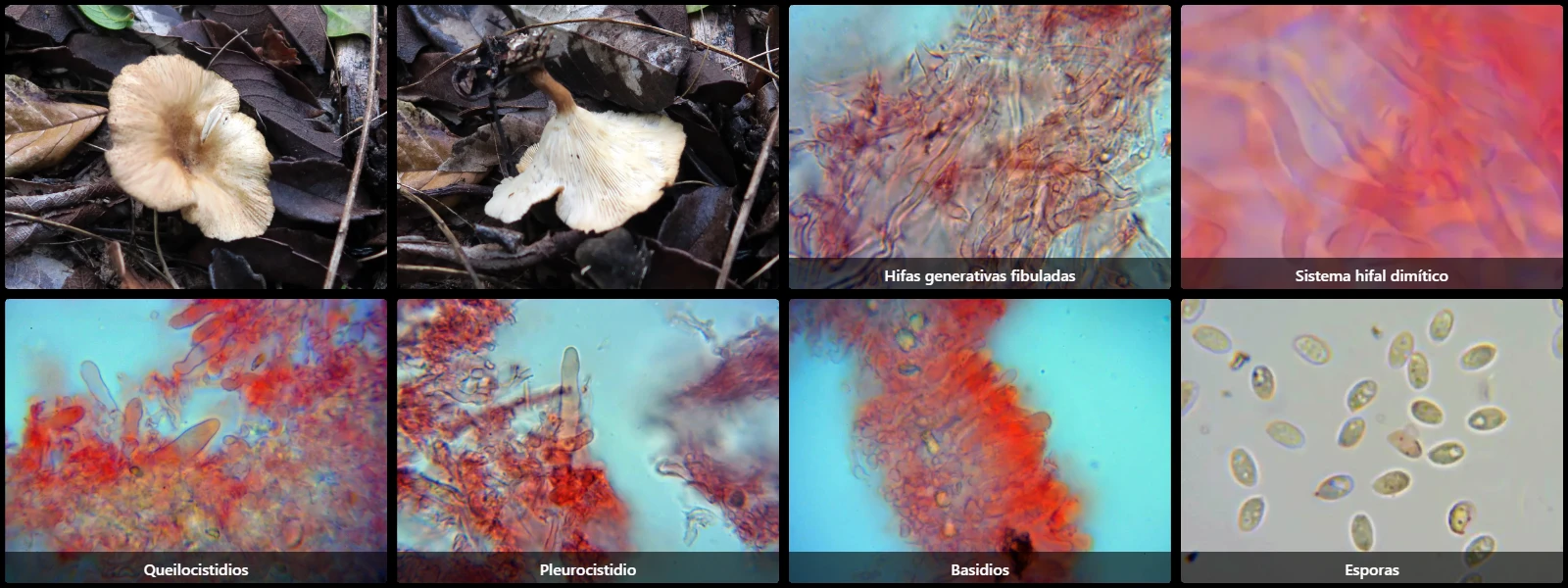
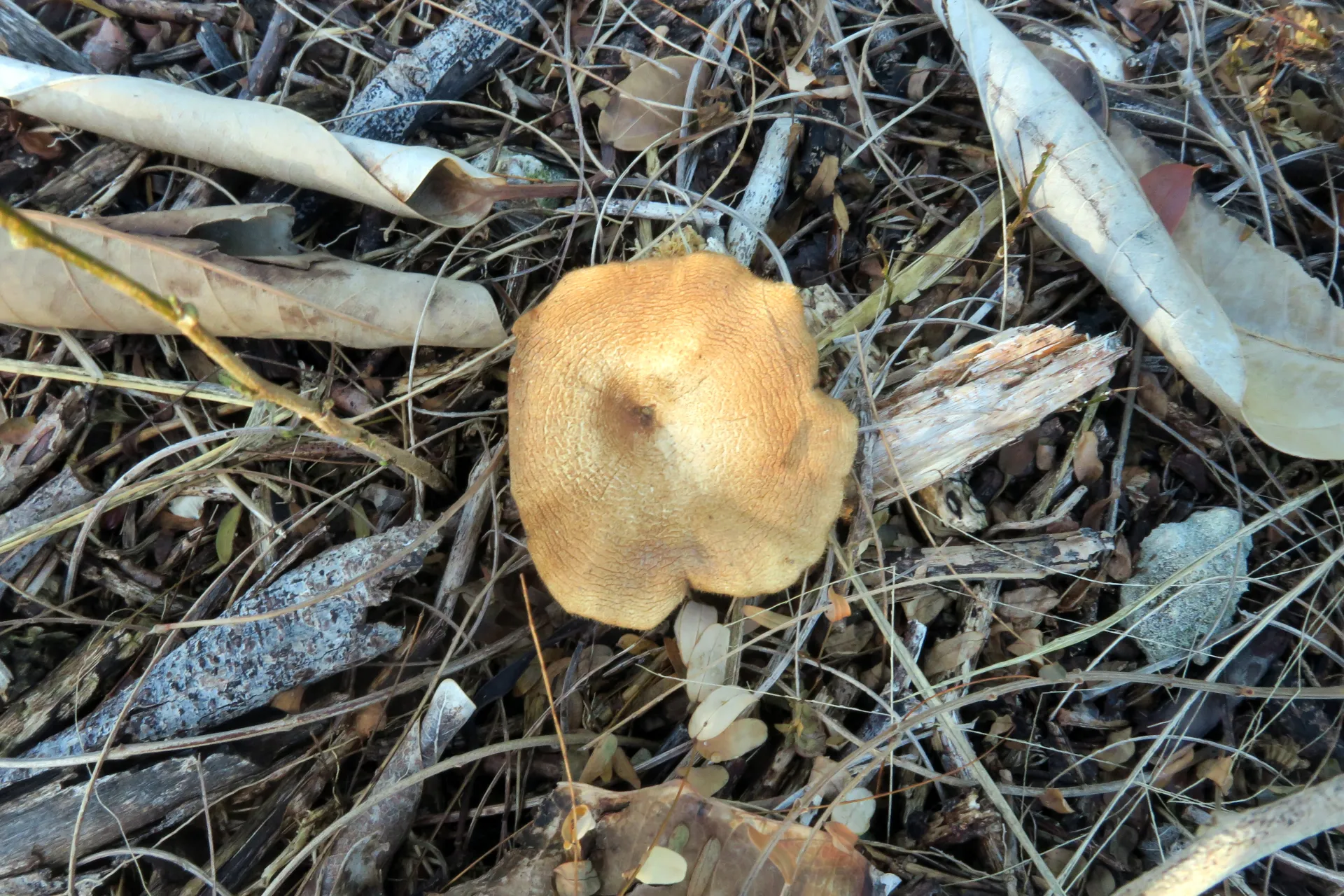
On decaying fallen hardwood logs and branches, with a centrally depressed, infundibuliform pileus 3 to 7 cm in diameter, yellowish-brown, finely squamulose surface, sharp and undulating margin, decurrent lamellae, and a cylindrical, hirsute, light brown stipe slightly enlarged at the base.
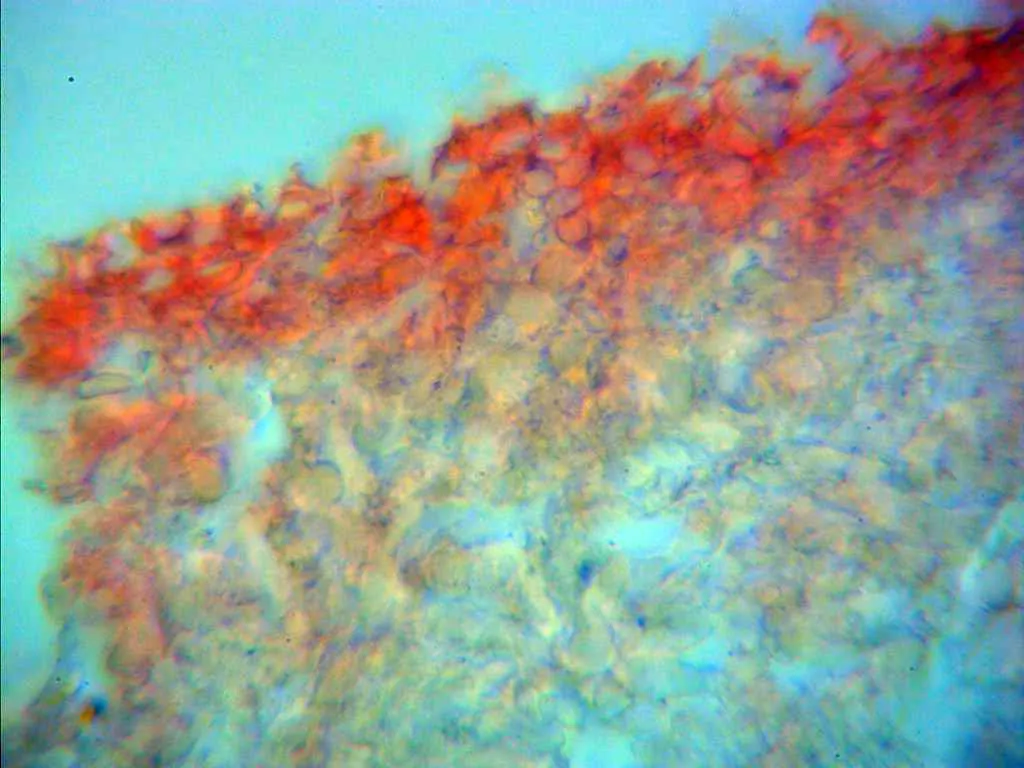
Pileipellis composed of two hyphal systems (dimitic): generative hyphae cylindrical, arranged more or less parallel, 3 to 6 µm wide, septate with clamp connections; and skeletal hyphae thick-walled, aseptate, unbranched, 2 to 6 µm wide.
Cheilocystidia clavate, moderately thick-walled, 30 to 50 µm long and 8 to 13 µm wide. Pleurocystidia scattered, cylindrical-clavate, similar in length to the cheilocystidia but slightly narrower (6 to 10 µm wide).
Lamellar trama irregular.
Basidia cylindrical-clavate, 25 to 35 µm long, 4 to 6 µm wide, with basal clamp connections, 4-spored.
Spores ellipsoidal, smooth, hyaline, thin-walled, 5 to 7 µm long, 2.9 to 3.7 µm wide, with a slightly eccentric apiculus at one end, containing small guttules inside, inamyloid in Melzer's reagent.
Geographic references
Map generated from global occurrence data from GBIF. GBIF.
Study measurements
Values in Microns (µm)Macroscopic gallery
Microscopic gallery