Panaeolus papilionaceus
(Bull.) Quél.
Study description
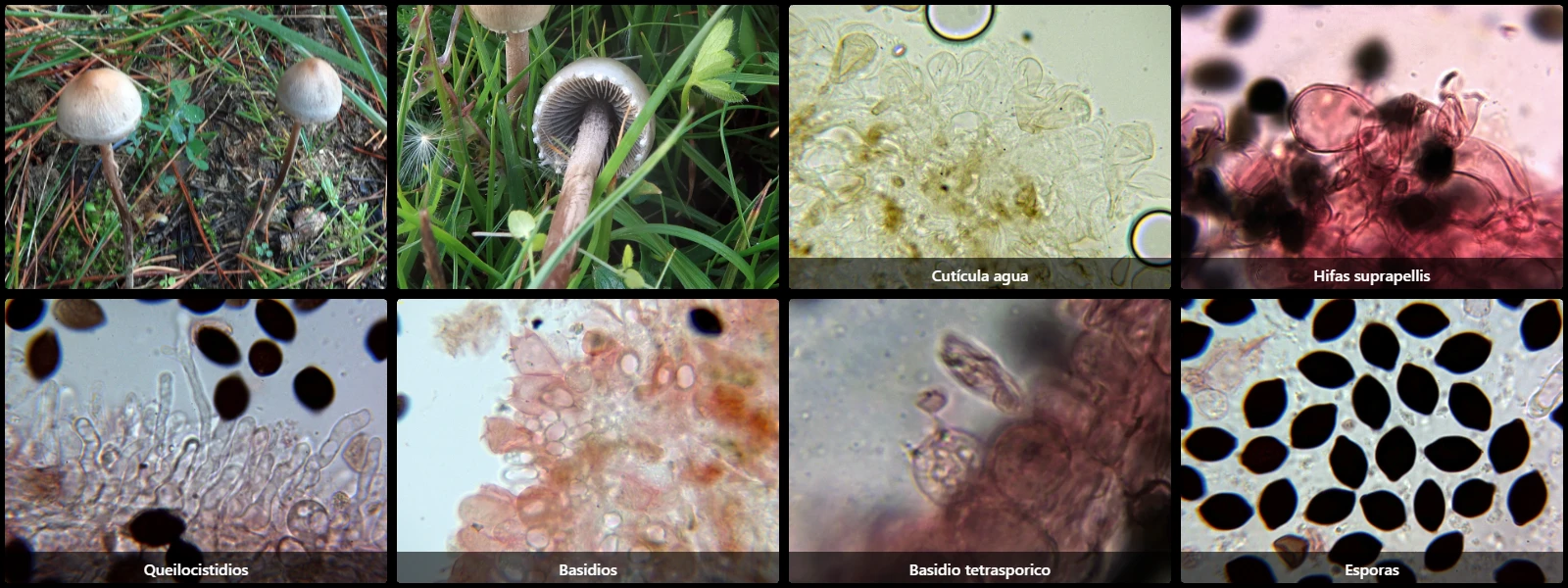
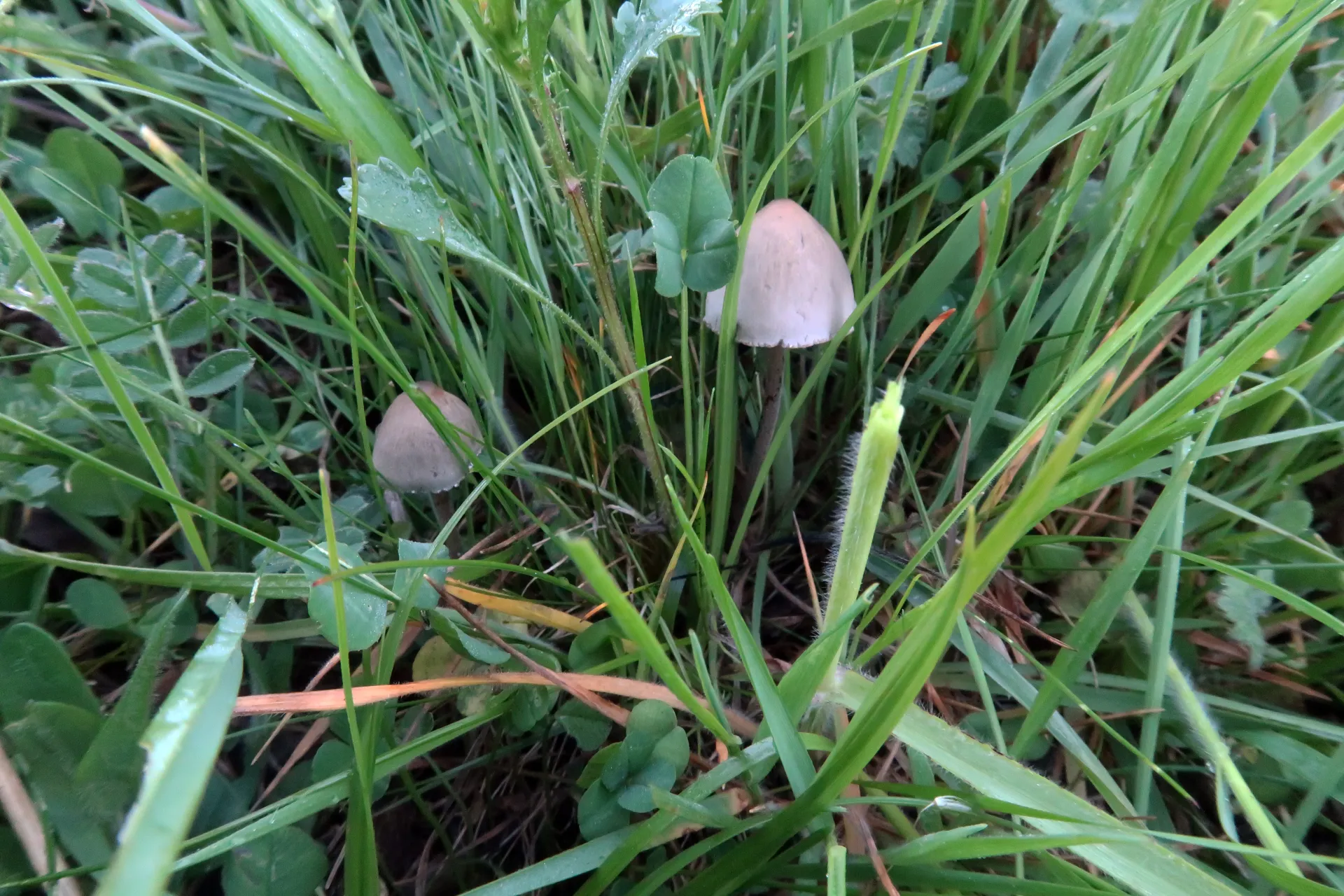
A coprophilous species fruiting directly on herbivore dung, especially cow or horse manure, with a campanulate to convex pileus 1 to 3 cm in diameter, greyish-brown, with a crenulate margin decorated with whitish appendiculate veil remnants, adnate greyish to black lamellae, and a cylindrical, hollow, greyish-brown stipe covered in whitish pruina.
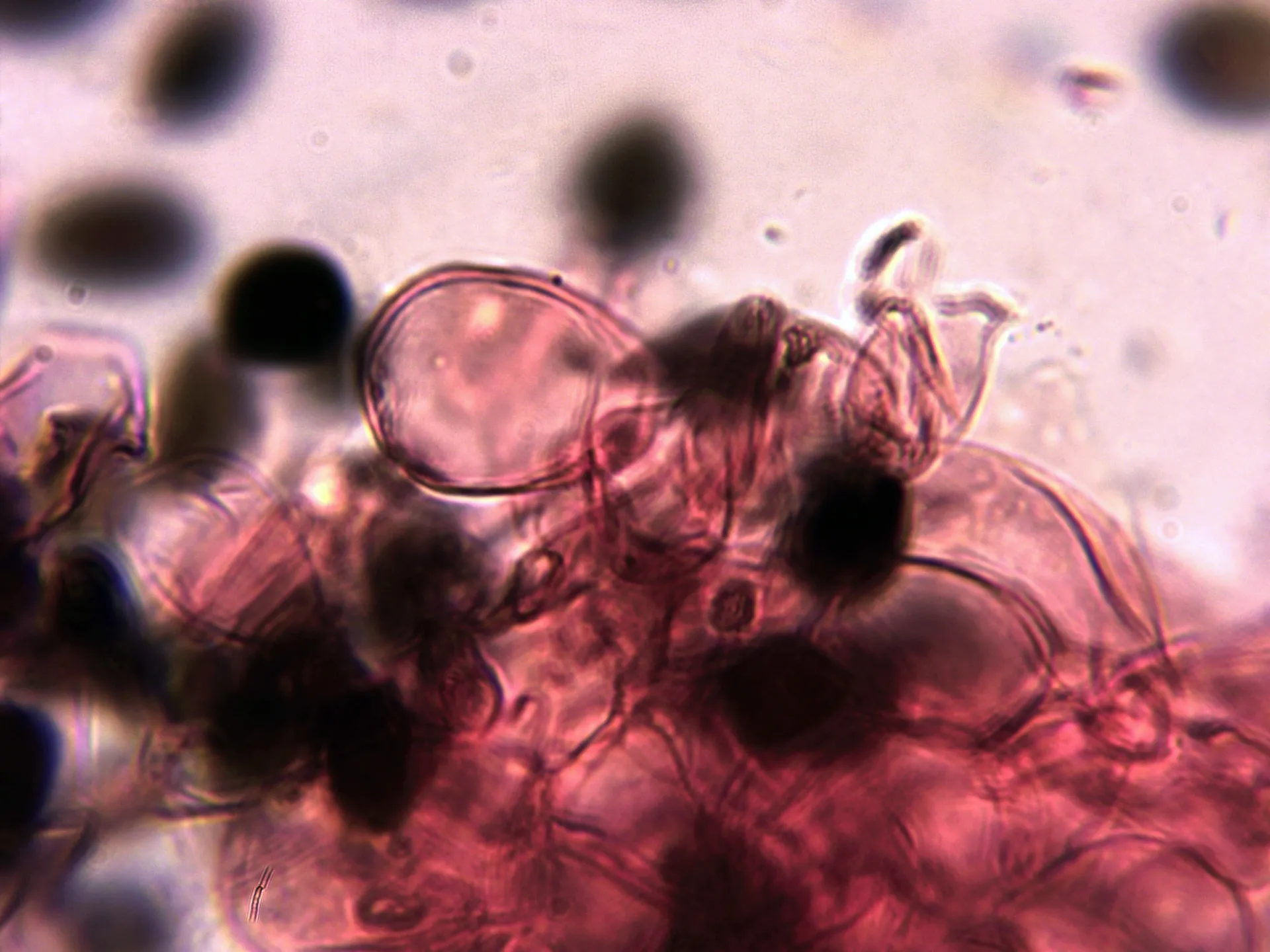
Pileipellis cellular (hymeniderm), composed of pyriform to clavate cells, hyaline or containing faint yellowish-brown intracellular pigment, 20 to 40 µm long and 10 to 20 µm wide.
Caulocystidia present, cylindrical to flexuous, with rounded apices.
Cheilocystidia very abundant, cylindrical to lageniform, flexuous, 35 to 65 µm long and 7 to 10 µm wide.
Pleurocystidia absent.
Basidia cylindrical to slightly clavate, 25 to 35 µm long, 12 to 16 µm wide, simple-septate at the base, 4-spored.
Spores ellipsoidal to lenticular (hexagonoid to lemon-shaped in face view), smooth-walled, dark reddish-brown under the microscope, 12 to 18 µm long, 9 to 12 µm wide, with an inconspicuous apiculus at one pole and a central germ pore at the other.
Geographic references
Map generated from global occurrence data from GBIF. GBIF.
Study measurements
Values in Microns (µm)Macroscopic gallery
Microscopic gallery