Panaeolus acuminatus
(P.Kumm.) Quél.
Study description
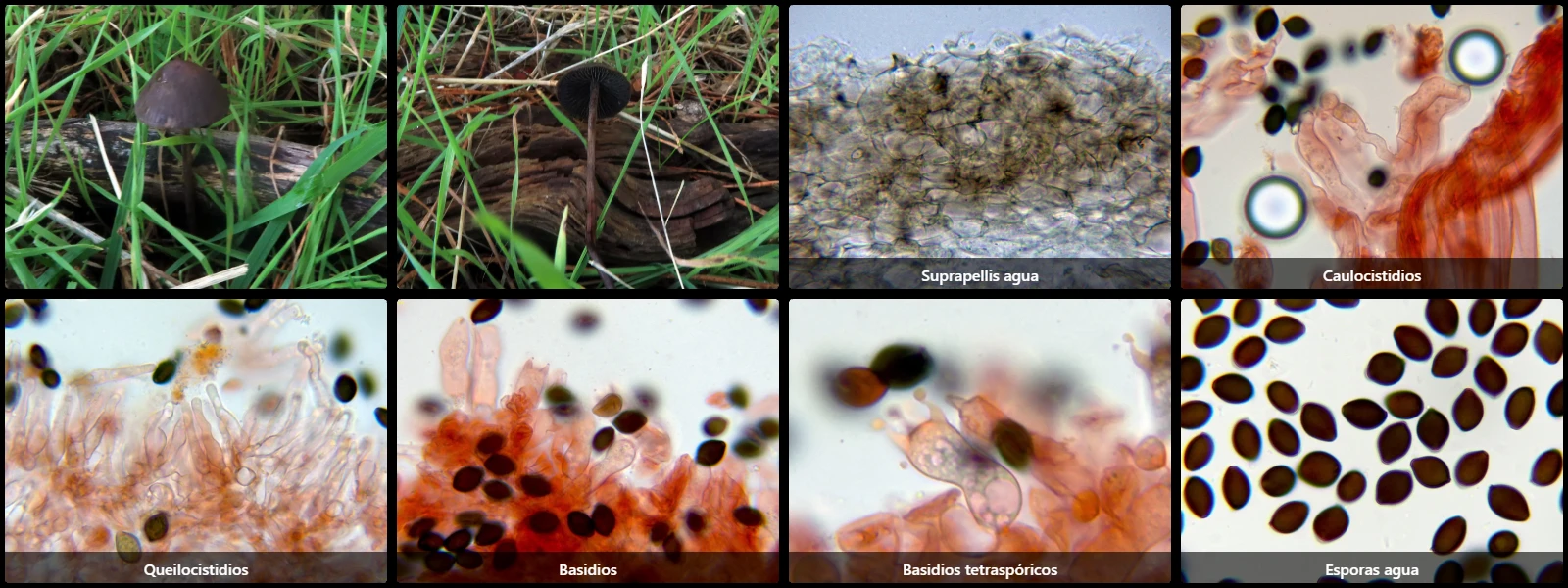
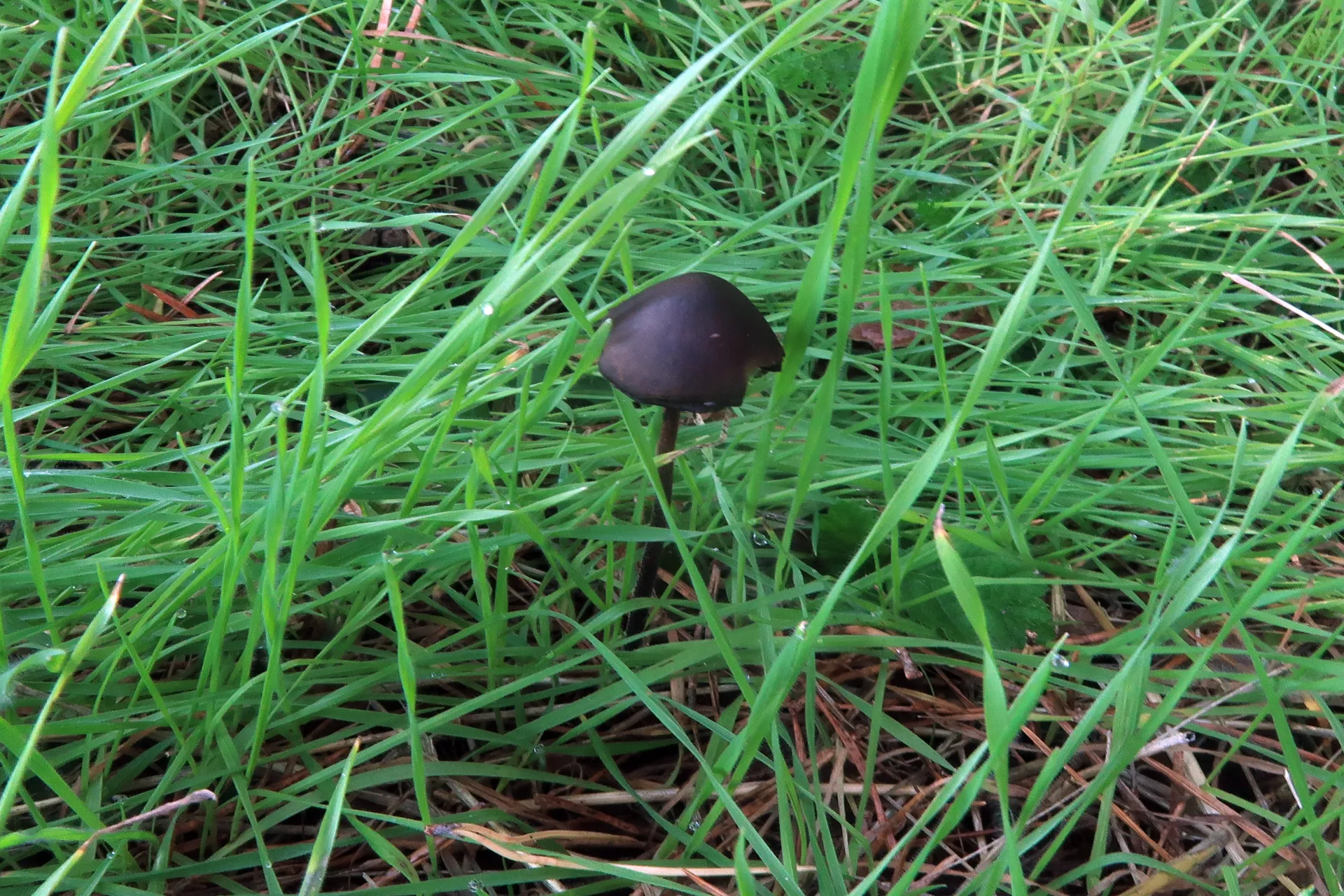
Species characteristic of meadows, pastures, and damp grassy grounds, with a conical-campanulate pileus 1 to 2.5 cm across, dark reddish-brown to blackish, ascending, adnate, blackish lamellae, and a cylindrical, hollow, dark brown stipe coated with whitish pruina.
Pileipellis composed of a hymeniderm of globose to pyriform thin-walled cells 15 to 28 µm in diameter, containing abundant brown intracellular pigment.
Caulocystidia present, particularly at the stipe apex, irregular, cylindrical, flexuous, with rounded apices.
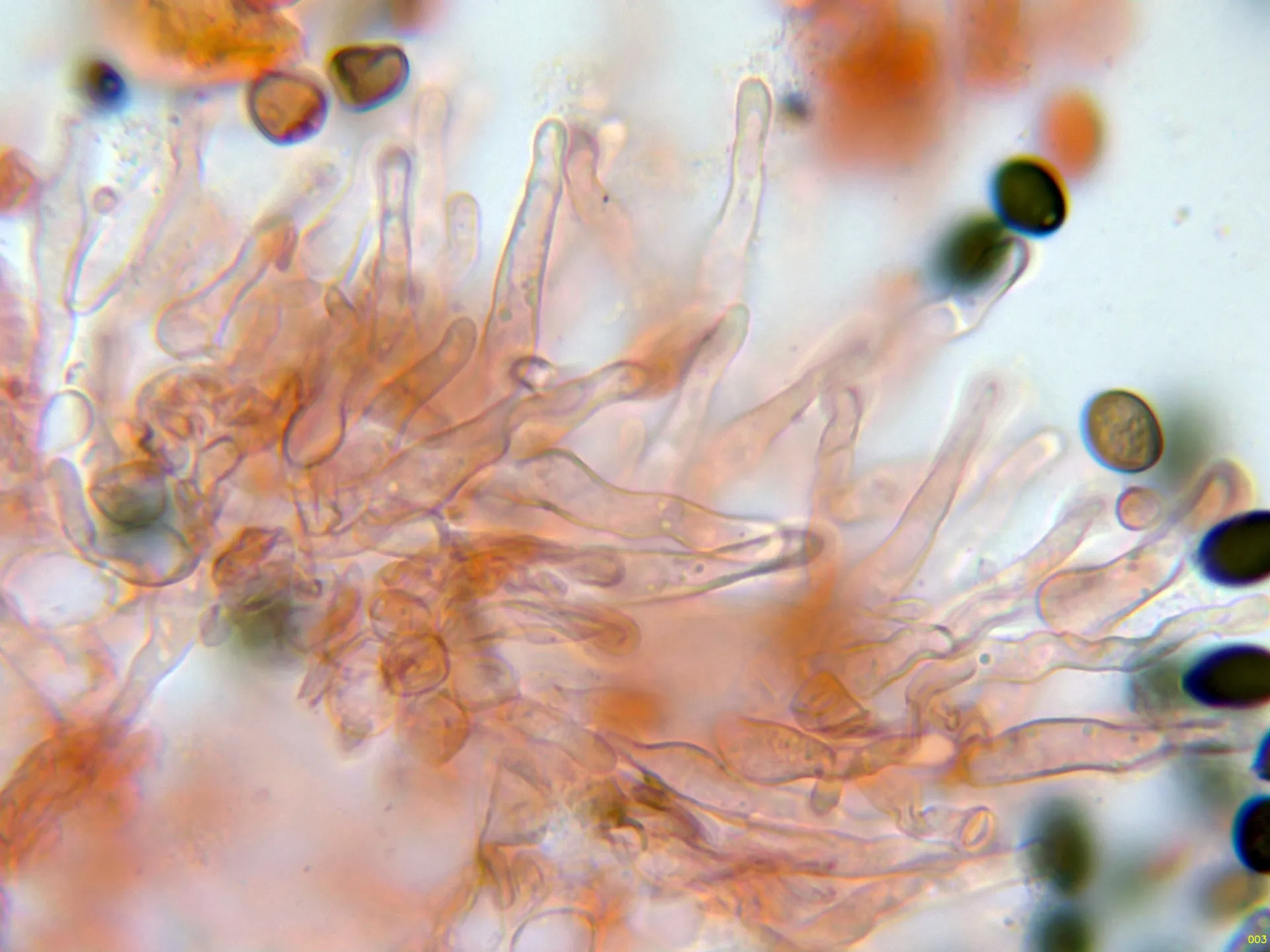
Cheilocystidia subcylindrical to lageniform, sinuous, flexuous, 25 to 38 µm long, 7 to 10 µm wide at the base, tapering into an elongated neck.
Pleurocystidia absent.
Basidia cylindrical-clavate, 20 to 25 µm long, 10 to 14 µm wide, partly clamped, 4-spored.
Spores lentiform to citriform, smooth-walled, brown under the microscope, 10 to 14 µm long, 7.5 to 10 µm wide, with an apiculus at one pole and an evident germ pore at the opposite pole.
Microscopically practically identical to Panaeolus rickenii and long treated as synonymous; today both are accepted as distinct species supported by molecular data. Macroscopically, Panaeolus acuminatus typically has a conical cap (broader than tall) and a nitrophilous, grassy habitat, whereas Panaeolus rickenii has a parabolic cap (taller than broad) and is strictly coprophilous, fruiting directly on dung.
Herbarium material available: JTP2255/24.
Geographic references
Map generated from global occurrence data from GBIF. GBIF.
Study measurements
Values in Microns (µm)Macroscopic gallery
Microscopic gallery