

Pachyella celtica
(Boud.) Häffner
Study description
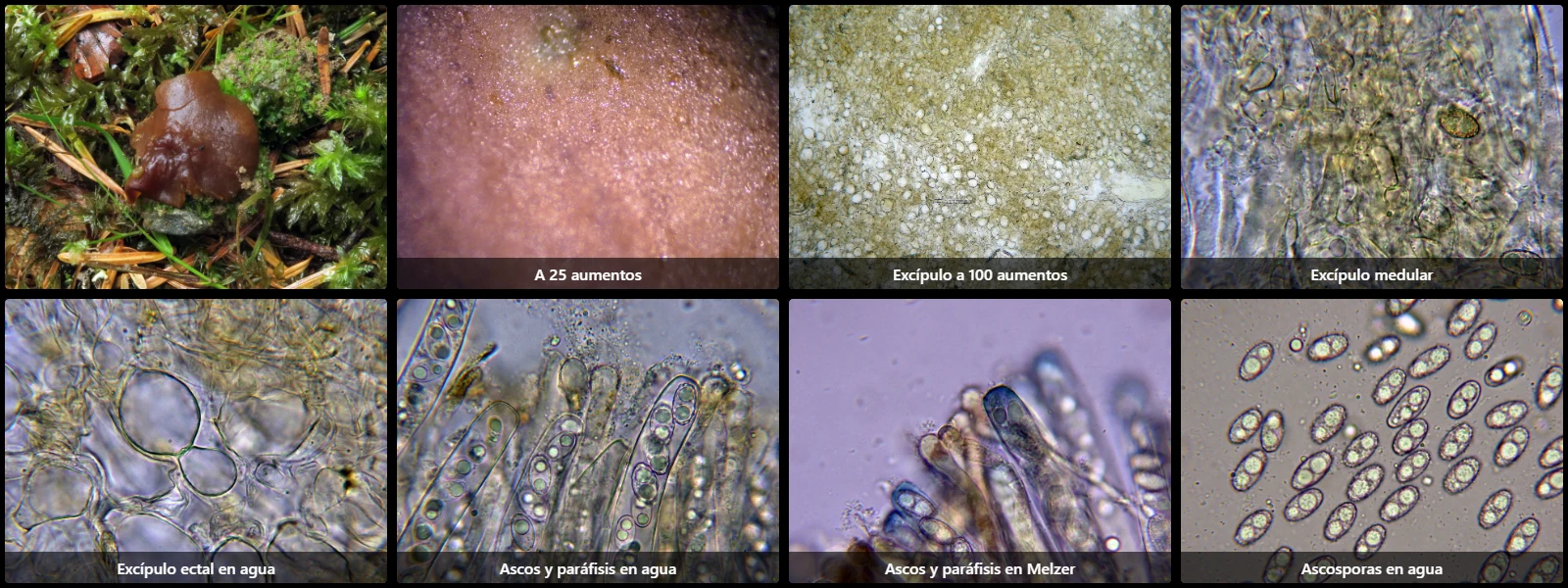
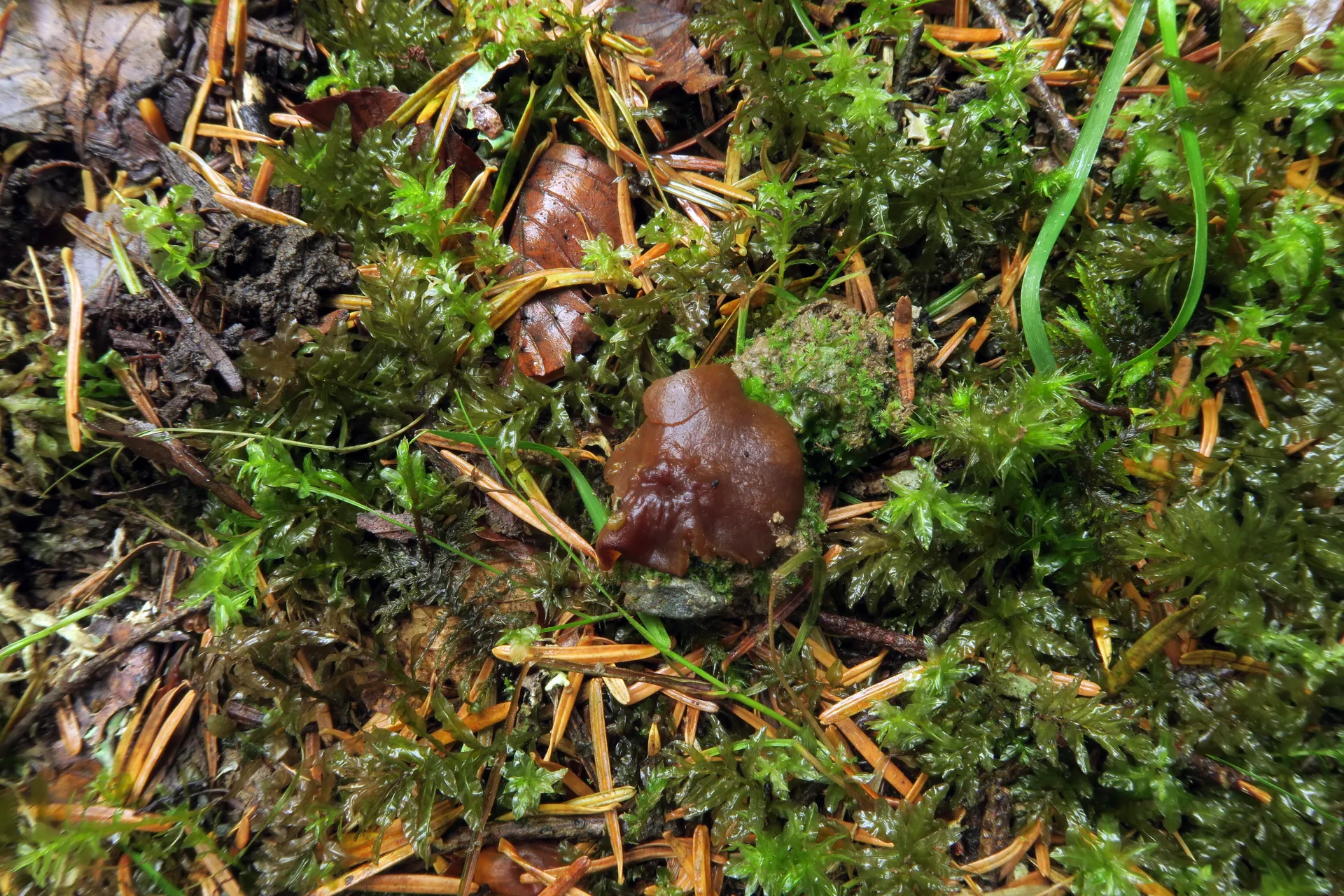
On the ground, on buried decaying woody debris, with cup- or bowl-shaped ascomata flattening with development, with a wavy margin, 2 to 4 cm in diameter, with a smooth brown surface with purple reflections, and of fragile and brittle consistency.
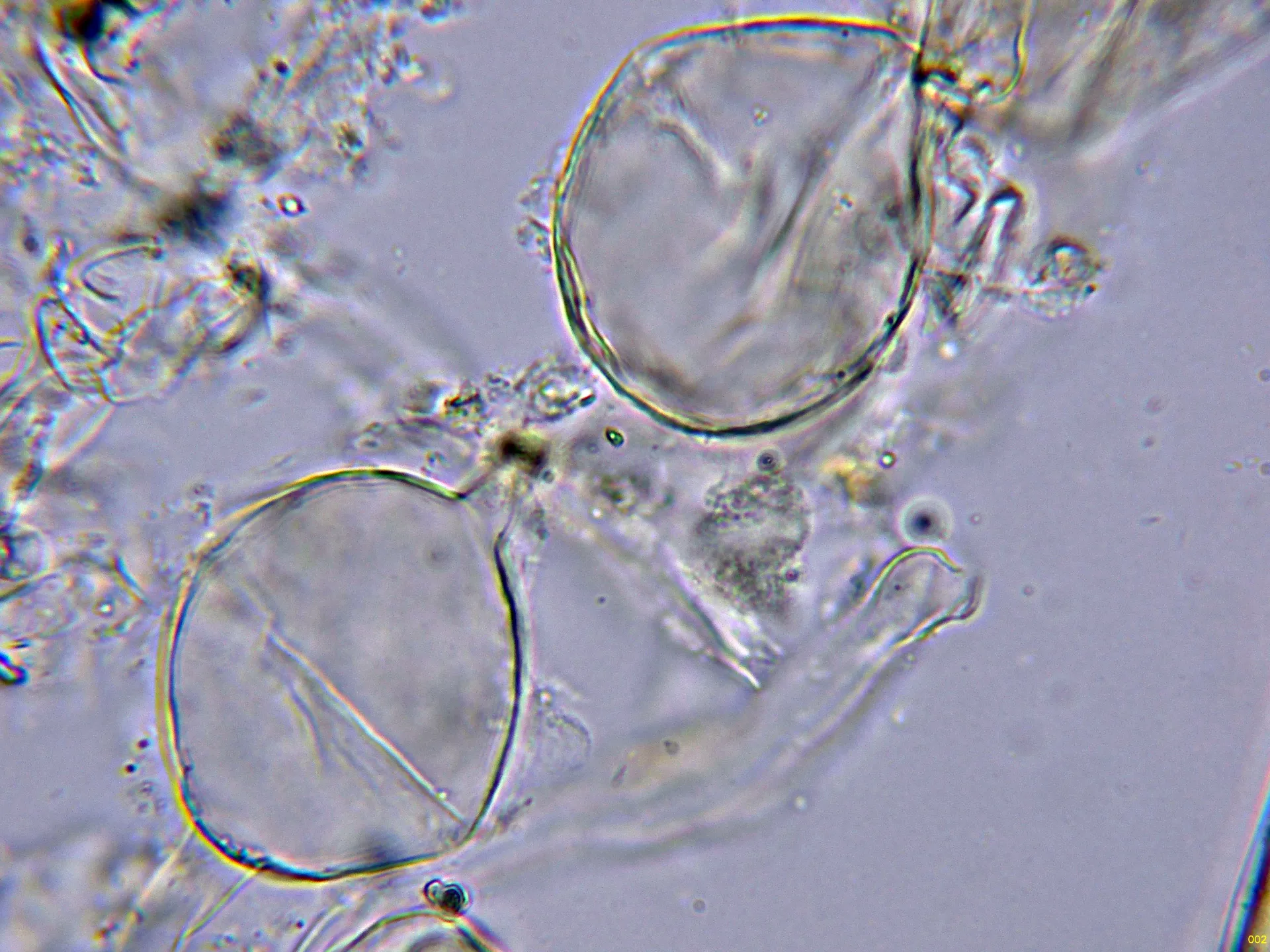
Medullary excipulum of textura intricata, with cylindrical intertwined hyphae, and beneath these large globose, pyriform to clavate hyphae, 25 to 55 µm long by 20 to 40 µm wide, alternating with other cylindrical hyphae 6 to 12 µm wide, all containing slight violaceous-brown pigment inside.
Asci cylindrical, eight-spored (octosporic), 270 to 290 µm long by 12 to 14 µm wide, with uniseriate spore arrangement within the ascus, laterally overlapping each other, and amyloid in Melzer's reagent, especially in the upper part.
Paraphyses filiform, septate, with some branching, 2.5 to 3 µm wide, with apical swellings 4 to 6 µm wide, with brown intracellular pigment, barely or not at all projecting above the level of the asci.
Ascospores ellipsoidal, hyaline, thick-walled and verrucose, 15 to 18 µm long by 7 to 9 µm wide, ornamented with scattered warts evenly distributed over their entire surface, mostly with two large oil drops (guttules) inside, one at each pole of the spore.
Herbarium material available: JTP2846/26.
Geographic references
Map generated from global occurrence data from GBIF. GBIF.
Study measurements
Values in Microns (µm)Macroscopic gallery
Microscopic gallery