Otidea cochleata
(L.) Fuckel
Study description
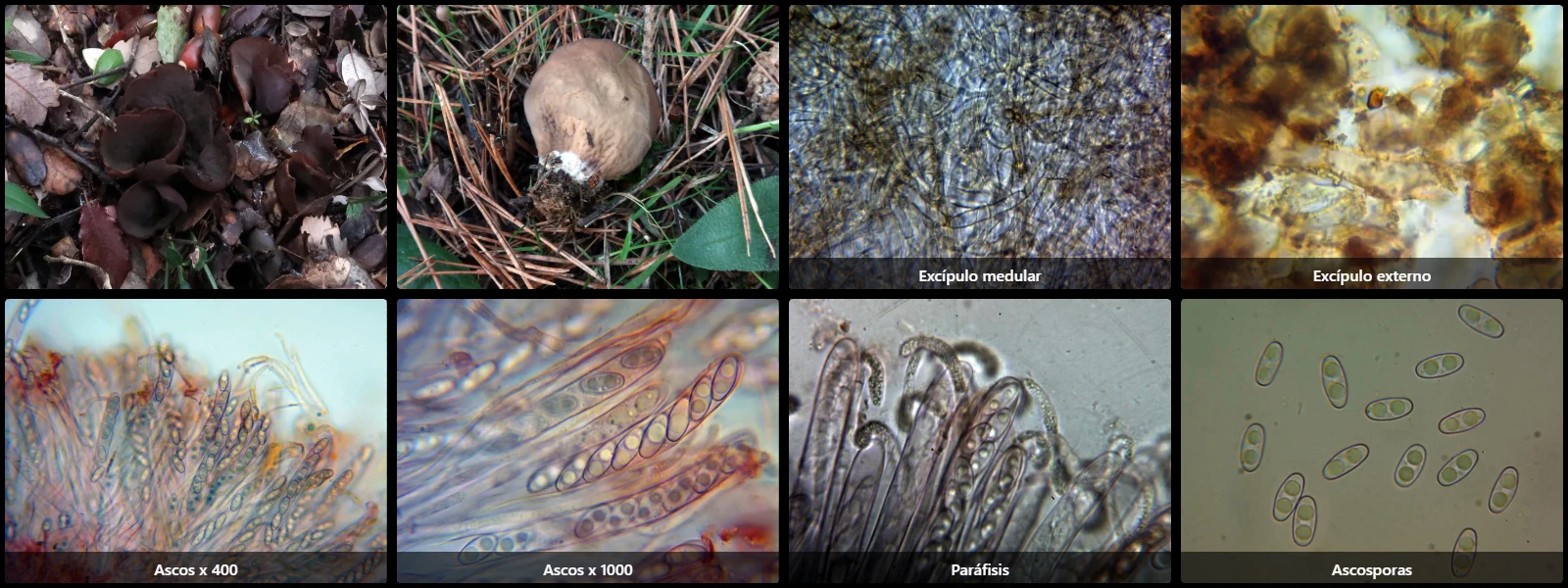
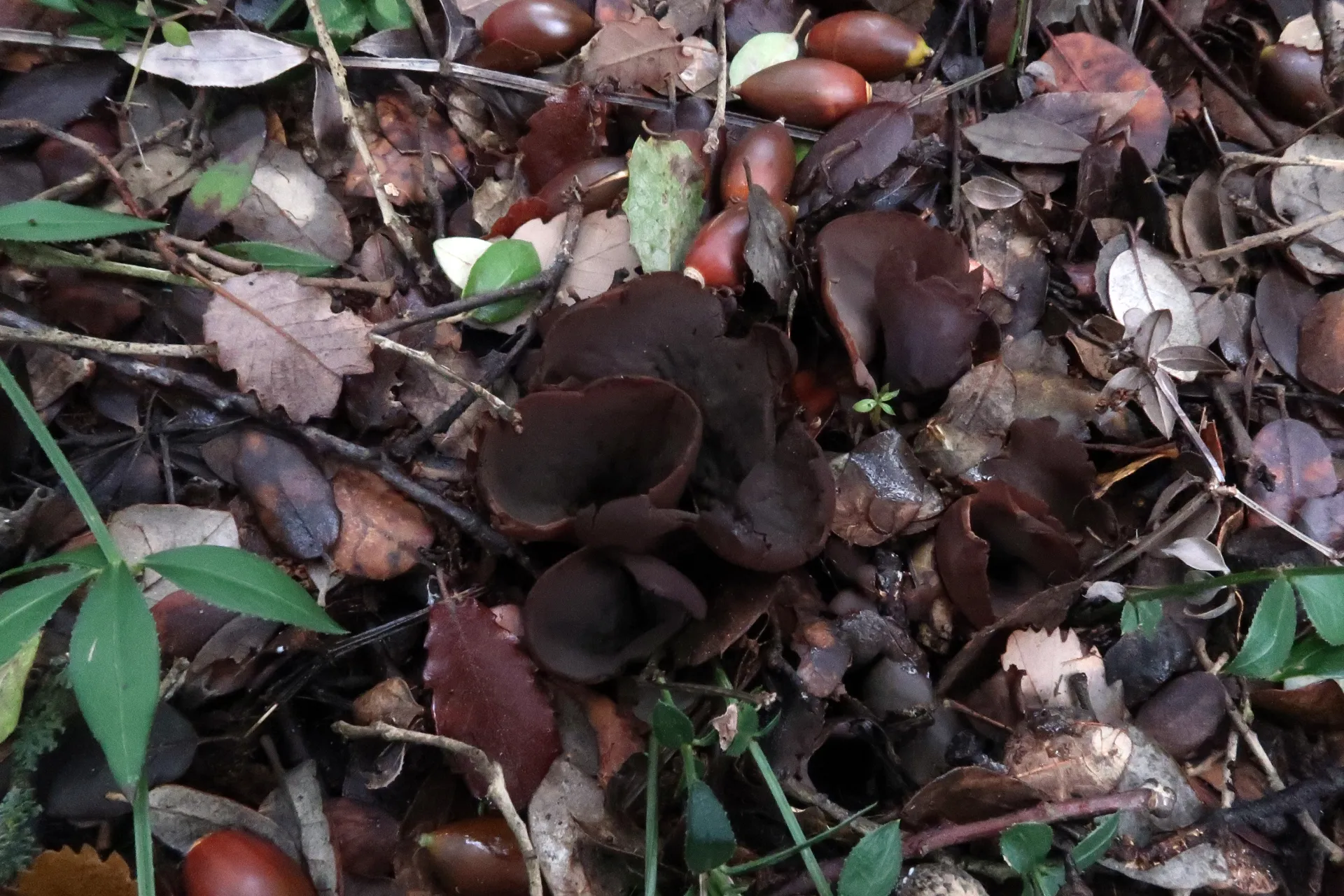
Formerly known as Otidea umbrina, with deep cup-shaped to ear-shaped apothecia 1.5–3 cm in diameter by 2–4.5 cm high, dark reddish-brown to violaceous-brown, verrucose to wrinkled towards the base, with abundant whitish to pale brown basal tomentum.
Medullary excipulum of textura intricata, with thick-walled interwoven hyphae 4–9 µm wide, hyaline or containing brown intracellular pigment, often with dark brown resinous exudates.
Ectal excipulum of thin-walled textura angularis with brown intracellular pigment, cells 15–30 µm long by 12–25 µm wide; outermost elements forming hyphoid hairs up to 80 µm tall composed of 3 to 4 subglobose to cylindrical cells constricted at the septa, 6–11 µm wide, often encrusted with dark brown resinous exudates.
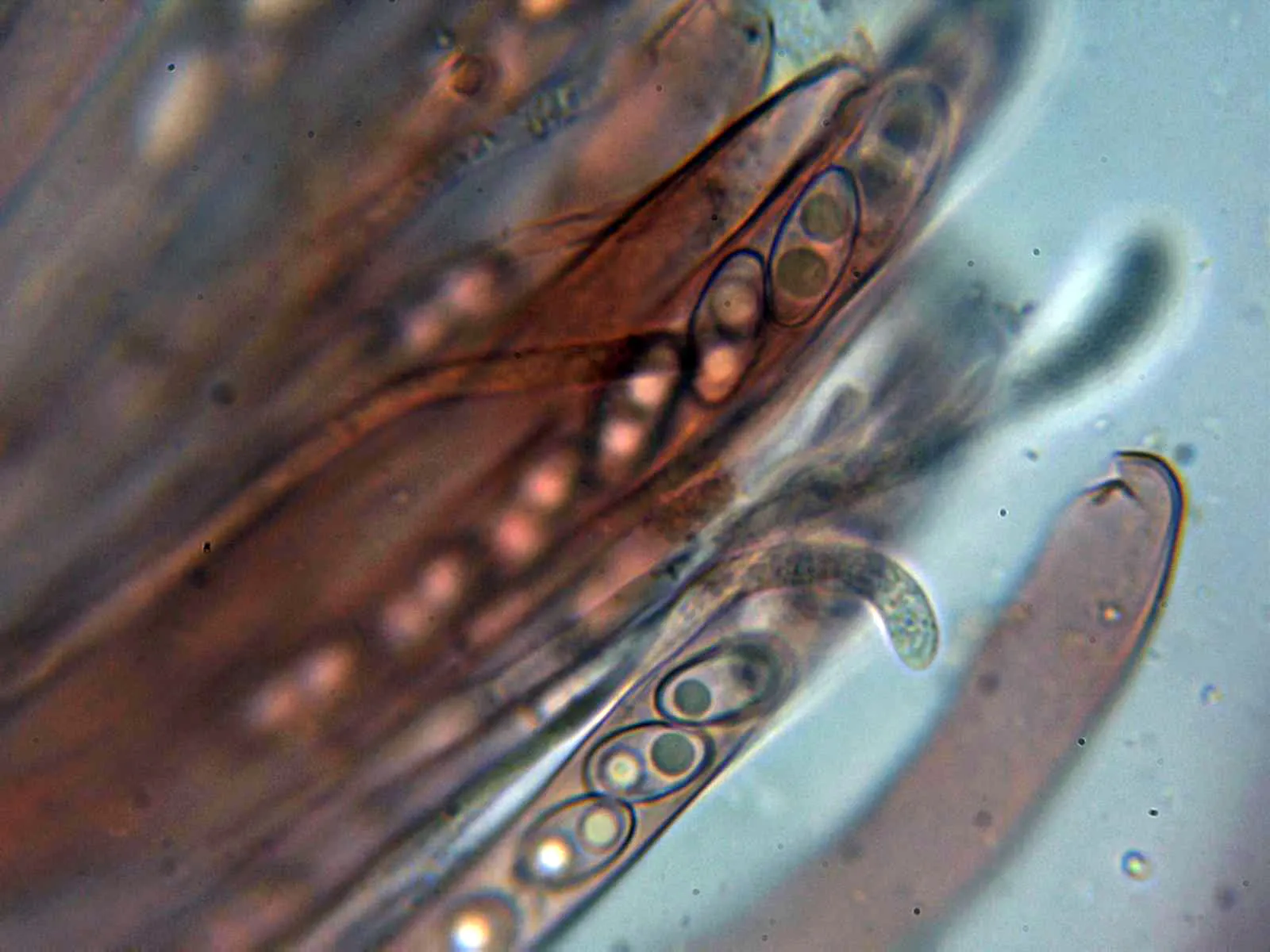
Asci cylindrical, 8-spored, operculate, measuring 140–170 µm long by 10–12 µm wide, uniseriate with slightly overlapping spores concentrated in the upper part of the ascus, inamyloid in Melzer's reagent.
Paraphyses filiform with curved to hooked apices, only slightly widened at the tip (4–6 µm wide), filled with abundant small refractive pale yellow guttules.
Ascospores cylindrical-ellipsoidal to slightly fusiform, inequilateral, smooth, hyaline, moderately thick-walled, measuring 13.5–15.5 µm long by 6–7 µm wide, containing two large oil guttules inside.
Geographic references
Map generated from global occurrence data from GBIF. GBIF.
Study measurements
Values in Microns (µm)Macroscopic gallery
Microscopic gallery