Orbilia eucalypti
(W.Phillips & Harkn.) Sacc.
Study description
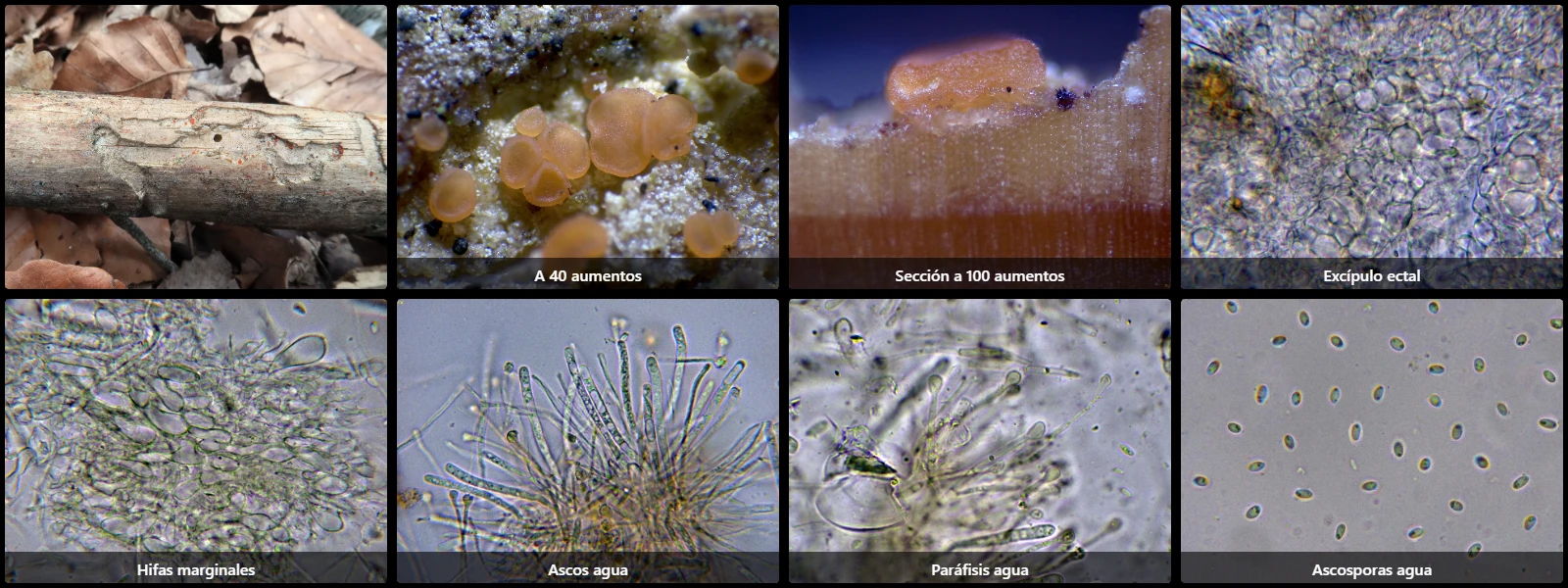
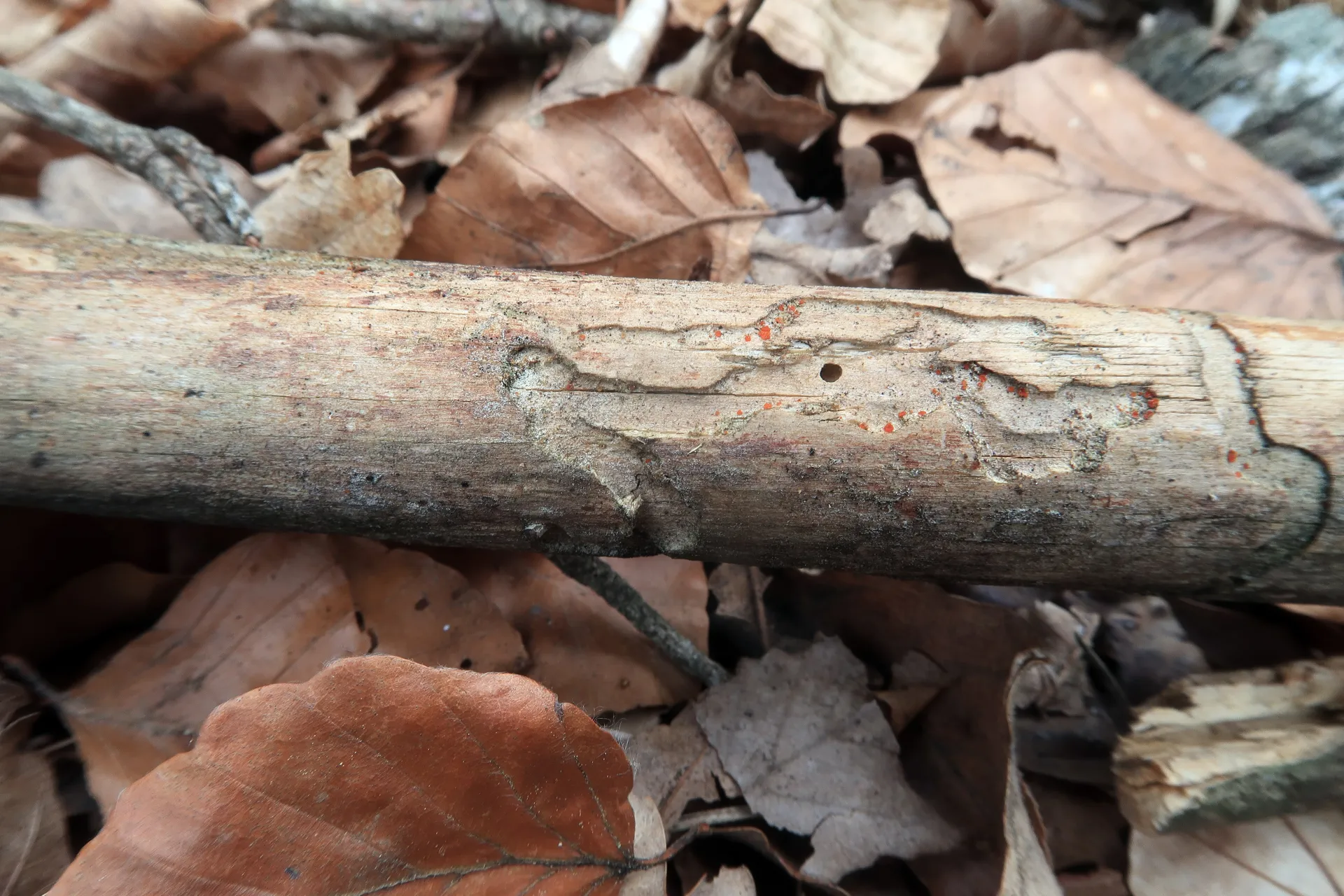
Despite what the specific epithet might suggest, this species can colonise a wide variety of deciduous woods such as alder, birch, or oak, with thick-margined disc-shaped apothecia 0.3–0.7 mm across, ranging from orange to pinkish, waxy in appearance, and developing an undulate margin with maturity.
Medullary excipulum layered, with textura intricata to textura prismatica.
Ectal excipulum of textura globulosa-angularis with rounded to polygonal, hyaline, thin-walled cells 8–18 µm in diameter, which towards the apothecial margin become pyriform, ellipsoidal to clavate, measuring 12–25 µm long by 6–11 µm wide.
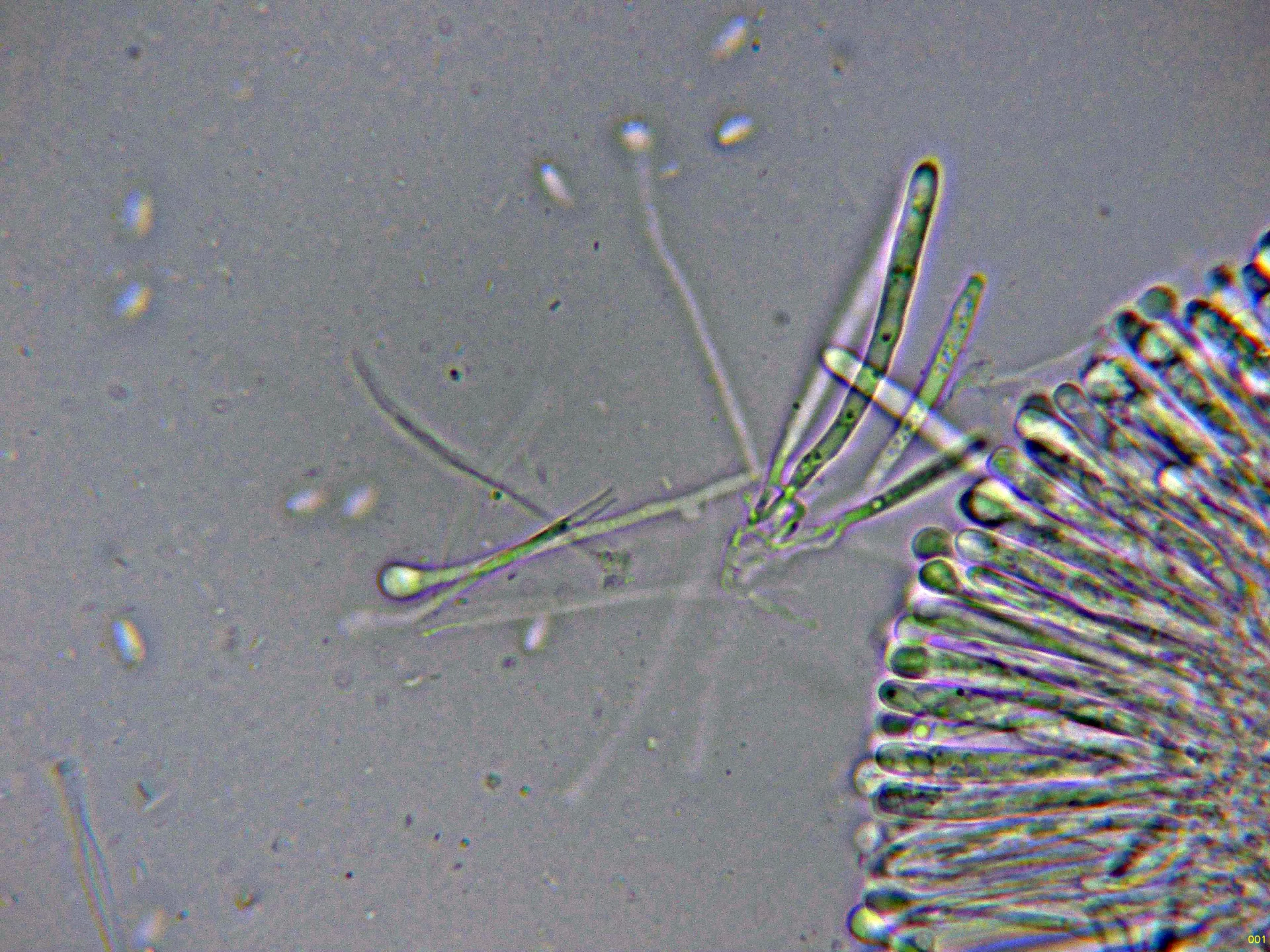
Asci cylindrical-clavate, 8-spored, measuring 35–45 µm long by 3.5–4.5 µm wide, with a truncate apex and uniseriate to slightly oblique spore arrangement, inamyloid in Melzer's reagent.
Paraphyses filiform, 1.2–1.5 µm wide at the base, with a distinctly capitate apex 3–5 µm wide.
Ascospores ovoid to ellipsoidal, smooth, hyaline, thin-walled, measuring 3.5–4.5 µm long by 2–2.6 µm wide, containing small spore bodies (refractive inclusions) inside.
Herbarium material available: JTP2085/24 and JTP2141/24.
Geographic references
Map generated from global occurrence data from GBIF. GBIF.
Study measurements
Values in Microns (µm)Macroscopic gallery
Microscopic gallery