

Ombrophila janthina
(Fr.) Sacc.
Study description
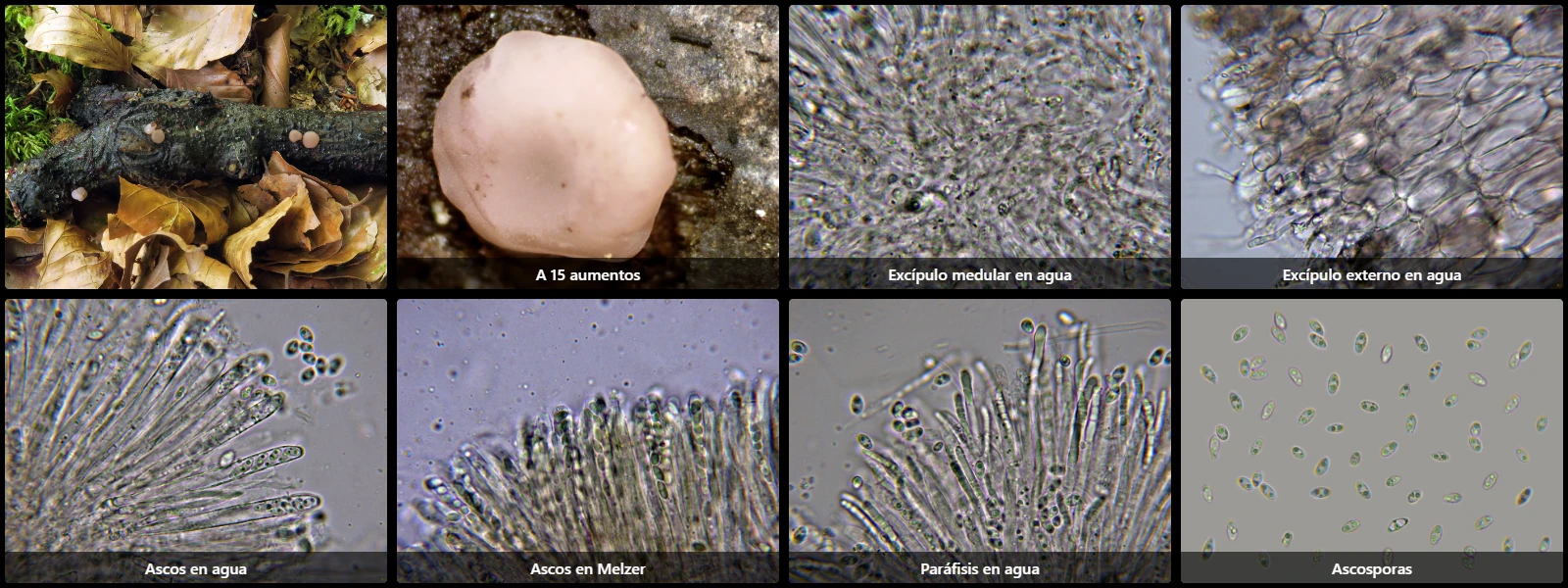
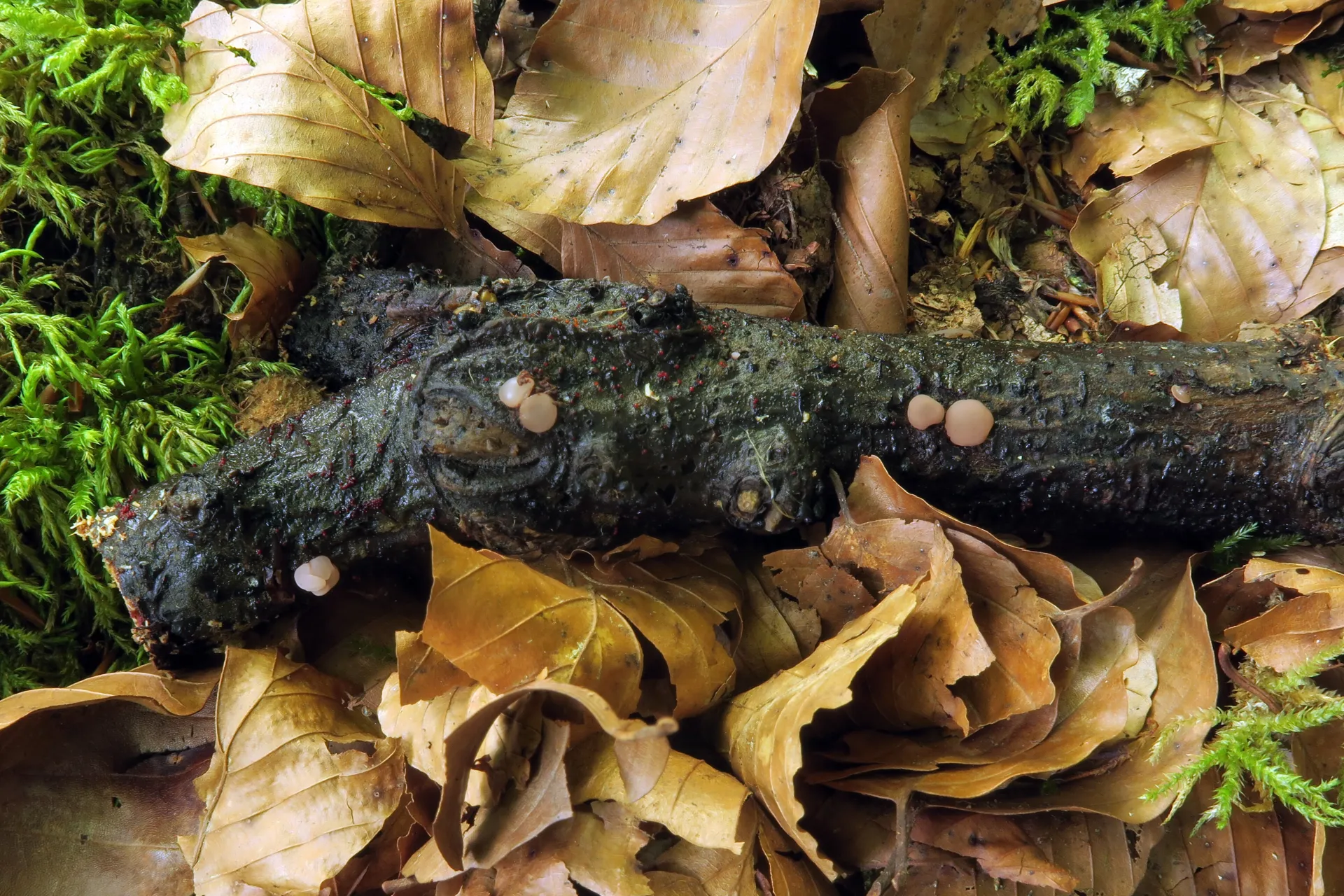
On very wet or semi-submerged decaying wood or bark on the ground, formerly known as Ombrophila violacea, with disc-shaped ascomata, 2 to 7 mm in diameter, with a smooth greyish-brown surface with violaceous tints, attached to the substrate by a very short, rudimentary stipe, and of gelatinous consistency.
Medullary excipulum of textura intricata, with filamentous, hyaline, densely intermixed hyphae, 2 to 5 µm wide, branched and embedded in a gelatinous matrix.
Ectal excipulum of textura angularis to prismatica, with outer hyphae arranged in a palisade, thin- to slightly thick-walled, 12 to 30 µm long by 8 to 15 µm wide, with violaceous pigment inside, and some narrow filiform terminal hyphae projecting considerably beyond the outer wall, 2.5 to 4.5 µm wide.
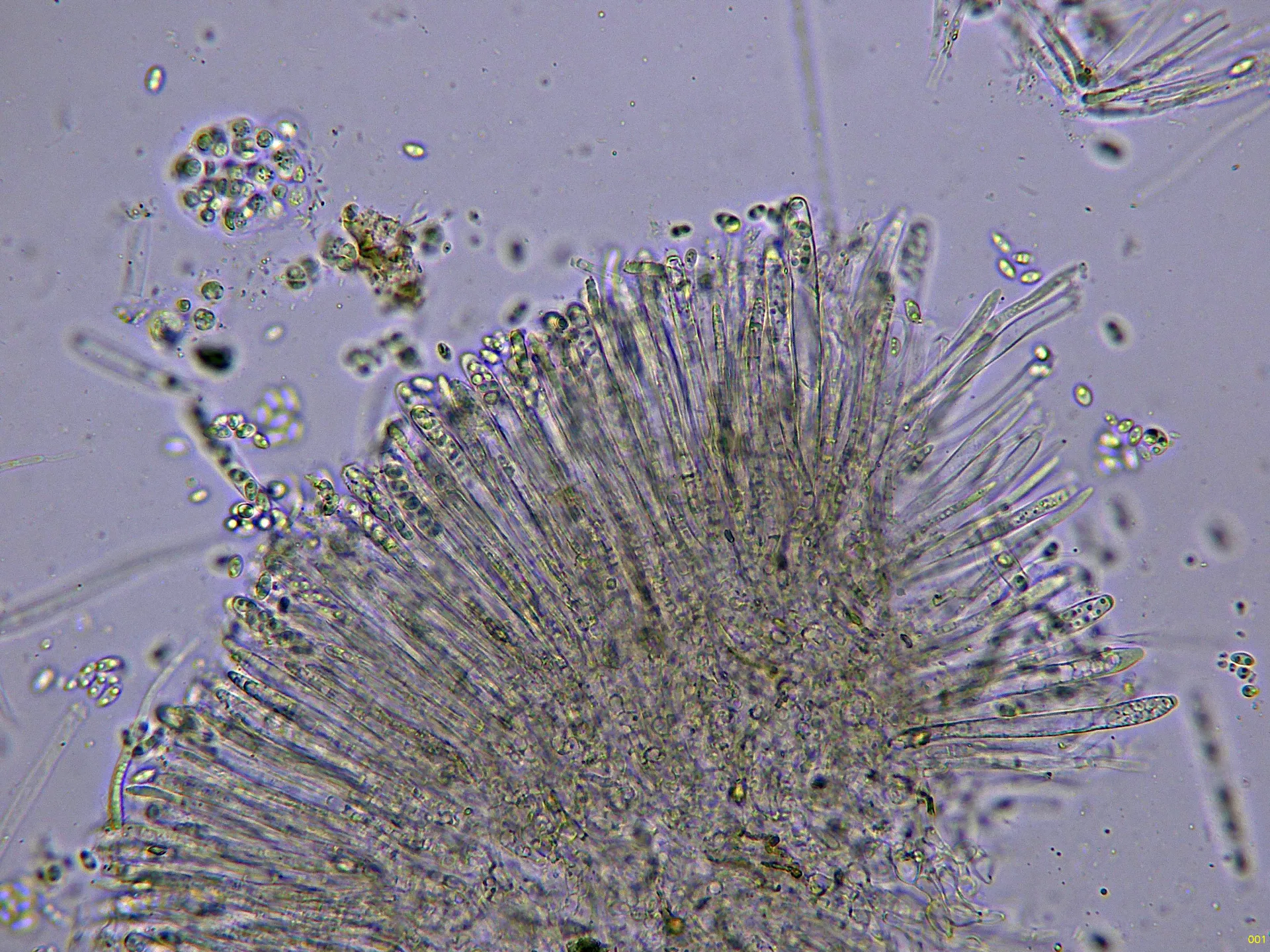
Asci cylindric-clavate, eight-spored (octosporic), 70 to 100 µm long by 6 to 8.5 µm wide, with uniseriate spore arrangement within the ascus (in a single row one behind the other), obliquely overlapping each other, and with an apical ring amyloid in Melzer's reagent or Lugol's solution.
Paraphyses filiform, simple or branched at the base, septate, 2 to 3.5 µm wide, with slight apical swellings up to 4 µm, containing refractive vacuolar contents inside, and projecting very slightly above the level of the asci.
Ascospores ellipsoidal, smooth, hyaline, thin-walled, non-septate, 6 to 9.5 µm long by 3.5 to 4.5 µm wide, generally with two large oil drops (one at each end).
Herbarium material available: JTP2832/26.
Geographic references
Map generated from global occurrence data from GBIF. GBIF.
Study measurements
Values in Microns (µm)Macroscopic gallery
Microscopic gallery