Odontia fibrosa
(Berk. & M.A.Curtis) Kõljalg
Study description
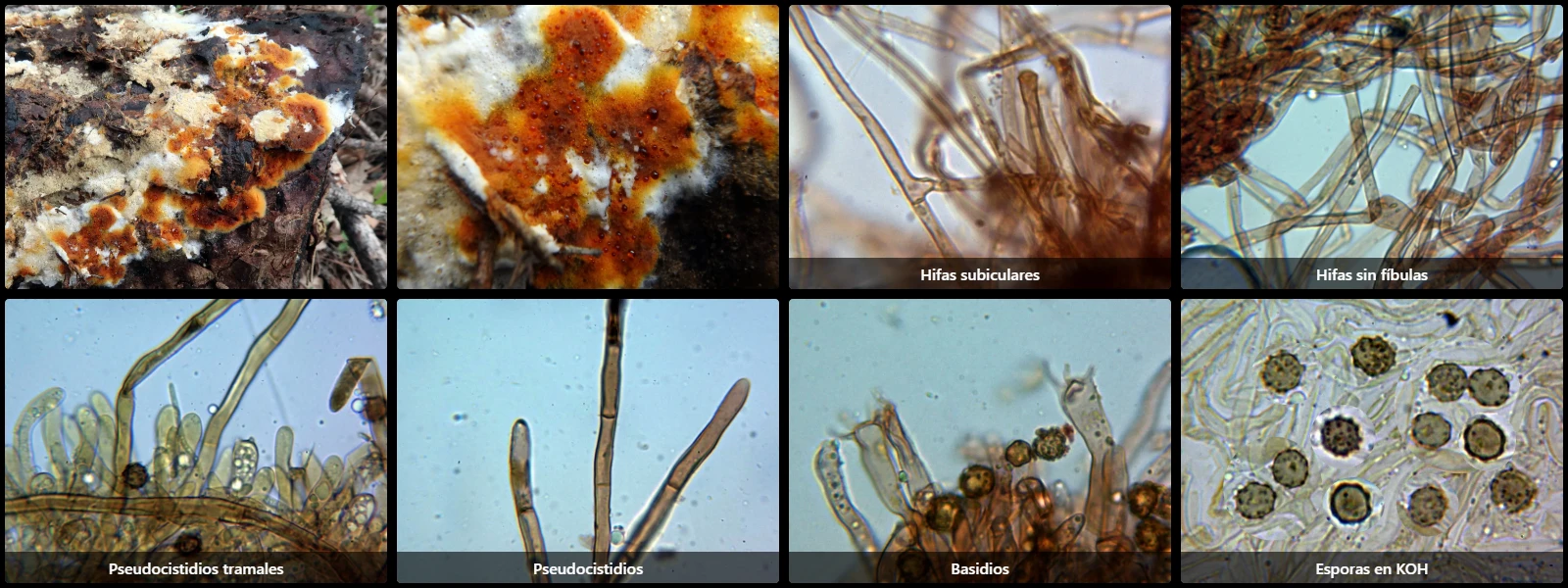
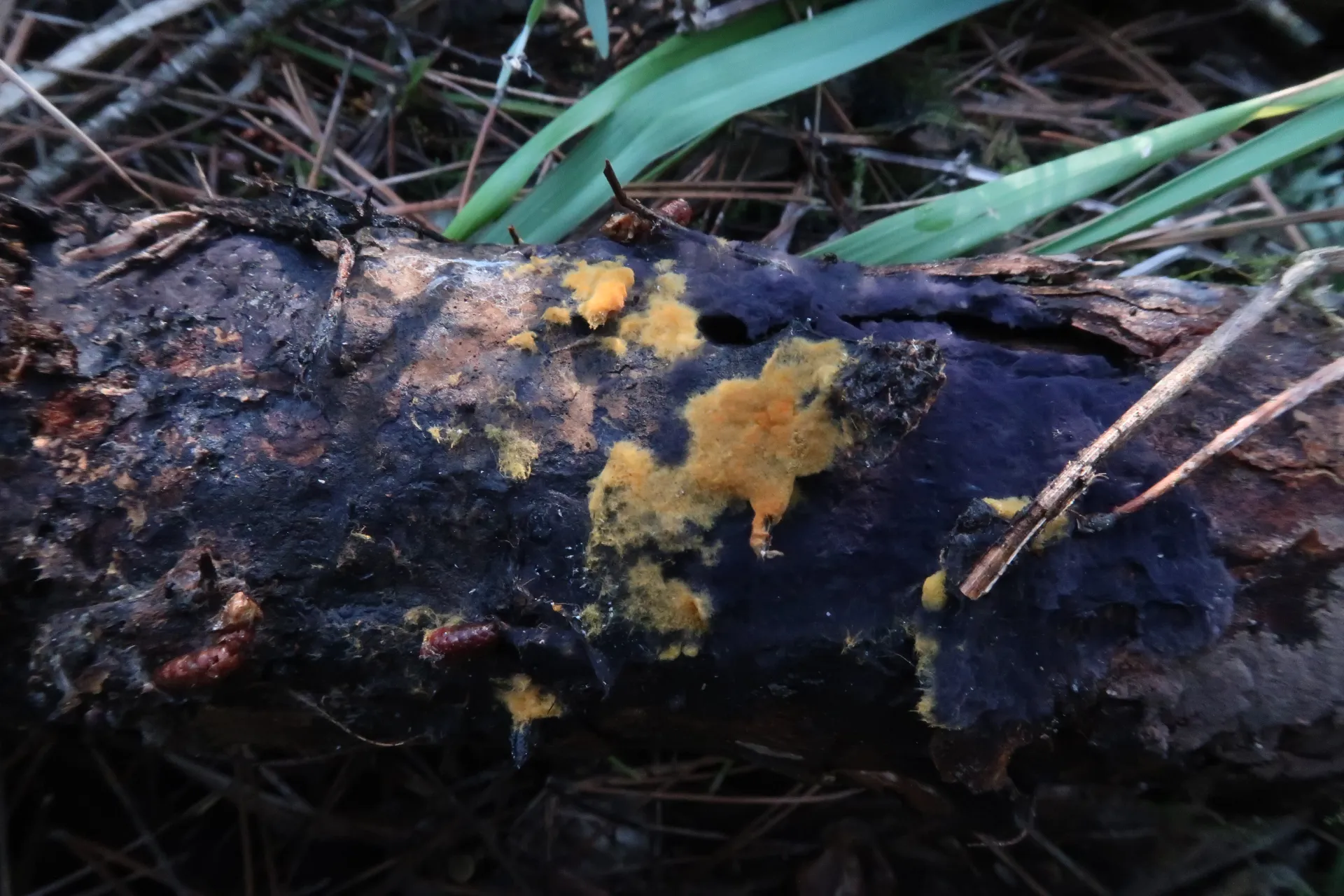
Under broadleaf trees, on dead decaying wood on the ground, formerly known as Tomentella fibrosa, with completely resupinate fruit bodies, brownish to reddish-brown, cottony surface, and a paler, poorly delimited growing margin.
Monomitic hyphal system, with thick-walled subicular hyphae containing brownish intracellular pigment, 2.5 to 4.5 µm wide, branched, septate with simple septa, and hyaline, thin-walled subhymenial hyphae, 2 to 3.5 µm wide, and like the subicular hyphae, septate without clamp connections.
Numerous emerging terminal elements in the hymenium resembling pseudocystidia, septate, with brown pigment inside, 160 to 200 µm long, 6 to 8 µm wide, with rounded apex.
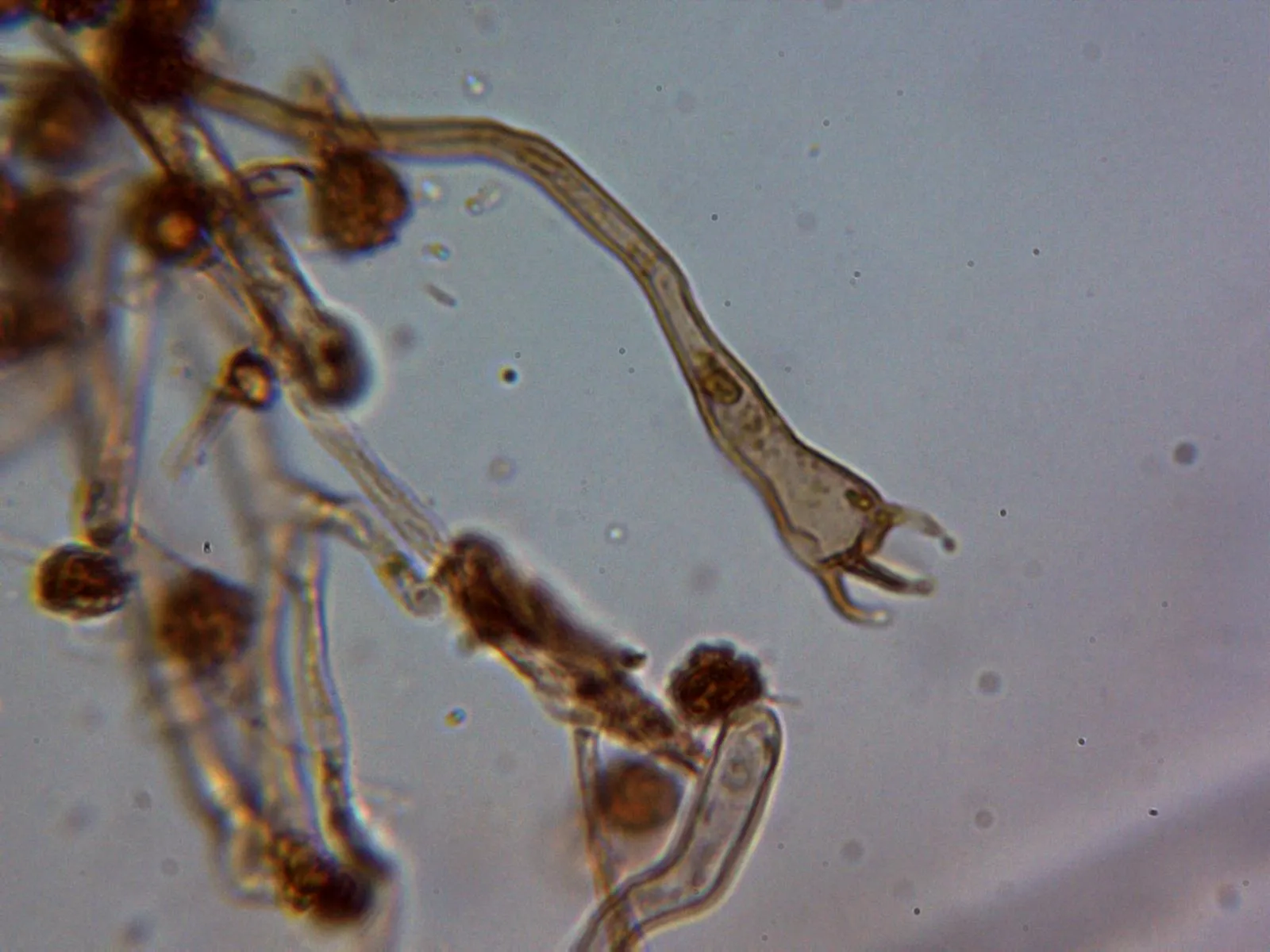
Basidia cylindric-clavate, 40 to 55 µm long, 6 to 8 µm wide, turning greenish in KOH, with simple base, 4-spored.
Spores globose to subglobose, thick-walled, pale brown under the microscope, 6.5 to 8.5 µm long, 6 to 8 µm wide, ornamented with short warts 0.5 to 1.2 µm high, inamyloid in Melzer's reagent.
Geographic references
Map generated from global occurrence data from GBIF. GBIF.
Study measurements
Values in Microns (µm)Macroscopic gallery
Microscopic gallery