

Niemelaea cremea
(Parmasto) Zmitr., Ezhov & Khimich
Study description
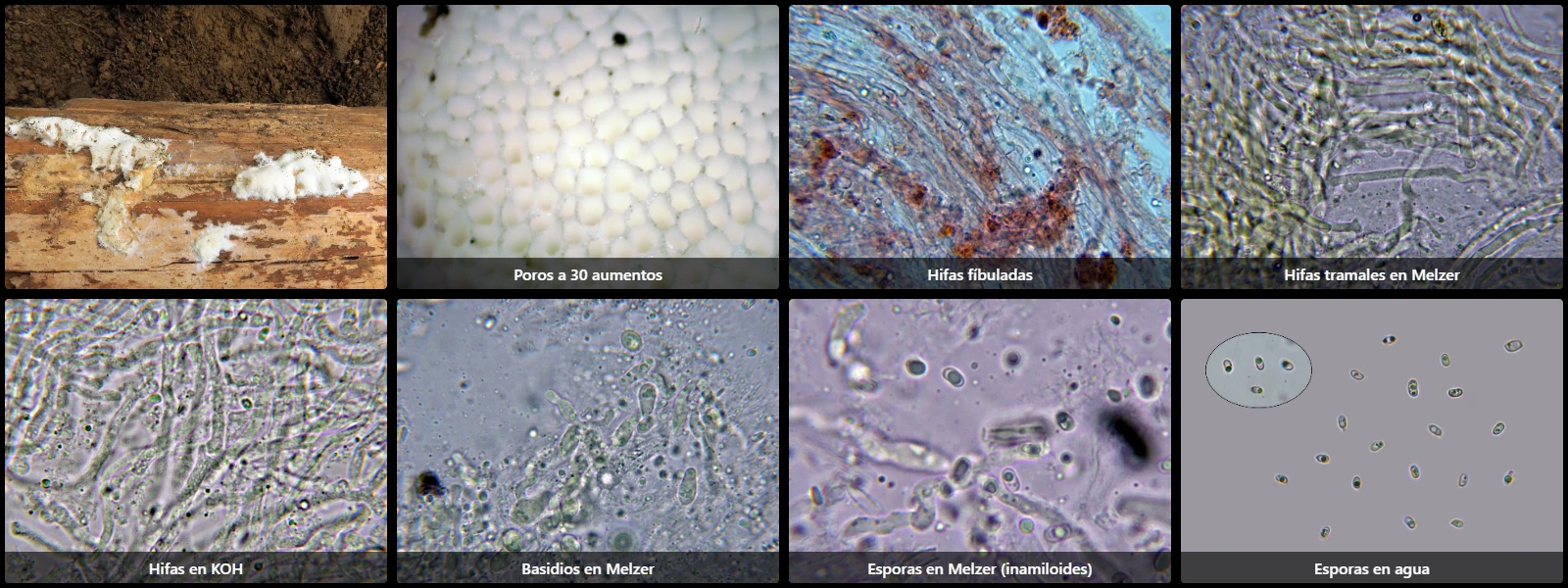
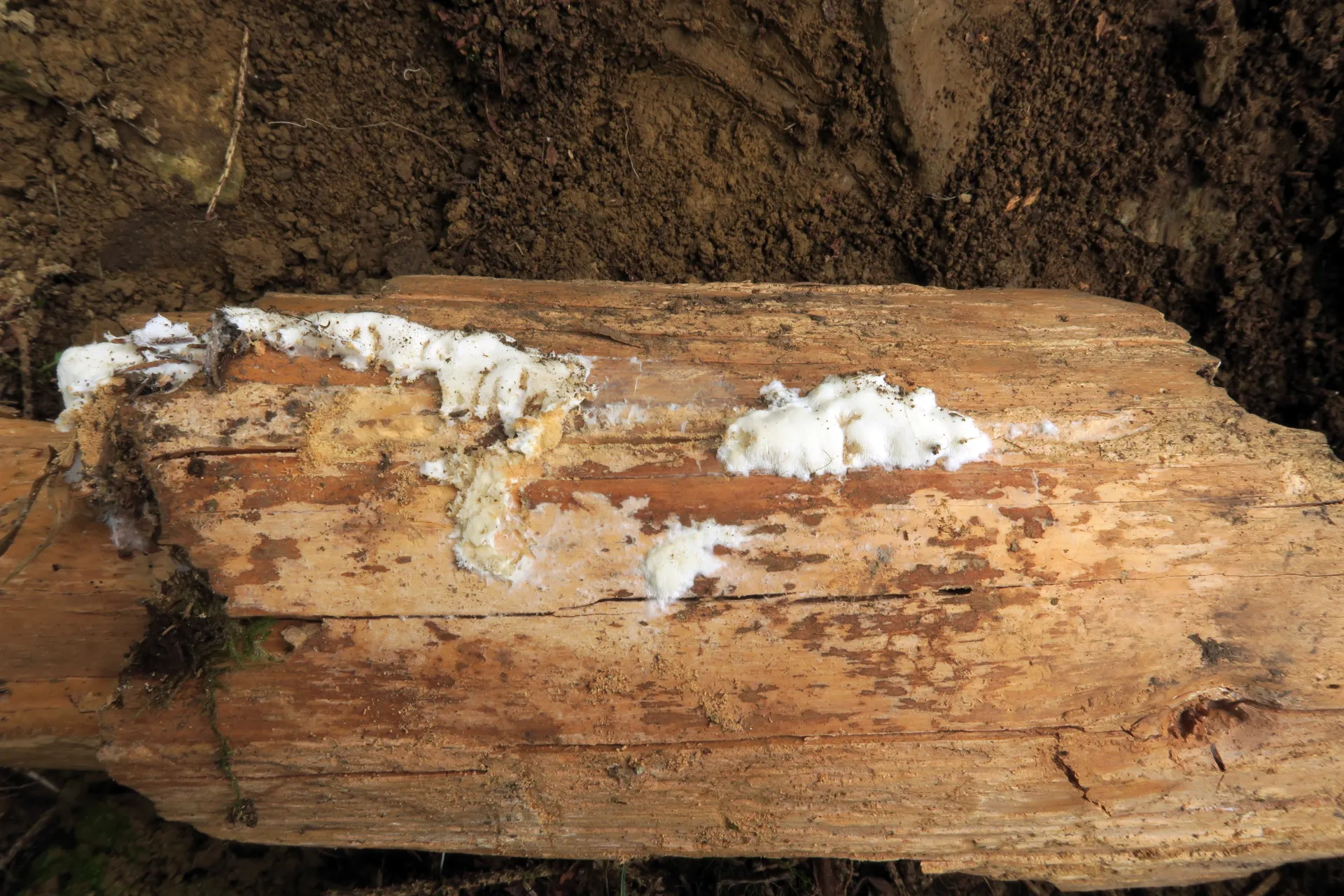
On decaying decorticated wood on the ground, with completely resupinate basidiomes, whitish to pale cream, with 1 to 2 angular and irregular pores per mm, quite thick, with a single tube layer 2 to 5 mm thick, of soft consistency when fresh, and with a fibrous, ill-defined growing margin.
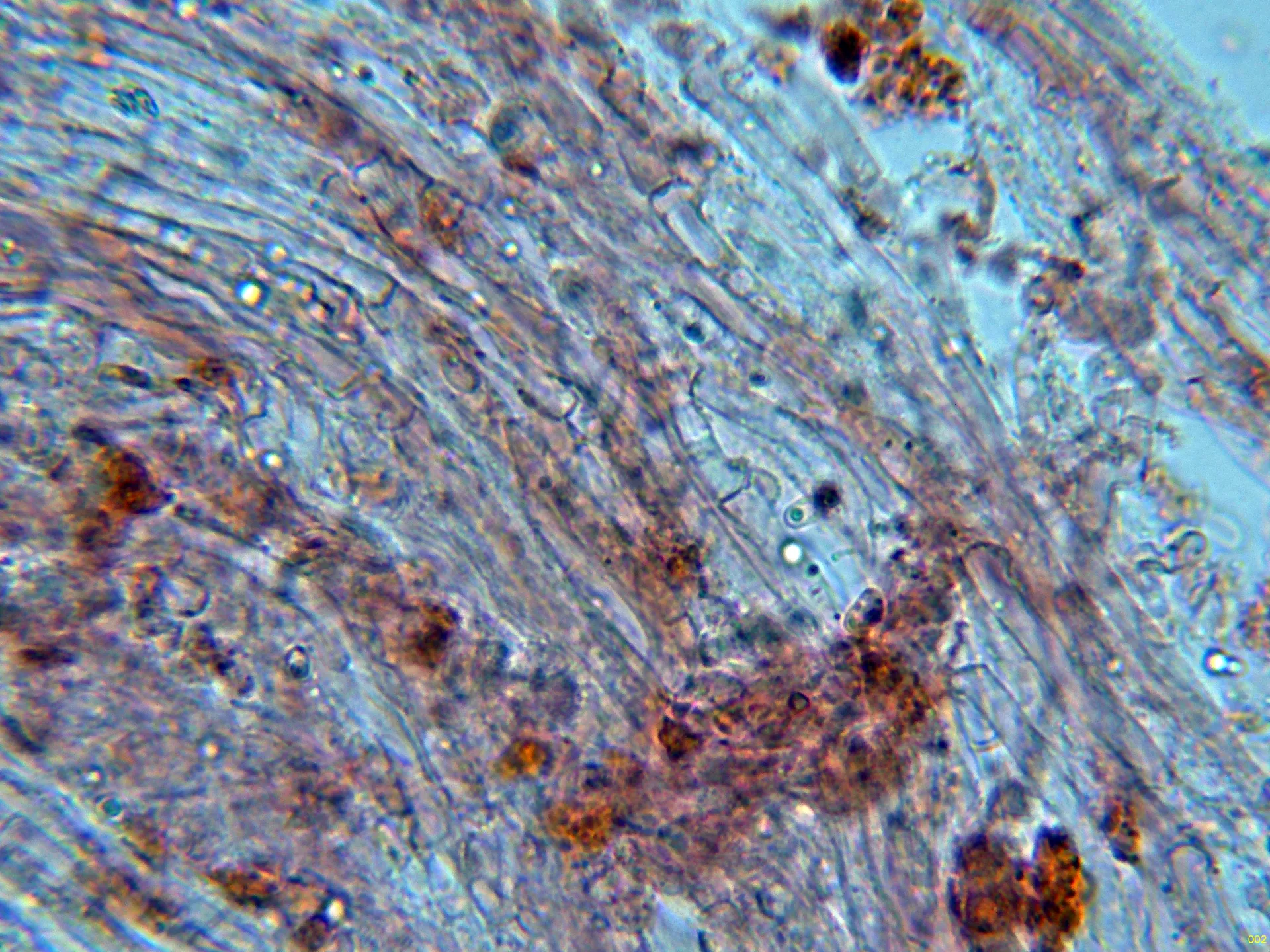
Monomitic hyphal system, with hyphae hyaline or with only a slight yellowish pigment inside, thin- to very slightly thick-walled, 2.5 to 5 µm wide, occasionally with minute crystalline encrustations on their surface, septate with coarse clamp connections.
Without cystidia or other sterile elements in the hymenium.
Basidia clavate, 12 to 17 µm long by 5 to 6 µm wide, with basal clamp connections and tetrasporic.
Spores cylindric-ellipsoidal, smooth, hyaline, with a slightly thickened and well-defined wall, with an eccentric apiculus at one end, 4 to 5.5 µm long by 2.5 to 3.2 µm wide, containing oil drops (guttules) of varying sizes inside, and inamyloid in Melzer's reagent.
It differs from its congener, the common Niemelaea consobrina, in spore morphology, with ellipsoidal spores having a mean Q quotient of Qe=1.5 for Niemelaea consobrina, versus cylindric-ellipsoidal spores with a mean Q quotient of Qe=1.7 for Niemelaea cremea.
Herbarium material available: JTP2852/26.
Geographic references
Map generated from global occurrence data from GBIF. GBIF.
Study measurements
Values in Microns (µm)Macroscopic gallery
Microscopic gallery