Neodeightonia phoenicum
A.J.L.Phillips & Crous
Study description
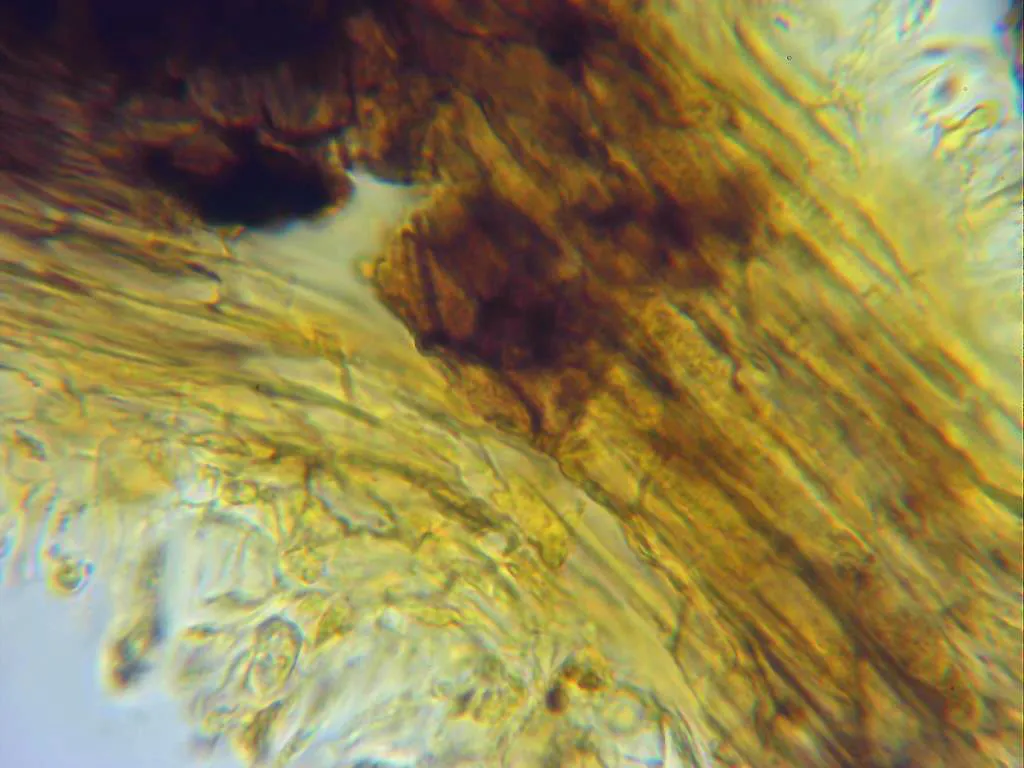
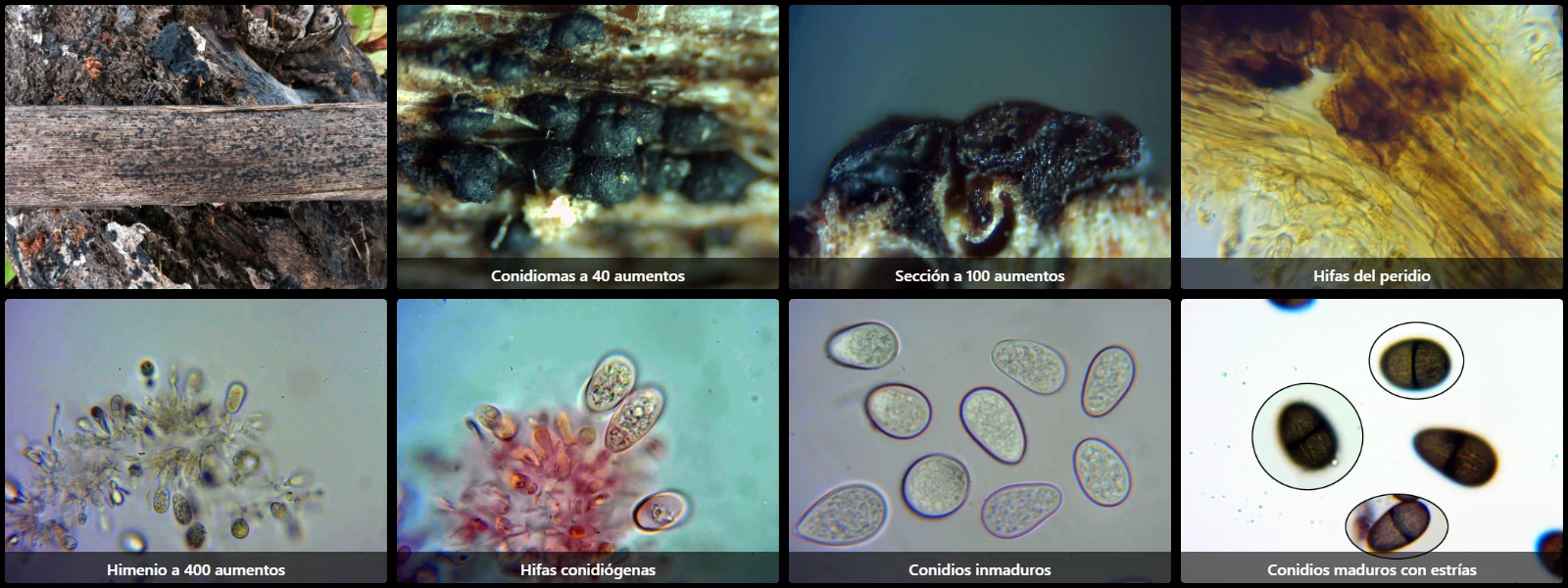
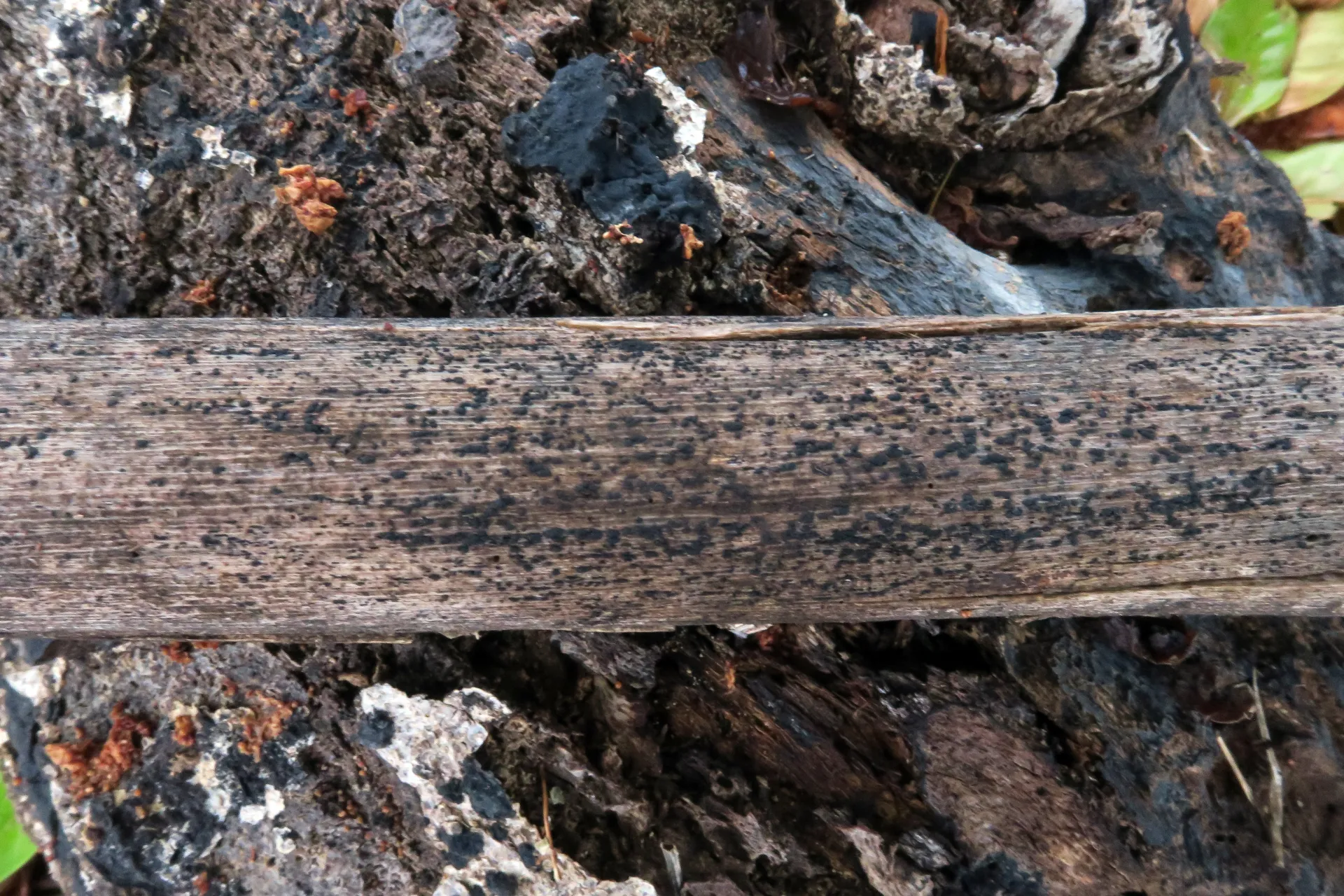
Species restricted to palms, especially Phoenix canariensis, Phoenix dactylifera, or Cocos nucifera, infecting leaves, rachises, or spathes, with conidiomata appearing as irregular, coalescent, blackish deformed grains (pycnidia), occurring in dense, extensive aggregations across the substrate.
Conidiogenous cells arranged in parallel, subcylindrical to very slightly lageniform, smooth, hyaline, thin-walled, slightly widened at the base, measuring 10–24 µm long by a maximum width of 3.5–5.5 µm.
Conidia ovoid, ellipsoidal to oblong, some with a slightly pointed end, initially unicellular, hyaline, moderately thick-walled, measuring 20–27 µm long by 12.5–17.5 µm wide; with maturity they become dark brown and develop a distinct median septum. At this mature stage, a key diagnostic feature placing them in the genus Neodeightonia is the presence of fine longitudinal striations on the cell wall.
Geographic references
Map generated from global occurrence data from GBIF. GBIF.
Study measurements
Values in Microns (µm)Macroscopic gallery
Microscopic gallery