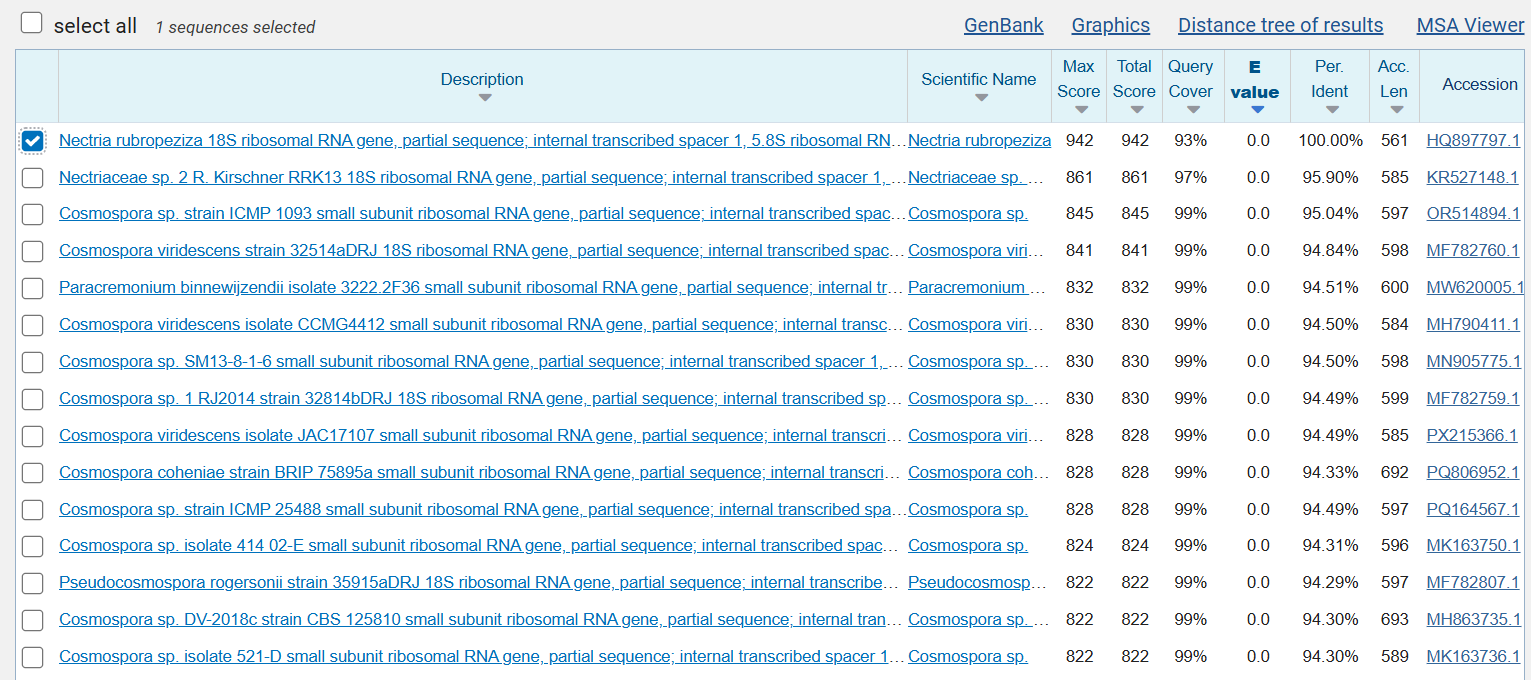
Nectria rubropeziza
Wollenw.
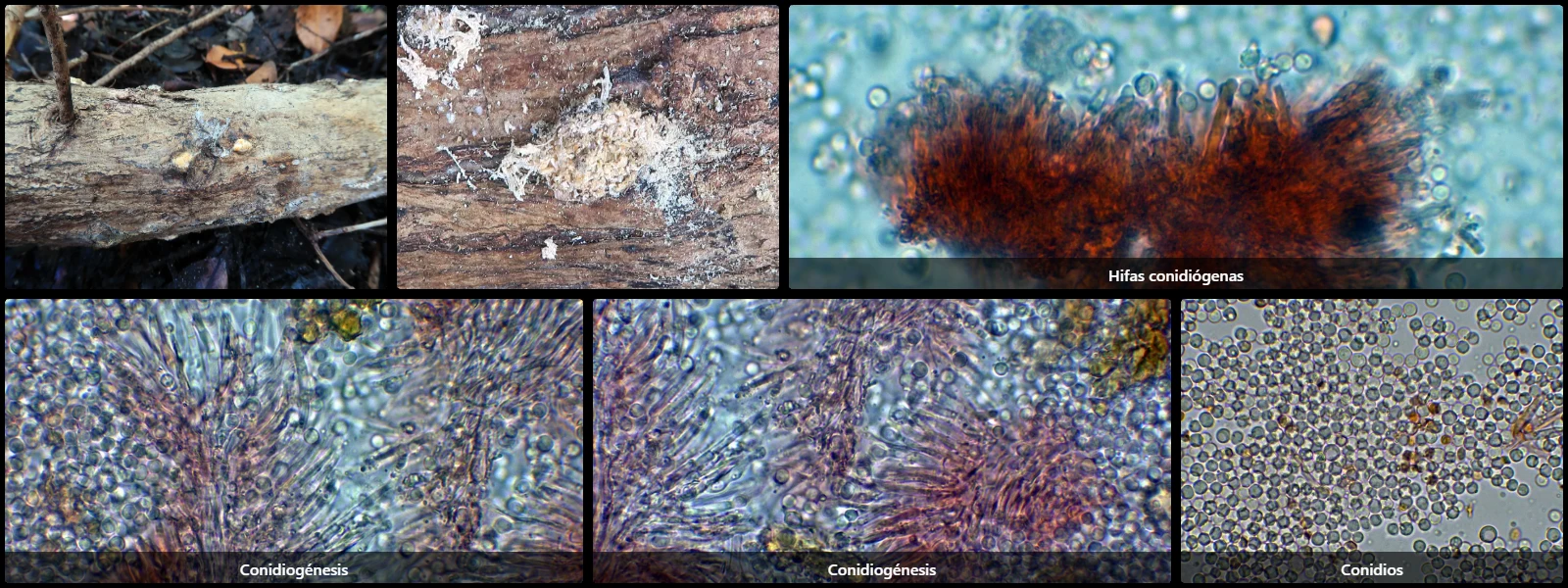
Study description
This study represents the anamorph (asexual, conidial, or imperfect stage) of the species.
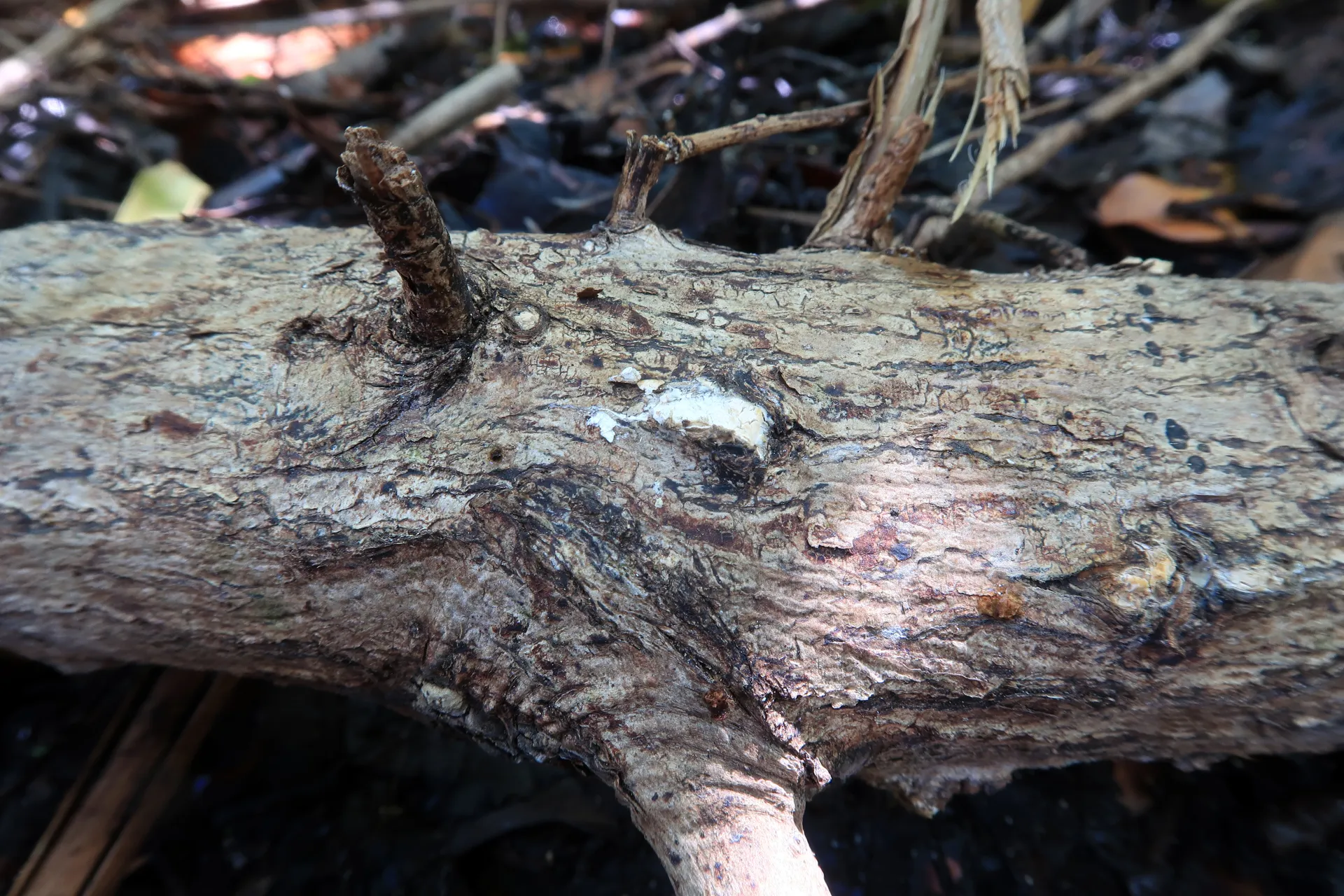
Tropical to subtropical species resembling Propolis farinosa though larger, erumpent through the host bark, whitish with ochre-orange hues, soft in consistency.
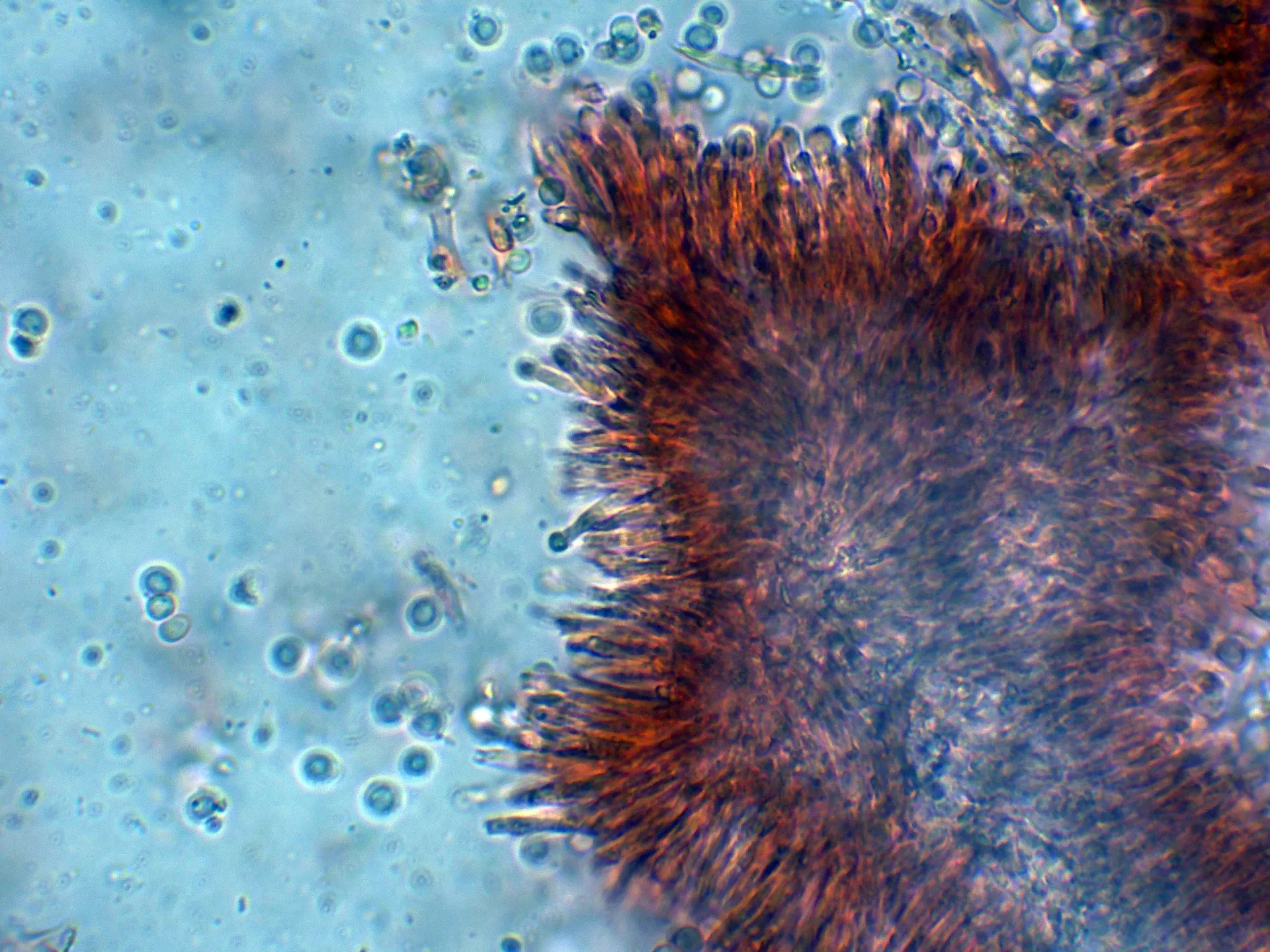
Conidiogenous hyphae cylindrical, hyaline, densely clustered into fasciculate structures.
Conidiogenous cells hyaline, branched in a verticillate to penicillate pattern, tapering towards the apex into cylindrical to slightly fusiform phialides measuring 16–22 µm long by 2.5–3.5 µm wide.
Conidiogenesis blastic-phialidic, producing conidia endogenously that aggregate into mucilaginous globose masses at the apex.
Conidia predominantly spherical to subspherical, smooth, hyaline, moderately thick-walled, measuring 3.5–4.5 µm long by 3.2–4.3 µm wide, hyaline or with faint greyish intracellular pigment, and with homogeneous internal contents.
Geographic references
Map generated from global occurrence data from GBIF. GBIF.
Study measurements
Values in Microns (µm)Macroscopic gallery
Microscopic gallery
Genetic / Phylogenetic Study
Phylogenetic Tree