


Mycogone rosea
Link
Study description
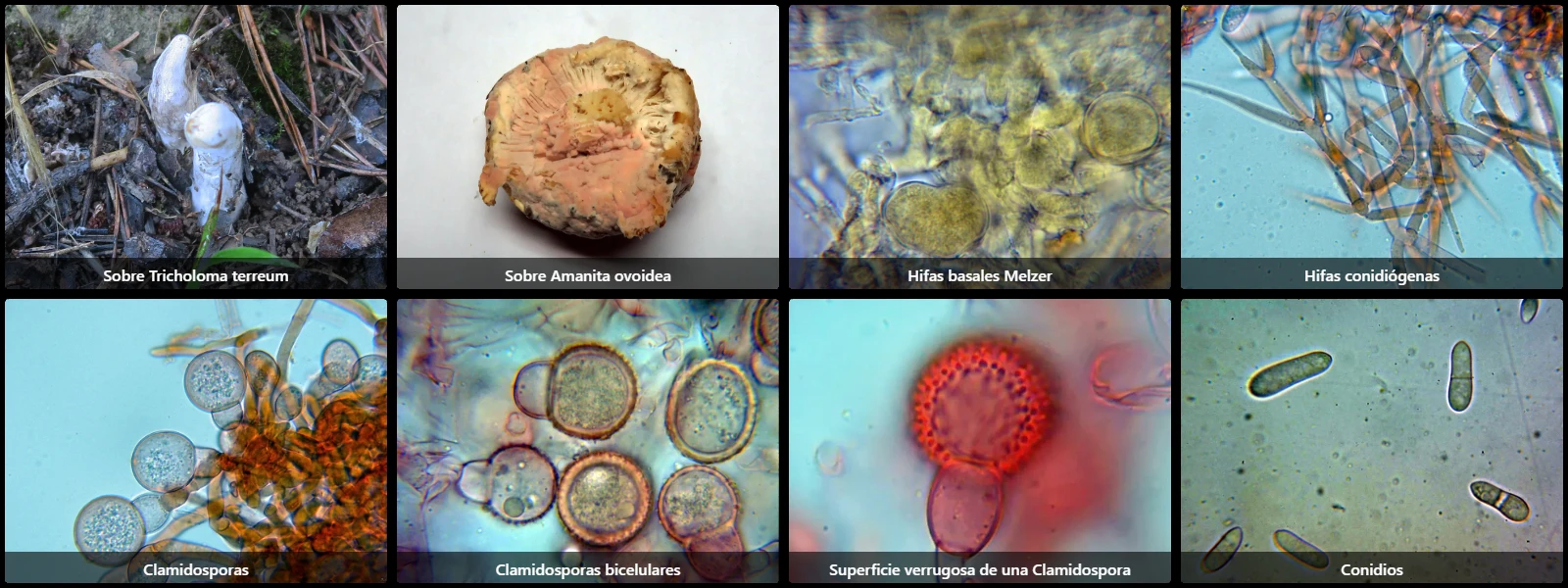
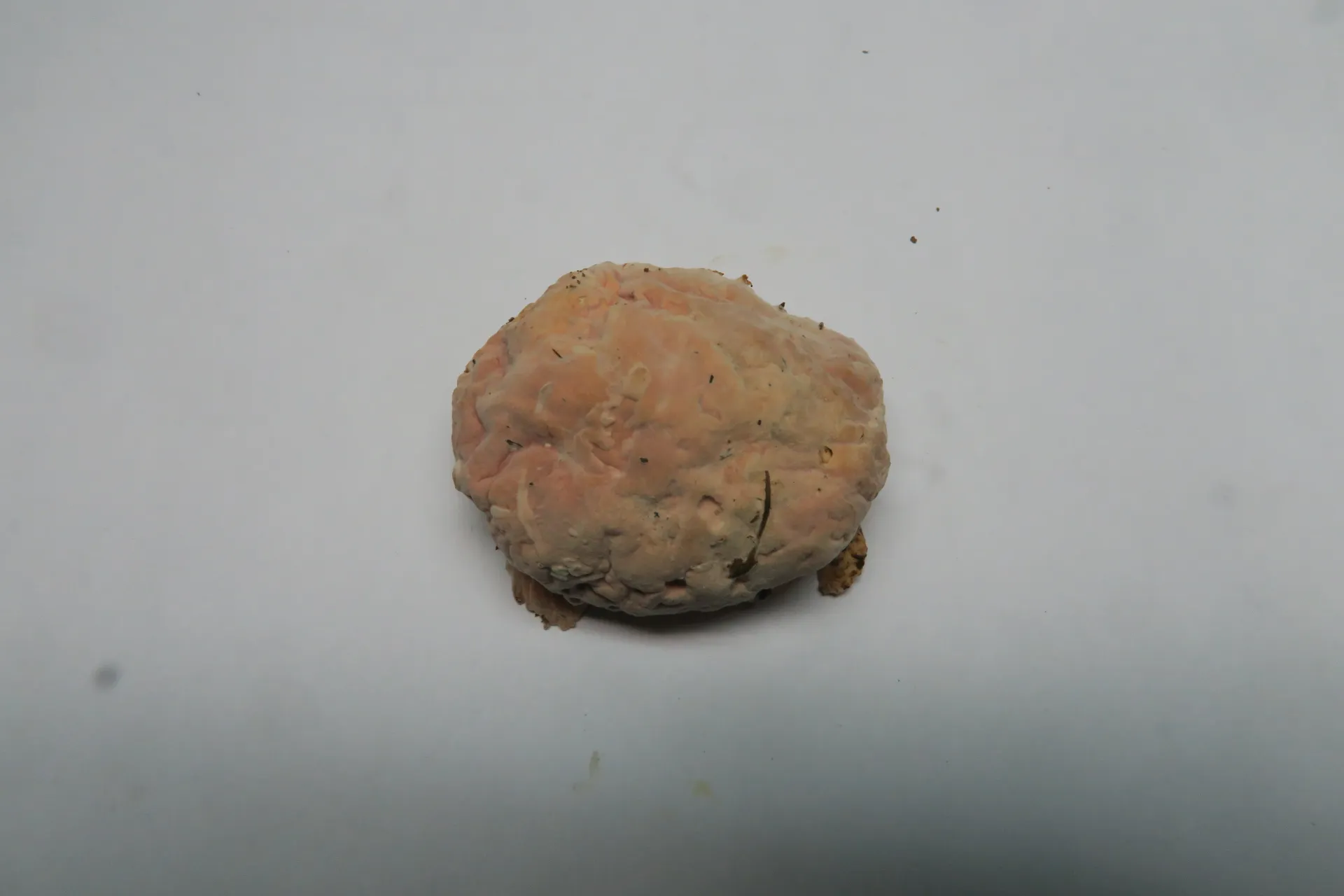
General: Parasitic fungus found attacking basidiomata of Tricholoma terreum, Amanita ovoidea, and Inocybe sp., inhibiting normal development and causing severe deformities, adopting characteristic pinkish tones at maturity.
Hyphae: Basal structural hyphae filamentous, septate, 3-6 µm wide, richly branched, without clamp connections.
Chlamydospores (Aleurioconidia): Two-celled, composed of a subspherical, very thick-walled, verrucose upper cell and a smaller, hyaline, thin-walled lower cell, total dimensions 25-43 x 22-32 µm.
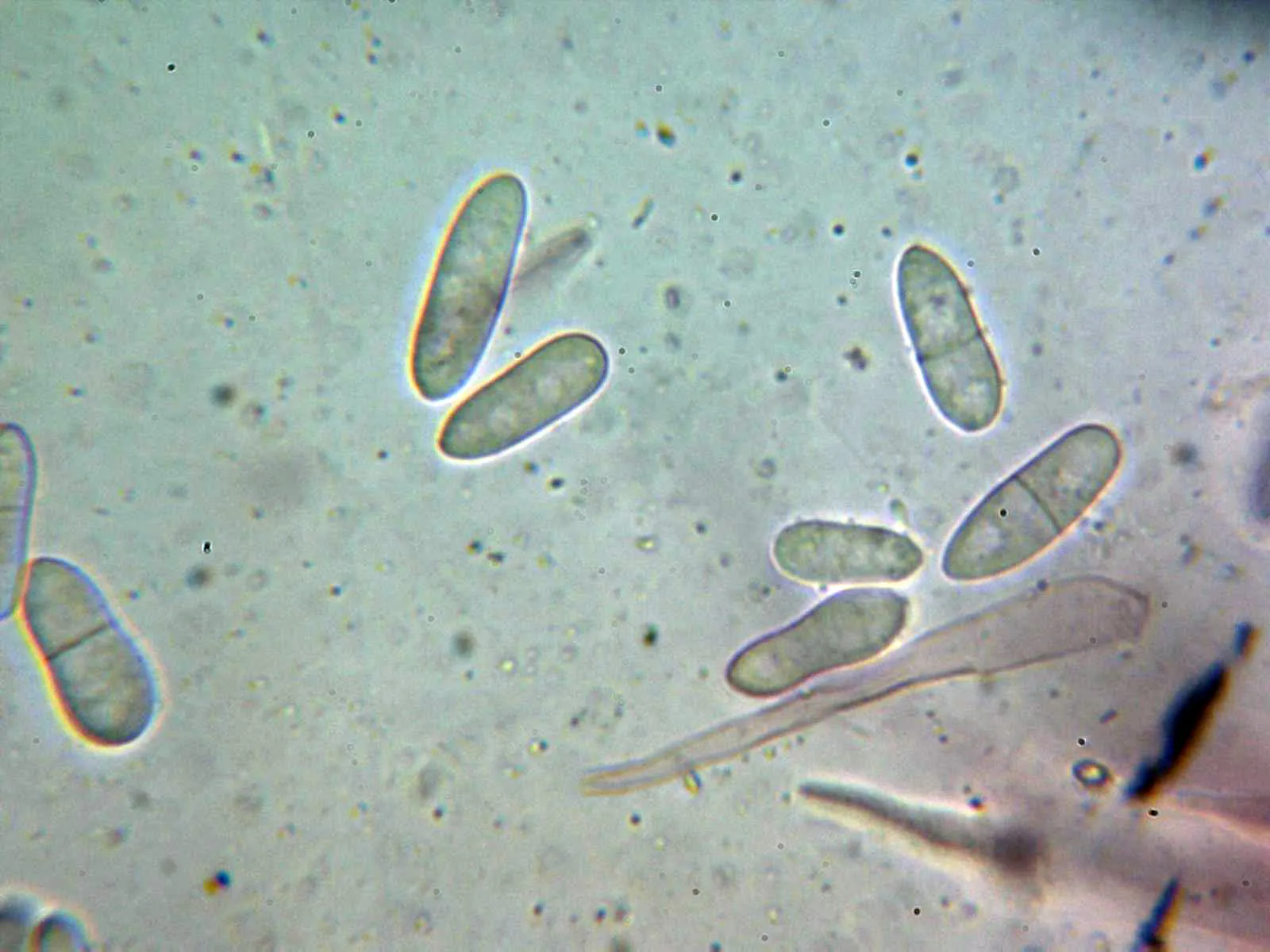
Conidia: Unicellular, hyaline, smooth and thin-walled, 12-19.5 x 4.5-6.8 µm.
Hyphae: Basal structural hyphae filamentous, septate, 3-6 µm wide, richly branched, without clamp connections.
Chlamydospores (Aleurioconidia): Two-celled, composed of a subspherical, very thick-walled, verrucose upper cell and a smaller, hyaline, thin-walled lower cell, total dimensions 25-43 x 22-32 µm.
Conidia: Unicellular, hyaline, smooth and thin-walled, 12-19.5 x 4.5-6.8 µm.
Geographic references
Map generated from global occurrence data from GBIF. GBIF.
Study measurements
Values in Microns (µm)Macroscopic gallery
1 / 4Mycogone rosea - 1 - IMG_0853
Microscopic gallery
1 / 25Mycogone rosea - 10 - Conidios 3