Mycoacia gilvescens
(Bres.) Zmitr.
Study description
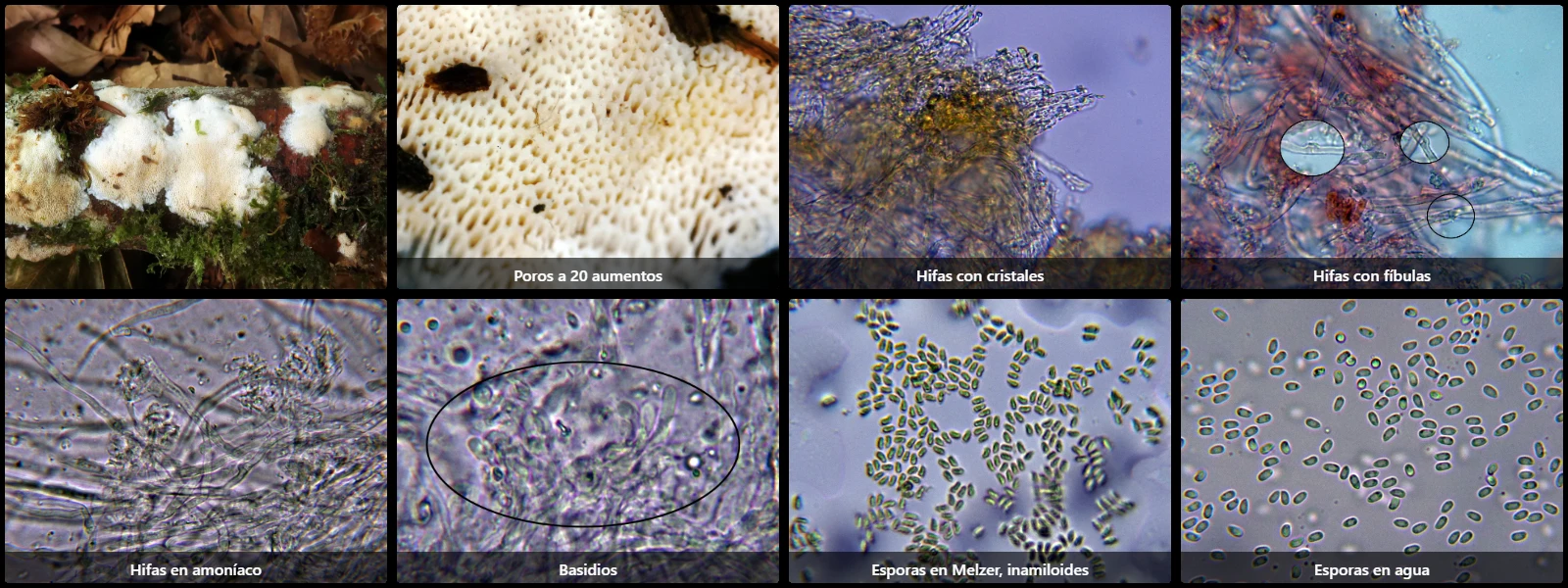
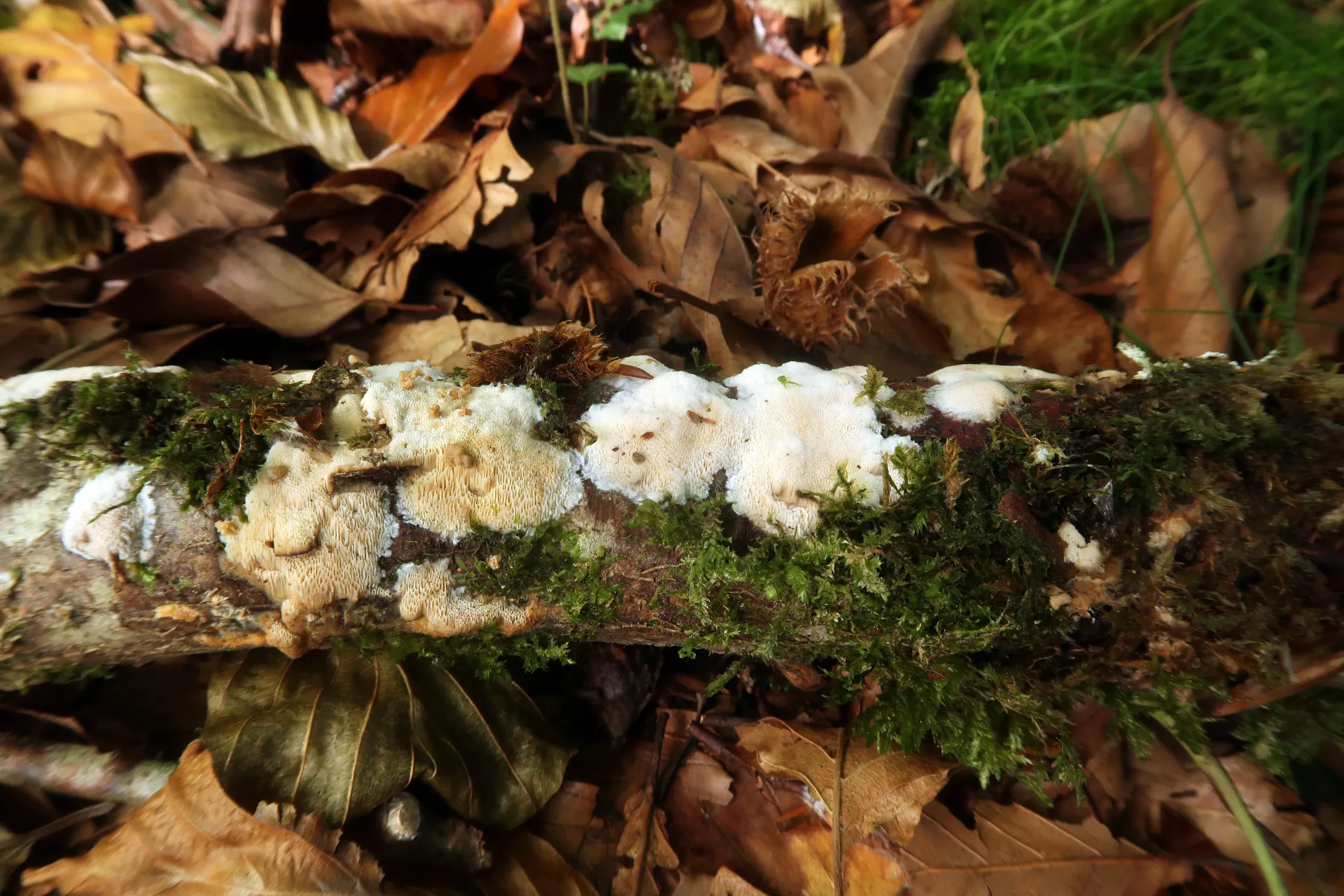
Formerly known as Ceriporiopsis gilvescens, on decaying broadleaf wood, preferring beech (Fagus), with fully resupinate basidiomes up to 4 mm thick, a whitish poroid surface with pinkish tints darkening on bruising, 4–5 pores per mm, and a very thin subiculum.
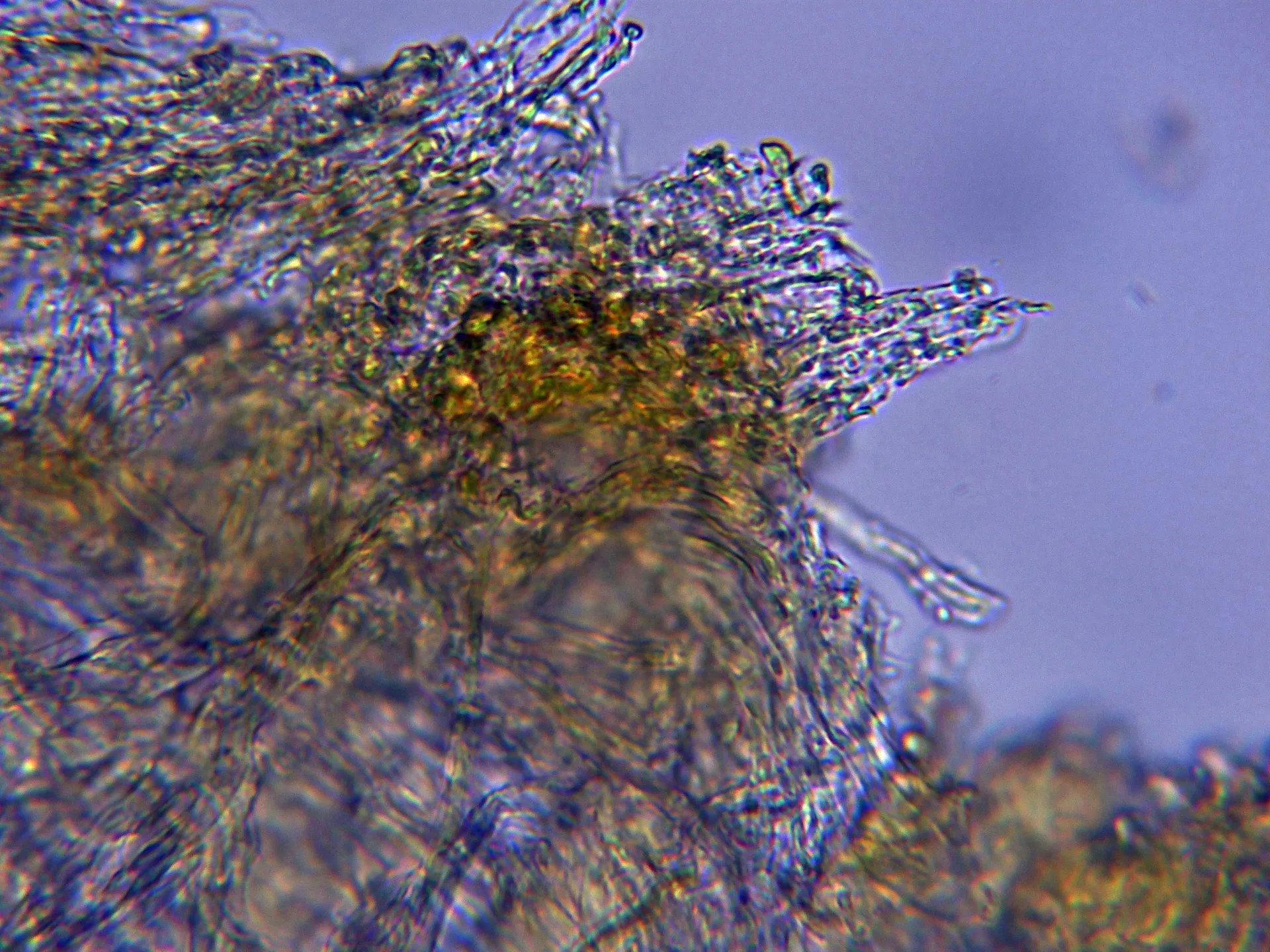
Monomitic hyphal system, with hyaline generative hyphae having thin to moderately thickened walls, 2–4 µm wide, often covered with small crystals, septate and clamped.
Cystidia or other sterile hymenial elements absent.
Basidia clavate, 14–18 µm long by 4–6 µm wide, with basal clamps, 4-spored.
Spores ellipsoidal to subcylindrical, with a pointed end where the lateral apiculus is located, smooth, hyaline, thin-walled, measuring 3.5–4.5 µm long by 1.5–2 µm wide, with homogeneous contents inside, inamyloid in Melzer's reagent.
Geographic references
Map generated from global occurrence data from GBIF. GBIF.
Study measurements
Values in Microns (µm)Macroscopic gallery
Microscopic gallery