Mycena seynii
Quél.
Study description
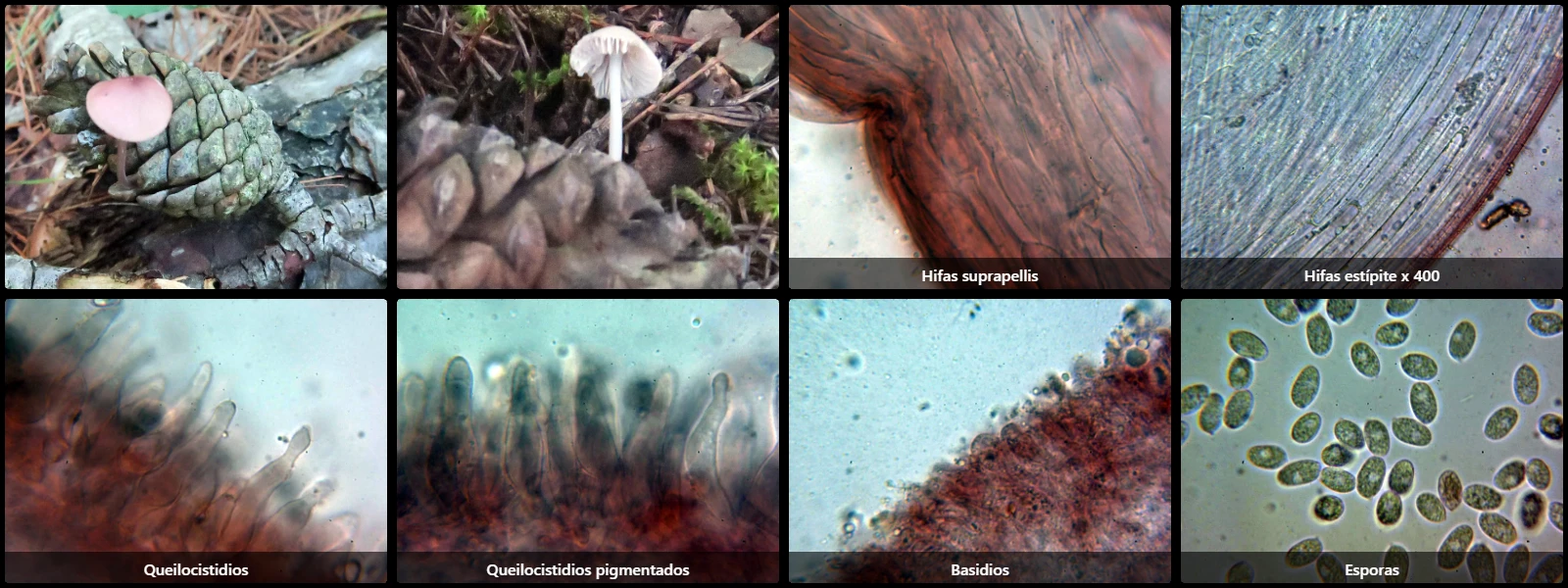
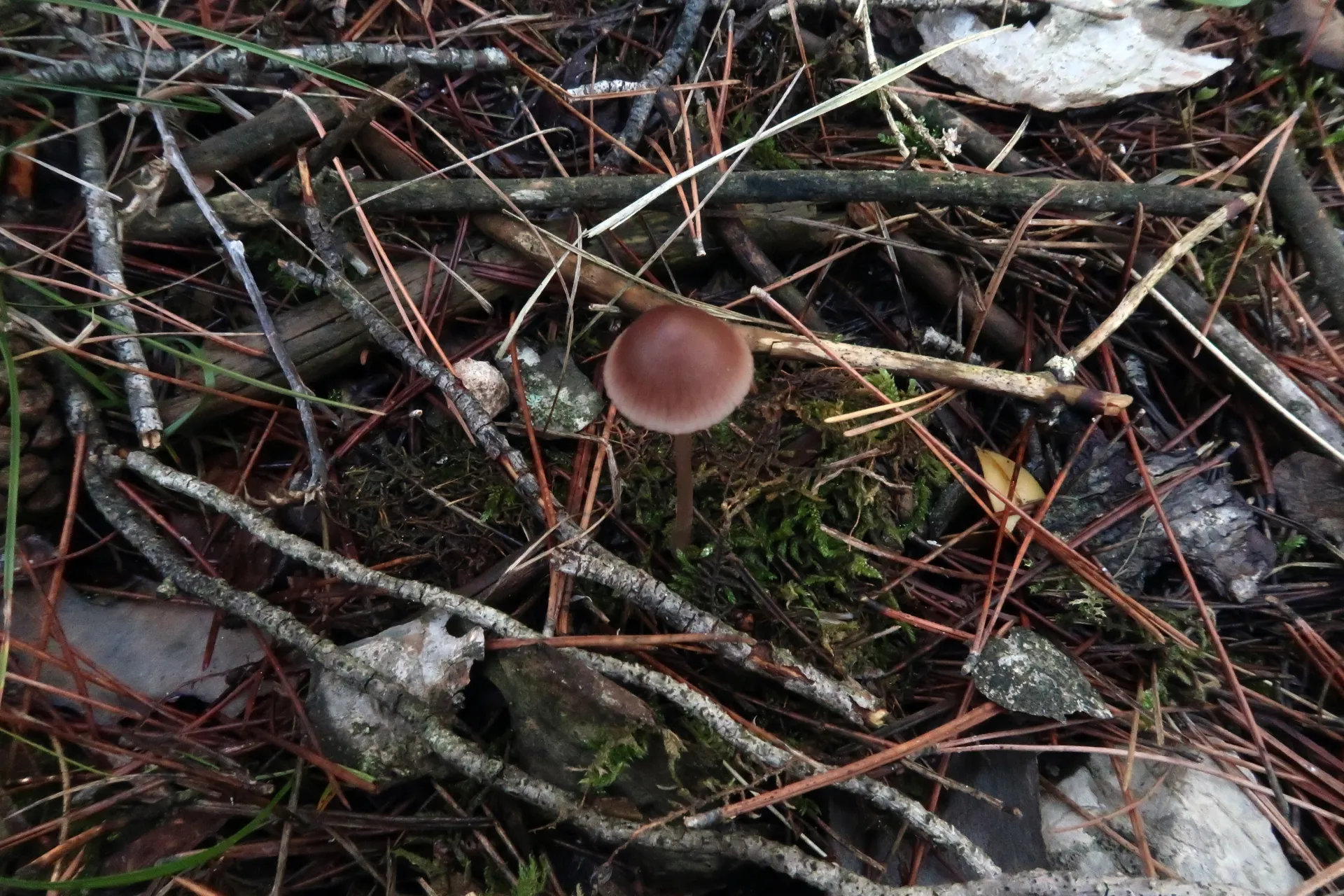
Common species growing on decaying fallen pine cones, with a conical to flattened pileus 2–3.5 cm across, pale purplish-brown with a whitish margin, pinkish adnate lamellae with a purple to reddish-brown edge, a cylindrical, hollow brownish-violaceous stipe paler towards the base, where it typically bears whitish fibrils.
Cuticular hyphae (pileipellis) cylindrical, smooth, 2–5 µm wide, arranged parallel to each other, with faint brown intracellular pigment, the outermost with some short excrescences, septate and with clamp connections at the septa.
Stipe hyphae 2–4 µm wide, with some terminal cells up to 7 µm wide.
Cheilocystidia very abundant, rendering the lamellar edge practically sterile, subcylindrical to lageniform, measuring 30–47 µm long by 8–14 µm wide, with abundant reddish-brown intracellular pigment.
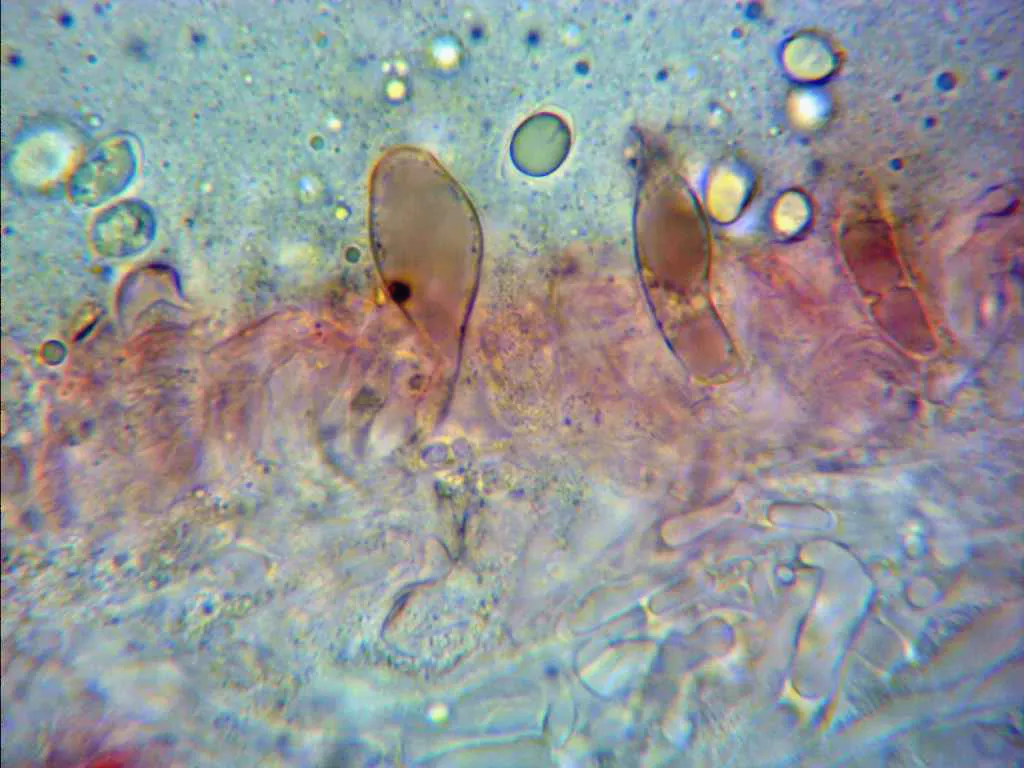
Basidia clavate, 30–40 µm long by 8–12 µm wide, with basal clamps, 4-spored.
Spores ellipsoidal, smooth, hyaline, thin-walled, measuring 9.5–12 µm long by 6–7.5 µm wide, with an inconspicuous eccentric apiculus at one end, containing guttules inside, amyloid in Melzer's reagent.
Geographic references
Map generated from global occurrence data from GBIF. GBIF.
Study measurements
Values in Microns (µm)Macroscopic gallery
Microscopic gallery