


Mycena quercus-ilicis
Kühner
Study description
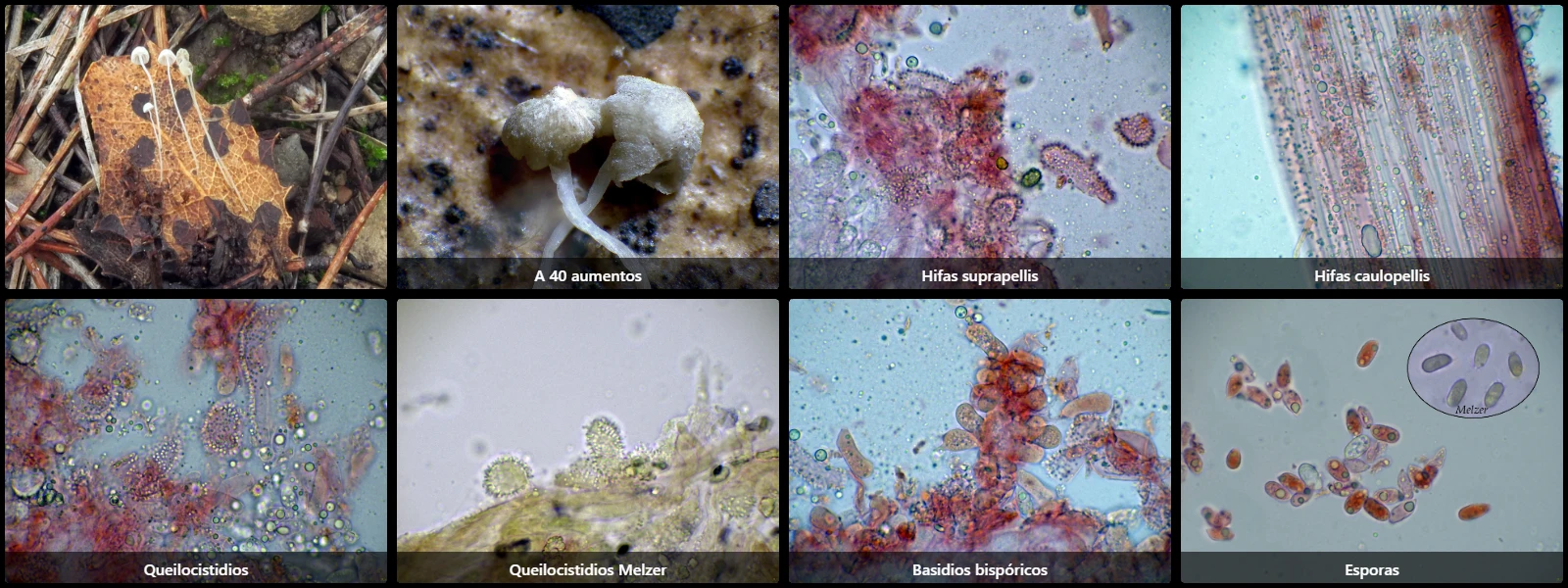
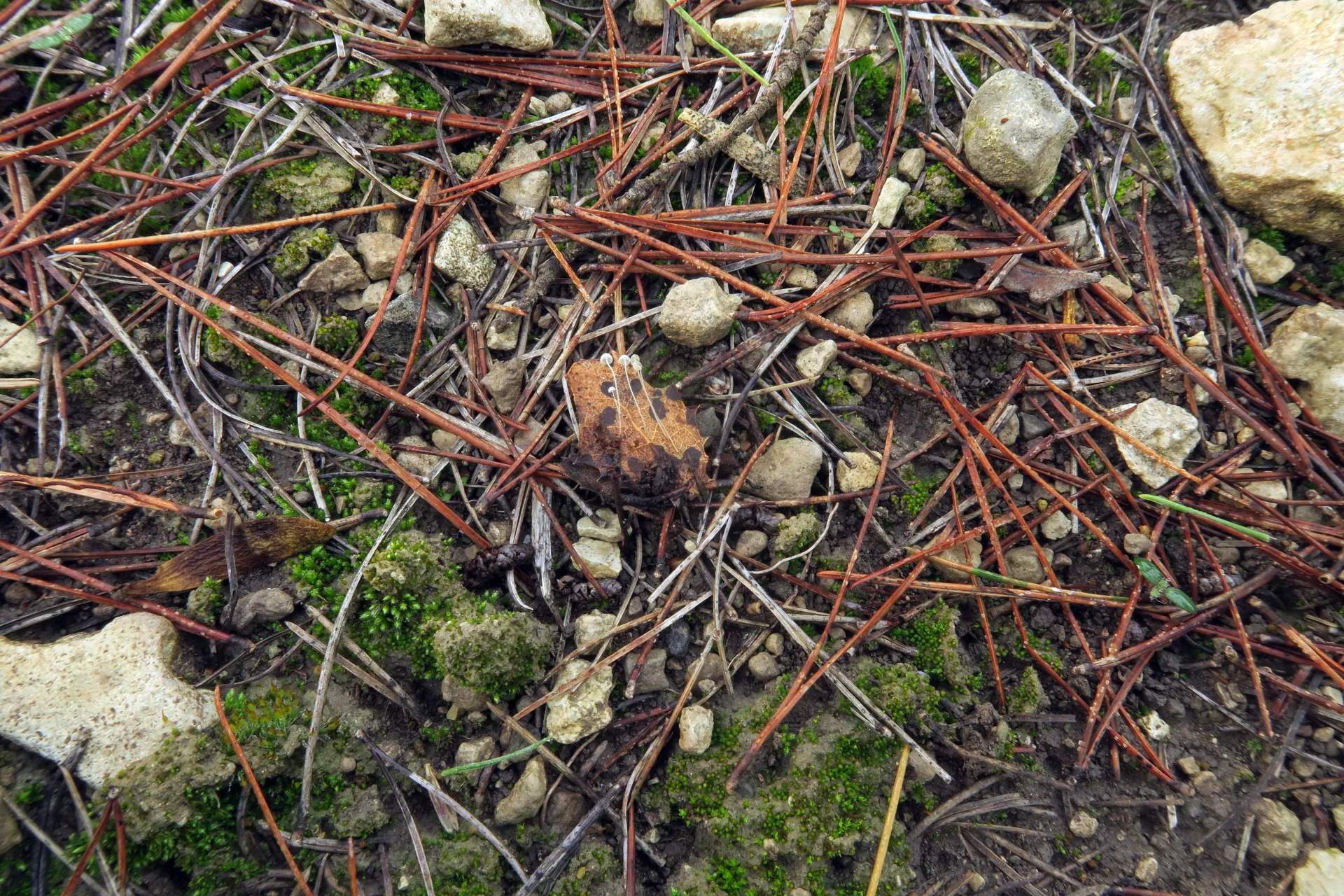
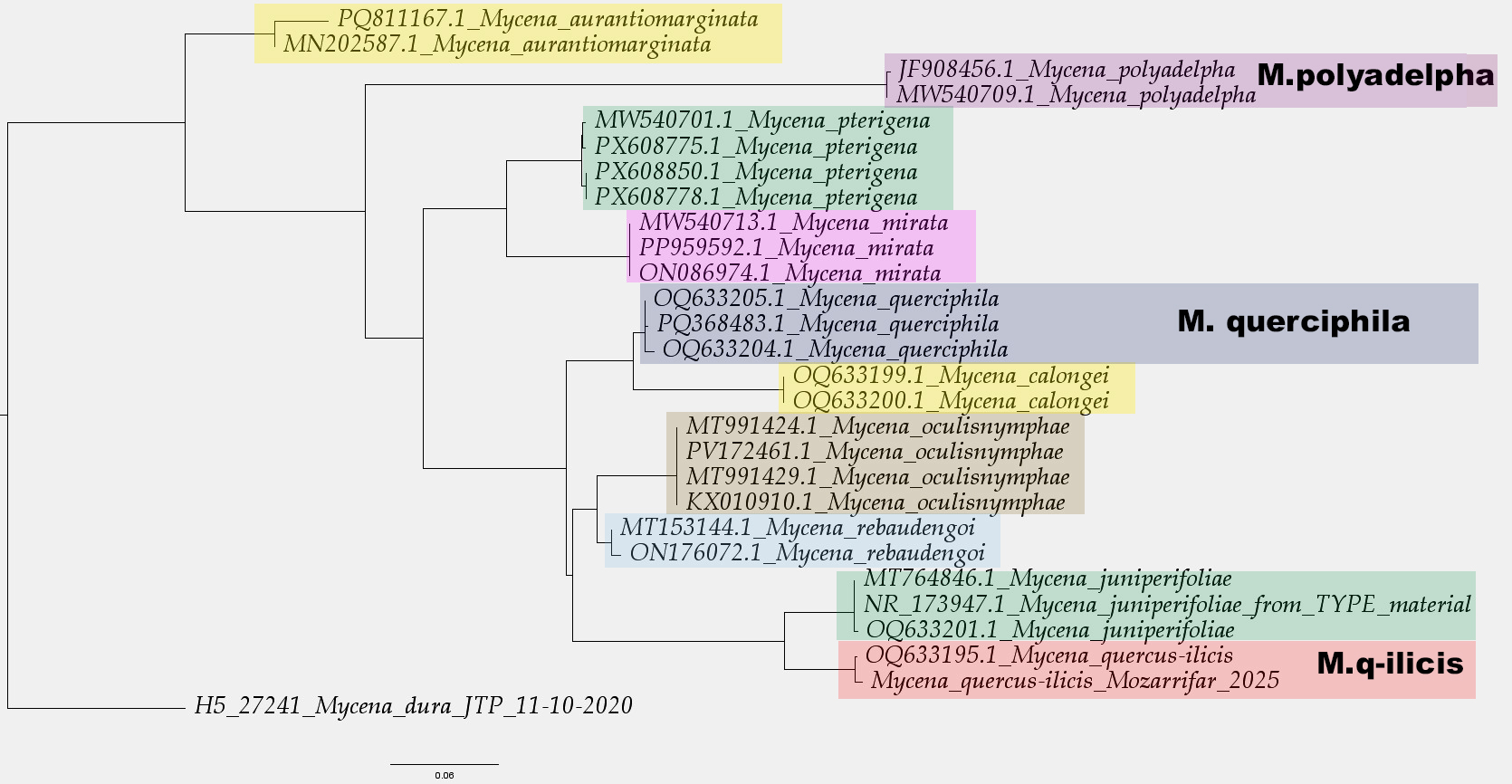
A minute Mycena fruiting on decaying leaf litter of Quercus rotundifolia; although the microscopy matched Mycena polyadelpha perfectly, molecular sequencing confirmed its identity unequivocally. With a hemispherical to convex pileus only 0.5–3 mm across, scarce, thick, adnate lamellae, and a long filiform watery-white stipe up to 5 cm in length.
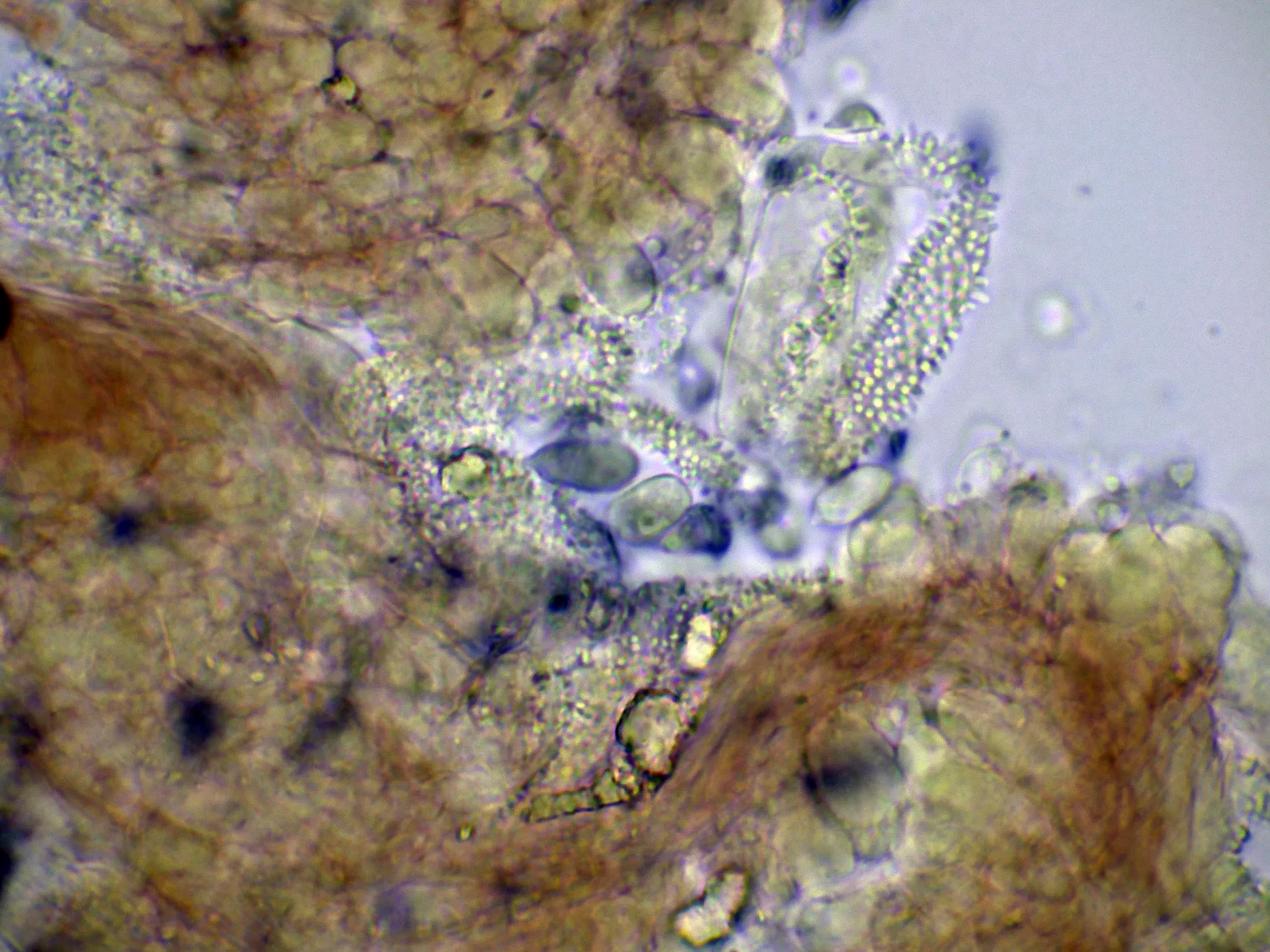
Cuticle (pileipellis) with cylindrical hyphae bearing swellings, 4–20 µm wide, the outermost densely covered in a compact mass of warts.
Stipe hyphae 2–4.5 µm wide, the outer hyphae with abundant excrescences up to 5 µm long by 0.5–1 µm wide.
Cheilocystidia subglobose to pyriform, measuring 15–20 µm long by 10–16 µm wide, with their surface densely covered in short excrescences 1–2 µm long.
Pleurocystidia absent.
Basidia subcylindrical to clavate, 15–25 µm long by 8–10 µm wide, 2- or 4-spored.
Spores cylindrical-ellipsoidal, smooth, hyaline, thin-walled, measuring 9–12 µm long by 4.5–6 µm wide, with a slightly eccentric apiculus at one end, containing oil droplets inside, amyloid in Melzer's reagent.
These spore dimensions differ considerably from those published for the species (which authors describe as subglobose); according to Manuel Villarreal, this discrepancy could stem from the collection being made in December, where under cold conditions the fungus produces 2-spored basidia that yield abnormally large spores.
Herbarium material available: JTP2763/25.
Geographic references
Map generated from global occurrence data from GBIF. GBIF.
Study measurements
Values in Microns (µm)Macroscopic gallery
Microscopic gallery
Genetic / Phylogenetic Study
Phylogenetic Tree
Sequences and Data
Sequencing (Chromatogram)
Select a file to visualize the chromatogram