Mycena polygramma
(Bull.) Gray
Study description
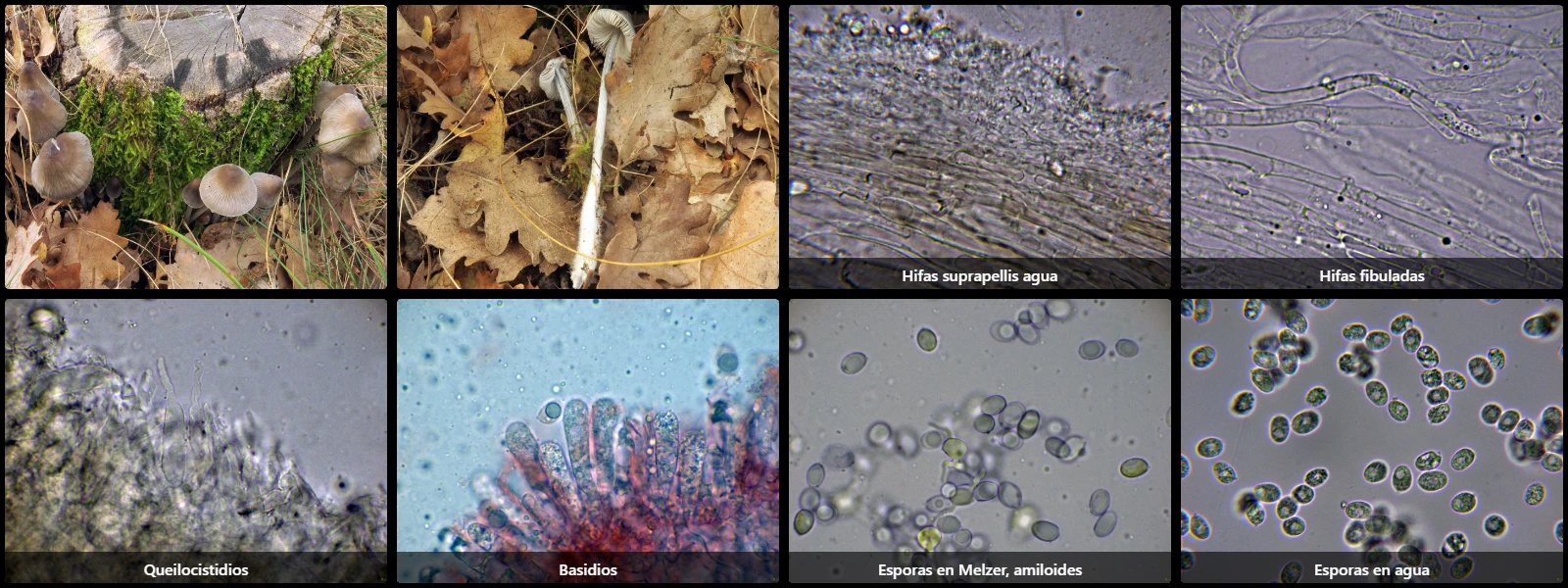
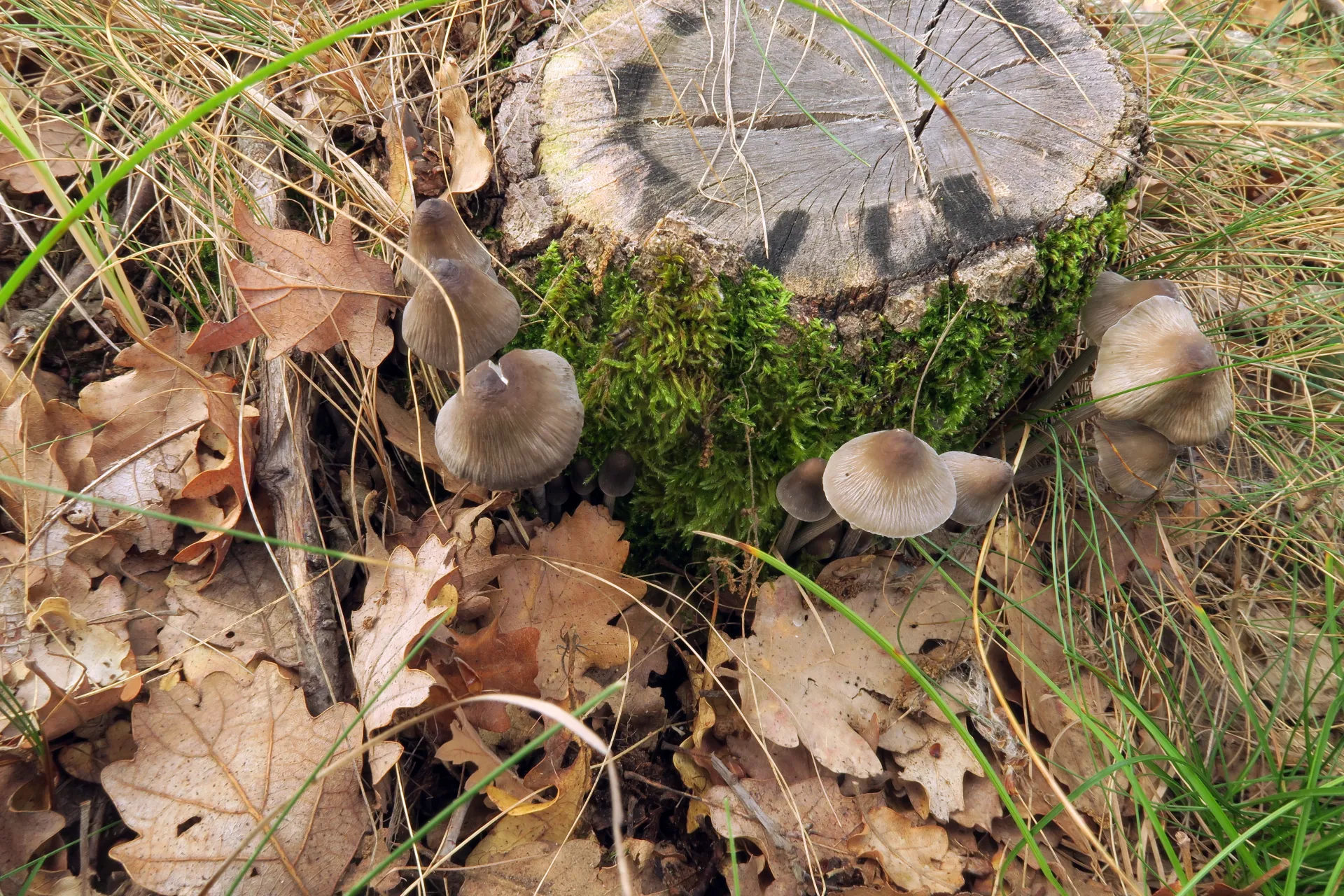
Species associated with stumps or buried woody debris of broadleaf trees, preferably Quercus, with a conical-campanulate pileus 2–4 cm across, dark brown at the centre and paler towards the margin, adnate lamellae, and a cylindrical, hollow, silvery-grey stipe with conspicuous white longitudinal grooves (striations), its lower part densely covered in whitish fibrils.
Cuticle (pileipellis) composed of cylindrical hyphae arranged more or less parallel, 1.5–4 µm wide, with brown intracellular pigment, the outermost hyphae densely covered with a compact mass of simple or branched excrescences up to 20 µm long by 0.5–1.5 µm wide, septate and clamped.
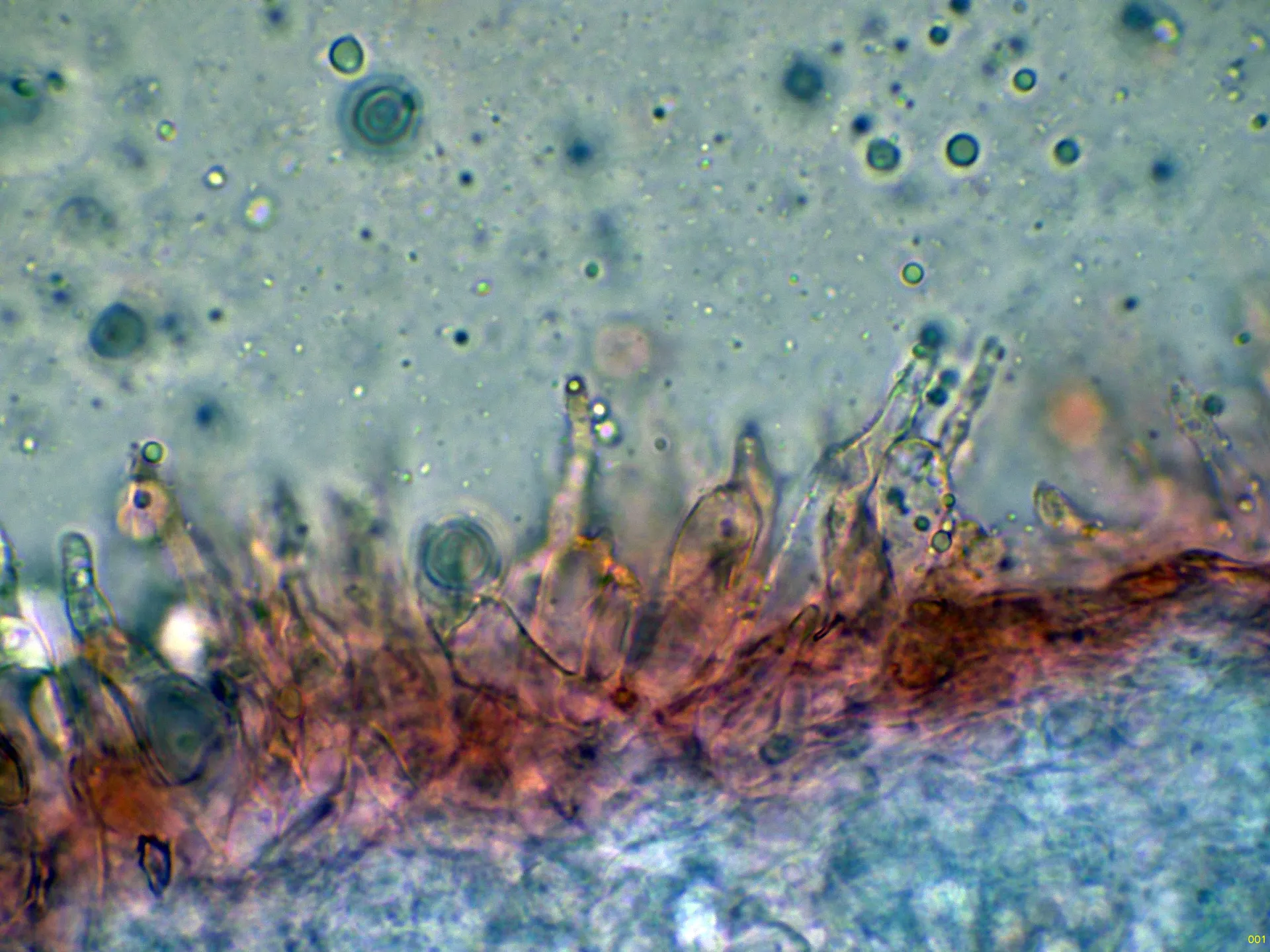
Cheilocystidia abundant, irregular, subcylindrical, fusiform to lageniform, measuring 30–50 µm long by 5–10 µm wide.
Pleurocystidia absent.
Basidia cylindrical-clavate, 30–40 µm long by 7–9 µm wide, with basal clamps, 4-spored.
Spores ellipsoidal, smooth, hyaline, thin-walled, with an inconspicuous hyaline apiculus at one end, measuring 10–11.5 µm long by 6.5–8.3 µm wide, containing small oil droplets inside, amyloid in Melzer's reagent.
Herbarium material available: JTP2618/25.
Geographic references
Map generated from global occurrence data from GBIF. GBIF.
Study measurements
Values in Microns (µm)Macroscopic gallery
Microscopic gallery