Mycena pelianthina
(Fr.) Quél.
Study description
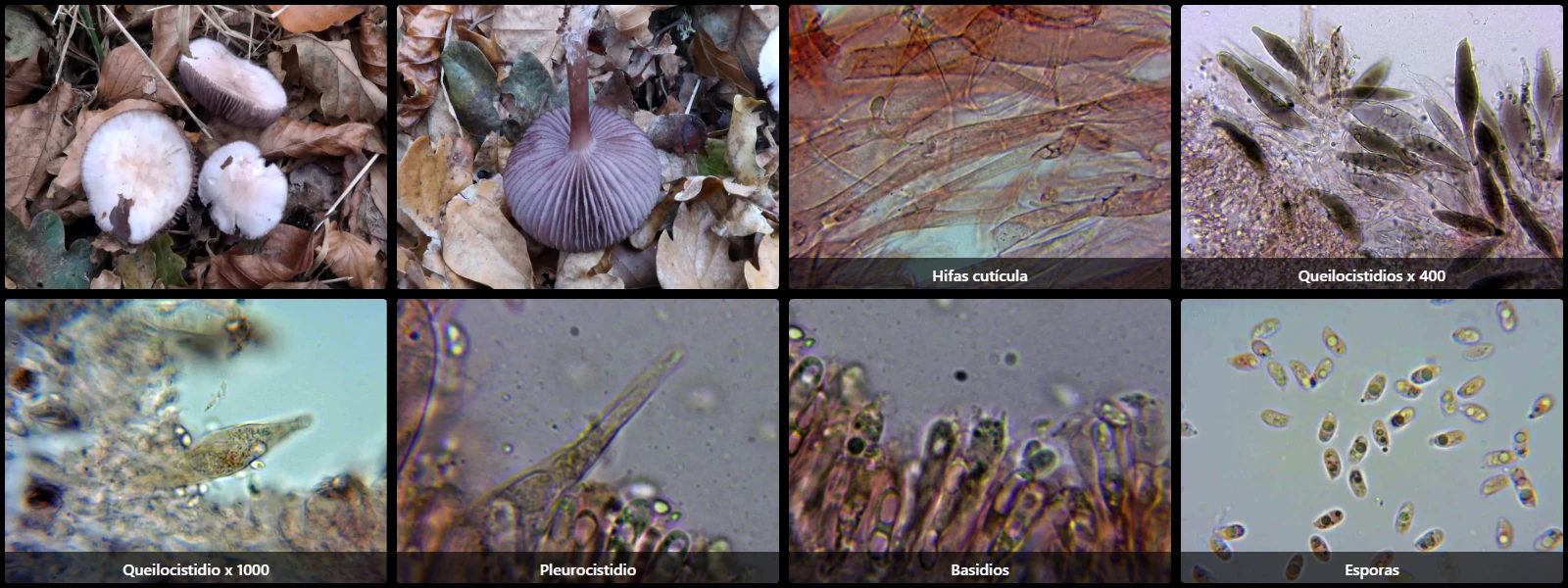
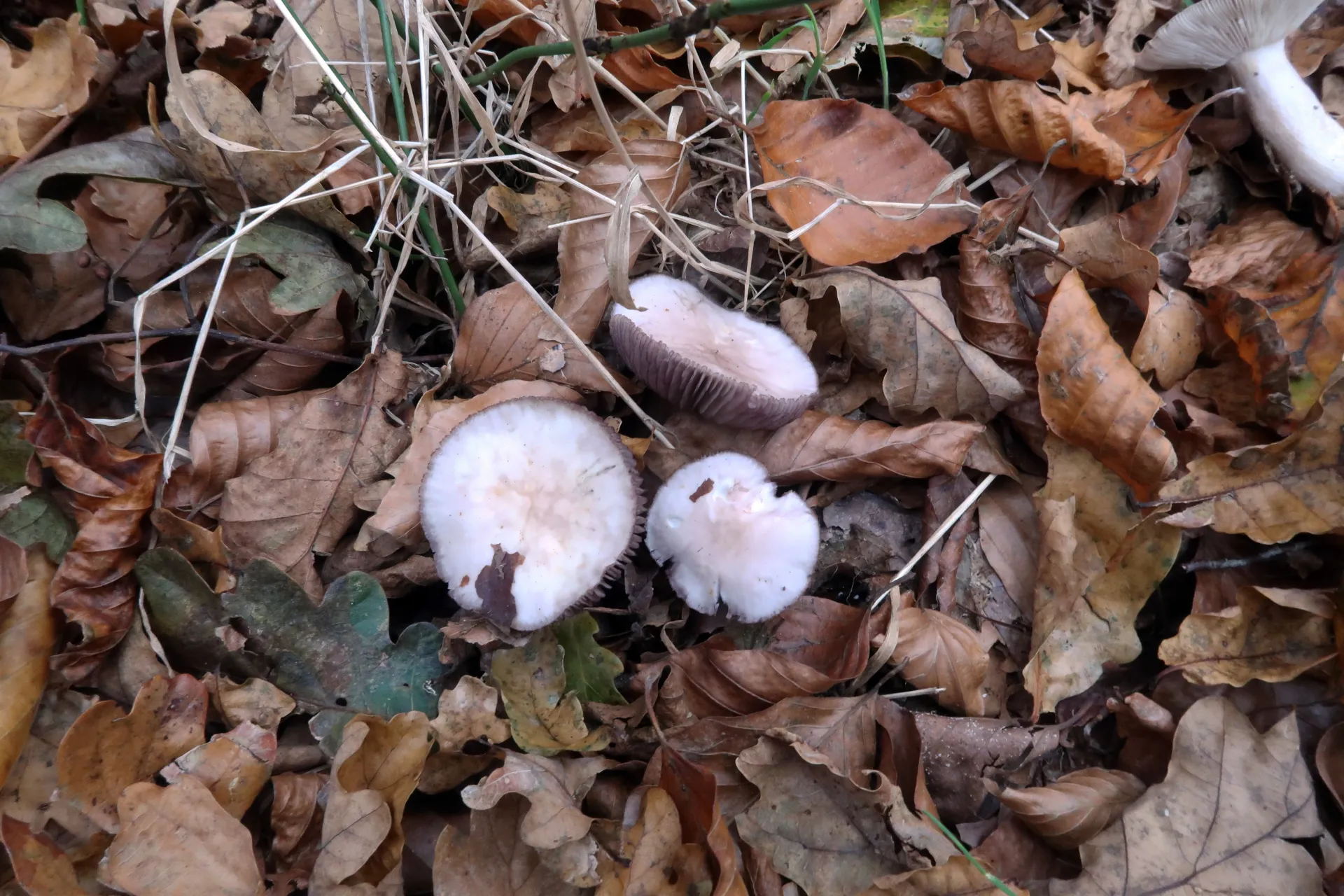
Species typical of broadleaf woodlands, preferring beech forests, with a convex to flattened pileus 2.5–5 cm across, whitish-beige with violet tones, adnate lamellae with a denticulate, dark violaceous edge, a cylindrical, hollow, brownish-violet stipe, and a raphanoid odour and taste.
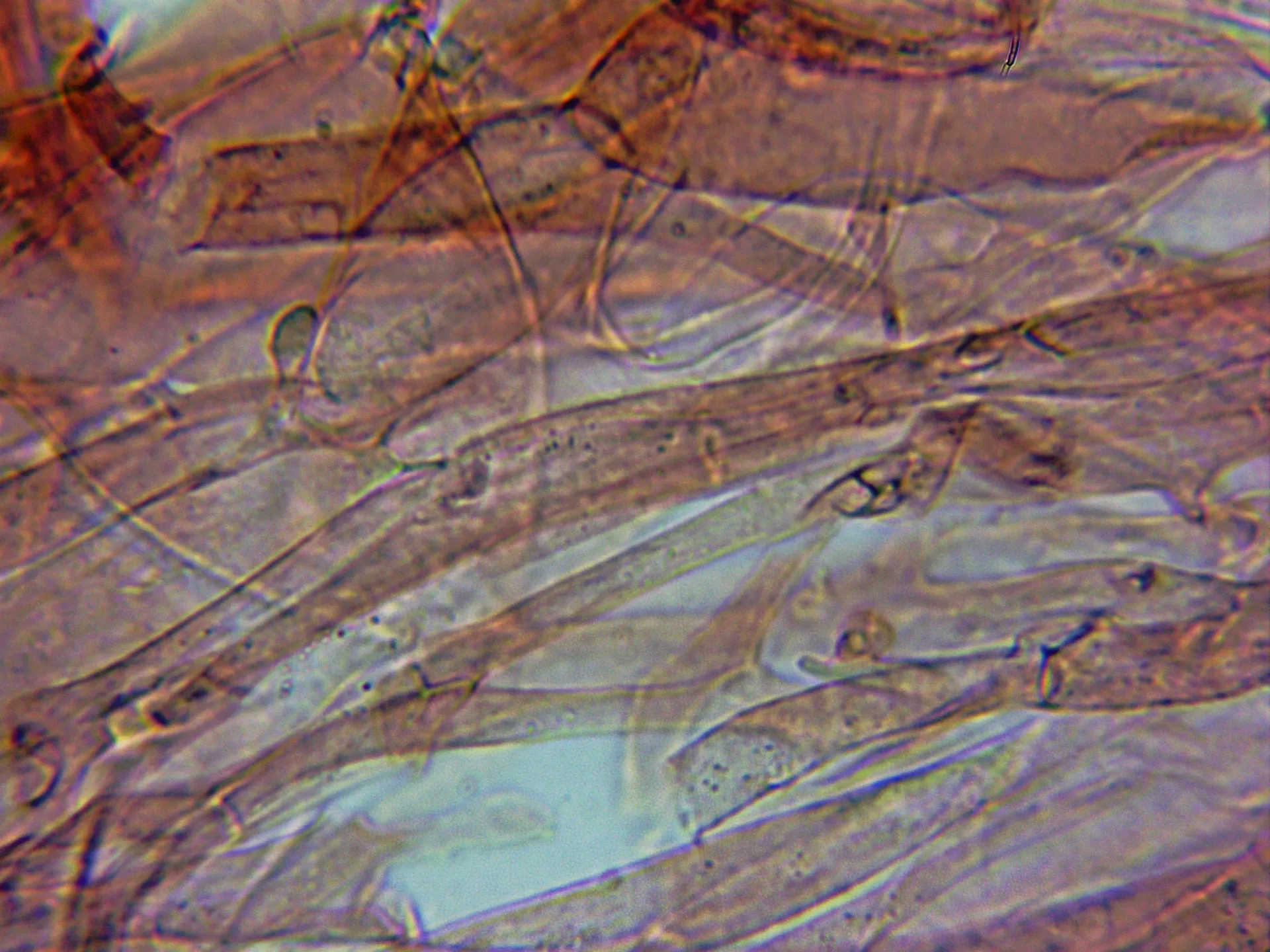
Cuticle (pileipellis) formed by hyphae arranged more or less parallel, with a superficial layer 2–5 µm wide containing pale brown intracellular pigment, underlain by broader hyaline hyphae, septate and with clamp connections at the septa.
Cheilocystidia fusiform, smooth-walled, measuring 50–80 µm long by 7–14 µm wide, with very abundant purple-brown intracellular pigment.
Pleurocystidia similar, fusiform, measuring 60–70 µm long by 9–11 µm wide.
Lamellar trama regular to parallel.
Basidia cylindrical-clavate, 18–25 µm long by 4–6 µm wide, with basal clamps, 4-spored.
Spores ellipsoidal, smooth, hyaline, thin-walled, with a pointed end where the apiculus is located, measuring 6.5–7.5 µm long by 3–3.5 µm wide, containing lipid droplets of varying size inside, amyloid in Melzer's reagent.
Geographic references
Map generated from global occurrence data from GBIF. GBIF.
Study measurements
Values in Microns (µm)Macroscopic gallery
Microscopic gallery