Mycena haematopus
(Pers.) P.Kumm.
Study description
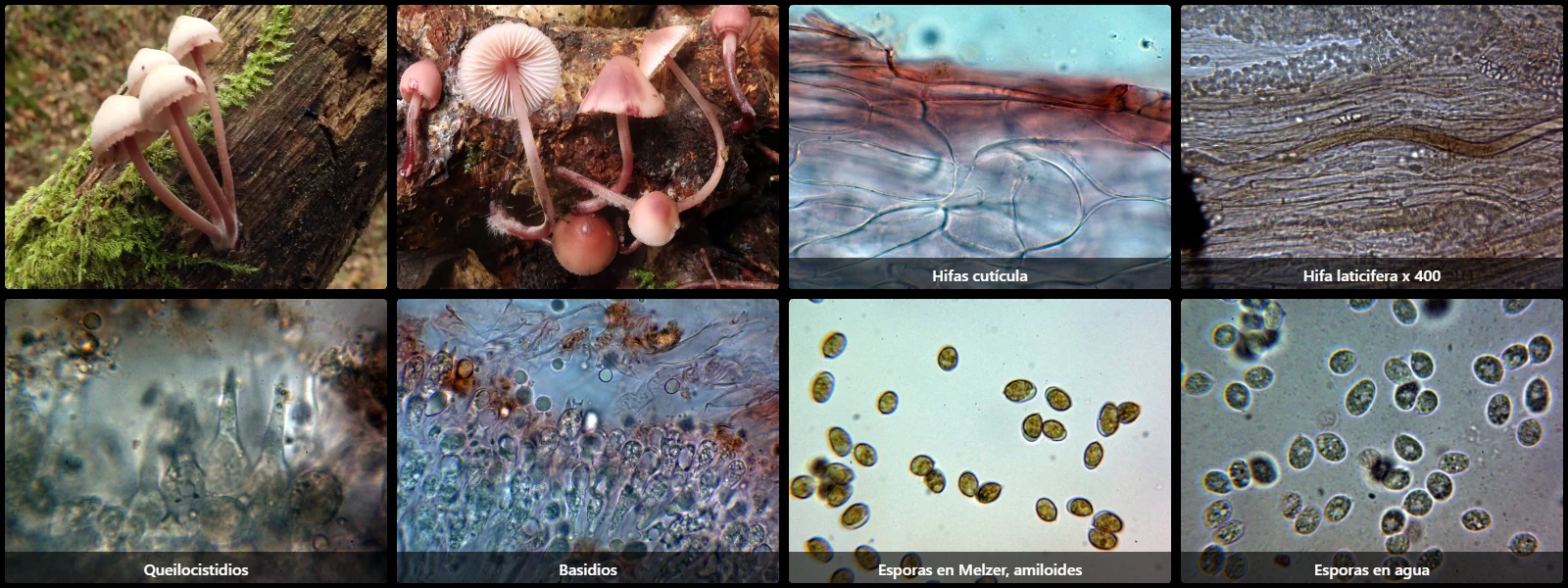
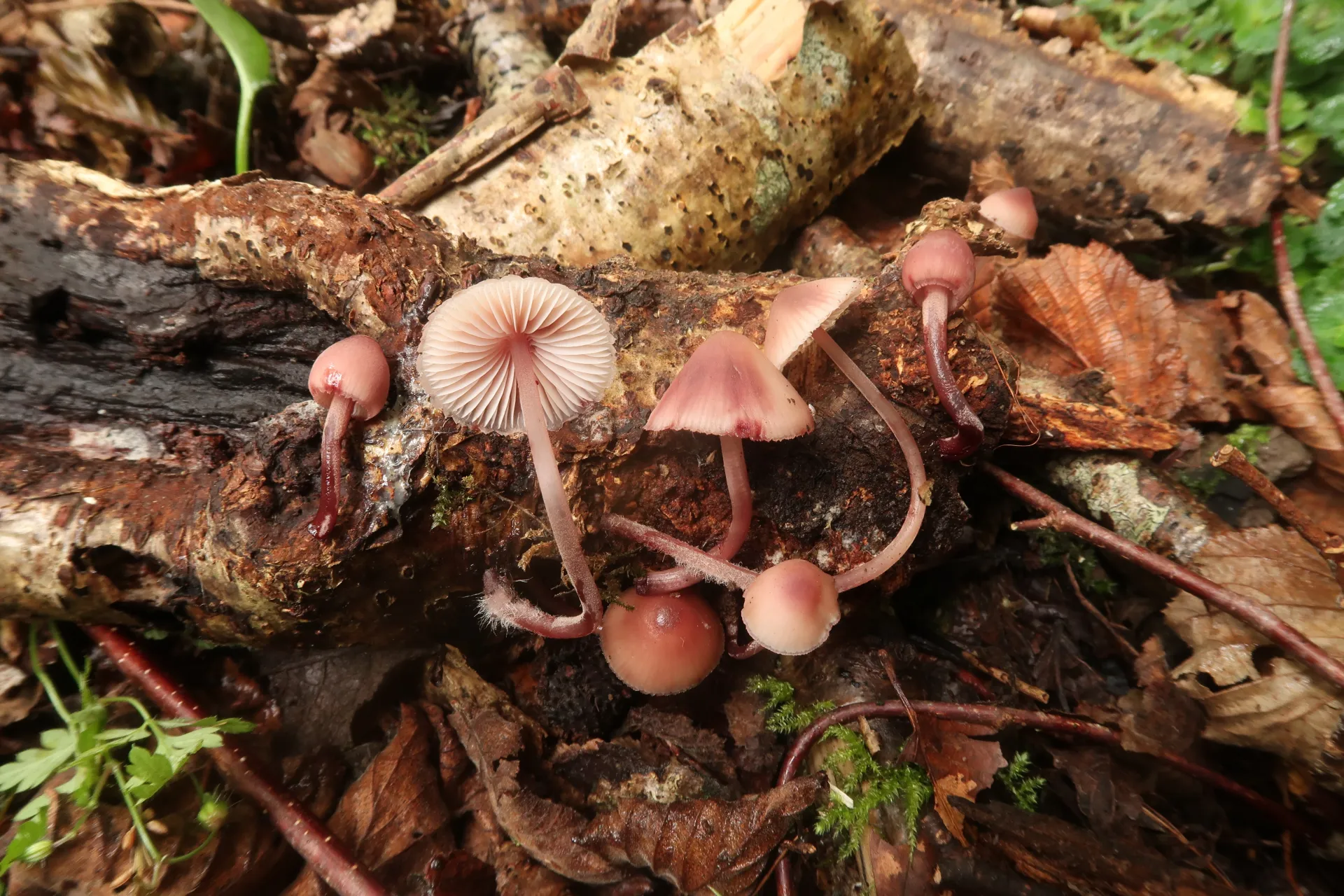
Species developing on decaying wood of broadleaf trees, especially beech (Fagus), growing in fasciculate clusters or gregarously in small groups, with a campanulate to conical pileus, pale pinkish-brown, pinkish lamellae, and a curved, cylindrical stipe with a pruinose surface exuding a reddish-brown latex when injured or cut, having a fungal odour and raphanoid taste.
Cuticle (pileipellis) with a layer of cylindrical hyphae 2–5 µm wide, arranged parallel and diverticulate, underlain by broader hyphae (up to 20 µm wide), septate and with clamp connections at the septa.
Stipe hyphae 2–4 µm wide, accompanied by lactiferous hyphae containing the red latex.
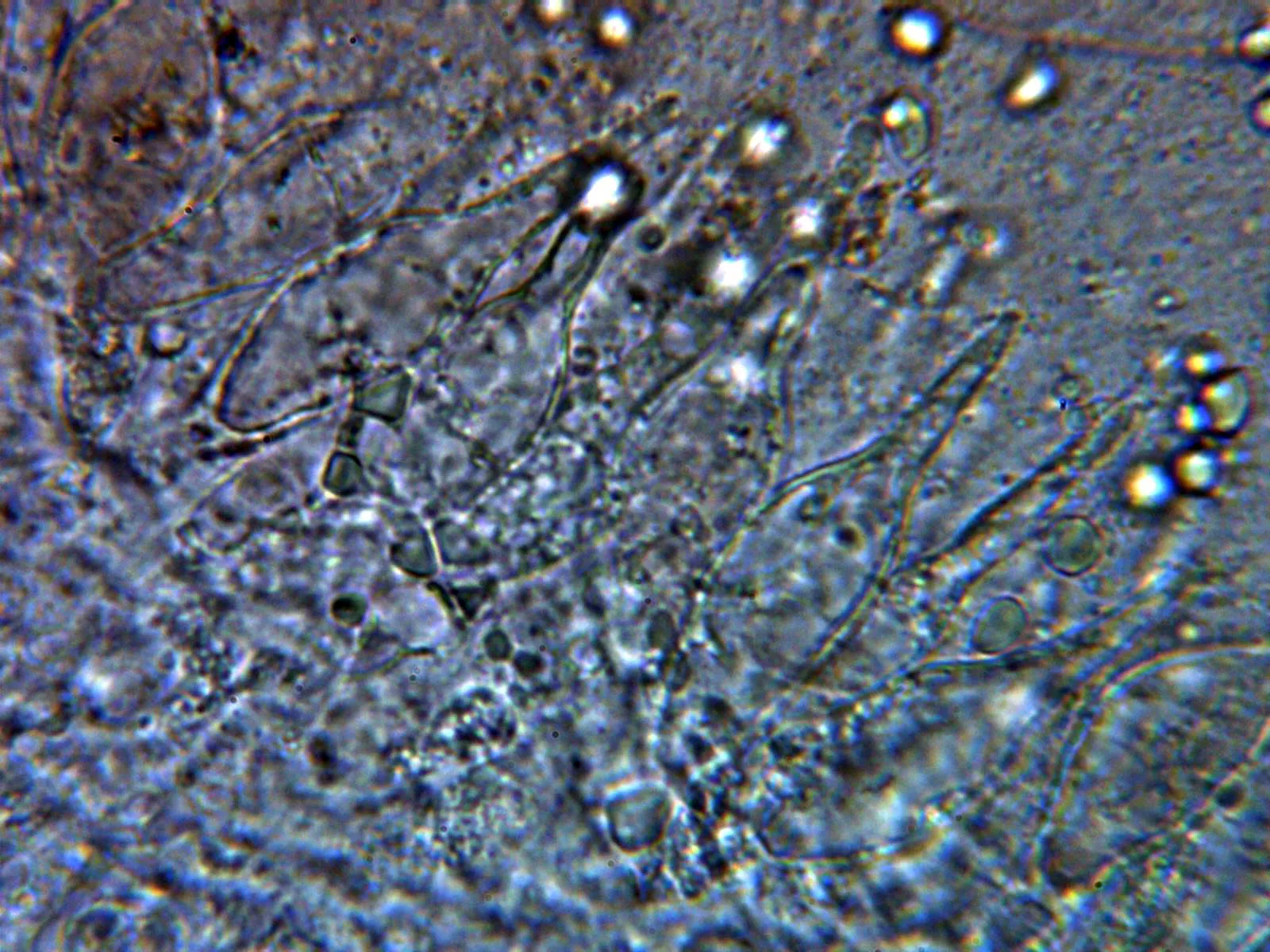
Cheilocystidia fusiform to lageniform with a long neck, predominantly hyaline, measuring 35–70 µm long by 10–15 µm wide.
Pleurocystidia scarce, scattered, similar in morphology and dimensions to cheilocystidia.
Basidia clavate, 28–37 µm long by 6–9 µm wide, with basal clamps, 4-spored.
Spores ellipsoidal to oblong, smooth, hyaline, thin-walled, measuring 8–10 µm long by 5.5–7 µm wide, with an inconspicuous apiculus at one end, faint granular contents inside, amyloid in Melzer's reagent.
Geographic references
Map generated from global occurrence data from GBIF. GBIF.
Study measurements
Values in Microns (µm)Macroscopic gallery
Microscopic gallery