


Mycena galopus
(Pers.) P.Kumm.
Study description
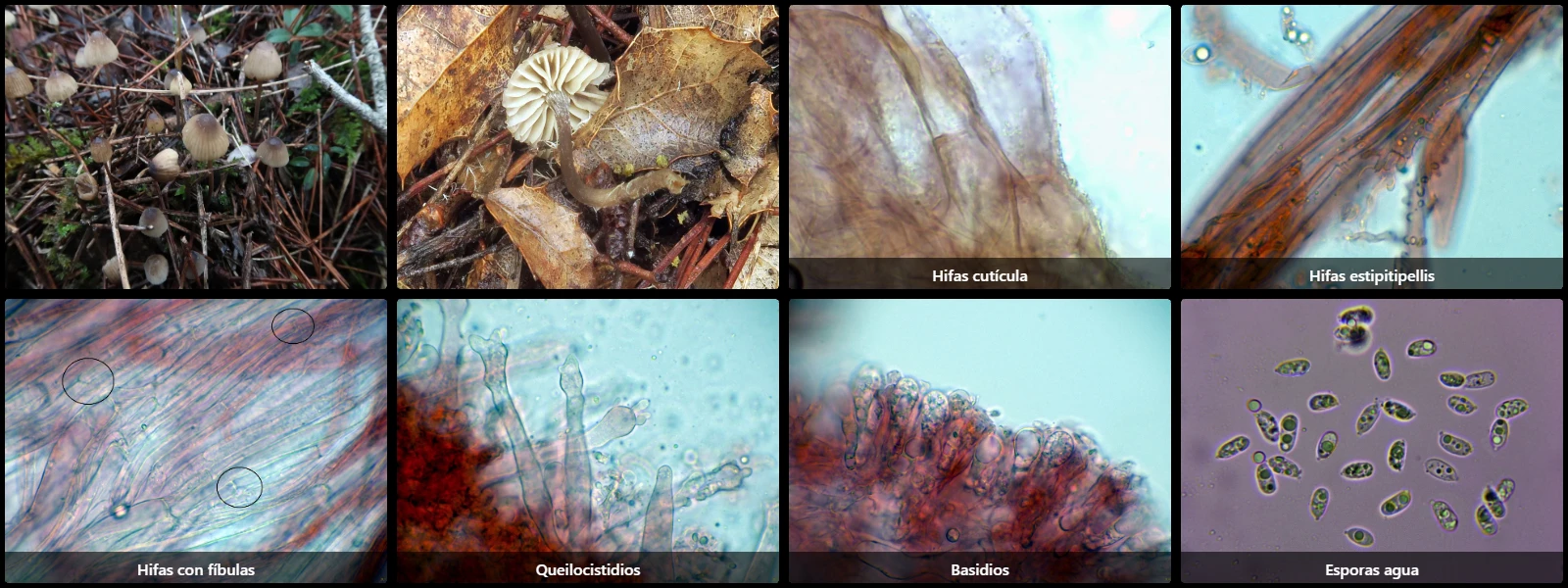
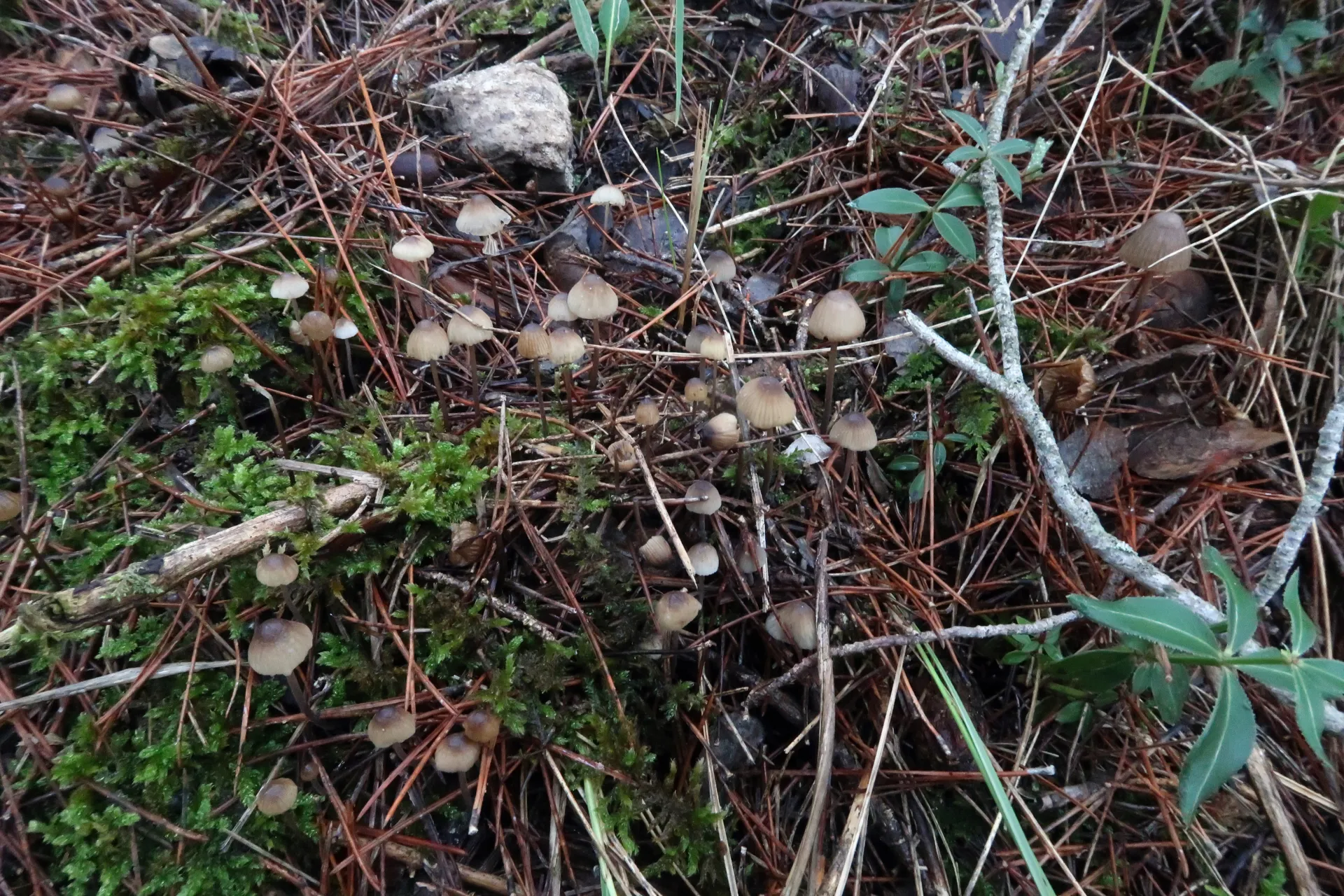
Species typical of organic litter such as leaves, twigs, or woody debris of both coniferous and deciduous trees, with a conical to campanulate pileus bearing an obtuse umbo, greyish-brown and darker at the centre, adnate lamellae, a cylindrical, hollow, slightly pruinose stipe of brownish-grey colour (exuding a white milky fluid when broken), with a raphanoid odour and sweet taste.
Cuticle (pileipellis) with a thin layer of hyphae arranged more or less parallel, 1.5–5 µm wide, with faint brown intracellular pigment and short excrescences, underlain by a layer of broader hyaline hyphae.
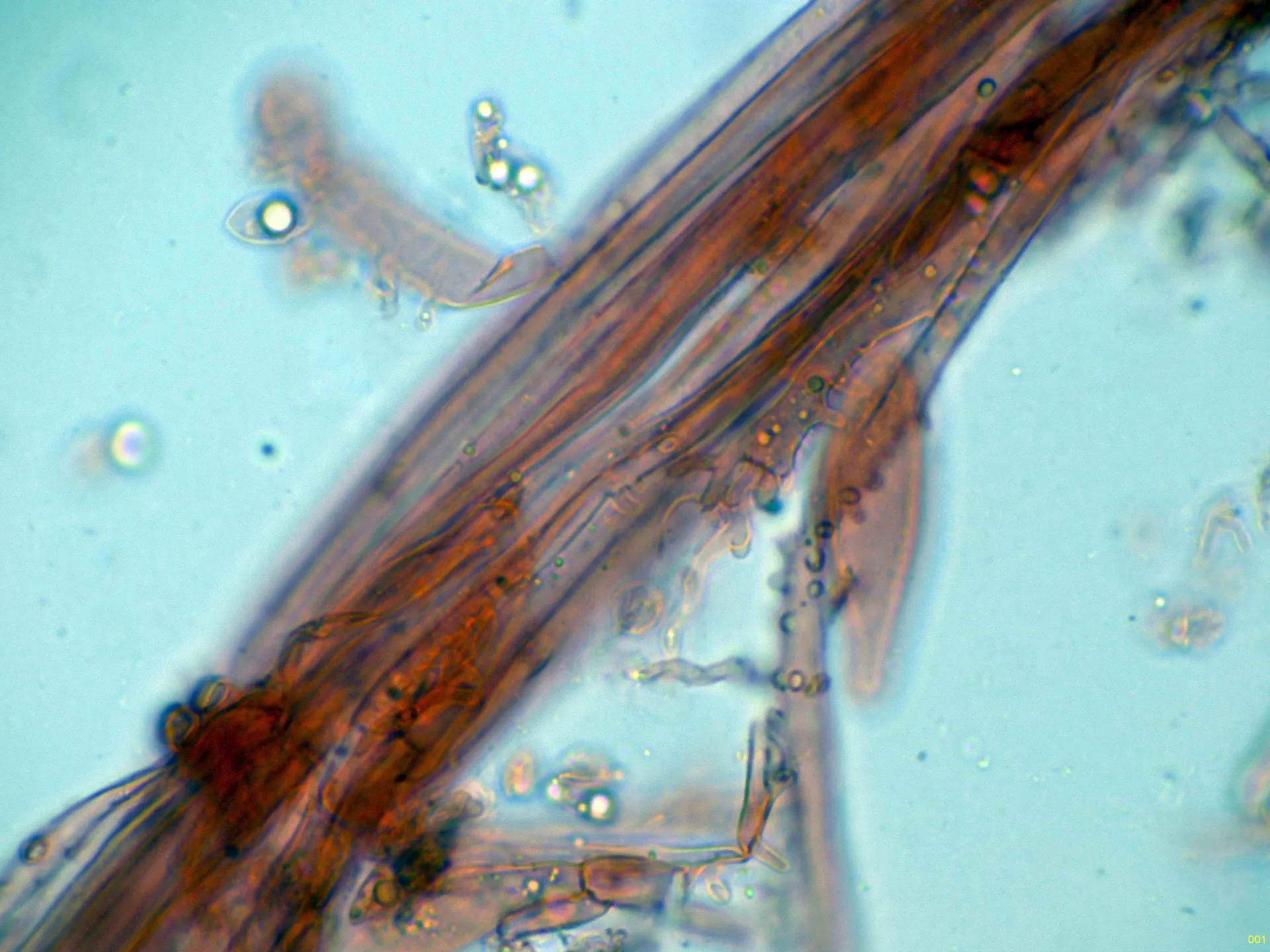
Hyphae of the outer surface of the stipe with simple to bifurcated excrescences 2–10 µm tall by 1–2 µm wide, septate and clamped.
Cheilocystidia and pleurocystidia cylindrical to fusiform, measuring 40–90 µm long by 9–18 µm wide, often with apical bifurcations or even short, coarse digitations.
Basidia cylindrical-clavate, 25–40 µm long by 6–8 µm wide, with basal clamps, 4-spored.
Spores cylindrical to ellipsoidal, smooth, hyaline, thin-walled, measuring 6.5–10 µm long by 4–5.5 µm wide, with a slightly eccentric apiculus at one end, containing oil droplets of varying size inside, amyloid in Melzer's reagent.
Herbarium material available: JTP2769/25.
Geographic references
Map generated from global occurrence data from GBIF. GBIF.
Study measurements
Values in Microns (µm)Macroscopic gallery
Microscopic gallery
Genetic / Phylogenetic Study
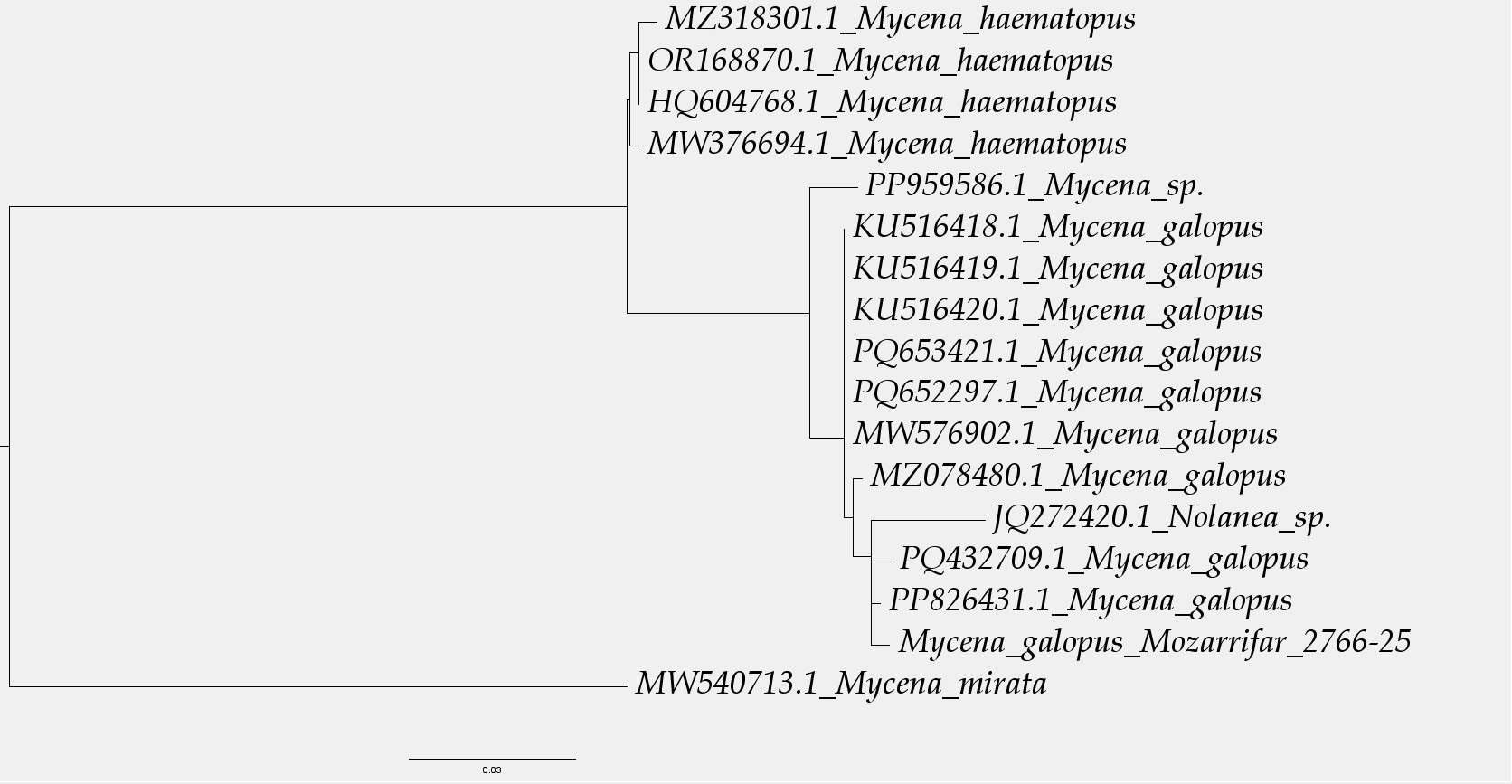
Phylogenetic Tree
Sequences and Data
Sequencing (Chromatogram)
Select a file to visualize the chromatogram