Mucronella calva
(Alb. & Schwein.) Fr.
Study description
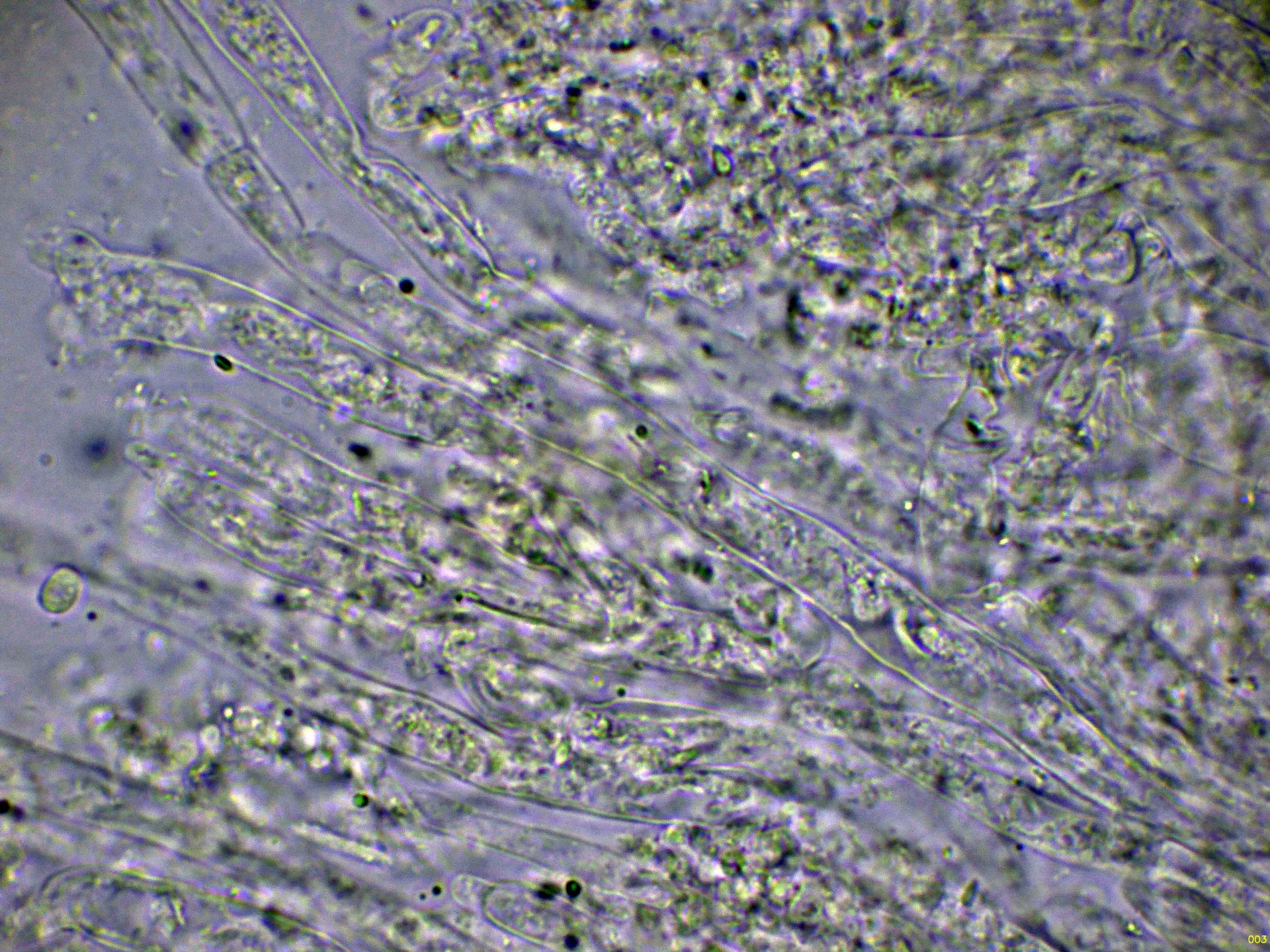
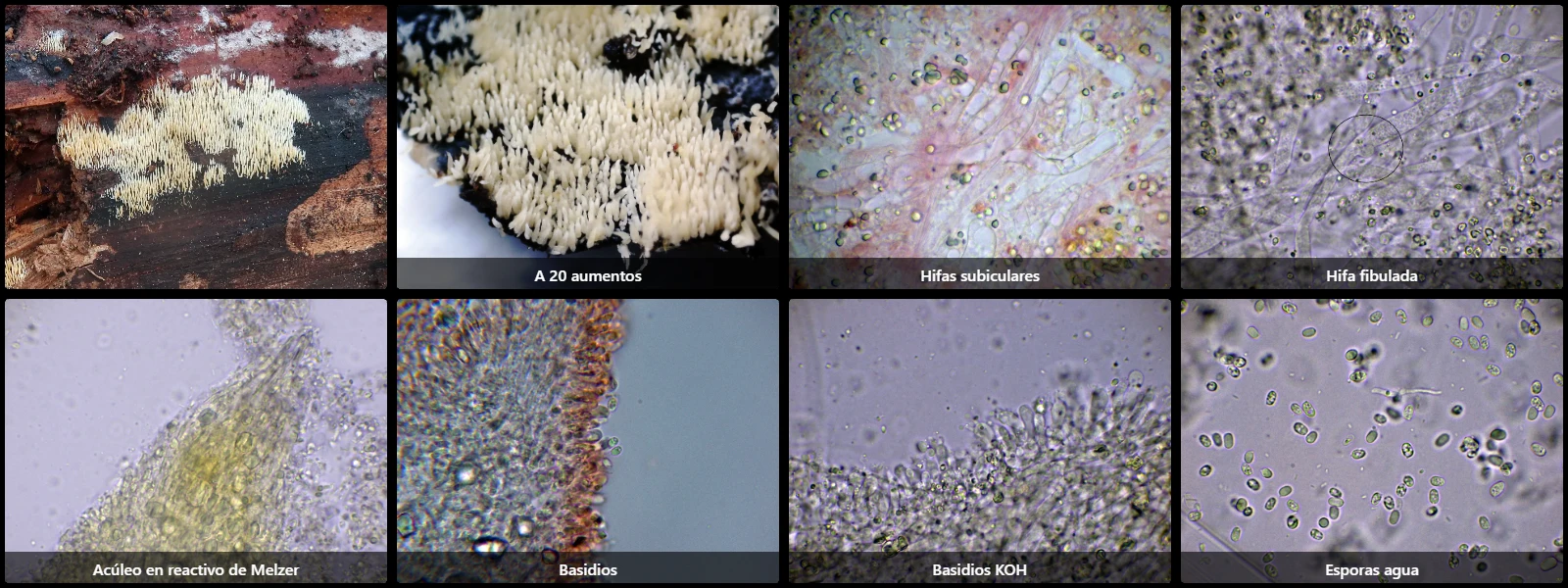
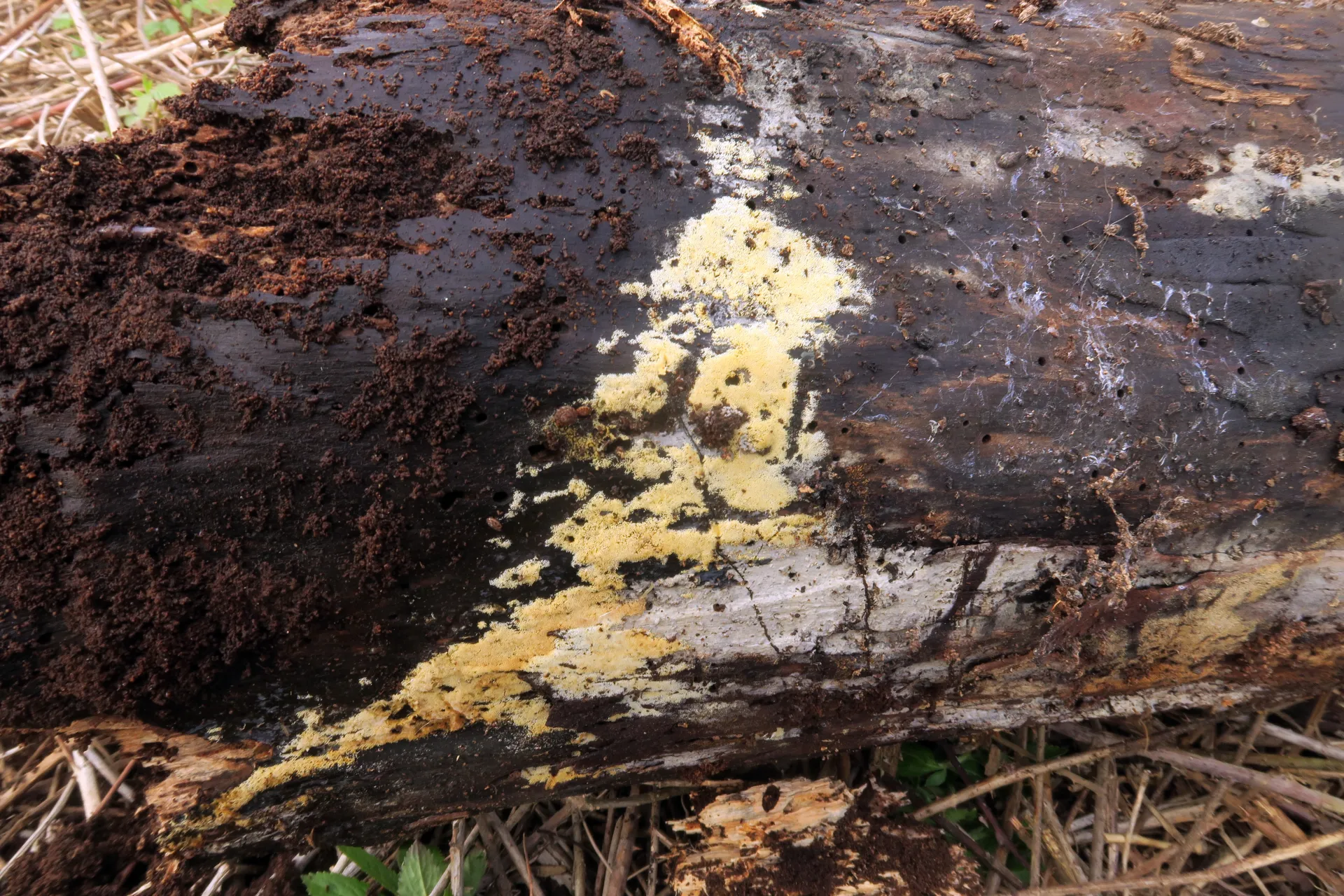
A species typical of decaying coniferous wood, especially fir (Abies), with spines (aculei) 0.4–0.6 mm long and a maximum width of 0.1–0.2 mm, white becoming yellowish with development, growing in numerous groups without a common subiculum.
Monomitic hyphal system, formed by cylindrical, hyaline, thin-walled hyphae 3–10 µm wide, arranged more or less parallel, septate and mostly with clamp connections (sometimes difficult to observe). Disseminated amorphous crystals are notably present among both subicular and subhymenial hyphae.
Cystidia or other sterile hymenial elements absent.
Basidia clavate, 12–18 µm long by 4–6 µm wide, apparently simple-based, 4-spored.
Spores ovoid to ellipsoidal, smooth, hyaline, thin-walled, measuring 5–6 µm long by 3–4 µm wide, with a pointed lateral apiculus at one end, containing small oil droplets inside, inamyloid in Melzer's reagent.
Herbarium material available: JTP2407/25.
Geographic references
Map generated from global occurrence data from GBIF. GBIF.
Study measurements
Values in Microns (µm)Macroscopic gallery
Microscopic gallery