


Morchella esculenta
(L.) Pers.
Study description
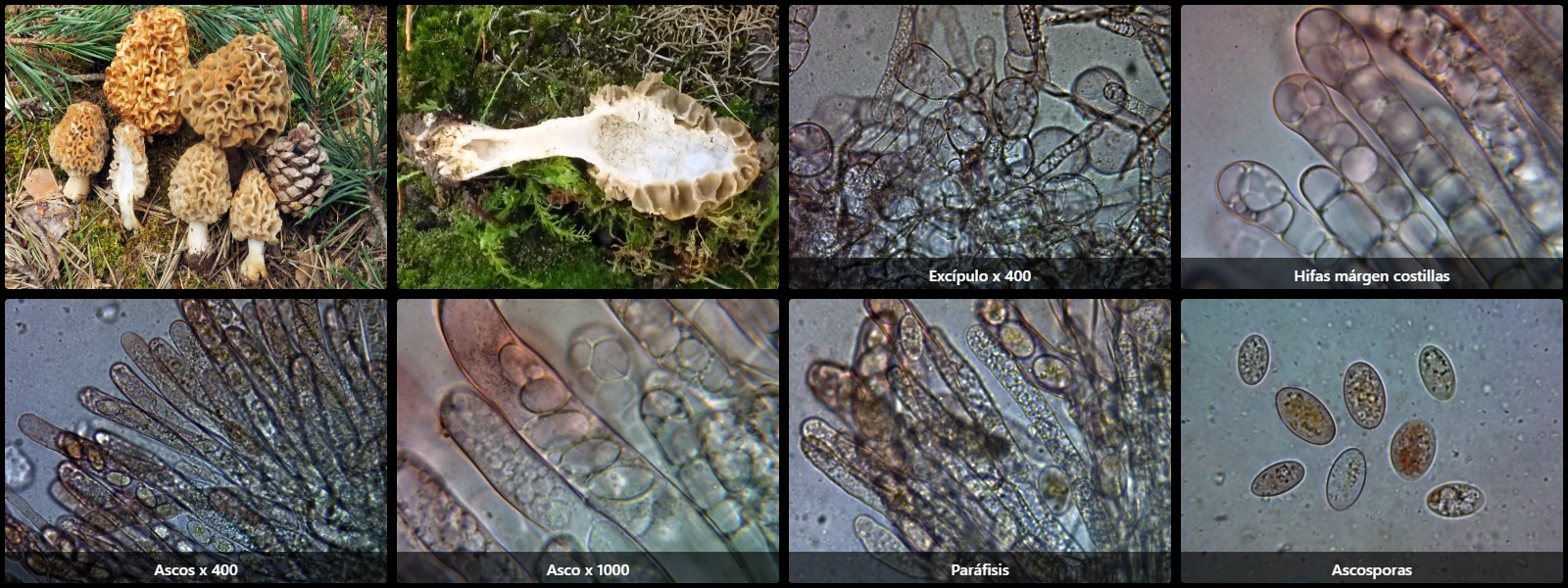
General: Occurring in riparian and alluvial woodlands, with very irregular, rounded to sinuous pits, cream-ochre to yellowish-brown, and a hollow, whitish stipe slightly enlarged at the base.
Asci: Cylindrical, 8-spored, operculate, uniseriate, 280-370 x 17-22 µm, inamyloid in Melzer's reagent.
Paraphyses: Scarce, cylindrical, septate, similar in length to asci, 8-12 µm wide, with pale yellowish granular contents.
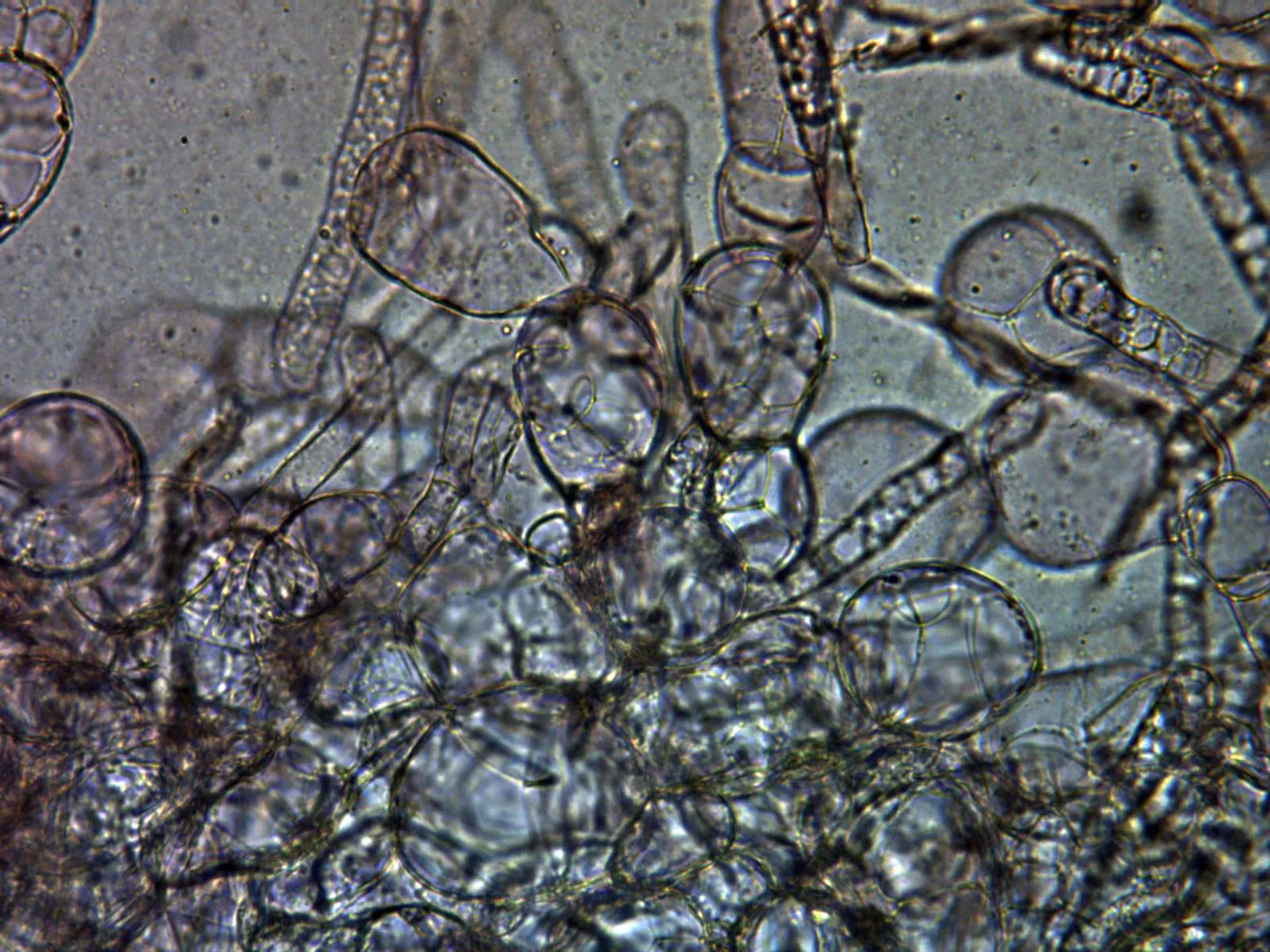
Sterile ridge elements: Very numerous along the sterile ridge edges, cylindrical, subclavate to slightly capitate, 50-100 x 10-24 µm.
Ascospores: Ovoid to ellipsoid, smooth, hyaline, thin-walled, 16-22 x 10-14 µm, homogeneous at maturity without guttules.
Asci: Cylindrical, 8-spored, operculate, uniseriate, 280-370 x 17-22 µm, inamyloid in Melzer's reagent.
Paraphyses: Scarce, cylindrical, septate, similar in length to asci, 8-12 µm wide, with pale yellowish granular contents.
Sterile ridge elements: Very numerous along the sterile ridge edges, cylindrical, subclavate to slightly capitate, 50-100 x 10-24 µm.
Ascospores: Ovoid to ellipsoid, smooth, hyaline, thin-walled, 16-22 x 10-14 µm, homogeneous at maturity without guttules.
Geographic references
Map generated from global occurrence data from GBIF. GBIF.
Study measurements
Values in Microns (µm)Macroscopic gallery
1 / 7Morchella esculenta - 1
Microscopic gallery
1 / 19Morchella esculenta - 10 - Excípulo x 400