

Mollisia ventosa
(P.Karst.) P.Karst.
Study description
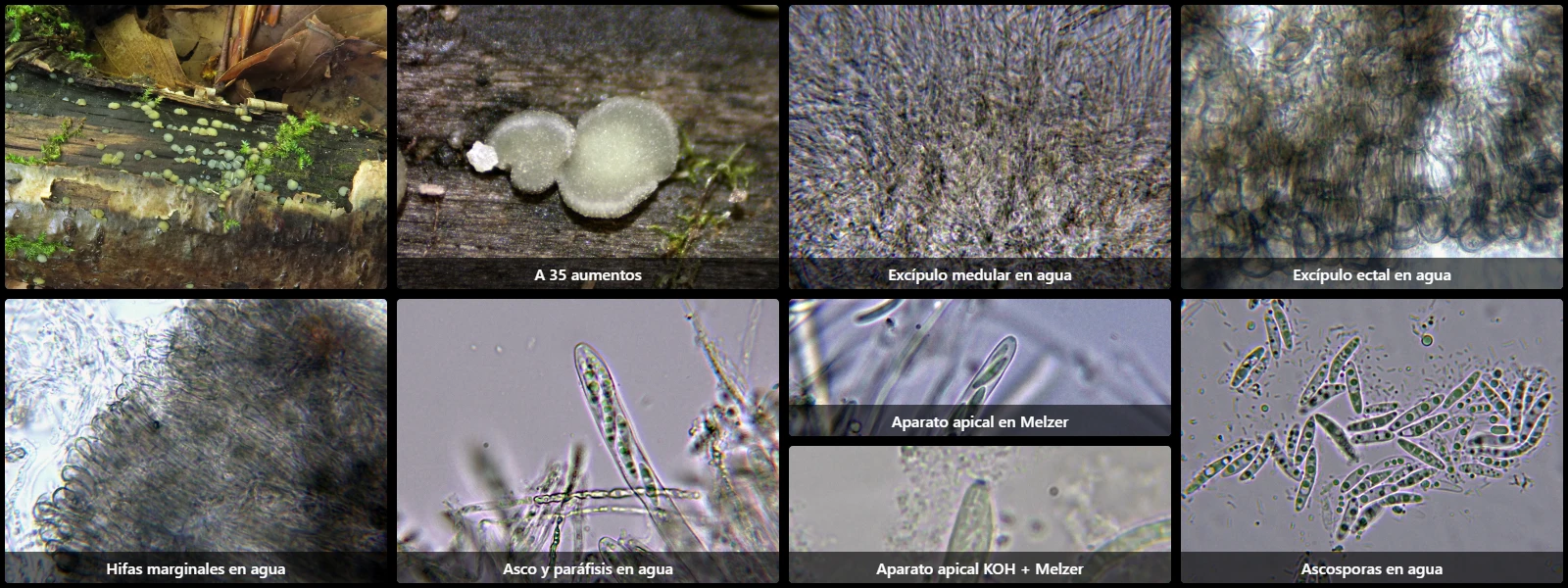
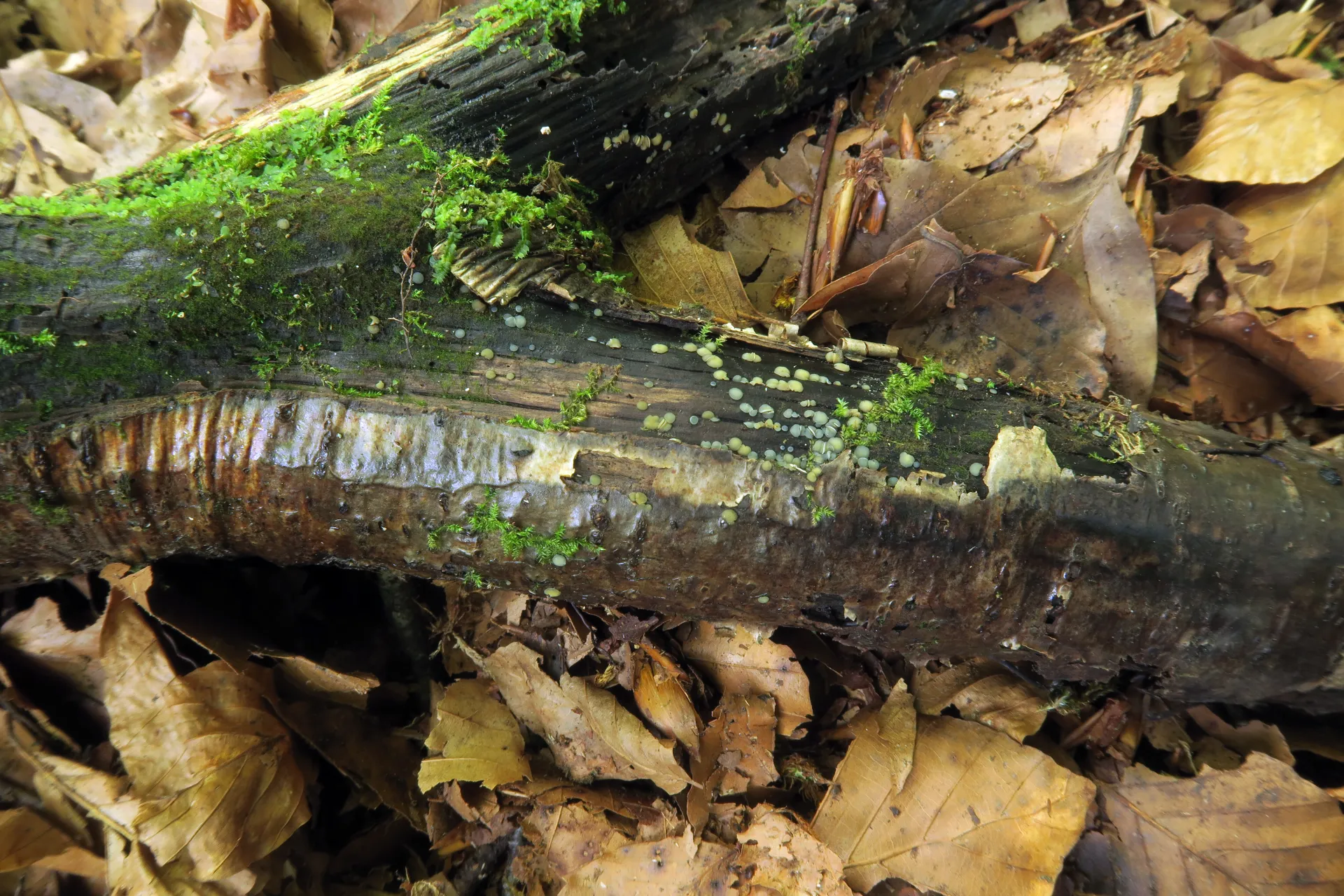
On very wet decaying decorticated wood on the ground, with sessile, cupuliform to flattened, discoid ascomata with a wavy margin, 0.5 to 1.5 mm in diameter, yellowish with greenish or bluish tinges, and with a brown exterior.
Medullary excipulum of textura intricata, with filamentous, densely intertwined, hyaline, branched hyphae 2.5 to 5 µm wide.
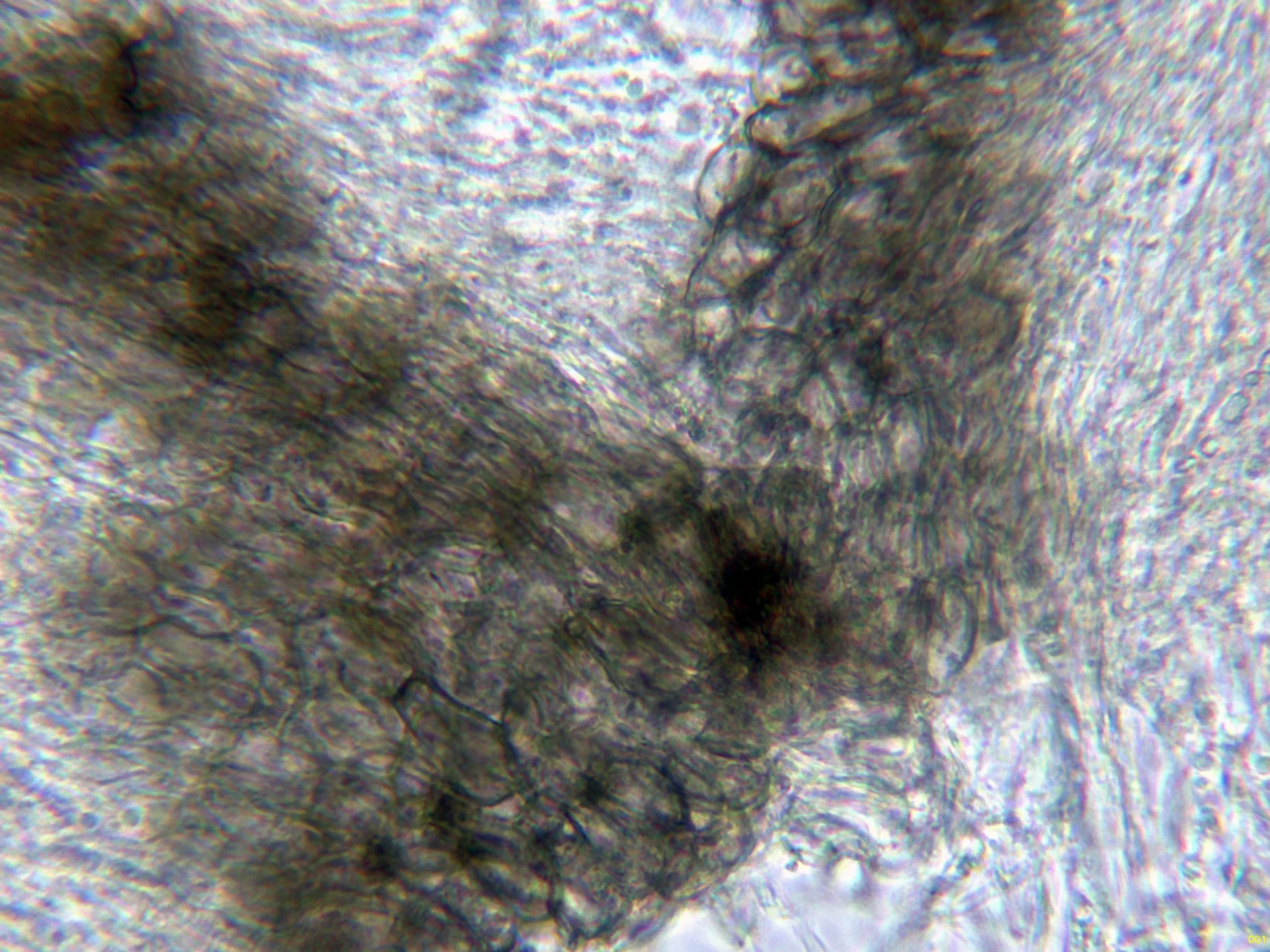
Ectal excipulum of textura globulosa-angularis, with thick-walled hyphae, basal cells 10 to 25 µm long by 9 to 18 µm wide with abundant greyish-brown pigment inside; these hyphae narrow towards the margin, where they acquire a cylindrical to slightly clavate morphology, 12 to 25 µm long by 4 to 6 µm wide, these marginal hyphae thinner-walled, paler or hyaline, arranged parallel to each other (in a palisade) with rounded endings.
Asci cylindrical, eight-spored (octosporic), 100 to 120 µm long by 5 to 6 µm wide, with spore arrangement uniseriate in the lower part of the ascus, overlapping laterally, to biseriate or irregular in the upper part, with basal croziers, and with an apical apparatus weakly amyloid in Melzer's reagent, which intensifies after a 10-minute pretreatment with KOH.
Paraphyses filiform, septate, simple or branched only from the base, 2 to 3.5 µm wide, with slight apical swellings 2.5 to 4.5 µm wide, containing refractive vacuolar contents inside, barely or not at all projecting above the level of the asci.
Ascospores cylindric-fusiform, smooth, hyaline, thin-walled, 12.5 to 20 µm long by 2.7 to 3.6 µm wide, mature ones 1- to 3-septate, with a more pronounced constriction at the central septum, and containing oil drops (guttules) inside.
Herbarium material available: JTP2831/26.
Geographic references
Map generated from global occurrence data from GBIF. GBIF.
Study measurements
Values in Microns (µm)Macroscopic gallery
Microscopic gallery