Melanoleuca humilis
(Pers.) Pat.
Study description
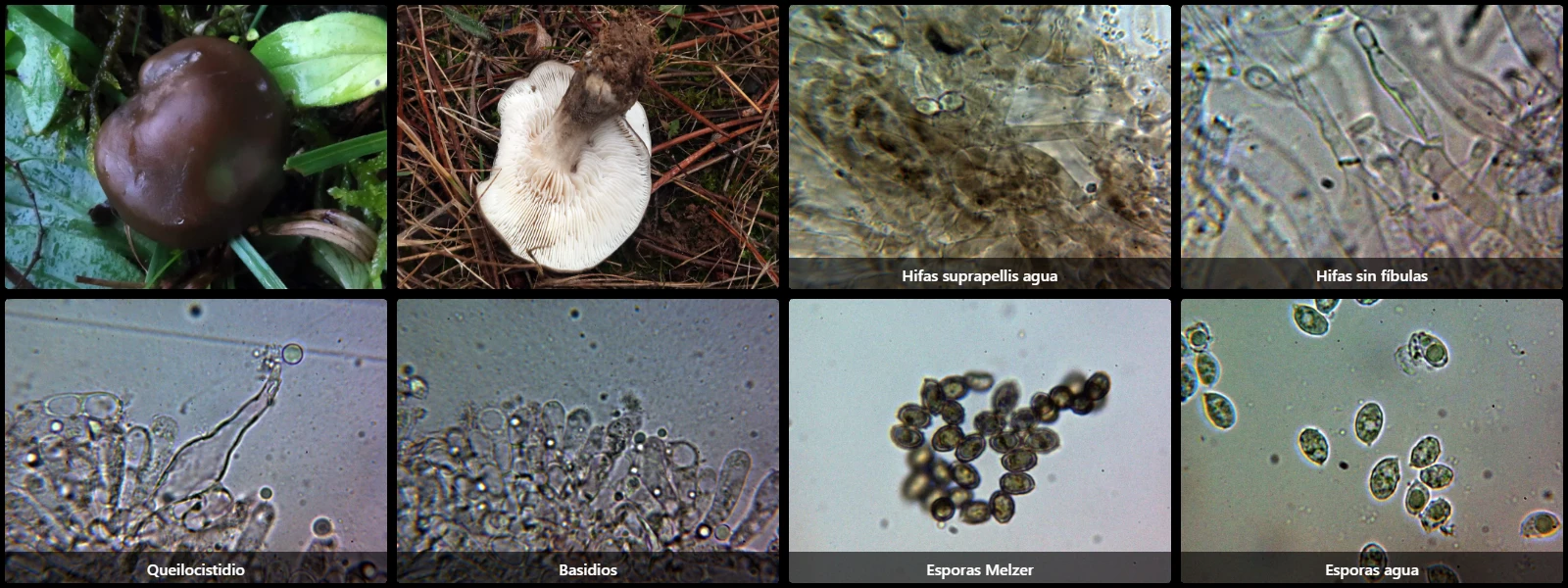
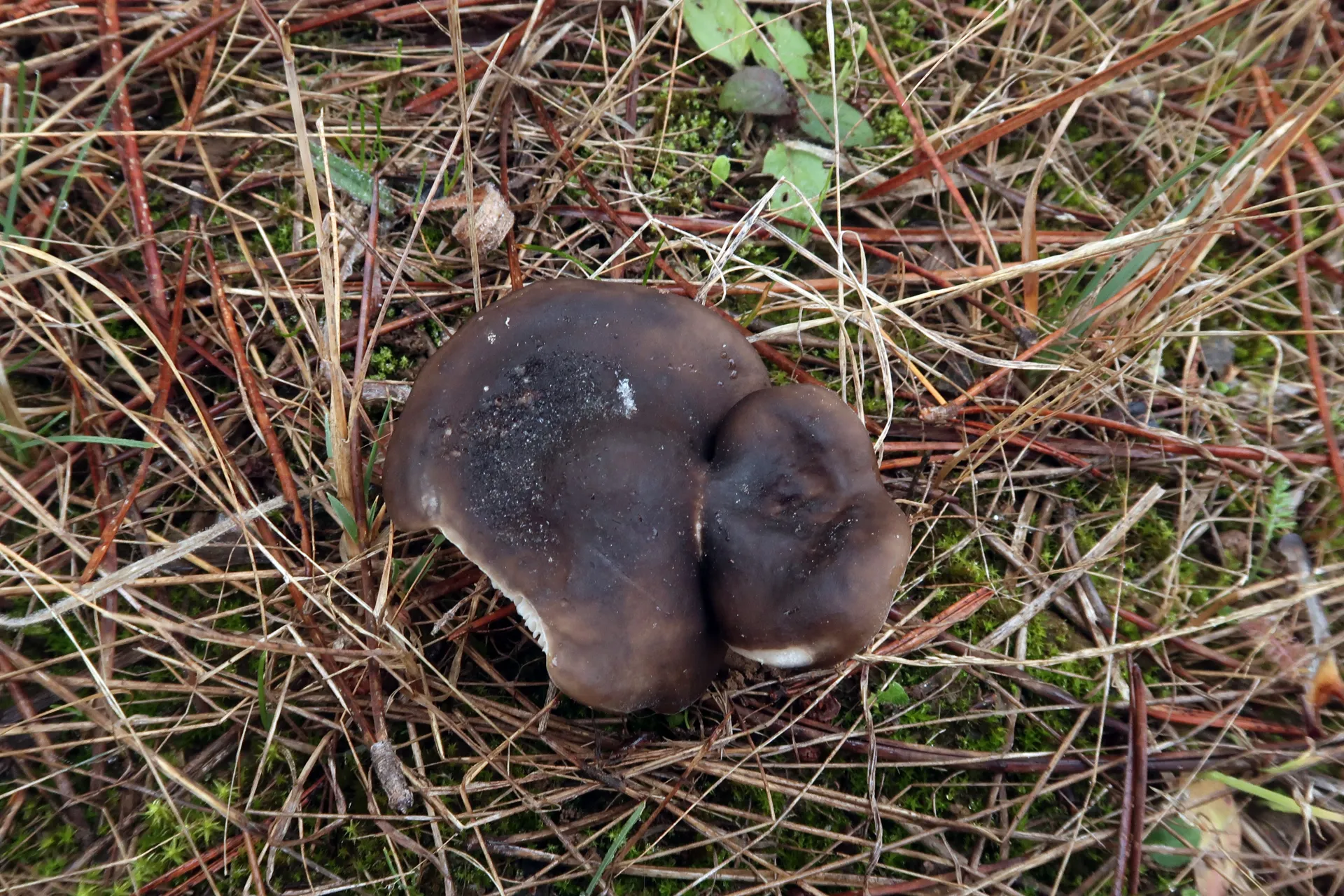
Species typical of meadows or roadsides at woodland edges, with a pileus up to 10 cm across, convex with an obtuse central umbo, dark reddish-brown, a stipe thickened at the base with a brownish-grey, finely scaly surface, a fungal odour, and a sweet, farinaceous taste.
Cuticle (pileipellis) formed by filamentous, irregularly interwoven hyphae 4–8 µm wide, with abundant brown intracellular pigment, septate, with simple septa (clampless).
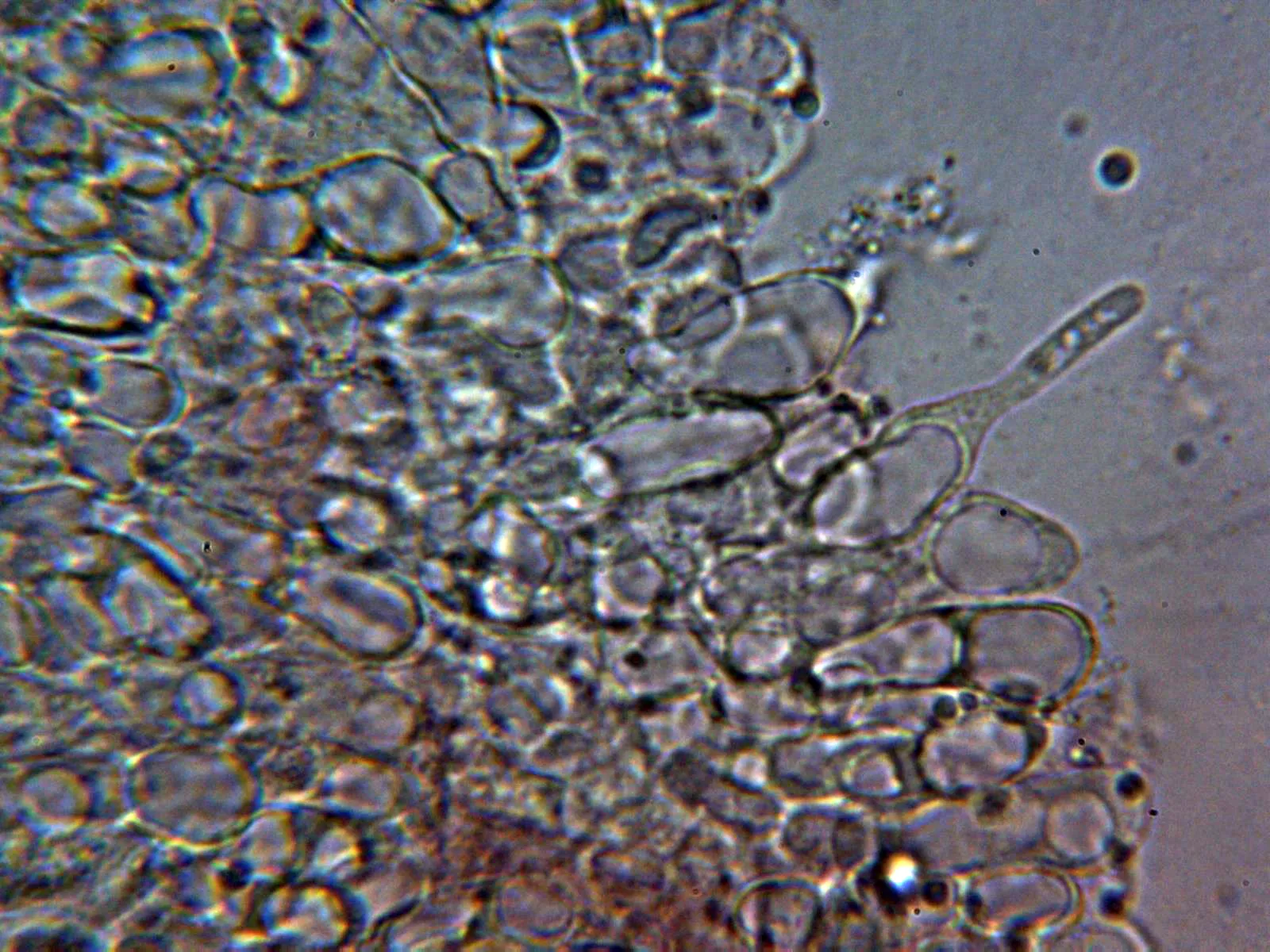
Cheilocystidia fusiform to lageniform, ventricose, moderately thick-walled, measuring 50–70 µm long by 10–14 µm wide, and generally with apical crystal encrustations.
Lamellar trama regular to parallel.
Basidia clavate, 30–35 µm long by 7–9 µm wide, with a simple base, 4-spored.
Spores ellipsoidal, hyaline, with a verrucose wall, measuring 6.5–8.8 µm long by 4.3–5.5 µm wide, with a minute hyaline apiculus at one end, containing oil droplets (guttules) inside, amyloid in Melzer's reagent.
Geographic references
Map generated from global occurrence data from GBIF. GBIF.
Study measurements
Values in Microns (µm)Macroscopic gallery
Microscopic gallery