Marasmius rotula
(Scop.) Fr.
Study description
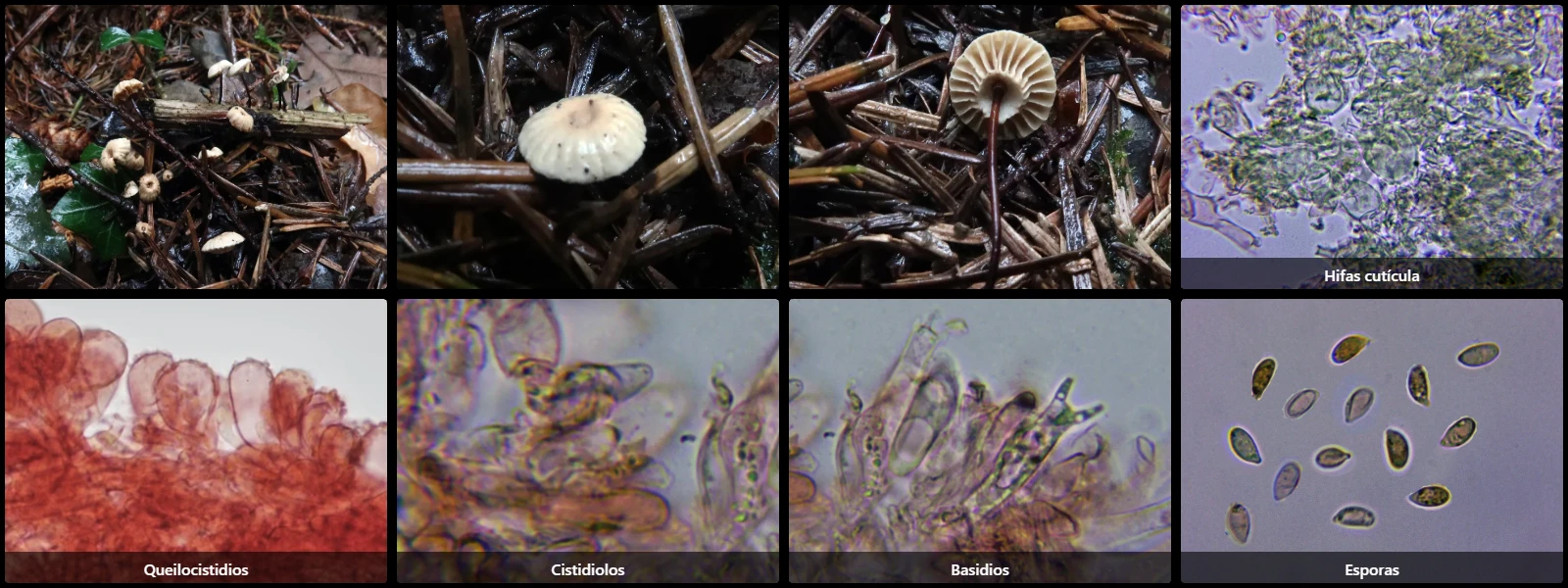
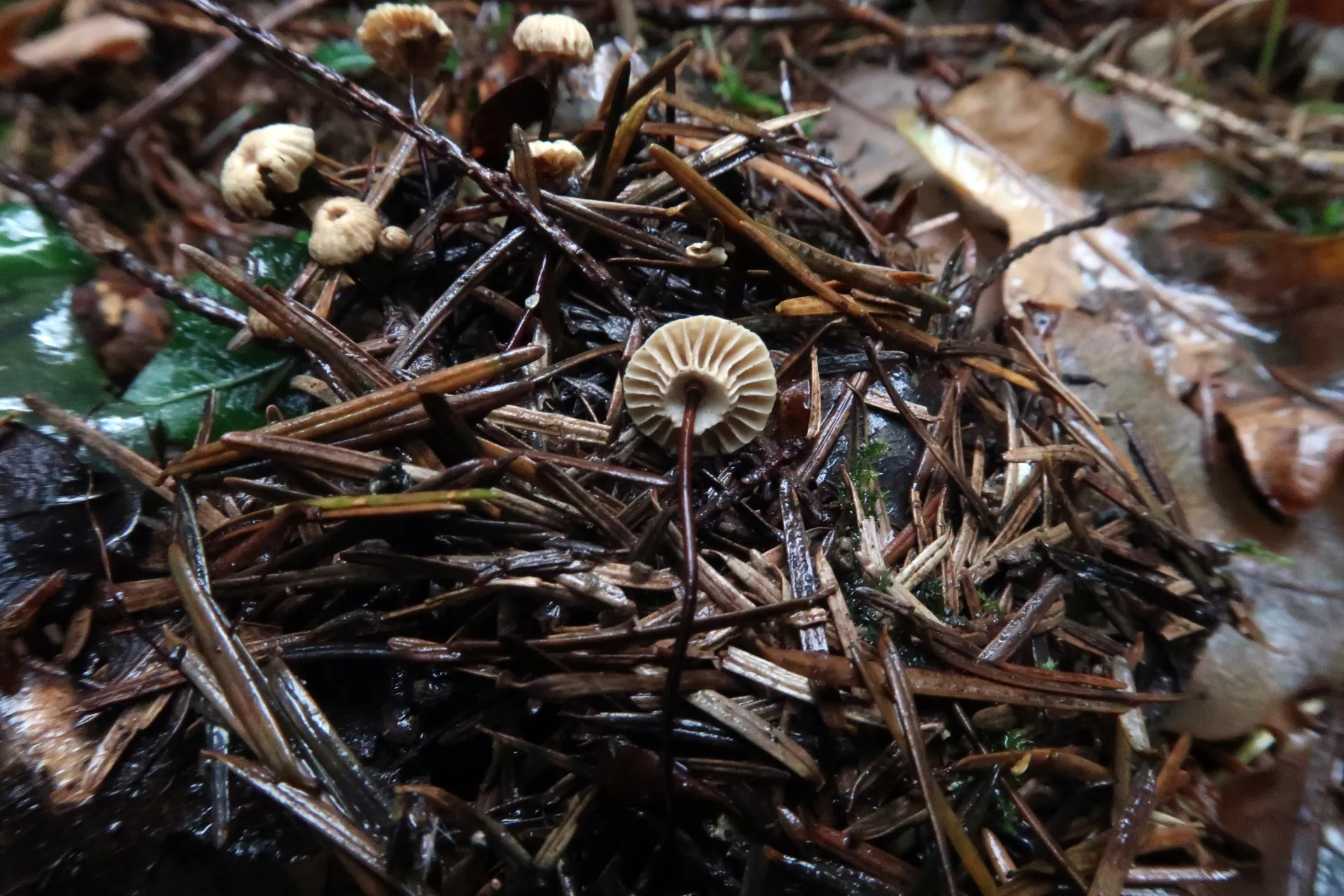
Found on decaying fine twigs on the ground, with pilei 0.5–1.5 cm across, white to cream, convex, always umbilicate, lamellae attached to a well-defined collar free from the stipe, and a smooth, dark reddish-brown to black stipe.
Pileipellis formed by clavate to pyriform, thick-walled hyphae (broom cells), measuring 20–40 µm long by 10–18 µm wide, ornamented with obtuse warts, with basal clamps.
Cheilocystidia globose to clavate, 15–25 µm long by 7–15 µm wide, moderately thick-walled, ornamented with warts (Rotalis-type broom cells). Additionally, some fusiform cystidioles are present on the lamellar faces, some of them bifurcated.
Lamellar trama irregular.
Basidia cylindrical-clavate, 25–30 µm long by 4–6 µm wide, with basal clamps, 4-spored.
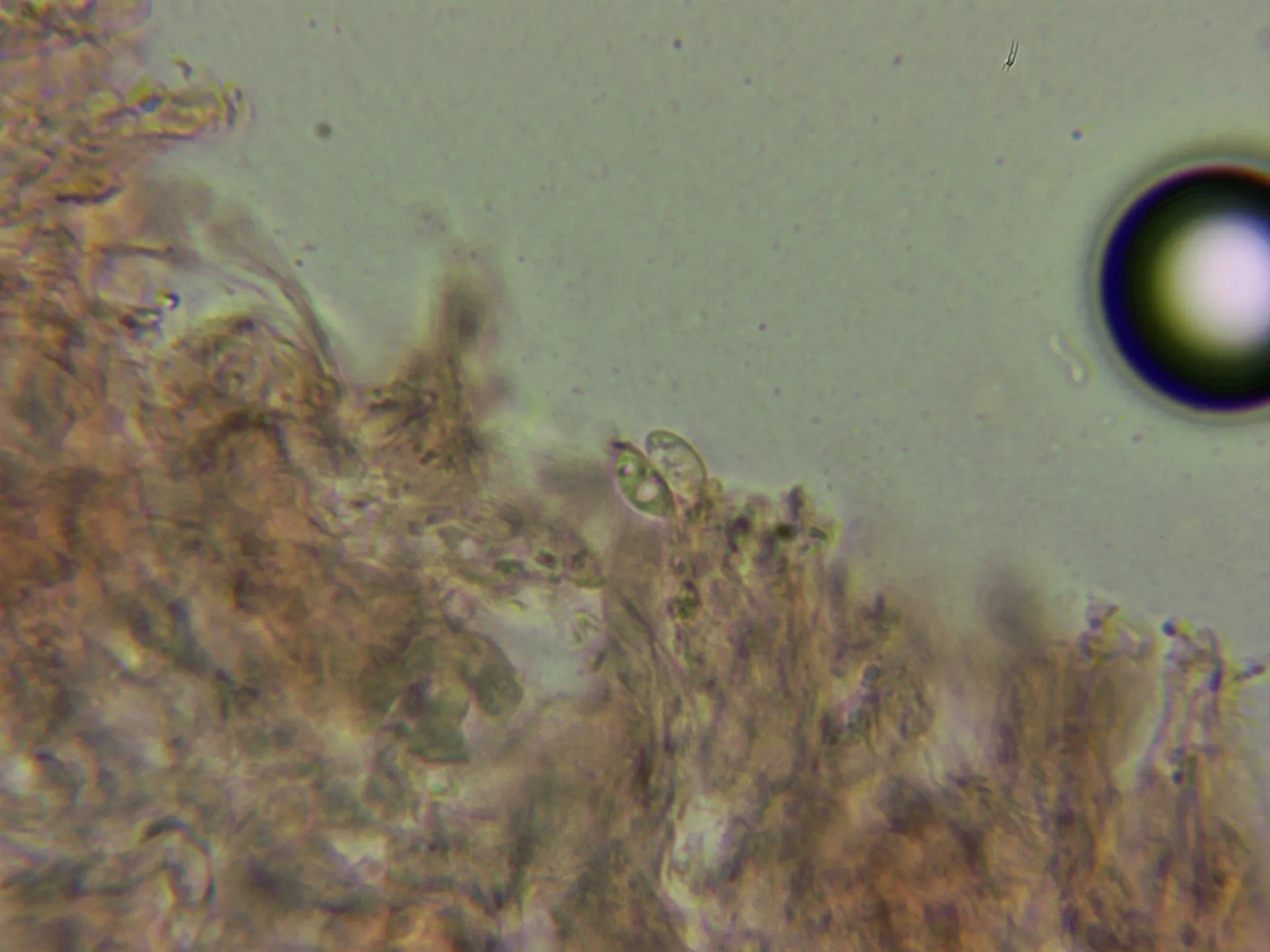
Spores ellipsoidal, smooth, hyaline, thin-walled, with a more pointed end where the apiculus is located, measuring 8–9.5 µm long by 4–5 µm wide, and with faint contents of tiny oil droplets inside.
Geographic references
Map generated from global occurrence data from GBIF. GBIF.
Study measurements
Values in Microns (µm)Macroscopic gallery
Microscopic gallery