


Marasmius epiphylloides
(Rea) Sacc. & Trotter
Study description
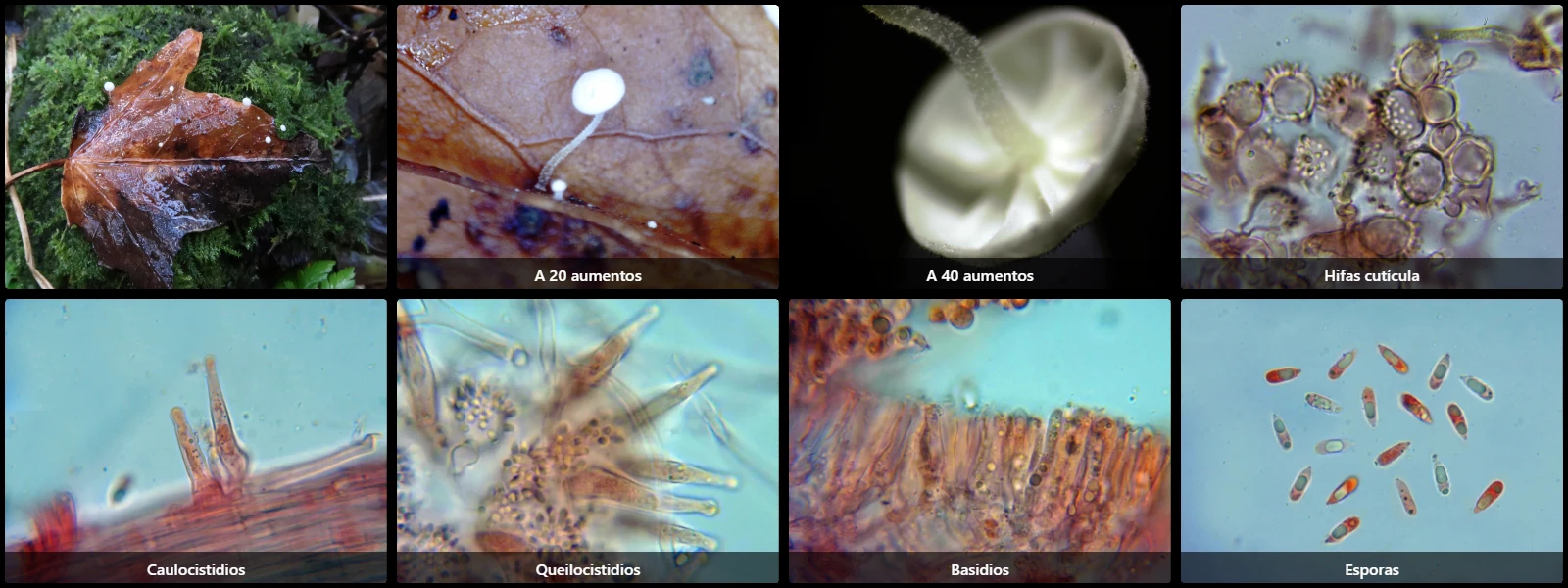
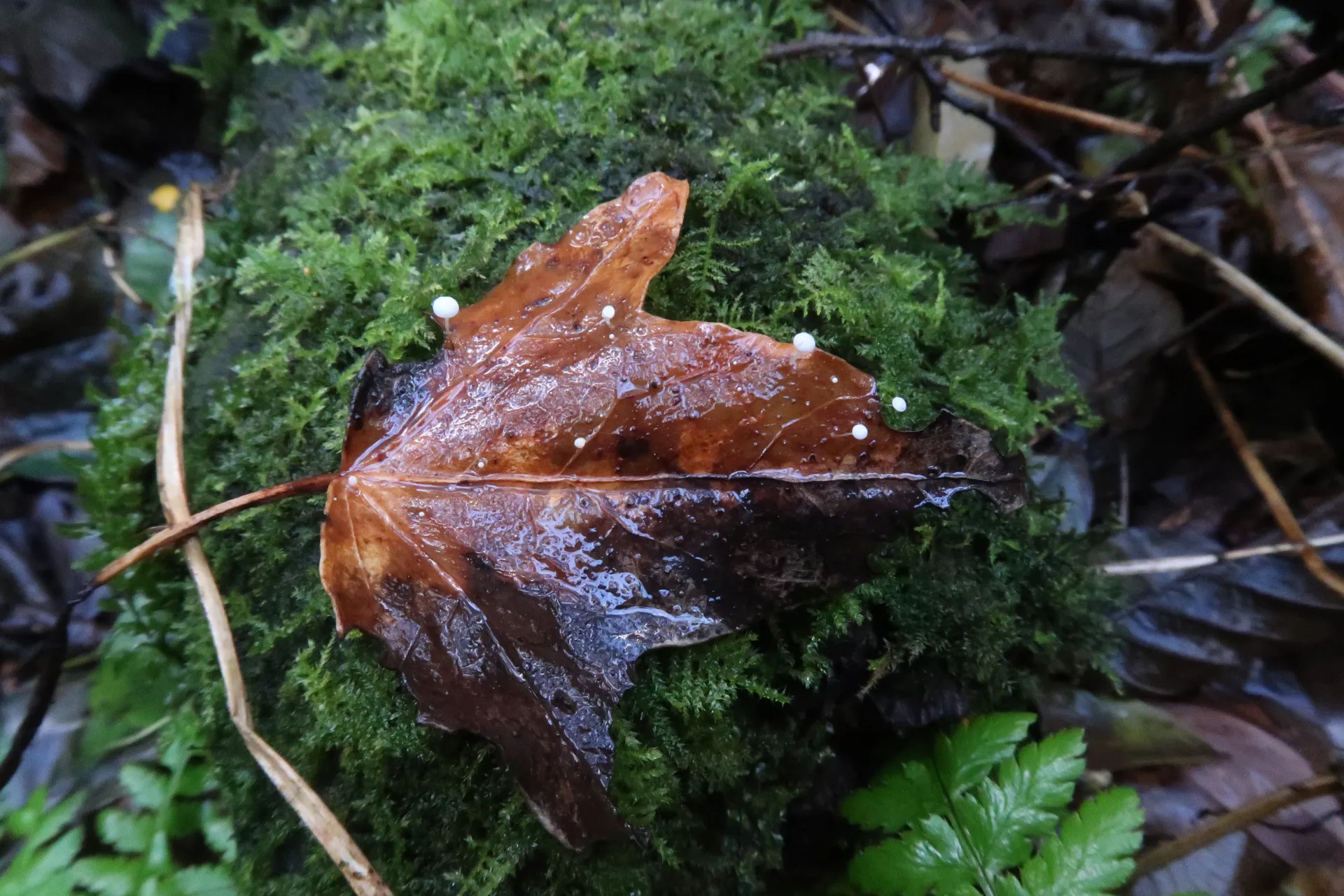
General: Strictly host-specific on wet decaying fallen leaves of ivy (Hedera helix), pileus minute (2-5 mm diam.), white, lamellae broad and distant, stipe up to 2.5 cm long, very slender (0.2-0.4 mm thick), whitish and finely floccose-scaly throughout.
Pileipellis: Composed of thick-walled pyriform to vesiculose broom-cells 17-30 x 10-15 µm, covered with coarse digitations.
Caulocystidia: Abundant, thick-walled, fusiform to lageniform, some subcapitate.
Cheilocystidia: Dimorphic: fusiform to lageniform (some subcapitate) elements 50-65 x 8-10 µm, intermixed with diverticulate vesiculose broom-cells resembling pileipellis cells.
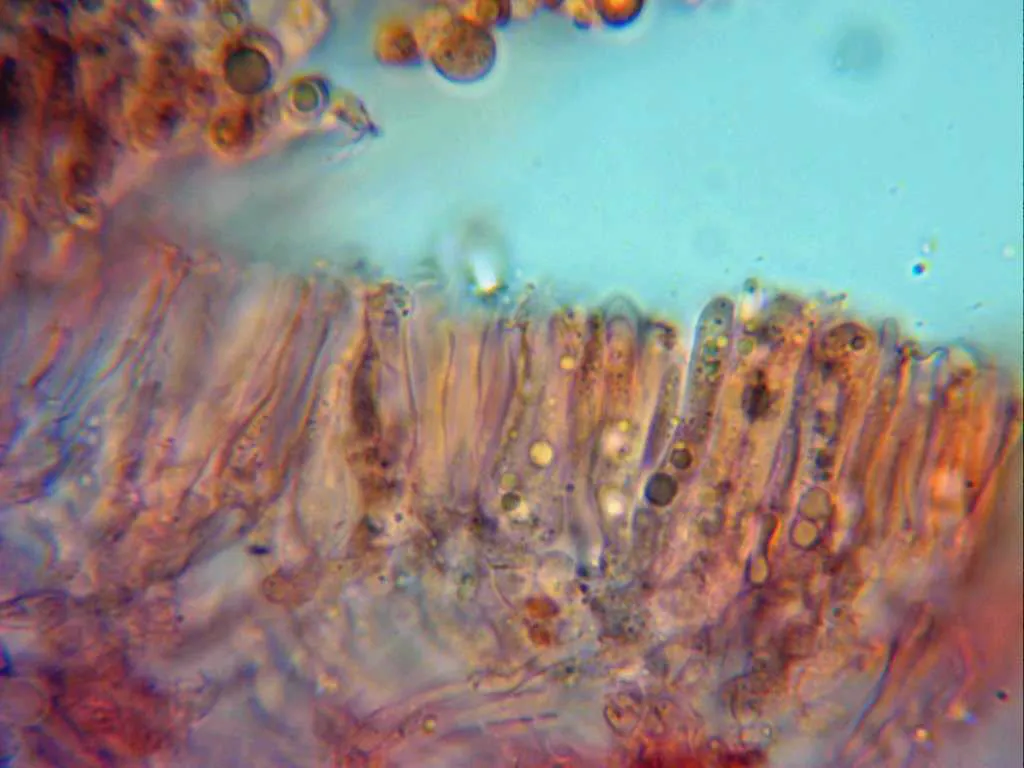
Basidia: Cylindric-clavate, 30-35 x 5-7 µm, with basal clamp connections, 4-spored.
Spores: Cylindrical, smooth, hyaline, thin-walled, 10.5-12.5 x 3-4 µm, pointed at the apicular pole, containing coarse lipid guttules.
Pileipellis: Composed of thick-walled pyriform to vesiculose broom-cells 17-30 x 10-15 µm, covered with coarse digitations.
Caulocystidia: Abundant, thick-walled, fusiform to lageniform, some subcapitate.
Cheilocystidia: Dimorphic: fusiform to lageniform (some subcapitate) elements 50-65 x 8-10 µm, intermixed with diverticulate vesiculose broom-cells resembling pileipellis cells.
Basidia: Cylindric-clavate, 30-35 x 5-7 µm, with basal clamp connections, 4-spored.
Spores: Cylindrical, smooth, hyaline, thin-walled, 10.5-12.5 x 3-4 µm, pointed at the apicular pole, containing coarse lipid guttules.
Geographic references
Map generated from global occurrence data from GBIF. GBIF.
Study measurements
Values in Microns (µm)Macroscopic gallery
1 / 9Marasmius epiphylloides - 1 - IMG_1789
Microscopic gallery
1 / 14Marasmius epiphylloides - 10 - Himenio