


Marasmius buxi
Fr.
Study description
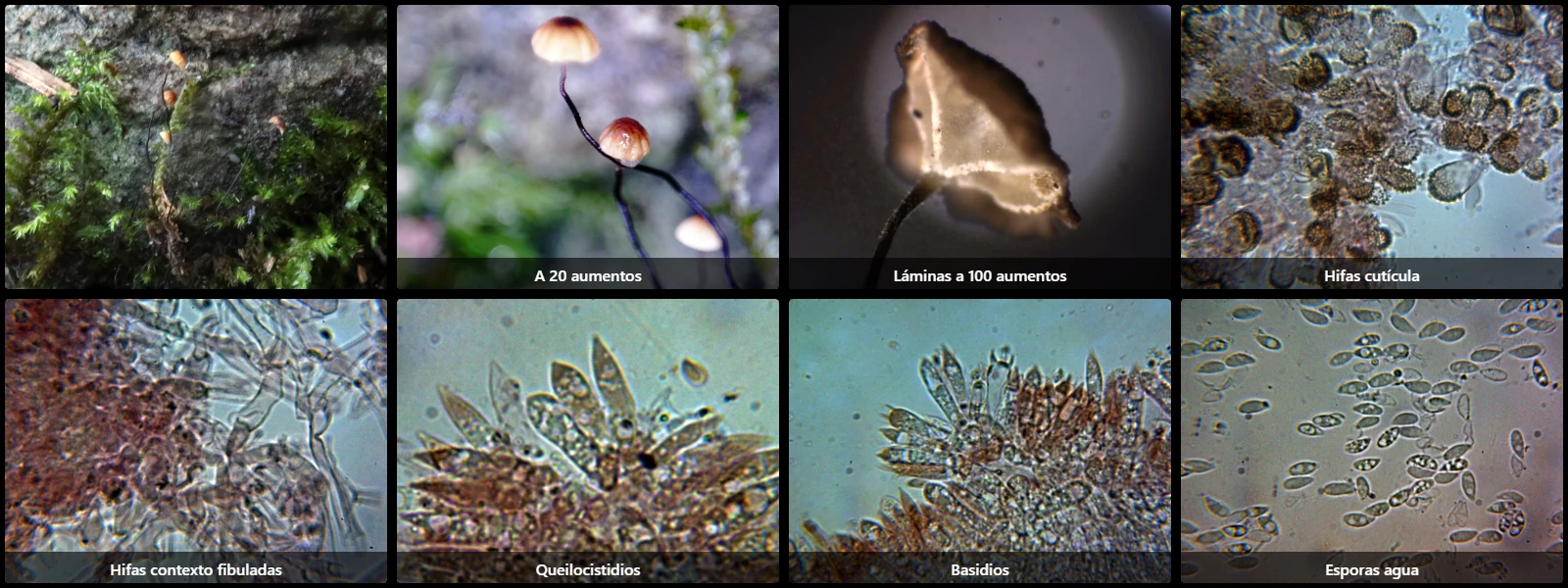
General: Host-specific on decaying fallen leaves of box (Buxus sempervirens), pileus 1-3.5 mm diam., convex to centrally flattened, reddish-brown at the disc with a whitish margin, pulverulent to granulose, stipe up to 2 cm long, 0.2-0.3 mm thick, blackish.
Pileipellis: Composed of vesiculose to pyriform broom-cells, thick-walled, 10-25 x 7-15 µm, ornamented with abundant short digitations and brown intracellular pigment.
Cheilocystidia: Abundant, fusiform, mucronate at the apex, 18-30 x 4-8 µm, with clamped bases.
Basidia: Cylindric-clavate, 20-25 x 6-8 µm, with basal clamp connections, 1- or 2-spored (mono- or bisporic).
Spores: Cylindrical to fusiform, pointed at the apicular pole, smooth, hyaline, thin-walled, 7.5-10 x 3-4.5 µm, containing oil droplets.
Pileipellis: Composed of vesiculose to pyriform broom-cells, thick-walled, 10-25 x 7-15 µm, ornamented with abundant short digitations and brown intracellular pigment.
Cheilocystidia: Abundant, fusiform, mucronate at the apex, 18-30 x 4-8 µm, with clamped bases.
Basidia: Cylindric-clavate, 20-25 x 6-8 µm, with basal clamp connections, 1- or 2-spored (mono- or bisporic).
Spores: Cylindrical to fusiform, pointed at the apicular pole, smooth, hyaline, thin-walled, 7.5-10 x 3-4.5 µm, containing oil droplets.
Geographic references
Map generated from global occurrence data from GBIF. GBIF.
Study measurements
Values in Microns (µm)Macroscopic gallery
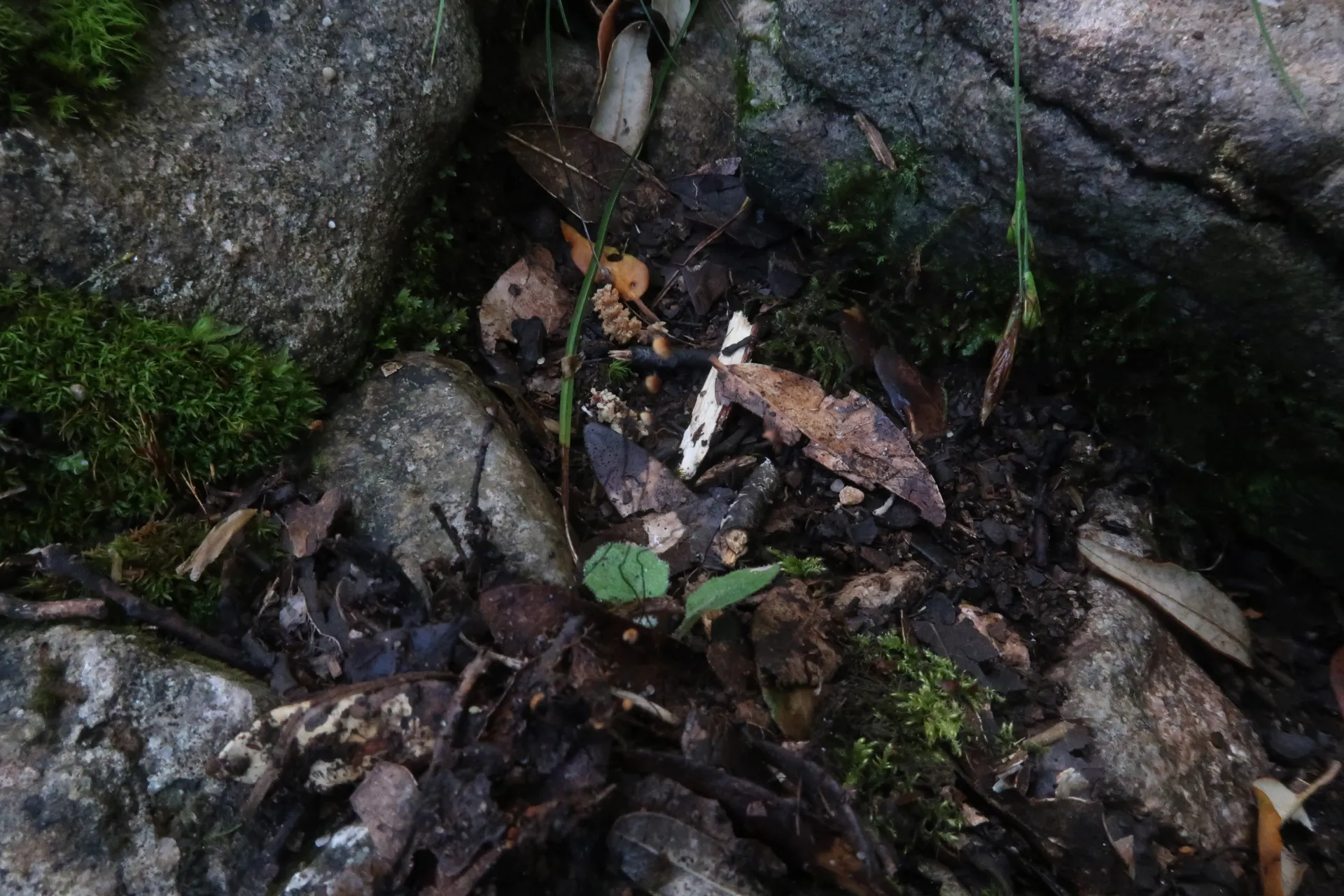
1 / 7Marasmius buxi - 1 - IMG_6921
Microscopic gallery
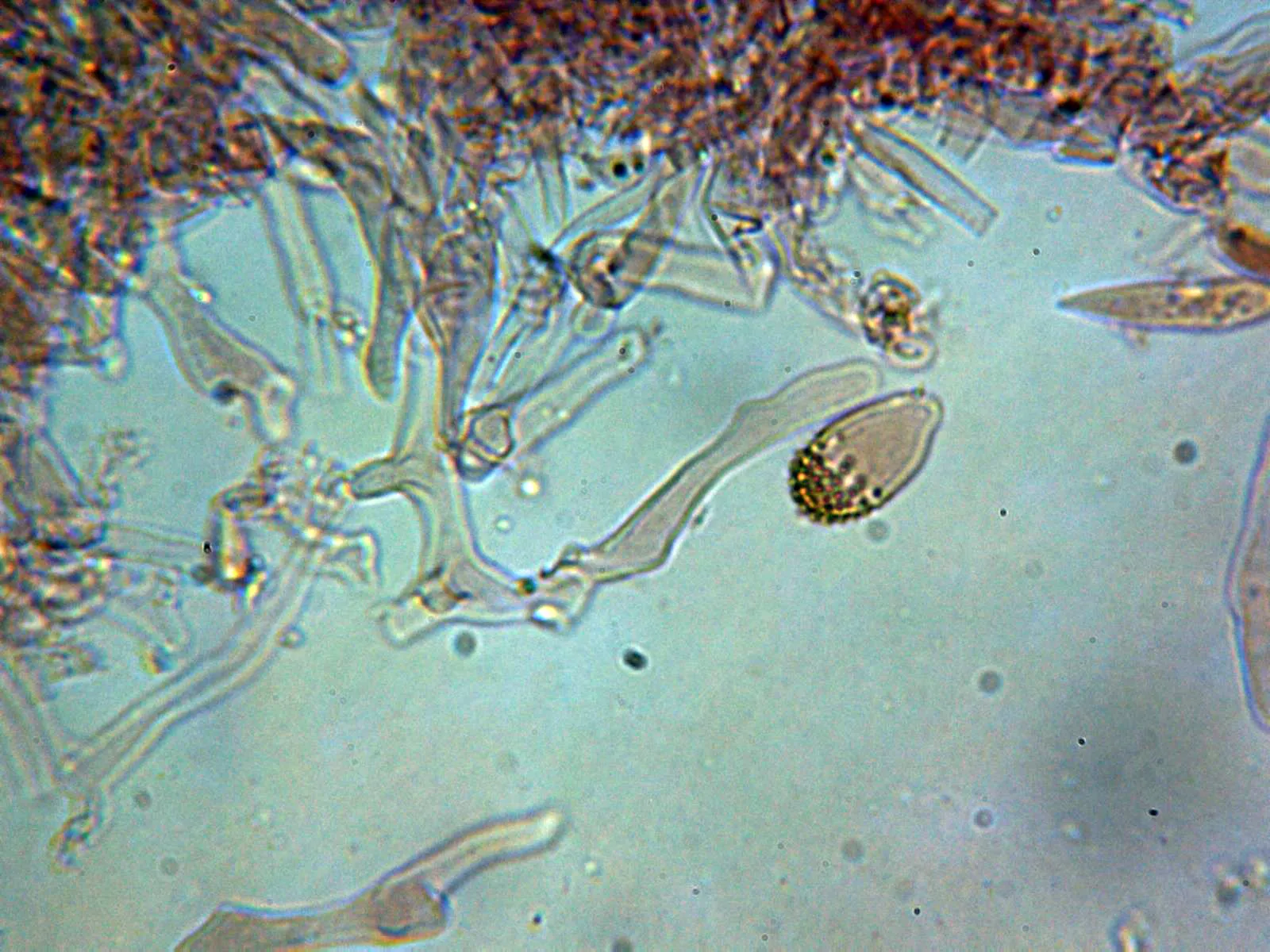
1 / 14Marasmius buxi - 10 - Cistidio 1