


Marasmiellus graminis
(Murrill) Singer & Hauskn.
Study description
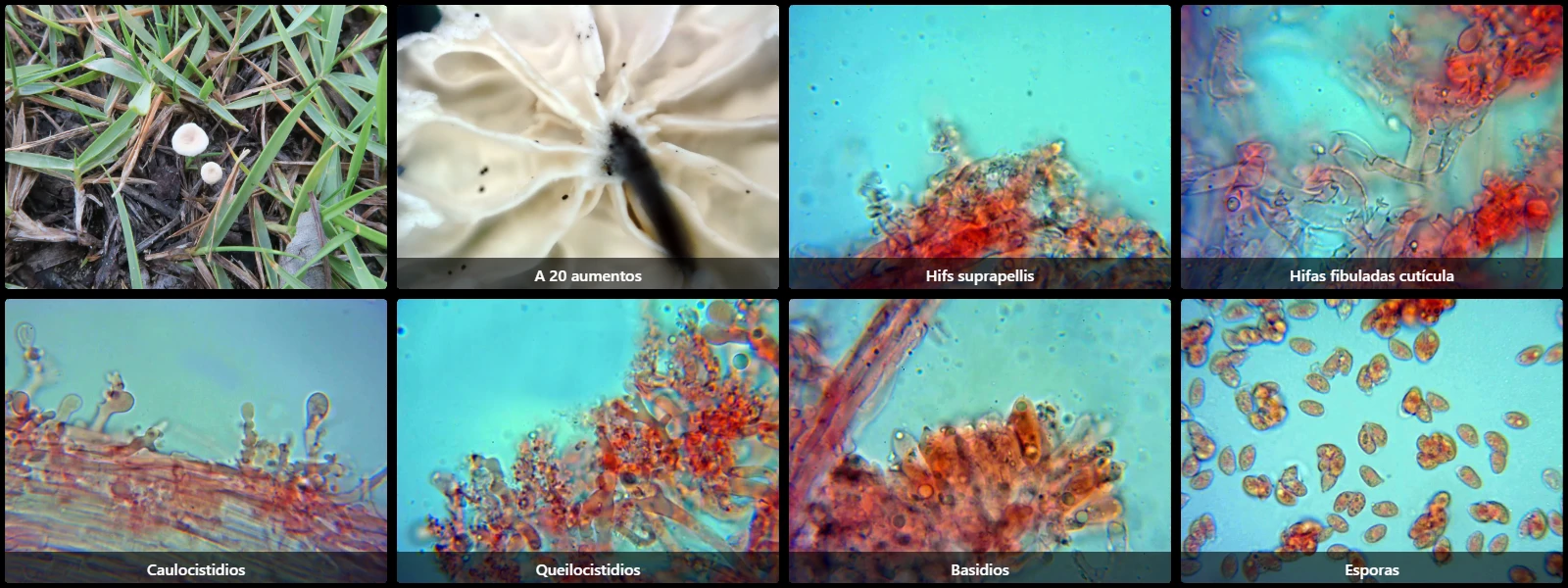
General: Formerly known as Marasmiellus tricolor var. graminis, developing on grass culms and turf in lawns, pileus white, minute (3-8 mm diam.), lamellae distant and anastomosed, stipe up to 1.5 cm long and only 0.3-0.5 mm thick.
Pileipellis: Filamentous cutis of cylindrical hyphae 3-15 µm wide with inflations and diverticulate hyphal endings, septate with clamp connections.
Caulocystidia: Abundant, cylindrical, flexuous, with short diverticulate projections and branches, 30-100 x 4-14 µm.
Cheilocystidia: Present, coralloid/diverticulate, 30-50 x 4-9 µm.
Basidia: Cylindric-clavate, 25-40 x 8-11 µm, with basal clamp connections, 2- or 4-spored.
Spores: Ellipsoid to amygdaliform, hyaline, smooth, thin-walled, with a lateral apiculus, 7.5-10 x 4-5 µm, containing minute lipid droplets.
Pileipellis: Filamentous cutis of cylindrical hyphae 3-15 µm wide with inflations and diverticulate hyphal endings, septate with clamp connections.
Caulocystidia: Abundant, cylindrical, flexuous, with short diverticulate projections and branches, 30-100 x 4-14 µm.
Cheilocystidia: Present, coralloid/diverticulate, 30-50 x 4-9 µm.
Basidia: Cylindric-clavate, 25-40 x 8-11 µm, with basal clamp connections, 2- or 4-spored.
Spores: Ellipsoid to amygdaliform, hyaline, smooth, thin-walled, with a lateral apiculus, 7.5-10 x 4-5 µm, containing minute lipid droplets.
Geographic references
Map generated from global occurrence data from GBIF. GBIF.
Study measurements
Values in Microns (µm)Macroscopic gallery
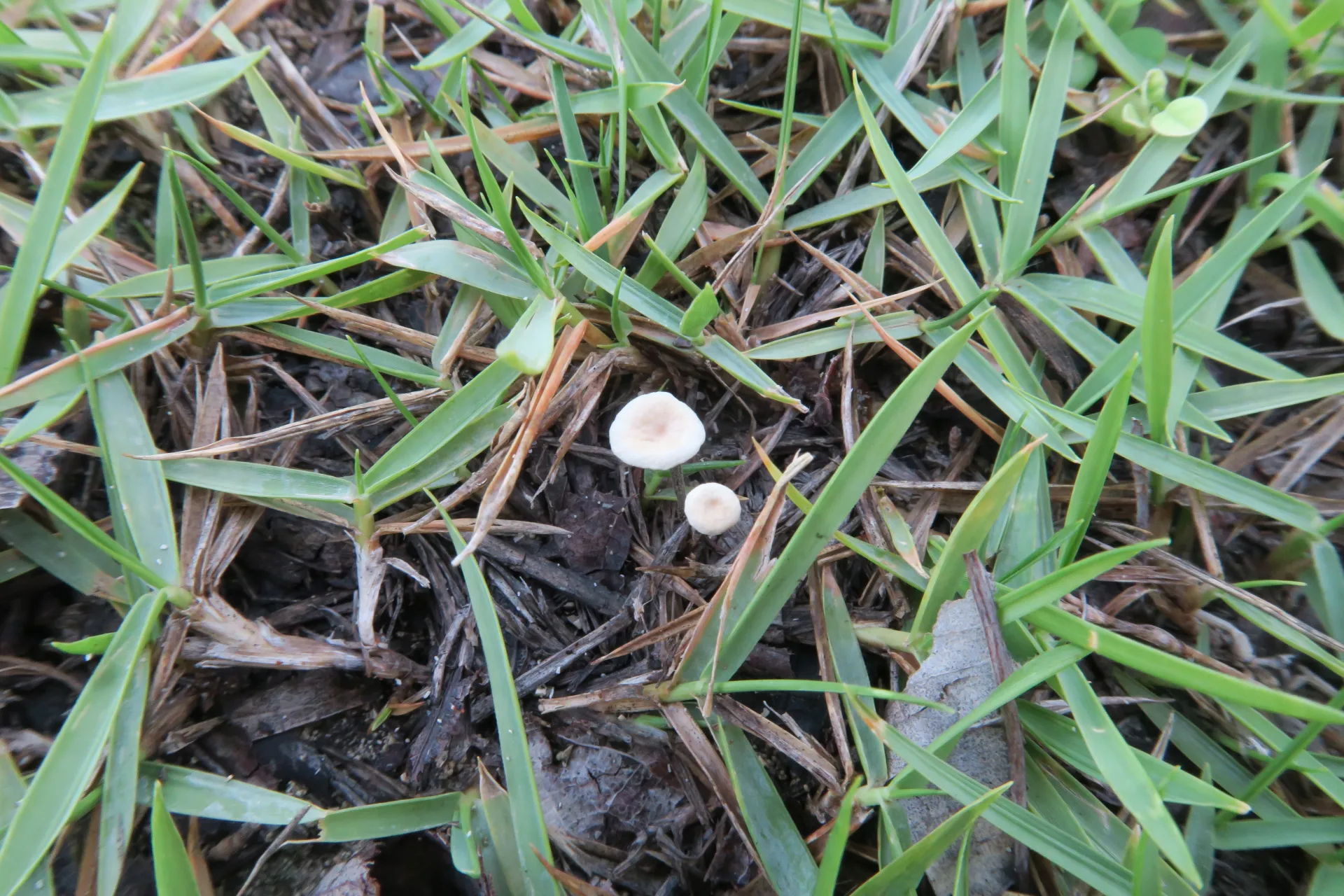
1 / 15Marasmiellus graminis - 1 - IMG_0442
Microscopic gallery
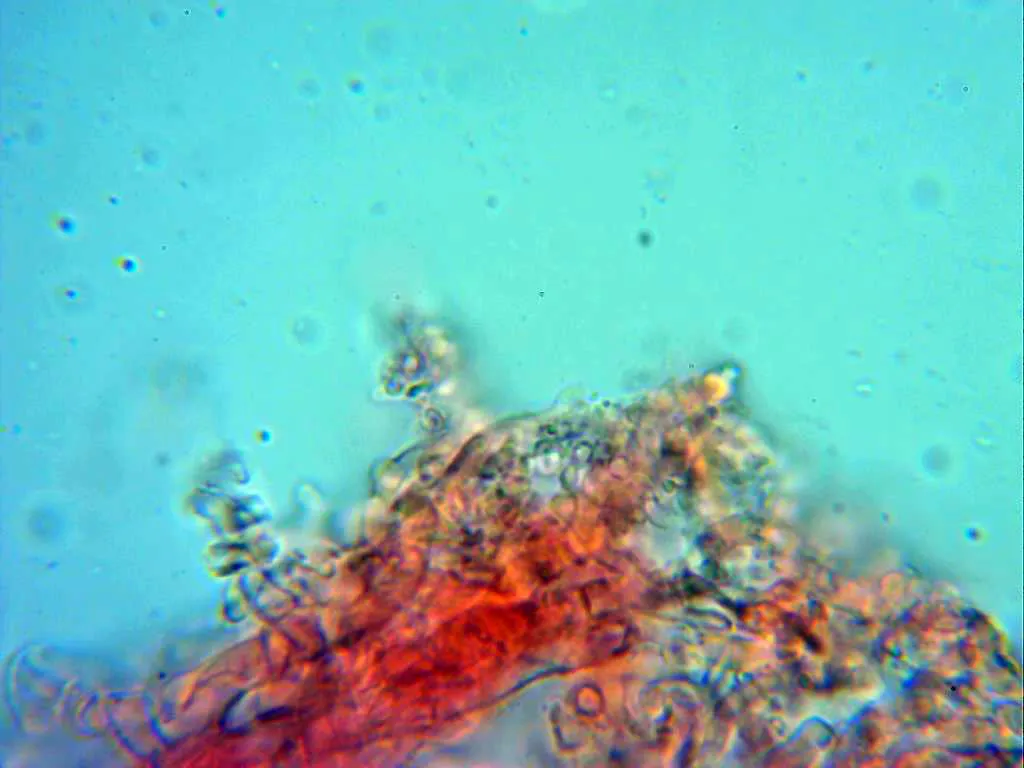
1 / 23Marasmiellus graminis - 10 - Suprapellis