


Macrolepiota excoriata
(Schaeff.) Wasser
Study description
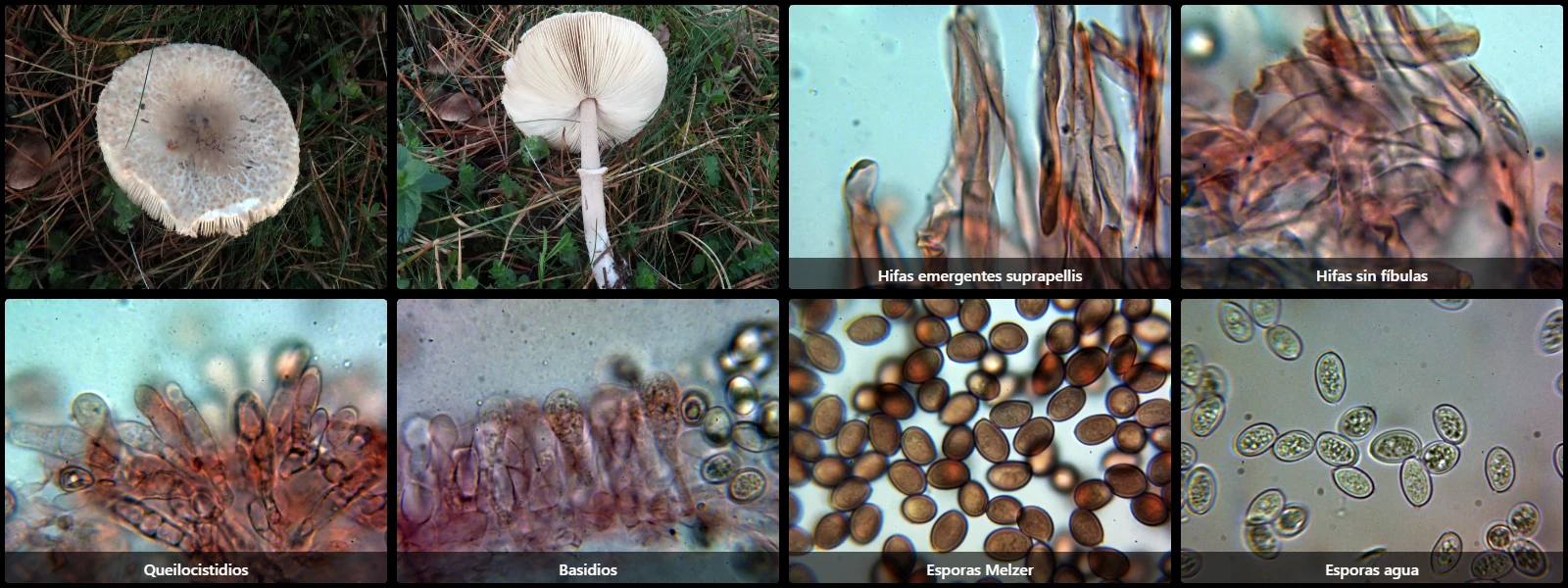
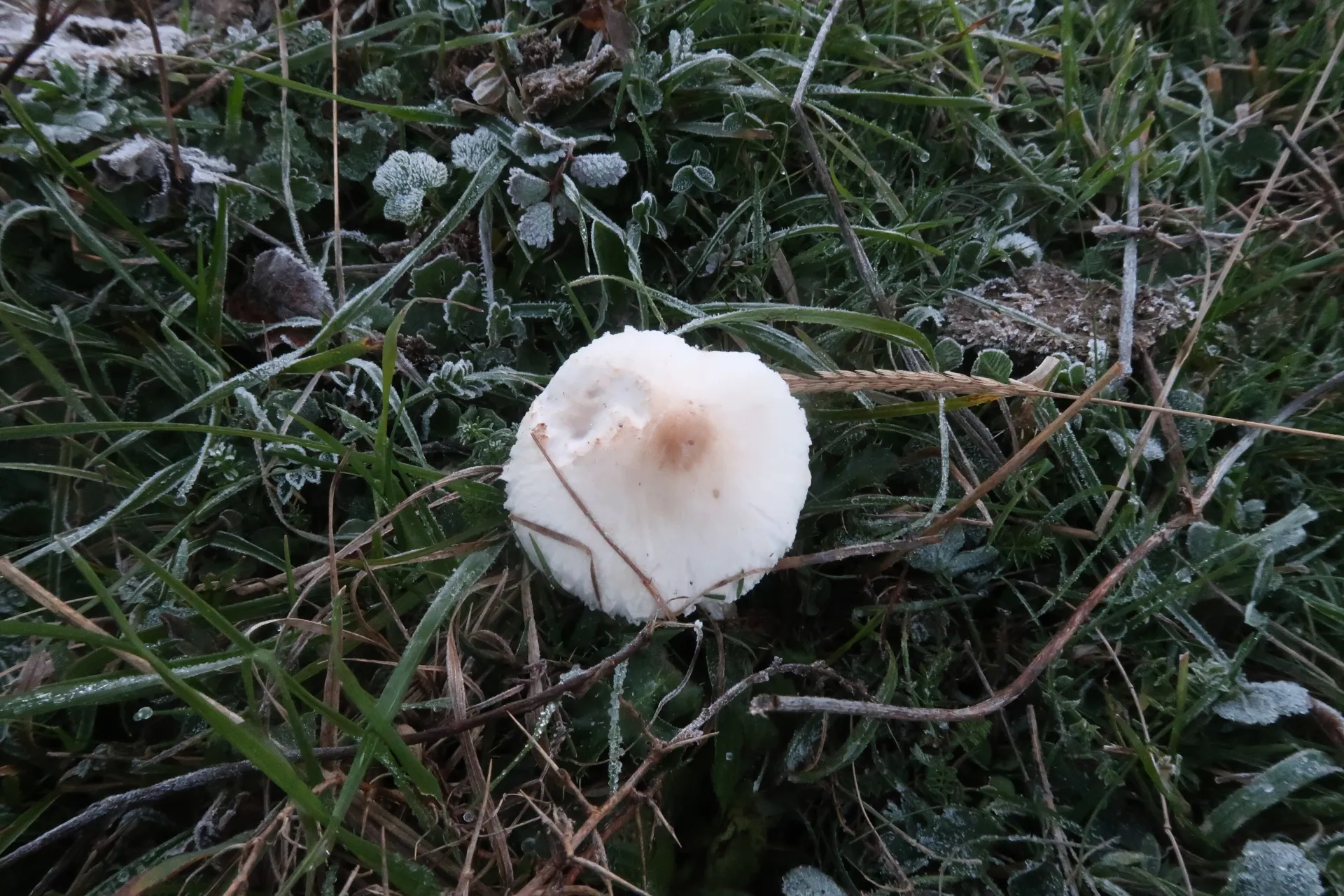
General: Typical of pastures, meadows, and forest clearings, pileus flattened with a prominent central umbo, whitish with hazel-brown scales flaking away toward the margin, membranous annulus, pleasant odor, sweetish taste.
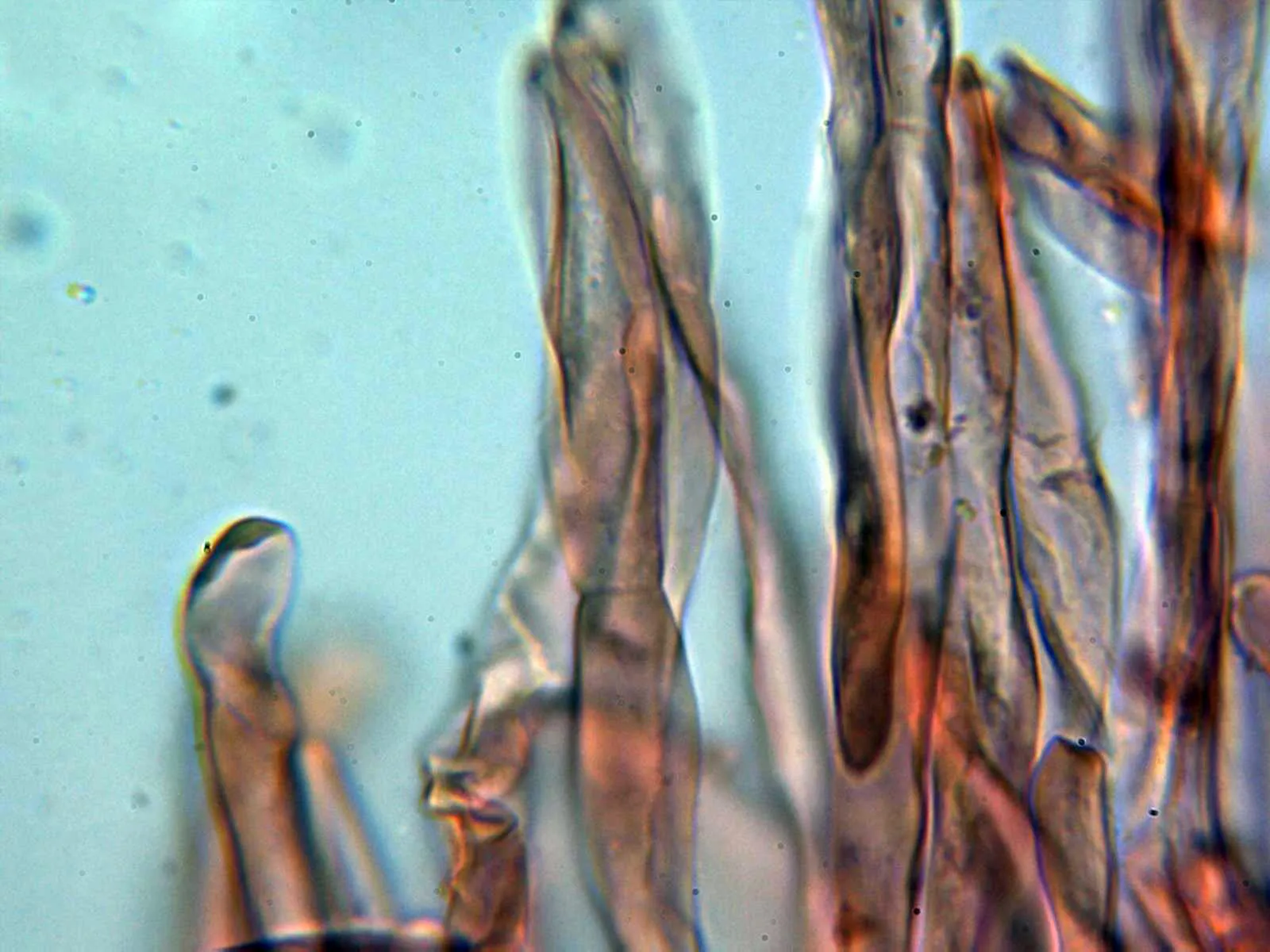
Pileipellis: Composed of cylindrical, filamentous, hyaline hyphae with slightly fusiform emergent terminal elements up to 200 µm long and 10-15 µm wide, containing pale brown intracellular pigment, septate with simple septa (clamp connections absent).
Cheilocystidia: Clavate to fusiform, 35-60 x 9-15 µm.
Pleurocystidia: Absent.
Basidia: Clavate, 35-45 x 10-16 µm, base simple (clampless), 4-spored.
Spores: Ellipsoid, smooth, hyaline, thick-walled, 11-16.5 x 7-8.5 µm, with an eccentric apiculus and a distinct apical germ pore, strongly dextrinoid in Melzer's reagent.
Pileipellis: Composed of cylindrical, filamentous, hyaline hyphae with slightly fusiform emergent terminal elements up to 200 µm long and 10-15 µm wide, containing pale brown intracellular pigment, septate with simple septa (clamp connections absent).
Cheilocystidia: Clavate to fusiform, 35-60 x 9-15 µm.
Pleurocystidia: Absent.
Basidia: Clavate, 35-45 x 10-16 µm, base simple (clampless), 4-spored.
Spores: Ellipsoid, smooth, hyaline, thick-walled, 11-16.5 x 7-8.5 µm, with an eccentric apiculus and a distinct apical germ pore, strongly dextrinoid in Melzer's reagent.
Geographic references
Map generated from global occurrence data from GBIF. GBIF.
Study measurements
Values in Microns (µm)Macroscopic gallery
1 / 6Macrolepiota excoriata - 1 - IMG_5643
Microscopic gallery
1 / 18Macrolepiota excoriata - 10 - Hifas emergentes suprapellis