


Lyophyllum eucalypticum
(A.Pearson) M.M.Moser
Study description
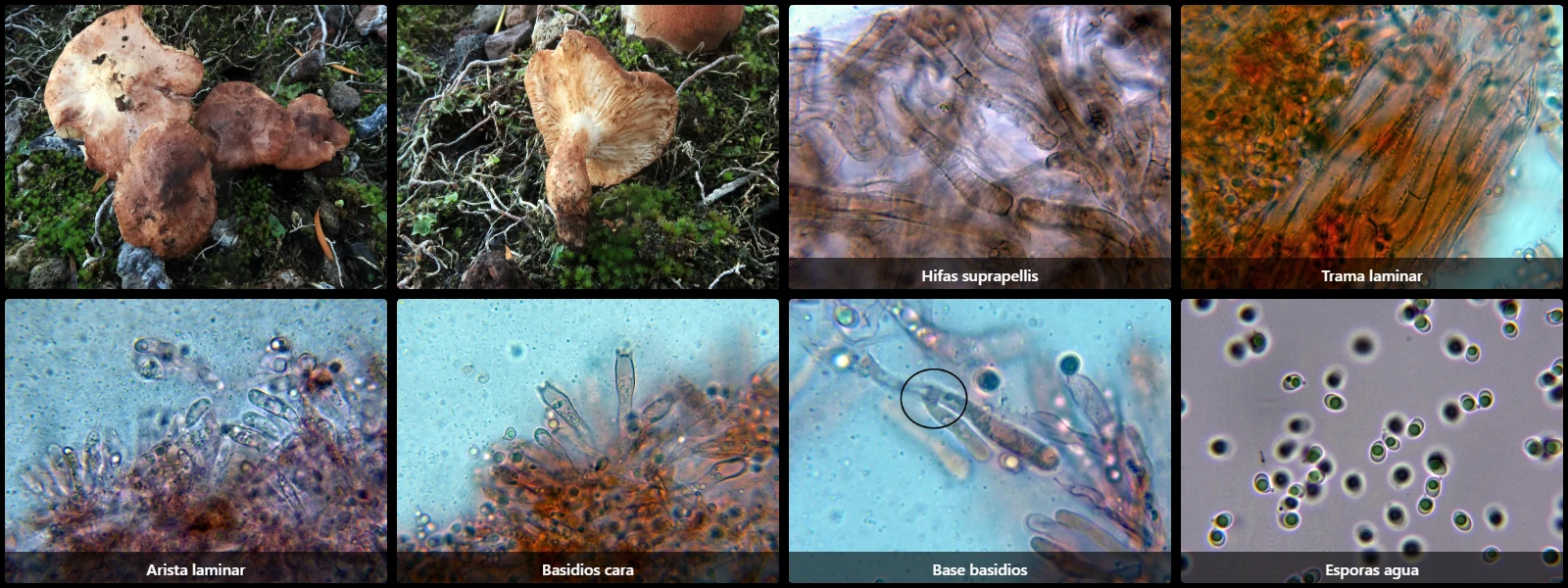
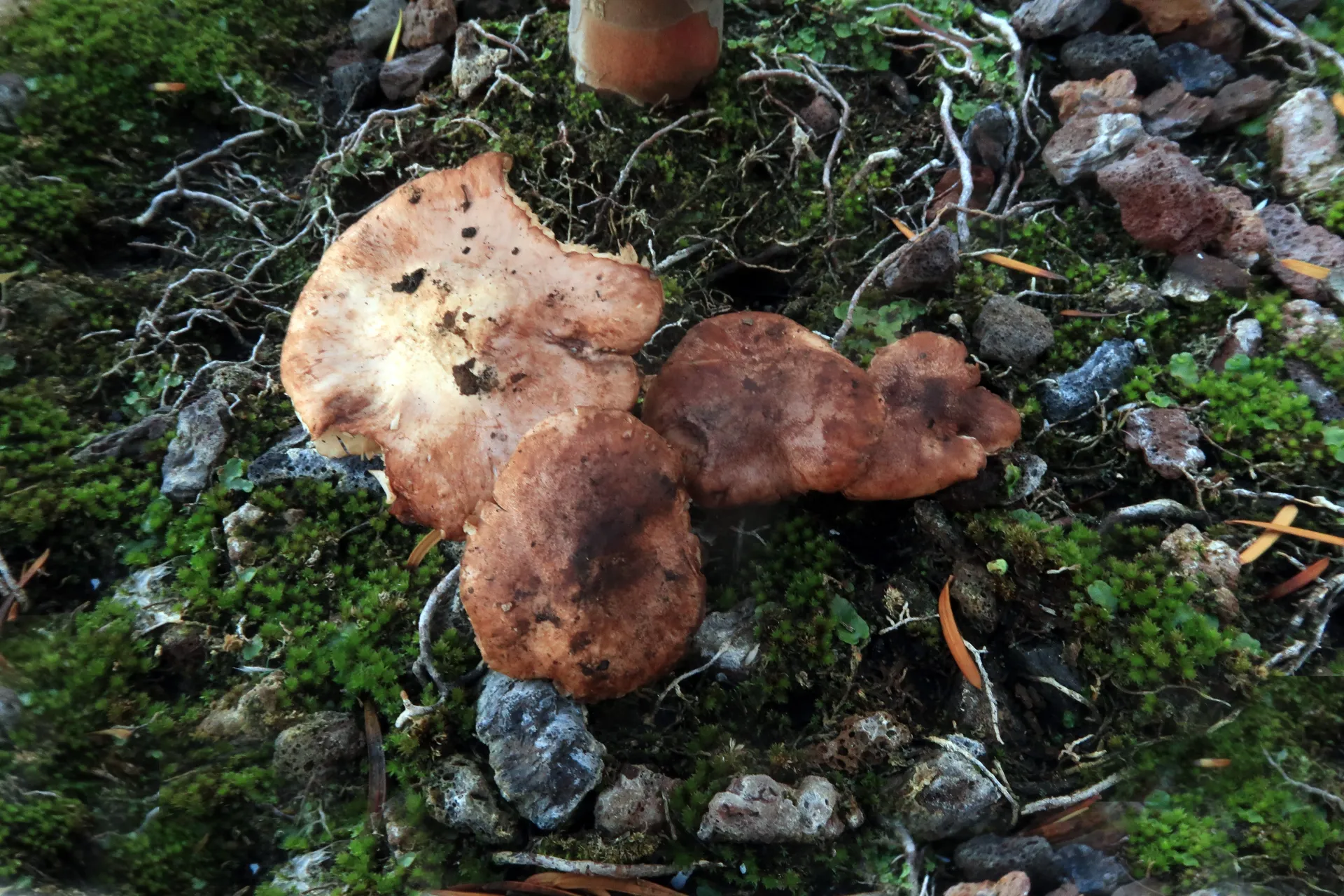
General: Material provided by Antonio Couceiro, collected under Eucalyptus globulus, pileus chestnut-brown, thick lamellae staining darker upon handling, odor fungal, taste sweetish.
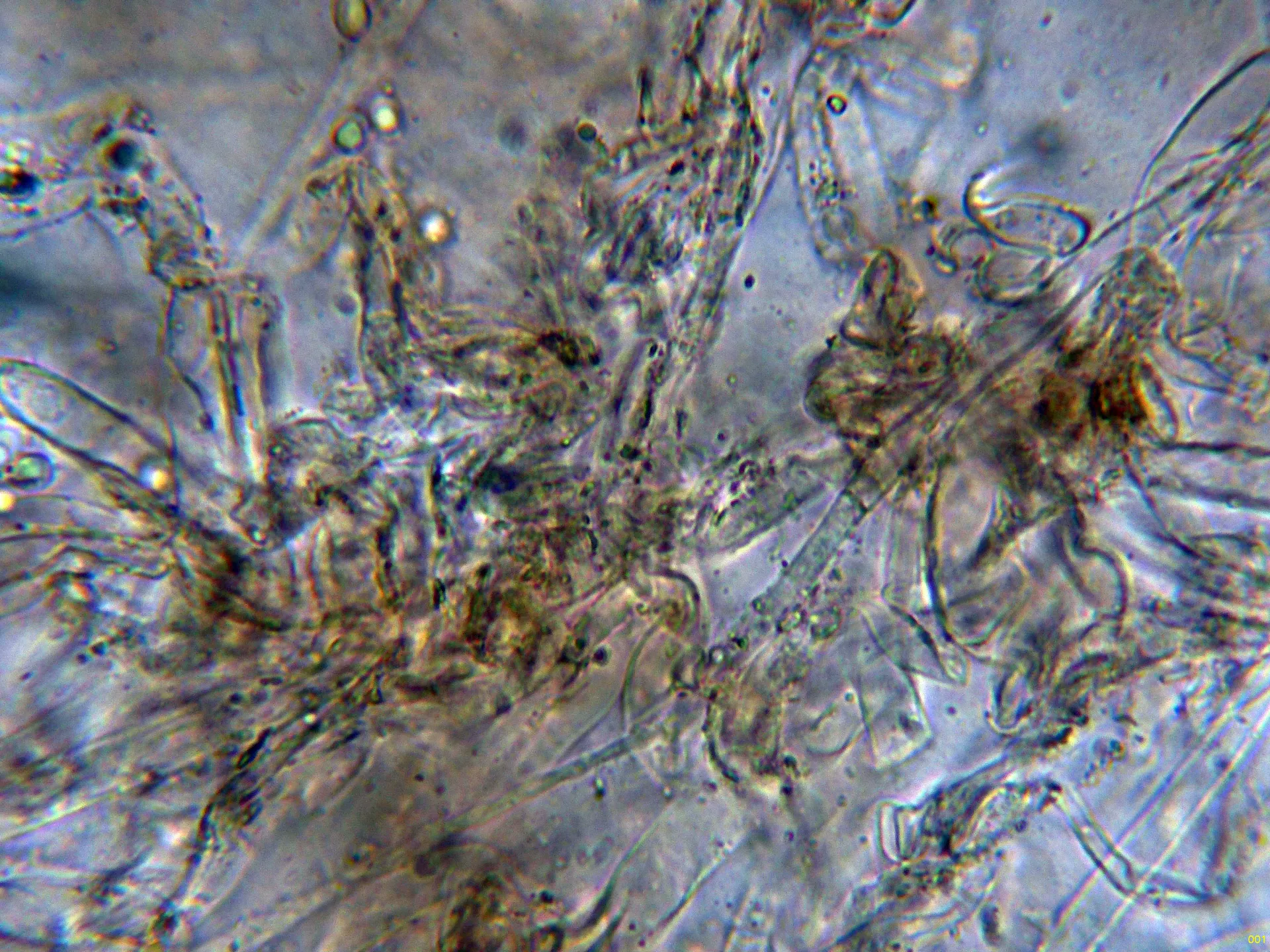
Pileipellis: Cutis of cylindrical hyphae 3-6 µm wide, arranged more or less parallel to slightly interwoven, with brown intracellular pigment and encrusting parietal pigment, some bifurcate, septate with simple septa (clamp connections absent, unlike congeners).
Lamellar edge: Fertile, lacking differentiated cystidia.
Basidia: Cylindric-clavate, 25-35 x 7-8.5 µm, base simple (clampless), predominantly 4-spored.
Spores: Ovoid, smooth, hyaline, thin-walled, 4.5-6 x 3.5-4.5 µm, with a prominent eccentric apiculus, containing 1-2 oil droplets, inamyloid in Melzer's reagent.
Herbarium voucher: JTP2003/23.
Pileipellis: Cutis of cylindrical hyphae 3-6 µm wide, arranged more or less parallel to slightly interwoven, with brown intracellular pigment and encrusting parietal pigment, some bifurcate, septate with simple septa (clamp connections absent, unlike congeners).
Lamellar edge: Fertile, lacking differentiated cystidia.
Basidia: Cylindric-clavate, 25-35 x 7-8.5 µm, base simple (clampless), predominantly 4-spored.
Spores: Ovoid, smooth, hyaline, thin-walled, 4.5-6 x 3.5-4.5 µm, with a prominent eccentric apiculus, containing 1-2 oil droplets, inamyloid in Melzer's reagent.
Herbarium voucher: JTP2003/23.
Geographic references
Map generated from global occurrence data from GBIF. GBIF.
Study measurements
Values in Microns (µm)Macroscopic gallery
1 / 4Lyophyllum eucalypticum - 1 - IMG_6619
Microscopic gallery
1 / 23Lyophyllum eucalypticum - 10 - Subpellis agua-001