


Lyophyllum admissum
(Britzelm.) Consiglio & Contu
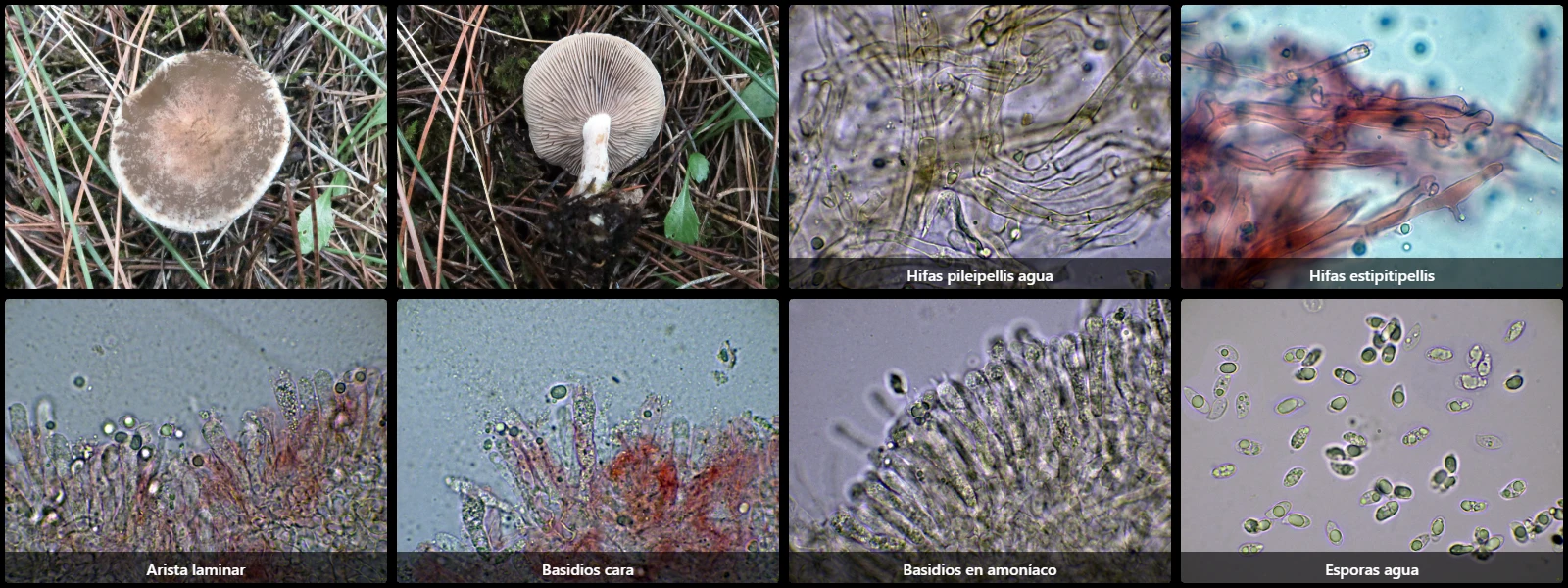
Study description
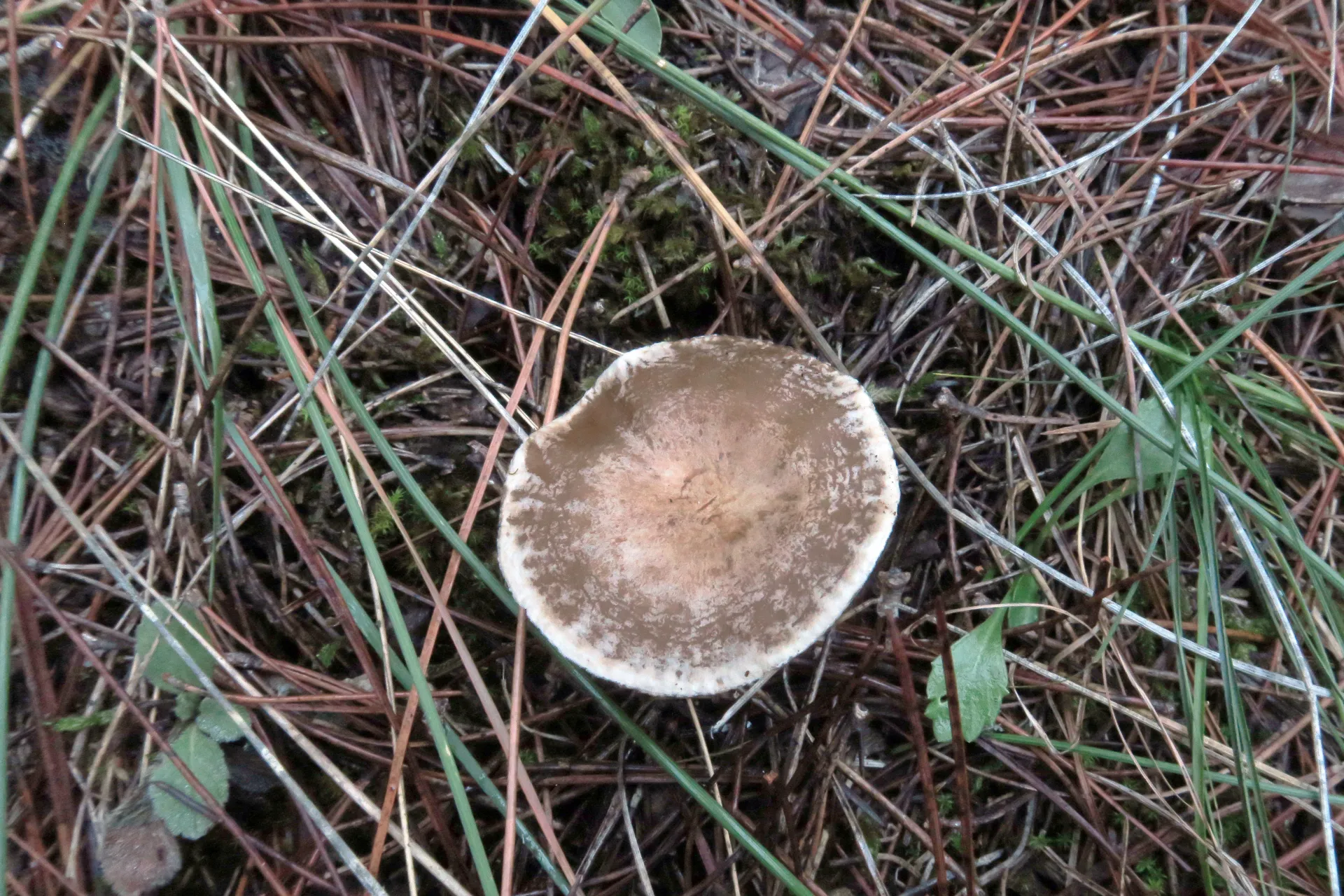
General: Inhabiting coniferous forests (particularly pines), fruiting among needle litter, pileus depressed, hygrophanous, brown with a whitish margin, farinaceous odor and taste, and notably large spores.
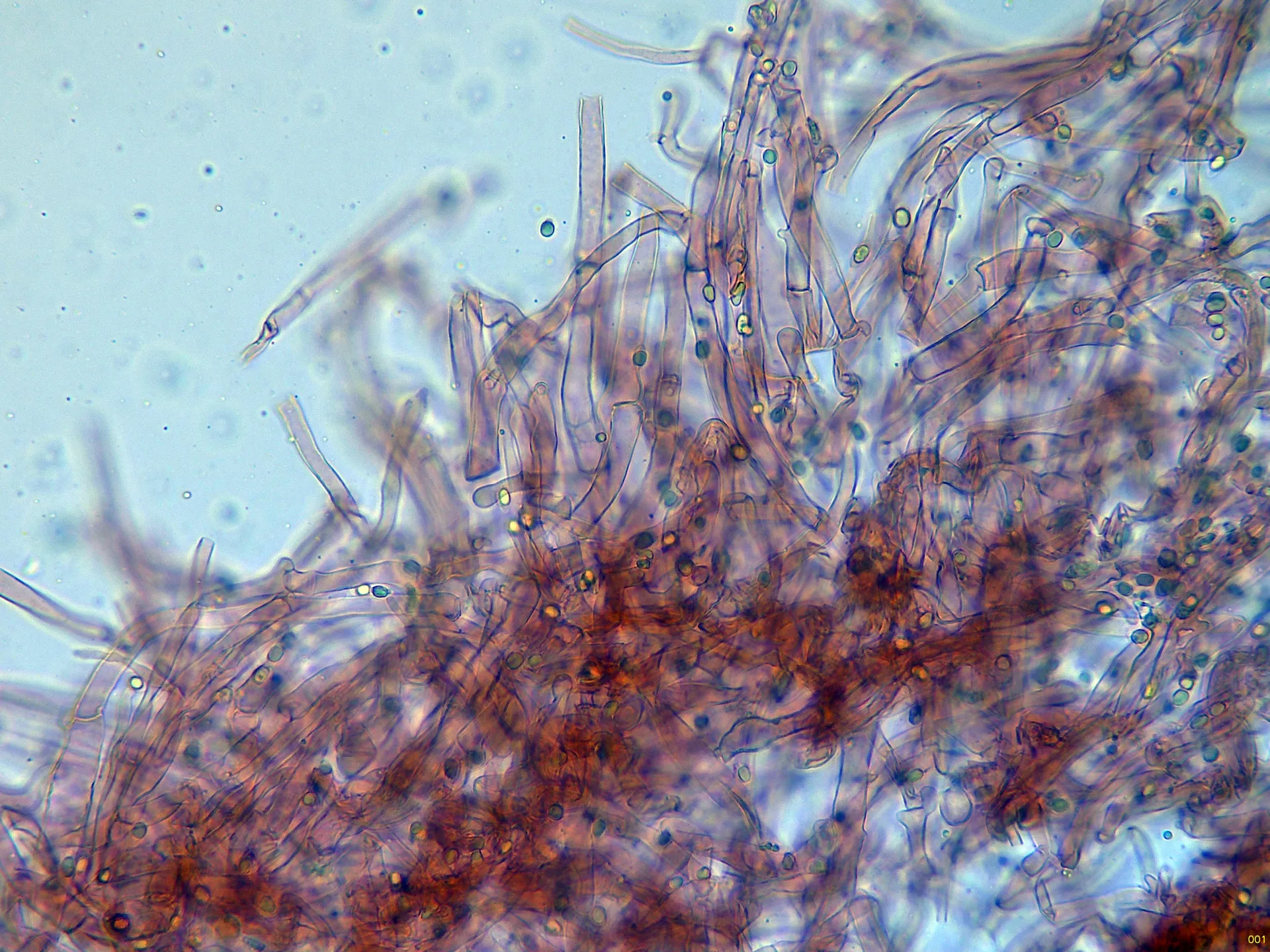
Pileipellis: Cutis composed of filamentous hyphae 3-5 µm wide, interwoven, with pale brown intracellular pigment, separated by gelatinization, septate with prominent clamp connections.
Lamellar edge: Fertile, lacking differentiated cystidia.
Basidia: Clavate, 29-36 x 5.5-8.5 µm, containing siderophilous granules, with basal clamp connections, 4-spored.
Spores: Ellipsoid, smooth, hyaline, thin-walled, pointed and slightly curved at the apicular end, 9-12.5 x 4-5.5 µm, containing oil droplets, inamyloid in Melzer's reagent.
Notes: Very similar to Lyophyllum ozes, which differs in having distinctly smaller spores (5.9-8.1 x 3.1-4.2 µm).
Herbarium voucher: JTP2671/25.
Pileipellis: Cutis composed of filamentous hyphae 3-5 µm wide, interwoven, with pale brown intracellular pigment, separated by gelatinization, septate with prominent clamp connections.
Lamellar edge: Fertile, lacking differentiated cystidia.
Basidia: Clavate, 29-36 x 5.5-8.5 µm, containing siderophilous granules, with basal clamp connections, 4-spored.
Spores: Ellipsoid, smooth, hyaline, thin-walled, pointed and slightly curved at the apicular end, 9-12.5 x 4-5.5 µm, containing oil droplets, inamyloid in Melzer's reagent.
Notes: Very similar to Lyophyllum ozes, which differs in having distinctly smaller spores (5.9-8.1 x 3.1-4.2 µm).
Herbarium voucher: JTP2671/25.
Geographic references
Map generated from global occurrence data from GBIF. GBIF.
Study measurements
Values in Microns (µm)Macroscopic gallery
1 / 3Lyophyllum admissum - 1 - IMG_4622
Microscopic gallery
1 / 26Lyophyllum admissum - 10 - Estipitipellis x 400-001