

Lyomyces sambuci
(Pers.) P.Karst.
Study description
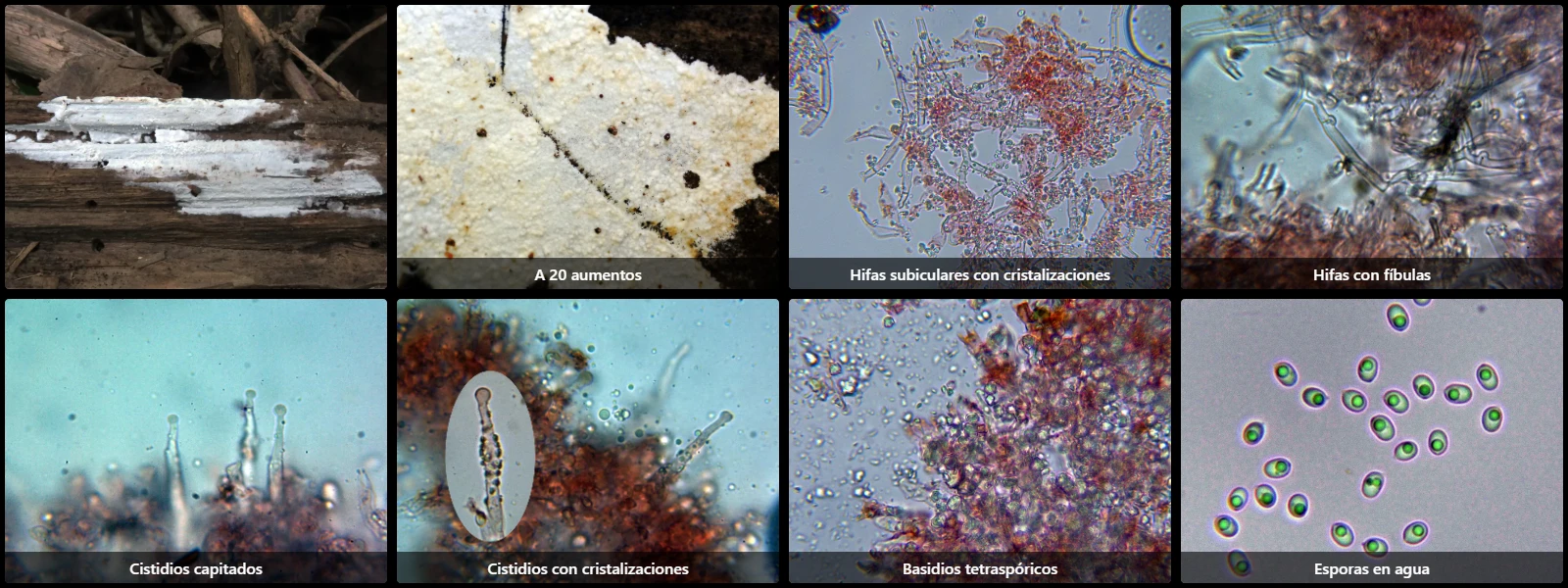
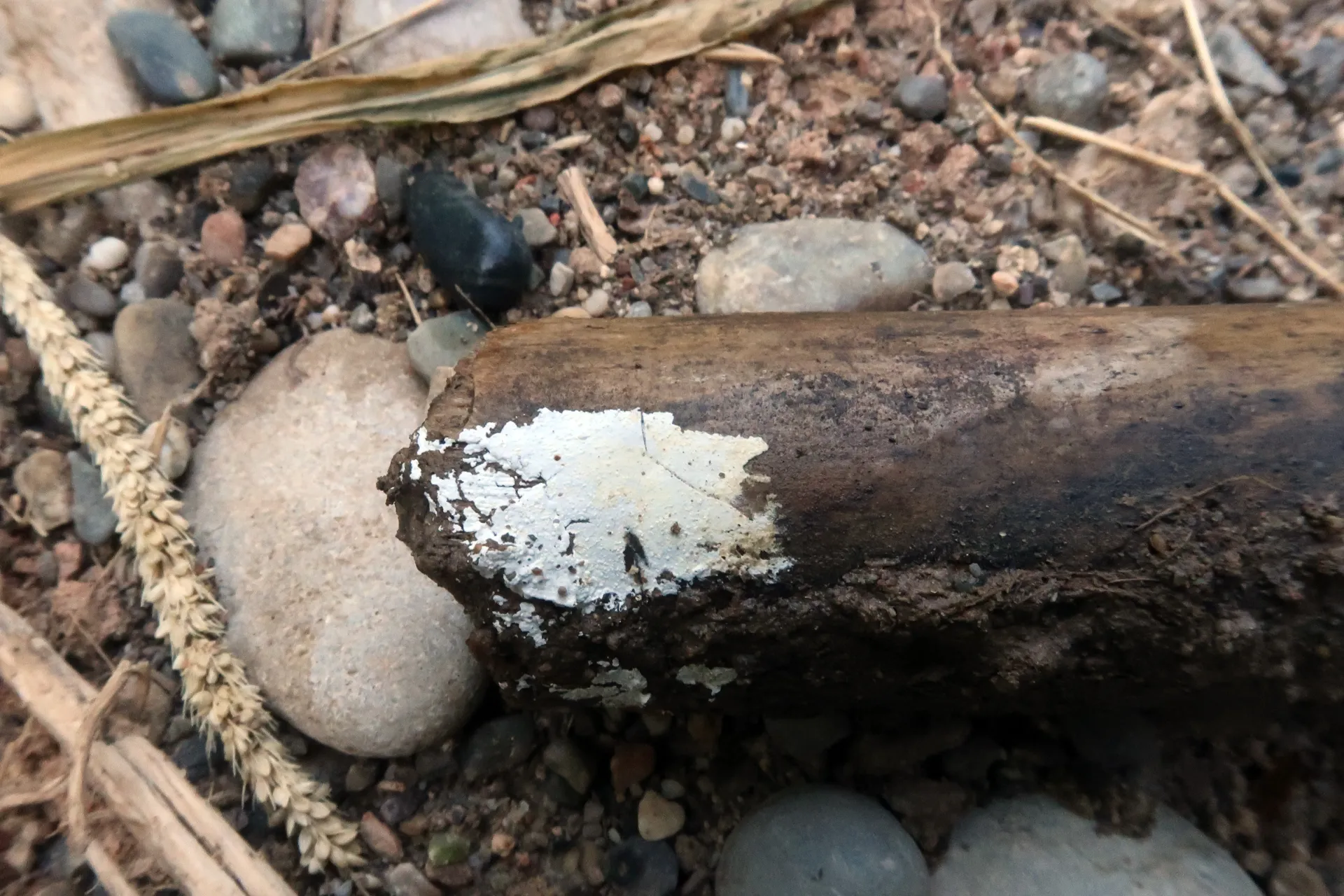
Although its name appears to associate it with elder (Sambucus nigra), it can also appear on the wood of other broadleaf trees, with completely resupinate basidiomes, thin, with a smooth to very slightly verrucose surface, white or very pale cream, and with a somewhat diffuse but well-delimited growing margin.
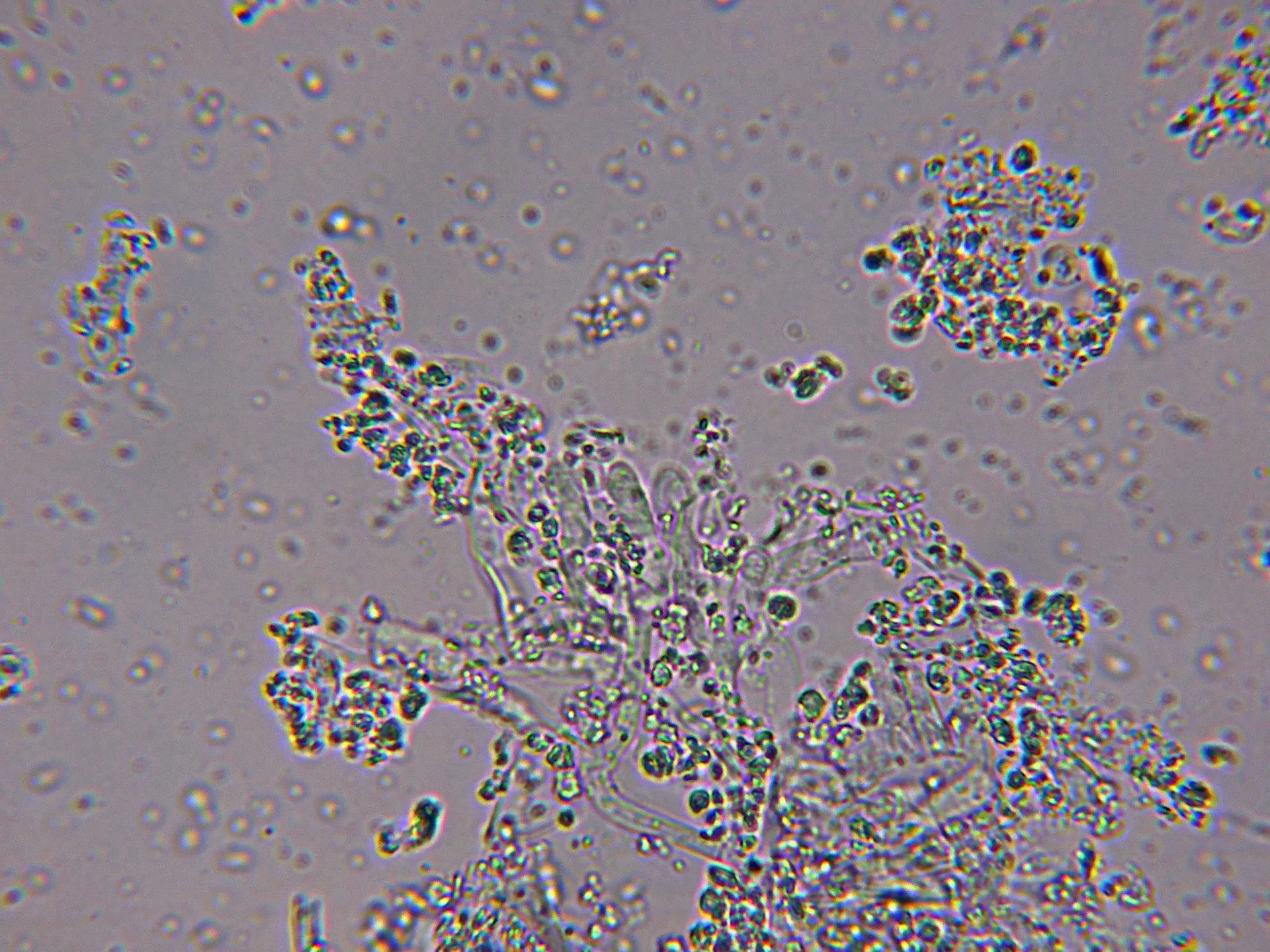
Monomitic hyphal system, formed by cylindrical, hyaline, moderately thick-walled hyphae, 2 to 5 µm wide, branched, often abundantly encrusted on their surface, septate and clamped.
Cystidia leptocystidium-like, cylindrical, capitate, 30 to 50 µm long by 4 to 5 µm wide, often with abundant encrusting crystals distributed across their entire surface.
Basidia clavate to suburniform, 20 to 25 µm long by 4 to 5 µm wide, with basal clamp connections and tetrasporic.
Spores ovoid to ellipsoidal, smooth, hyaline, thin- to slightly thick-walled, with an eccentric apiculus at one end, 5 to 6 µm long by 3.5 to 4 µm wide, containing a large oil or lipid drop inside, and inamyloid in Melzer's reagent.
Herbarium material available: JTP2059/24.
Geographic references
Map generated from global occurrence data from GBIF. GBIF.
Study measurements
Values in Microns (µm)Macroscopic gallery
Microscopic gallery