


Lyomyces juniperi
(Bourdot & Galzin) Riebesehl & Langer
Study description
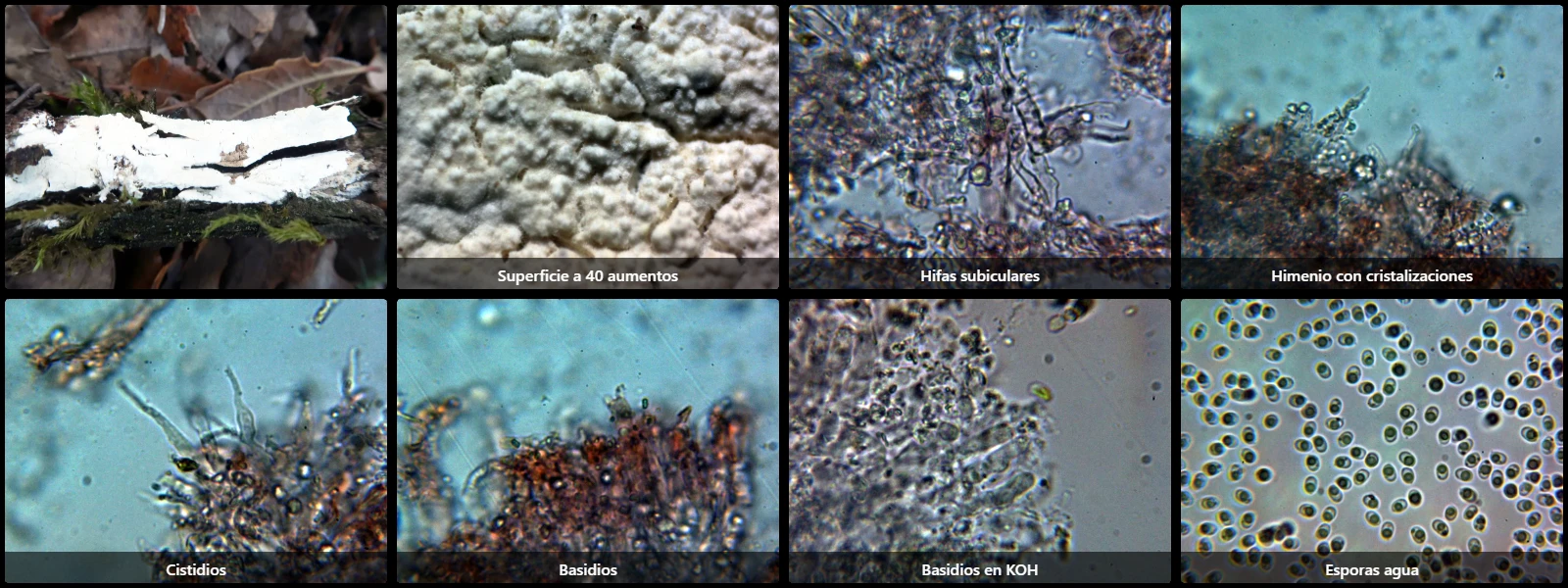
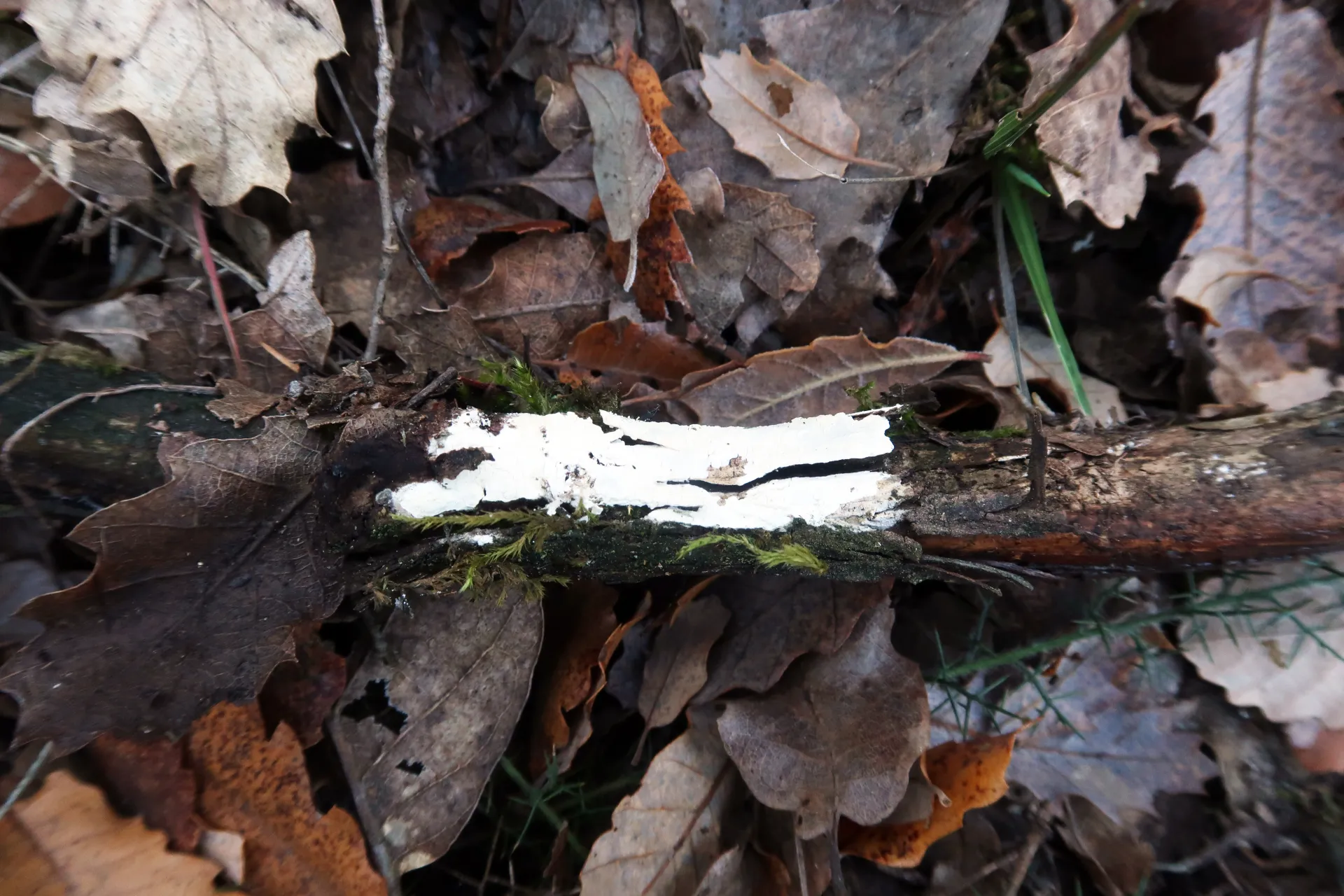
General: Growing on decaying fallen branches of Juniperus sp., basidiomata completely resupinate, white to very pale cream, surface rugose to slightly granulose.
Hyphal system: Monomitic; hyphae hyaline, moderately thick-walled, 2-4 µm wide, richly branched, accompanied by abundant crystalline matter in the subhymenium, septate with clamp connections.
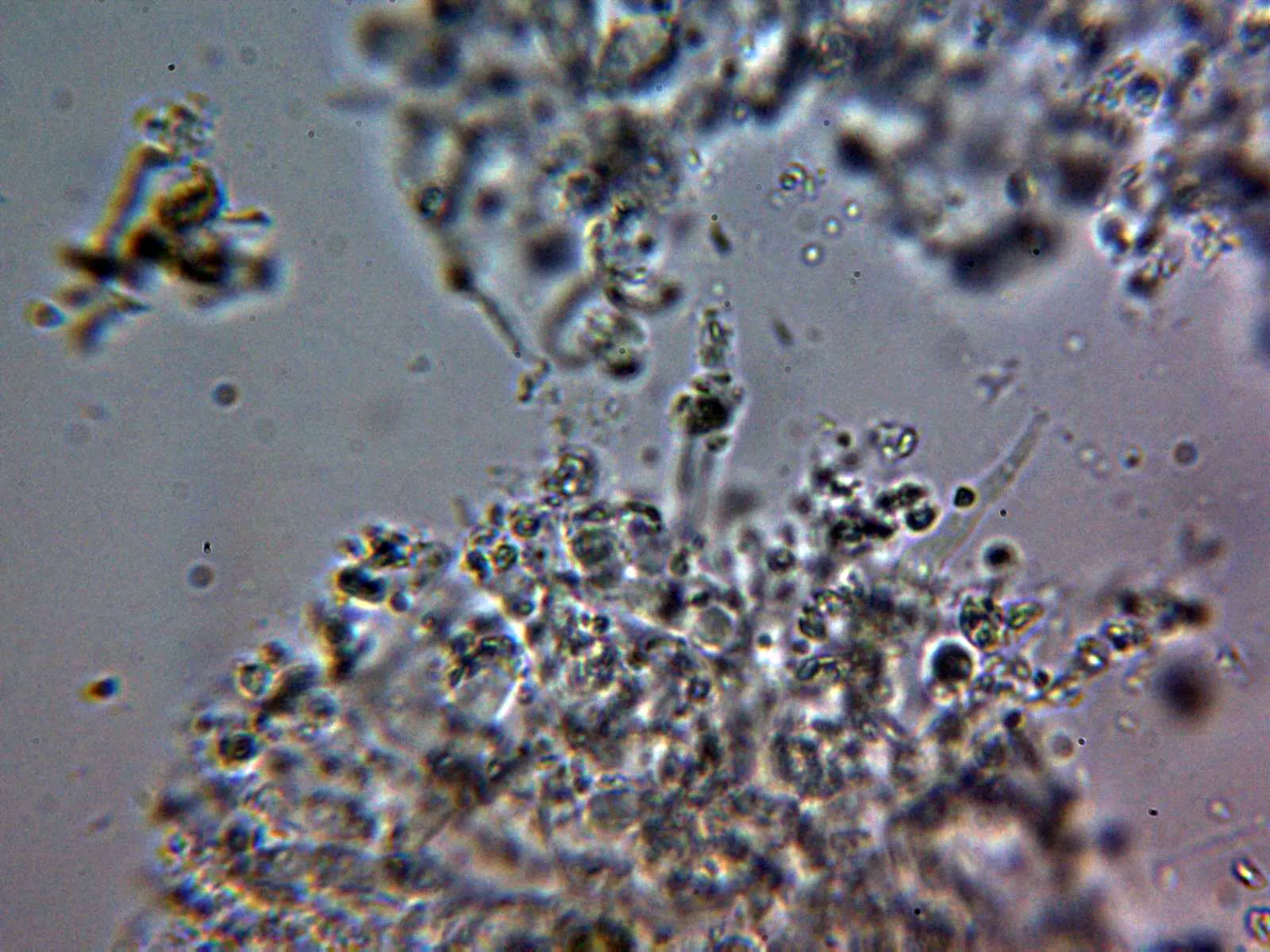
Cystidia: Abundant, subulate with acute apices, 30-55 x 3.5-5 µm, hyaline, thin-walled.
Basidia: Cylindric-clavate, 15-25 x 4-6 µm, with basal clamp connections, 4-spored.
Spores: Ellipsoid, smooth, hyaline, thin-walled, 4.5-5.5 x 3-4 µm, with an inconspicuous apiculus, containing a large oil guttule, inamyloid in Melzer's reagent.
Hyphal system: Monomitic; hyphae hyaline, moderately thick-walled, 2-4 µm wide, richly branched, accompanied by abundant crystalline matter in the subhymenium, septate with clamp connections.
Cystidia: Abundant, subulate with acute apices, 30-55 x 3.5-5 µm, hyaline, thin-walled.
Basidia: Cylindric-clavate, 15-25 x 4-6 µm, with basal clamp connections, 4-spored.
Spores: Ellipsoid, smooth, hyaline, thin-walled, 4.5-5.5 x 3-4 µm, with an inconspicuous apiculus, containing a large oil guttule, inamyloid in Melzer's reagent.
Geographic references
Map generated from global occurrence data from GBIF. GBIF.
Study measurements
Values in Microns (µm)Macroscopic gallery
1 / 5Lyomyces juniperi - 1 - IMG_8351
Microscopic gallery
1 / 19Lyomyces juniperi - 10 - Cistidio KOH
Genetic / Phylogenetic Study
Phylogenetic Tree
Blast.png
Sequences and Data
Sequencing (Chromatogram)
Chromatogram: A11+33544_12+ITS1F.ab1
Extracted sequence:
NNNNNNGNNTCGTAGGTGACCTGCGGAGGATCATTTGATGAAATTTGAAAGTGGGACTTGATGCTGGTAGCAGTGATGCTACATGTGCTCGGTCTCCGTCAAATCCACTTTACACCTGTGCACTTTCAAAGCTCTGTAGTCCTCCGTAATGGGAGCCGCGGTTTTAAGTAACTGCTGGGGCTGCACCTTTGCCCAACCTTTACACAAACTCTGTATATTGTCTTGTAGAATGTCTATTAGCCTTAGTTGGCTTAATATTATACAACTTTCAACAACGGATCTCTTGGCTCTCGCATCGATGAAGAACGCAGCAA