


Lycoperdon pratense
Pers.
Study description
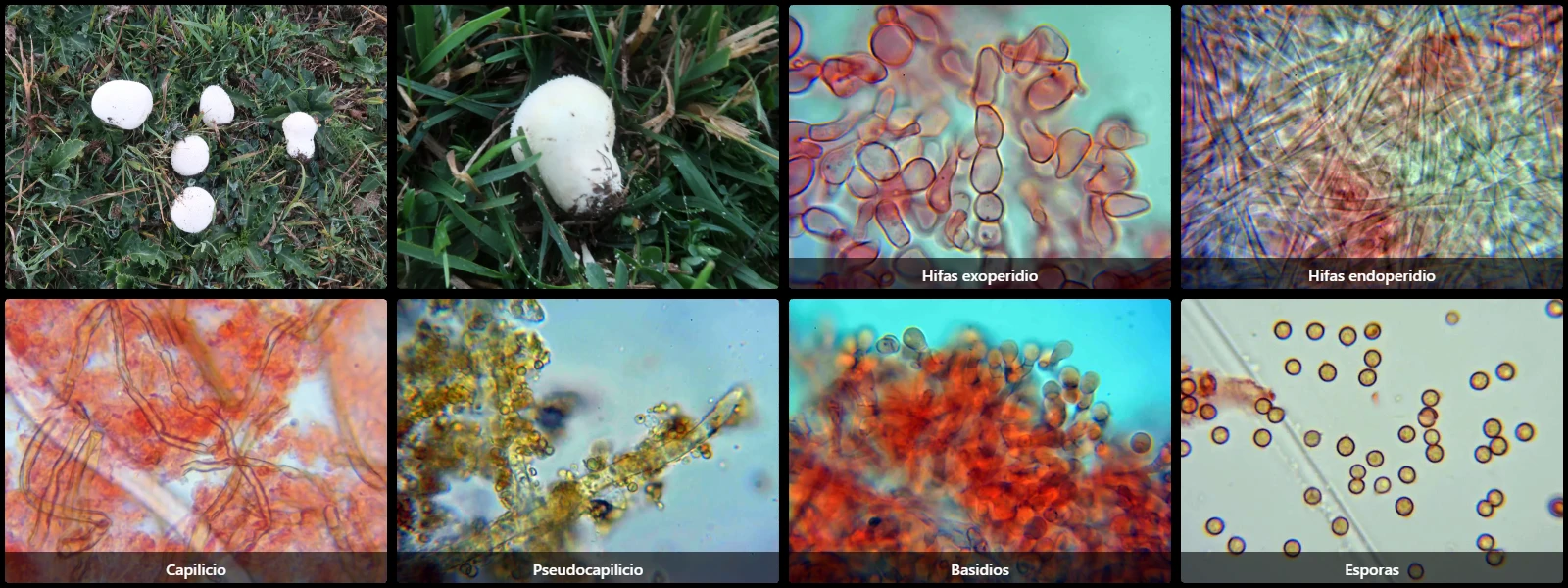
General: Characteristic of meadows and pastures, with pyriform white fruitbodies, rough surface with irregular warts that slough off, and a sterile base separated by a distinct diaphragm.
Exoperidium: Formed by chains of inflated elements, subcylindrical, subglobose, ellipsoid, or pyriform, 15-35 µm long, connected at the base by thin-walled hyaline filamentous hyphae 4-6 µm wide.
Endoperidium: Composed of cylindrical, densely interwoven hyphae 3-5.5 µm wide, with pale ochraceous intracellular pigment, unbranched, septate with simple septa.
Capillitium: Formed by brown thick-walled threads 2-4 µm wide, sparingly branched.
Pseudocapillitium: Hyaline, 3-5 µm wide, encrusted with amorphous granular matter.
Basidia: Clavate, 8-15 x 5-7 µm, base simple, 4-spored.
Spores: Globose, thick-walled, minutely verrucose, 3-5 µm in diameter, with an inconspicuous apiculus, containing oil droplets.
Exoperidium: Formed by chains of inflated elements, subcylindrical, subglobose, ellipsoid, or pyriform, 15-35 µm long, connected at the base by thin-walled hyaline filamentous hyphae 4-6 µm wide.
Endoperidium: Composed of cylindrical, densely interwoven hyphae 3-5.5 µm wide, with pale ochraceous intracellular pigment, unbranched, septate with simple septa.
Capillitium: Formed by brown thick-walled threads 2-4 µm wide, sparingly branched.
Pseudocapillitium: Hyaline, 3-5 µm wide, encrusted with amorphous granular matter.
Basidia: Clavate, 8-15 x 5-7 µm, base simple, 4-spored.
Spores: Globose, thick-walled, minutely verrucose, 3-5 µm in diameter, with an inconspicuous apiculus, containing oil droplets.
Geographic references
Map generated from global occurrence data from GBIF. GBIF.
Study measurements
Values in Microns (µm)Macroscopic gallery
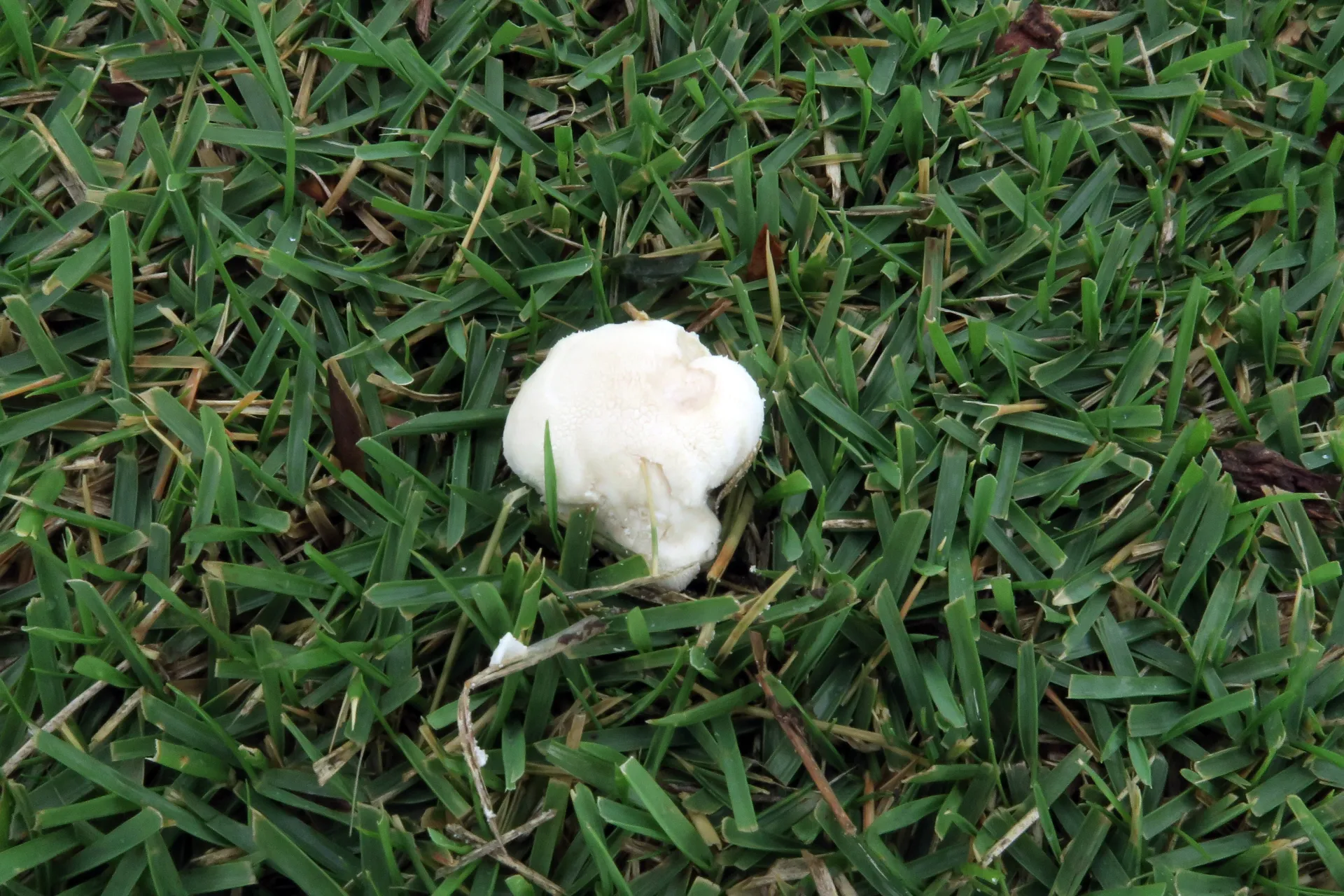
1 / 17Lycoperdon pratense - 1 - IMG_1032
Microscopic gallery
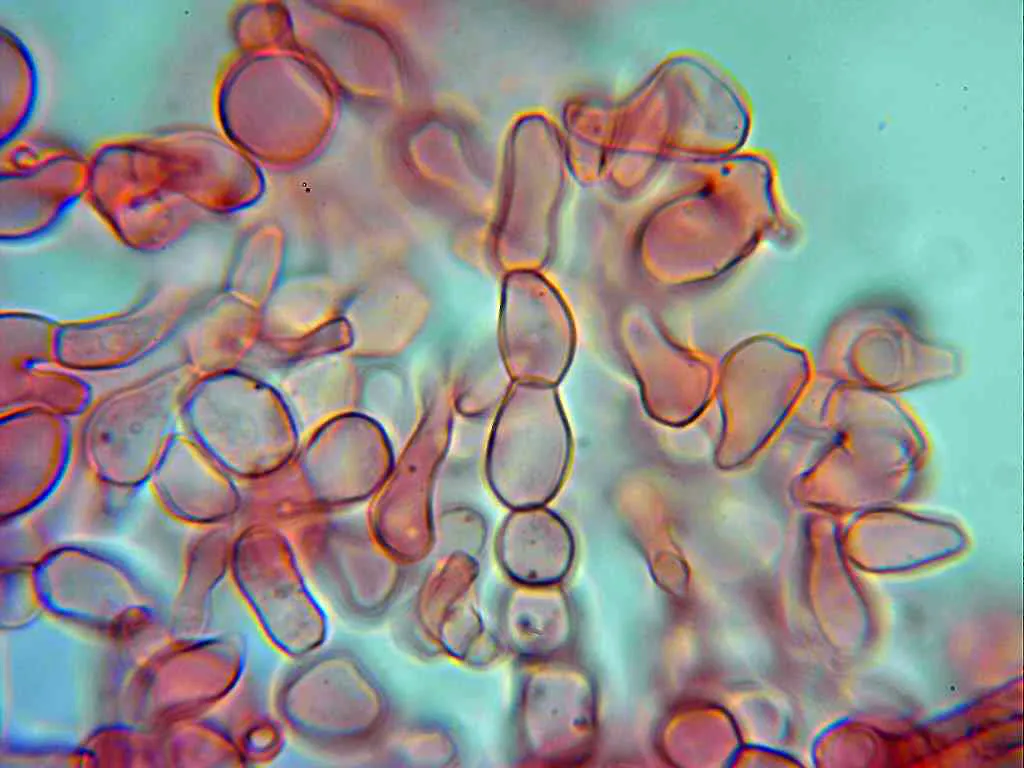
1 / 15Lycoperdon pratense - 10 - Peridio 1