


Lycoperdon nigrescens
Pers.
Study description
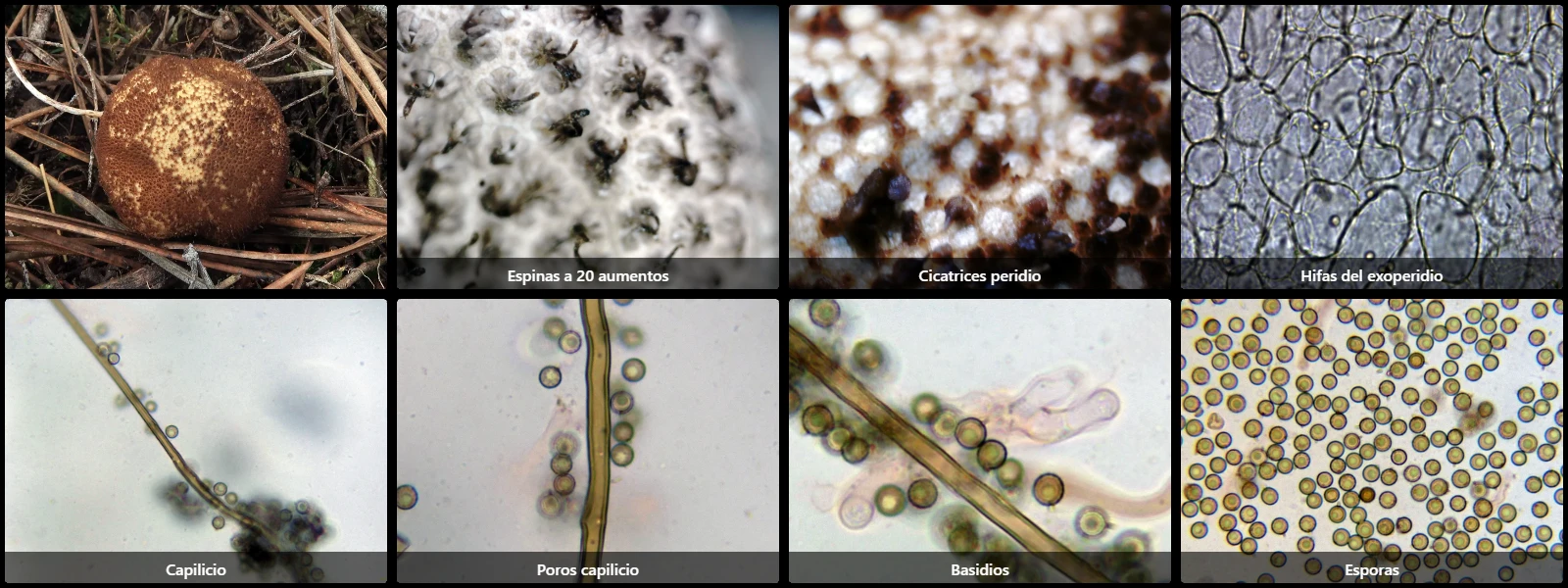
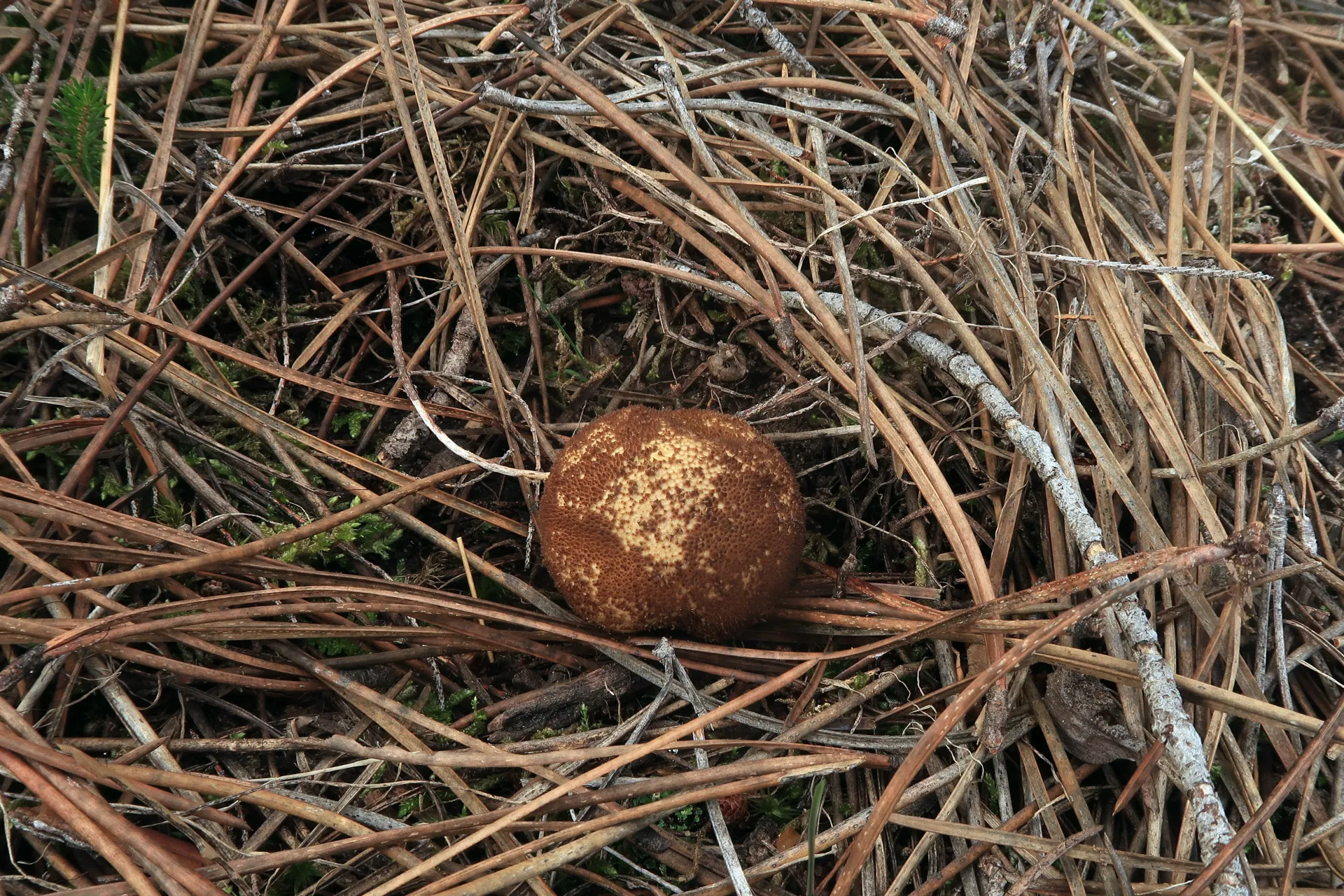
General: Formerly known as Lycoperdon foetidum, occurring on acidic soils in both coniferous and broadleaved woodlands, exoperidium with dark spines converging into pyramidal clusters, which leave a reticulate pattern upon shedding, accompanied by an unpleasant, foetid odor.
Exoperidium: Pseudoparenchymatous structure of subglobose to pyriform sphaerocysts 15-40 µm in diameter, with moderately thickened walls, supported at the base by filamentous hyphae 3-6 µm wide.
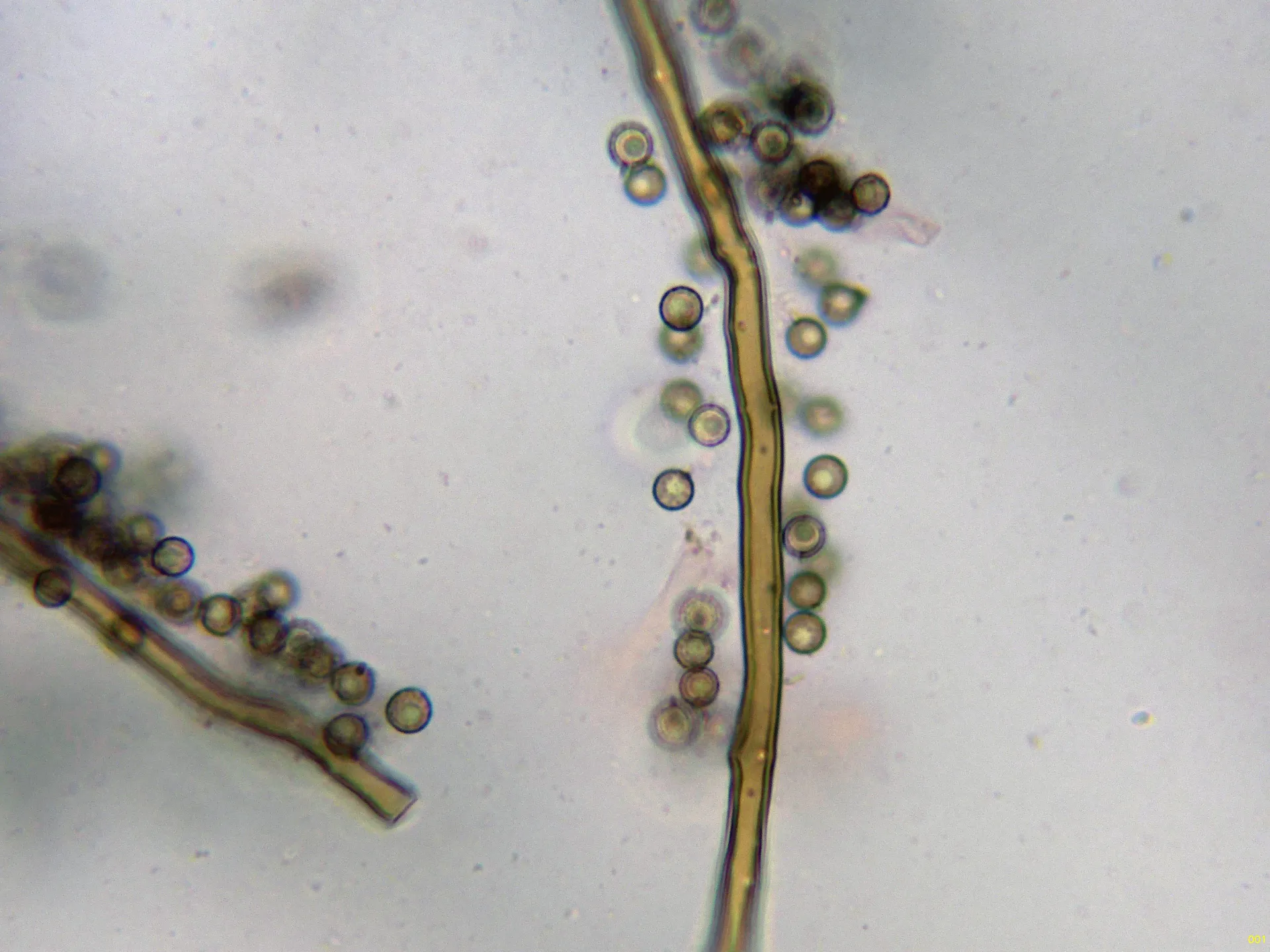
Capillitium: Composed of brown thick-walled threads 3.5-6 µm wide, sparingly branched, aseptate, perforated by abundant circular pores on the surface.
Basidia: Clavate, 8-12 x 4-5 µm, base simple, 2- or 4-spored.
Spores: Spherical, thick-walled, very finely verruculose to nearly smooth, brown under the microscope, 4-5 µm in diameter, with a minute apiculus, containing oil droplets.
Herbarium voucher: JTP2274/24.
Exoperidium: Pseudoparenchymatous structure of subglobose to pyriform sphaerocysts 15-40 µm in diameter, with moderately thickened walls, supported at the base by filamentous hyphae 3-6 µm wide.
Capillitium: Composed of brown thick-walled threads 3.5-6 µm wide, sparingly branched, aseptate, perforated by abundant circular pores on the surface.
Basidia: Clavate, 8-12 x 4-5 µm, base simple, 2- or 4-spored.
Spores: Spherical, thick-walled, very finely verruculose to nearly smooth, brown under the microscope, 4-5 µm in diameter, with a minute apiculus, containing oil droplets.
Herbarium voucher: JTP2274/24.
Geographic references
Map generated from global occurrence data from GBIF. GBIF.
Study measurements
Values in Microns (µm)Macroscopic gallery
1 / 13Lycoperdon nigrescens - 1 - IMG_8034
Microscopic gallery
1 / 8Lycoperdon nigrescens - 5 - Capilicio-001