


Lycoperdon molle
Pers.
Study description
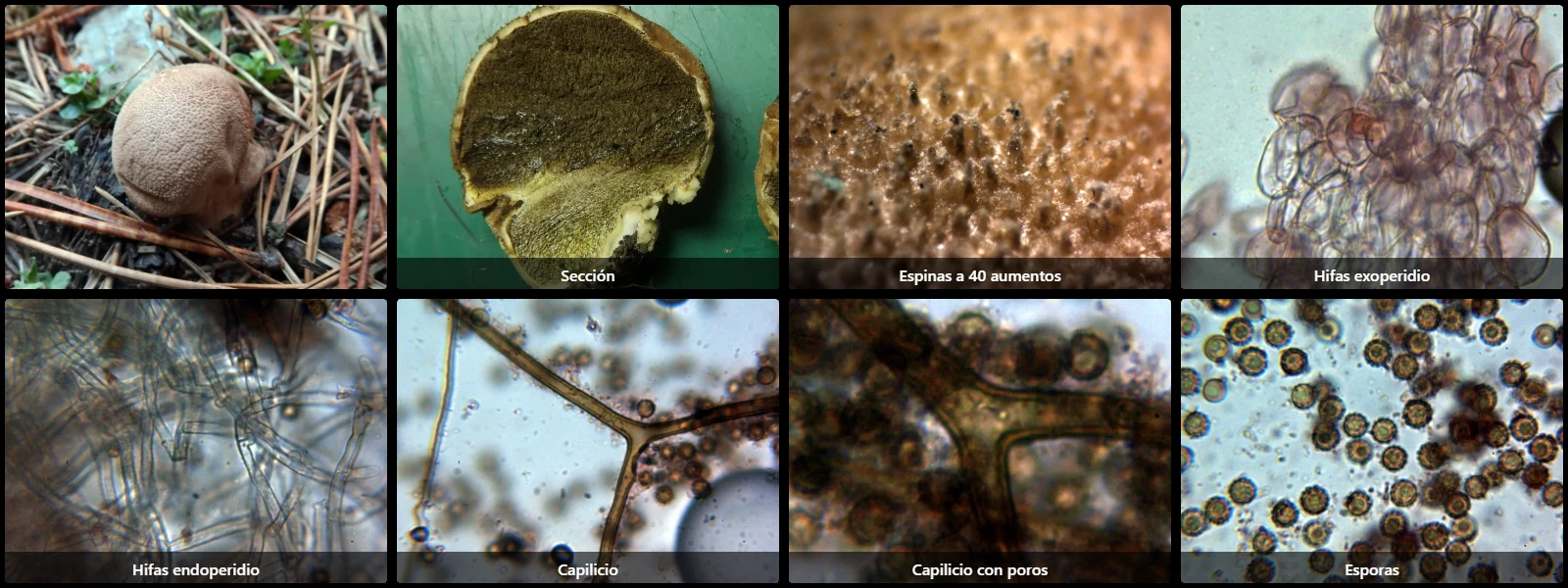
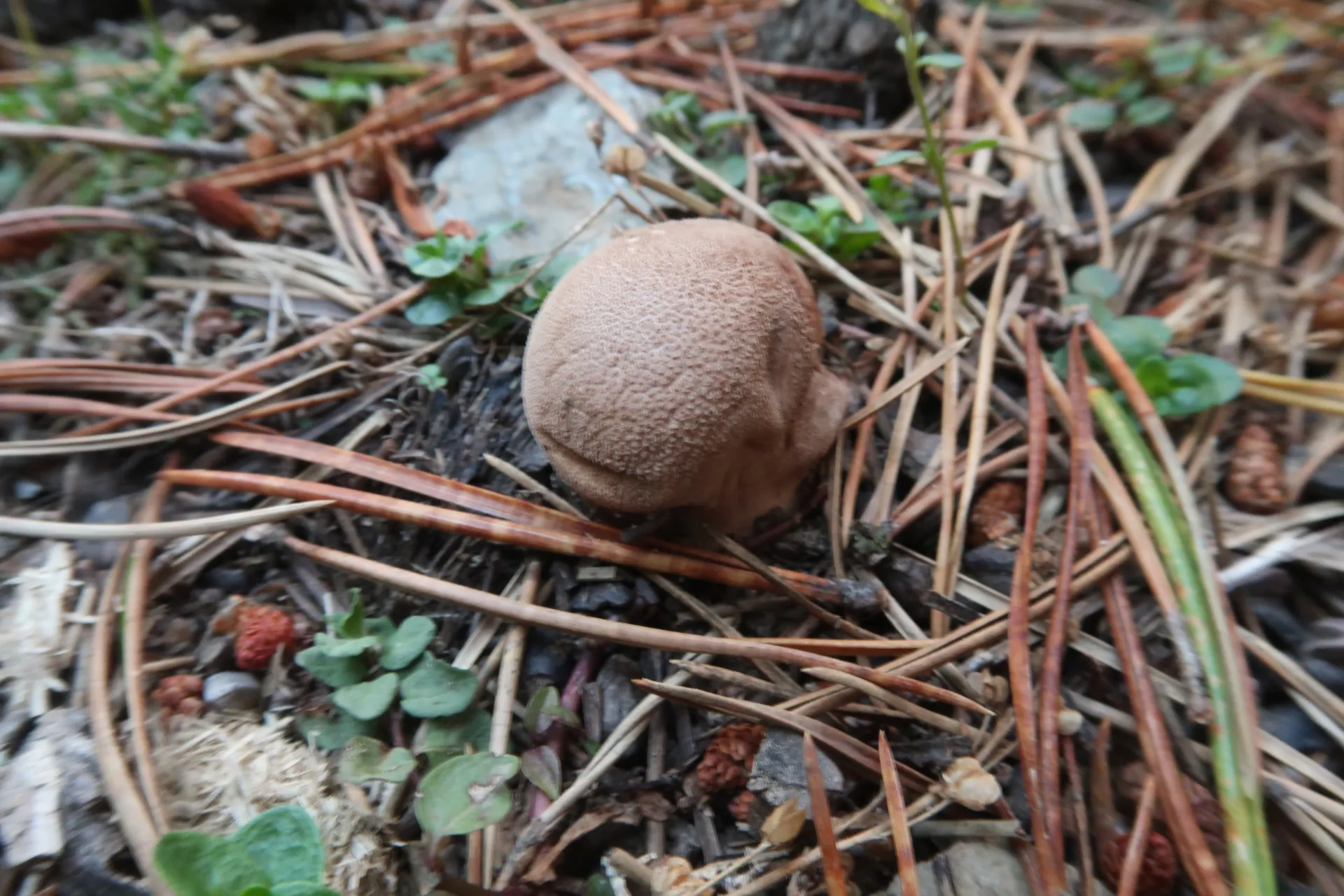
General: Occurring in both conifer and broadleaved woodlands, exoperidium ornamented with soft, short, simple brownish spines that fall off cleanly without leaving scars on the endoperidium.
Exoperidium: Formed by globose sphaerocysts 20-40 µm in diameter, moderately thick-walled, hyaline to pale brown.
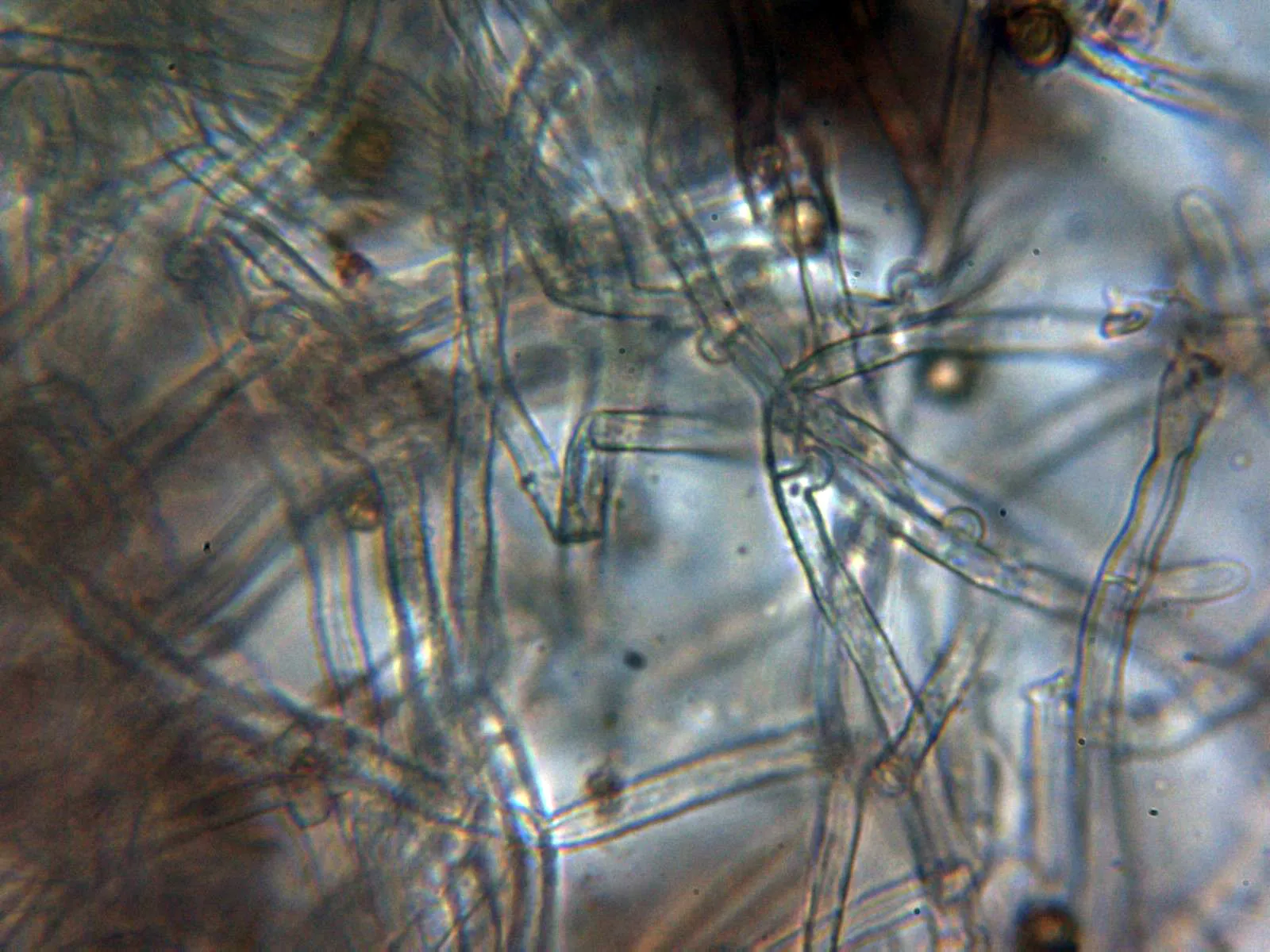
Endoperidium: Composed of filamentous, thick-walled hyphae 2-5 µm wide, septate with clamp connections.
Capillitium: Formed by brown thick-walled threads 2-6 µm wide, with abundant pores of variable size.
Basidia: Not observed; literature describes them as clavate, 30-40 x 8-10 µm, 4-spored.
Spores: Globose, coarsely verrucose with warts up to 0.8 µm high, 4-5.5 µm in diameter, apiculus minute, containing oil droplets.
Exoperidium: Formed by globose sphaerocysts 20-40 µm in diameter, moderately thick-walled, hyaline to pale brown.
Endoperidium: Composed of filamentous, thick-walled hyphae 2-5 µm wide, septate with clamp connections.
Capillitium: Formed by brown thick-walled threads 2-6 µm wide, with abundant pores of variable size.
Basidia: Not observed; literature describes them as clavate, 30-40 x 8-10 µm, 4-spored.
Spores: Globose, coarsely verrucose with warts up to 0.8 µm high, 4-5.5 µm in diameter, apiculus minute, containing oil droplets.
Geographic references
Map generated from global occurrence data from GBIF. GBIF.
Study measurements
Values in Microns (µm)Macroscopic gallery
1 / 6Lycoperdon molle - 1 - IMG_7729
Microscopic gallery
1 / 18Lycoperdon molle - 10 - Capafina debajo peridio 1